
HUF Registration in India: Complete Guide, Process & Benefits
What is HUF Registration in India?
HUF (Hindu Undivided Family) is a separate legal entity created by a Hindu family in India. It helps families manage assets and save income tax legally. An HUF is taxed separately from its family members, which can provide additional tax benefits.
Generally, Hindu families can form an HUF. People belonging to Sikh and Jain communities are also allowed to create an HUF. However, individuals from other religions cannot form an HUF.
An HUF has its own PAN card and files a separate Income Tax Return (ITR). It also receives tax benefits and deductions similar to an individual taxpayer.
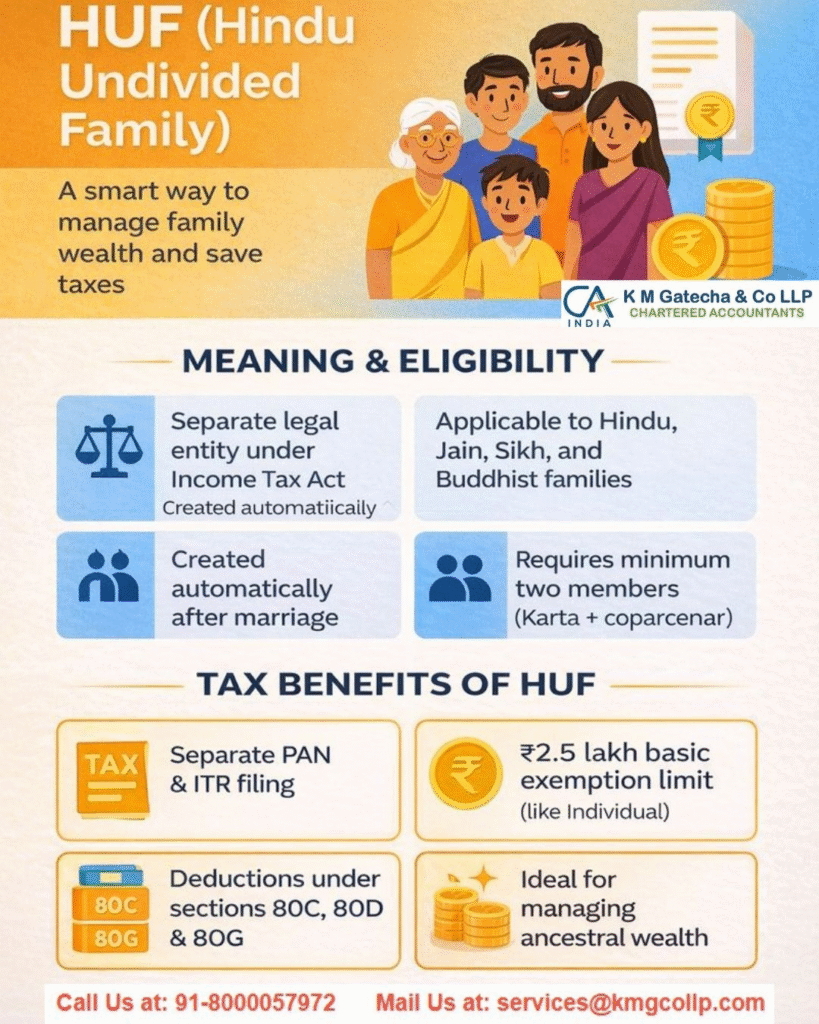
Key Members of an HUF
1. Karta
The Karta is the head of the HUF, usually the eldest family member. The Karta manages the HUF, makes decisions, and handles financial and legal matters on behalf of the family.
2. Coparceners
Coparceners are family members who have a legal right to claim a share in the HUF property. They can ask for their share if they decide to separate from the family.
Coparcenary generally includes family members up to four generations:
- 1st Generation: First holder of ancestral property
- 2nd Generation: Sons and daughters
- 3rd Generation: Grandchildren
- 4th Generation: Great-grandchildren
Steps for HUF Registration in India
Step 1: Create an HUF Deed
The first step is preparing an HUF Deed on stamp paper. This legal document includes details of the Karta, coparceners, and other HUF members.
Step 2: Apply for HUF PAN Card
Since an HUF is treated as a separate taxpayer, it must have its own PAN card. You can apply for it by submitting Form 49A.
Step 3: Open a Bank Account
After getting the PAN card, an HUF bank account should be opened. This account is used for financial transactions, investments, and managing HUF income separately.

Documents Required for HUF Registration in India
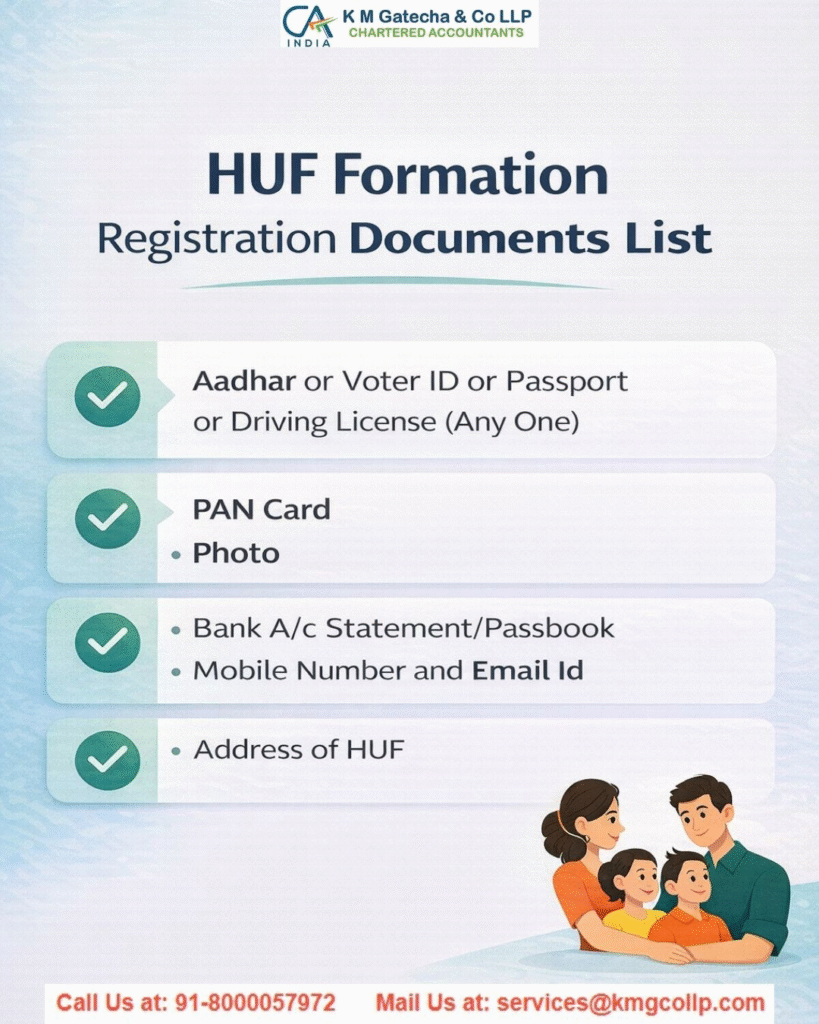
To register an HUF (Hindu Undivided Family) in India, the following documents are usually required:
- PAN Card copy of the Karta
- Aadhaar Card copy of the Karta
- Passport-size photograph of the Karta
- Signature of the Karta and family members, along with their names and relationship with the Karta
- HUF Deed containing details of family members and HUF formation
Types of Income an HUF Can Earn
An HUF can earn income from different sources, such as:
- Business or Professional Income – Income from business activities or professional services
- House Property Income – Rental income from property owned by the HUF
- Capital Gains – Profit earned from selling investments or property
- Other Sources of Income – Such as interest income, dividends, or other earnings

Final Thoughts
HUF registration can be useful for families looking to manage family income and tax planning in a structured way. Since an HUF is treated as a separate taxpayer, it can help in managing assets and income separately. Understanding the registration process, required documents, and tax benefits can help families make better financial decisions.
Disclaimer: The content on this website is for informational purposes only and does not constitute legal, financial, or professional advice. Please consult qualified experts before acting on any information. K M GATECHA & CO LLP accepts no liability for errors, omissions, or outcomes from the use of this content. This site is not an advertisement or solicitation.