
LLP Turnover Limits & Tax Audit Requirements in India Explained
Many business owners may not be fully aware of LLP compliance rules and turnover limits for audits, and that is completely normal. Understanding these requirements is important to avoid compliance issues and ensure smooth business operations.
In this guide, we will explain LLP annual compliance requirements and audit applicability in simple words.
Proper compliance helps LLPs avoid legal problems and ensures that important filings are completed on time.
What is a Limited Liability Partnership (LLP)?
A Limited Liability Partnership (LLP) is a business structure in India that offers the benefits of both a partnership and limited liability. It has a separate legal identity, meaning the LLP is treated as a separate entity from its partners.
An LLP also provides flexibility in management while protecting partners from personal liability for business obligations. However, LLPs must follow certain annual compliance rules to remain legally compliant.
Annual Compliance Requirements for LLPs
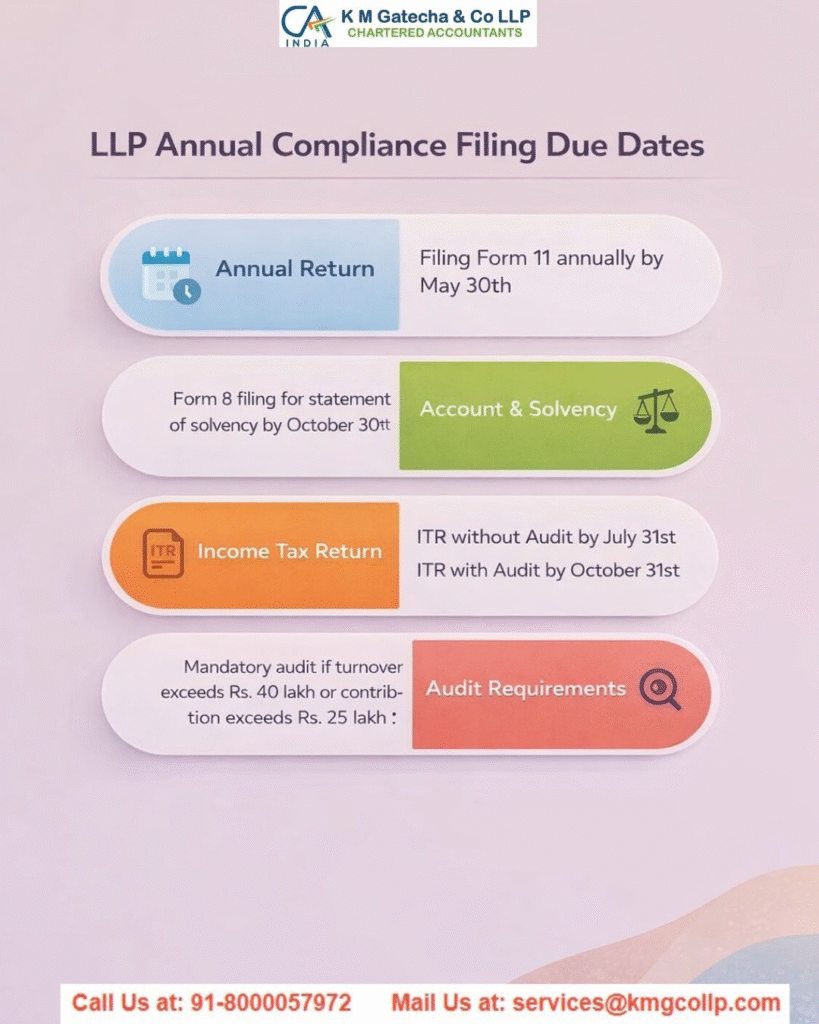
Every LLP must complete certain annual filings to maintain compliance.
1. Annual Return
LLPs are required to file an Annual Return, which includes information related to partners, management, and business details.
2. Statement of Accounts & Solvency
This filing provides details about the LLP’s financial position and confirms whether the business is financially stable.
3. Income Tax Return Filing
Every LLP must file an Income Tax Return to report business income and meet tax-related obligations.
Timely filing of these documents is important to avoid compliance-related issues.
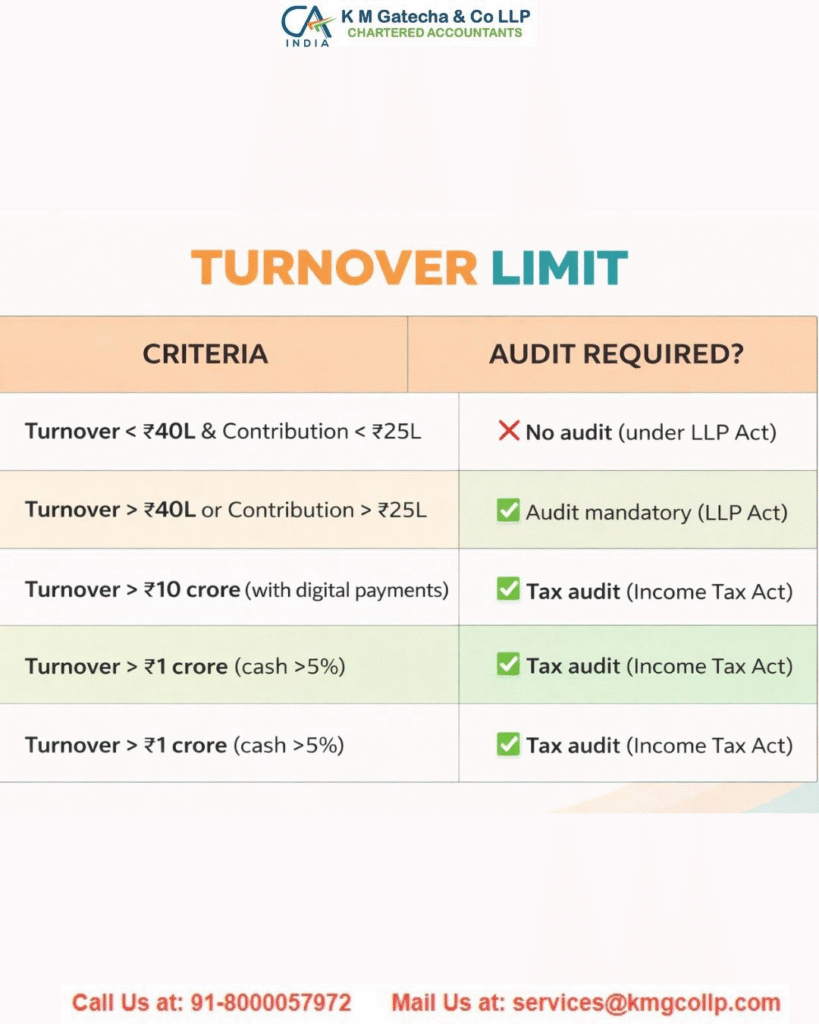
What is the Turnover Limit for LLP Audit?
LLPs may be required to undergo an audit if they cross prescribed turnover or contribution limits during a financial year. Audit requirements are governed by LLP compliance rules and may also relate to income tax provisions in certain situations.
Regularly reviewing turnover and financial records helps LLPs understand whether audit requirements apply to their business.
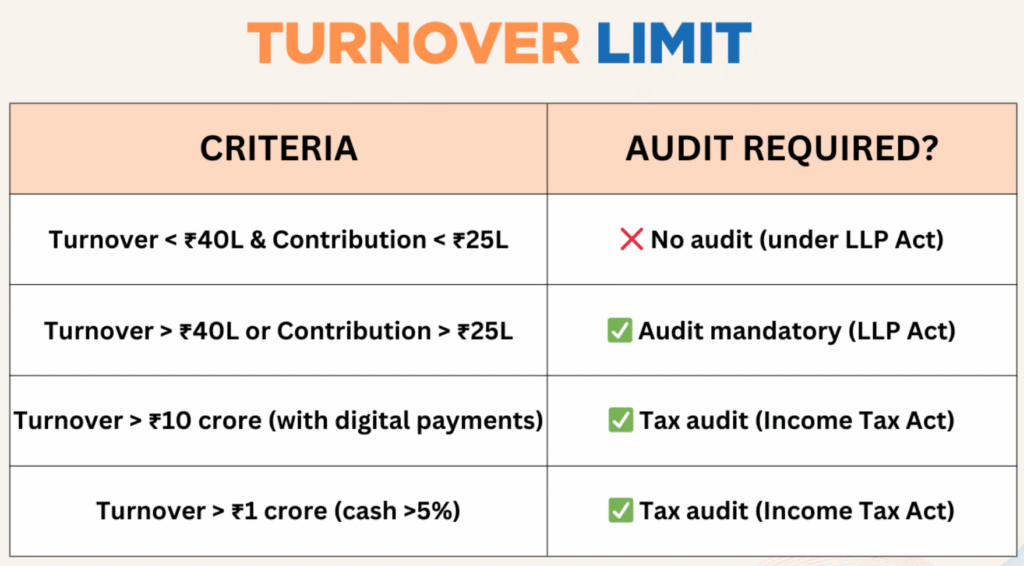
When is an LLP Audit Required?
Audit Not Required
An LLP may not need an audit if it remains within the prescribed turnover and contribution limits during the financial year.
Audit Becomes Mandatory
An audit is required if the LLP crosses the specified turnover or contribution limits. In such cases, the financial records must be reviewed by a qualified professional to ensure compliance.
Important: Many people think audit depends only on turnover, but contribution amount is also an important factor. Even if turnover is low, audit may still apply if contribution exceeds the prescribed limit.
Tax Audit for LLPs
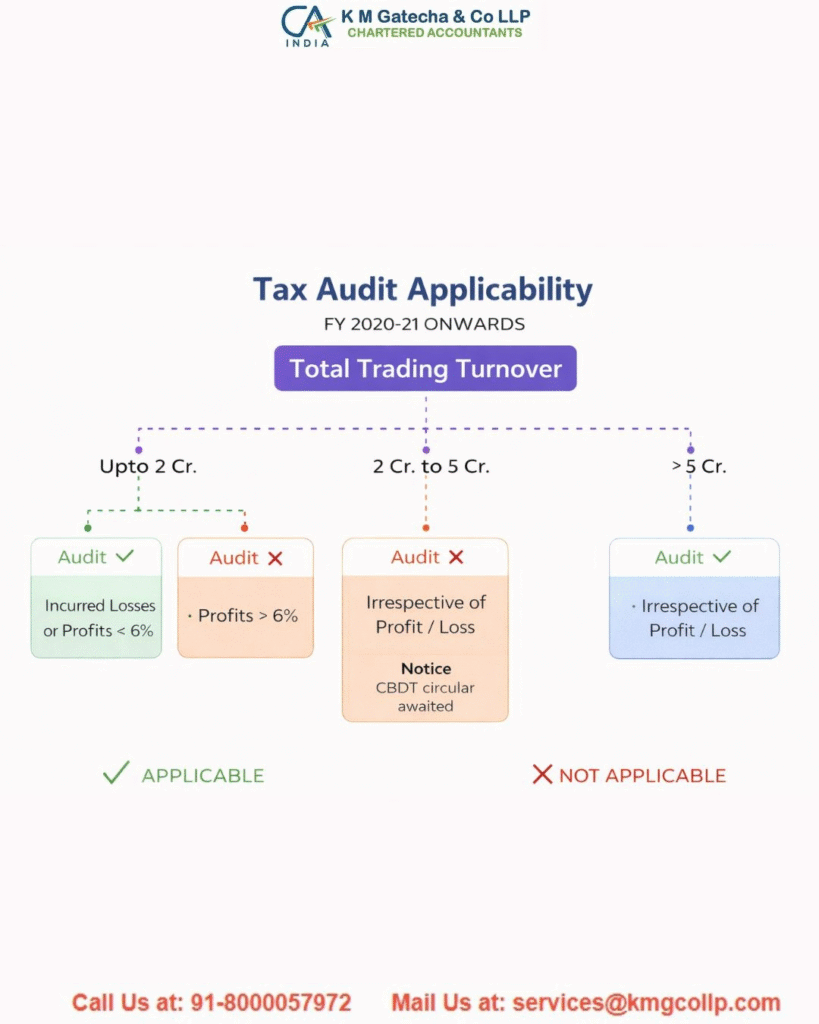
In some cases, LLPs may also need a tax audit under income tax rules, depending on turnover and the nature of business transactions.
Tax audit applicability depends on factors such as:
- Business turnover
- Cash transactions and receipts
- Applicable tax scheme
Understanding these rules helps LLPs stay compliant and avoid future issues.
Consequences of Non-Compliance for LLPs
Every LLP must maintain proper financial records and complete required filings on time. Failure to comply with legal and financial requirements can create compliance issues and may lead to penalties or legal complications.
Timely filing and accurate record keeping help LLPs maintain transparency and avoid unnecessary problems.
Disclaimer: The content on this website is for informational purposes only and does not constitute legal, financial, or professional advice. Please consult qualified experts before acting on any information. K M GATECHA & CO LLP accepts no liability for errors, omissions, or outcomes from the use of this content. This site is not an advertisement or solicitation.