In today’s interconnected world, globalization and technological advancements have transformed international business operations. Companies are increasingly expanding beyond domestic markets to access new opportunities, diversify revenue streams, and achieve sustainable growth. As businesses engage in international transactions, understanding and managing cross-border taxation becomes essential for ensuring compliance and maximizing tax efficiency.
At KMG & CO LLP, we provide comprehensive Cross Border Taxation Services to corporate entities, multinational groups, entrepreneurs, and individuals. Our team assists clients with international tax planning, regulatory compliance, risk assessment, and tax-efficient structuring of cross-border transactions.
Cross Border Taxation Laws and Regulatory Framework
The international tax landscape is constantly evolving due to changing business models, digitalization, global tax reforms, and increased regulatory scrutiny. Tax laws and compliance requirements continue to develop in response to emerging global business practices and cross-border economic activities.
Taxation plays a critical role in business decision-making and can significantly impact investments, expansions, mergers, acquisitions, and operational structures. Therefore, businesses must balance commercial objectives with tax compliance to enhance stakeholder value while minimizing risks.
Our professionals maintain a thorough understanding of Indian and international tax regulations and stay updated on legislative developments, policy changes, and regulatory reforms. We assist clients in designing practical tax strategies and implementing them effectively while ensuring compliance with applicable laws.
With extensive experience in domestic and international taxation, we support clients through every stage of their cross-border operations, including tax planning, compliance management, litigation support, and representation before tax authorities.
Our Cross Border Taxation Services
International Tax Planning and Advisory
We assist corporate and non-corporate clients in developing effective cross-border tax strategies by identifying opportunities, evaluating risks, and ensuring compliance with domestic and international tax regulations.
Advisory for Multinational Investments in India
Our experts provide tax and regulatory guidance to multinational corporations investing in India, helping them structure investments efficiently while complying with applicable foreign investment and tax laws.
Treaty Analysis and Permanent Establishment Advisory
We advise multinational groups on optimizing tax exposure in India by analyzing:
- Double Taxation Avoidance Agreements (DTAAs)
- Classification and characterization of income
- Permanent Establishment (PE) risks and mitigation strategies
- Cross-border transaction structures
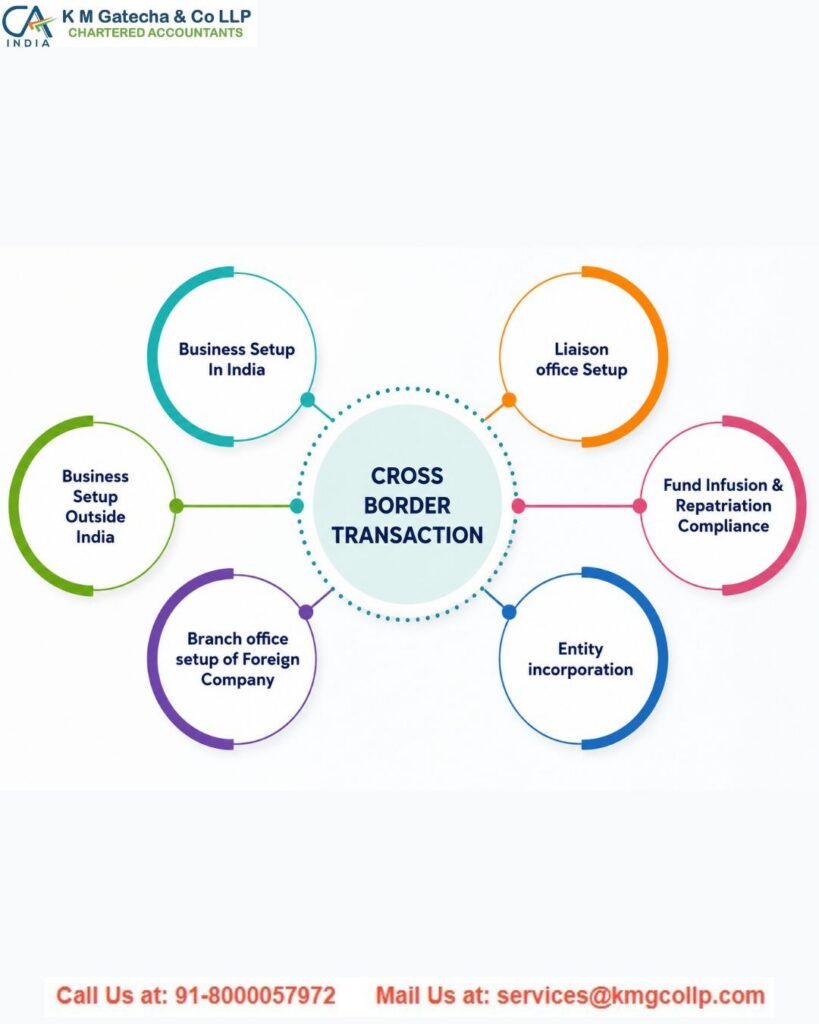
Advisory for Liaison, Branch, and Project Offices
We provide specialized guidance on tax implications relating to:
- Liaison Offices
- Branch Offices
- Project Offices
Our team assists businesses in understanding tax obligations, compliance requirements, and operational restrictions applicable to these entities.
Advisory on Emerging International Tax Regulations
We help businesses understand and comply with evolving international tax frameworks, including:
- General Anti-Avoidance Rules (GAAR)
- Place of Effective Management (POEM)
- Base Erosion and Profit Shifting (BEPS)
- Multilateral Instrument (MLI) implications
- Equalization Levy regulations
Statutory Compliance Support
Our compliance services ensure timely adherence to tax laws and reporting obligations through:
- Income Tax Return filing
- Tax Deducted at Source (TDS) and withholding tax compliance
- Advance tax calculations and payments
- Assistance in obtaining lower withholding tax certificates
- Tax certifications and audit reports under income tax laws
Tax Litigation and Representation
We represent clients before various tax authorities and forums, including:
- Income Tax Department
- Dispute Resolution Panel (DRP)
- Commissioner of Income Tax (Appeals) [CIT(A)]
- Income Tax Appellate Tribunal (ITAT)
- Higher judicial authorities, including the Supreme Court of India
Foreign Tax Credit Advisory
Our experts assist businesses and individuals in claiming and optimizing Foreign Tax Credits (FTC) to minimize double taxation and maximize available tax benefits under domestic laws and international tax treaties.
Regulatory Updates and Ongoing Support
We provide clients with regular updates on:
- Tax amendments
- Government notifications
- Circulars and clarifications
- Judicial rulings and landmark decisions
This helps businesses remain informed and compliant in an ever-changing tax environment.
Why Choose KMG & CO LLP?
KMG & CO LLP combines technical expertise, industry knowledge, and practical experience to deliver effective cross-border tax solutions. Our approach focuses on risk management, tax efficiency, regulatory compliance, and long-term business objectives.
Whether you are a multinational corporation investing in India, an Indian business expanding globally, or an individual involved in international transactions, our team provides strategic guidance and end-to-end support to help you navigate complex cross-border tax challenges with confidence.
Disclaimer: The content on this website is for informational purposes only and does not constitute legal, financial, or professional advice. Please consult qualified experts before acting on any information. K M GATECHA & CO LLP accepts no liability for errors, omissions, or outcomes from the use of this content. This site is not an advertisement or solicitation.