Received an Income Tax scrutiny notice? We offer expert advisory, documentation support, and end-to-end representation. Stay compliant, avoid penalties, and respond with confidence with support from a team of tax professionals across India.
Overview of Income Tax Scrutiny Advisory
The Income Tax Department reviews a large number of income tax returns filed by taxpayers every year. It examines return-filing patterns and may select certain returns for detailed verification based on prescribed criteria, risk parameters, or other factors.
What is Income Tax Scrutiny?
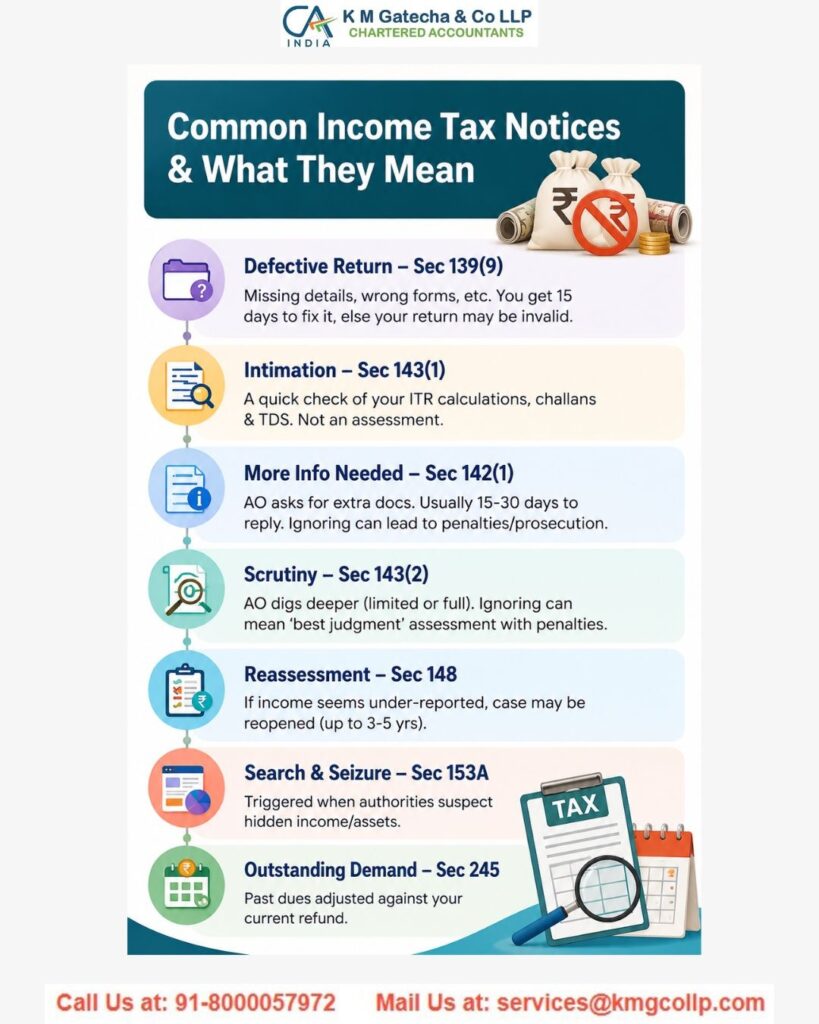
Income Tax scrutiny is a detailed examination of a taxpayer’s income tax return by the Income Tax Department. The process generally begins when the taxpayer receives a notice under Section 143(2) of the Income Tax Act, requiring them to provide information or supporting documents relating to the return filed for a particular assessment year.
Applicable Legislative Provisions and Statutory Authority
Under Section 143(3) of the Income Tax Act, 1961, the Assessing Officer conducts a detailed assessment of the taxpayer’s return, commonly referred to as a scrutiny assessment.
The scrutiny process is generally undertaken to determine whether:
- The taxpayer has correctly disclosed the income earned during the relevant assessment year.
- The deductions, expenses, exemptions, losses, and other claims reported in the return are legally and factually correct.
- The information provided in the return is supported by appropriate documents and records.
To verify the claims made by the taxpayer, the Assessing Officer may examine relevant financial records, documents, and other information. If discrepancies, omissions, inaccuracies, or unsupported claims are identified during the assessment, the Assessing Officer may make appropriate adjustments in accordance with the applicable provisions of the Income Tax Act.
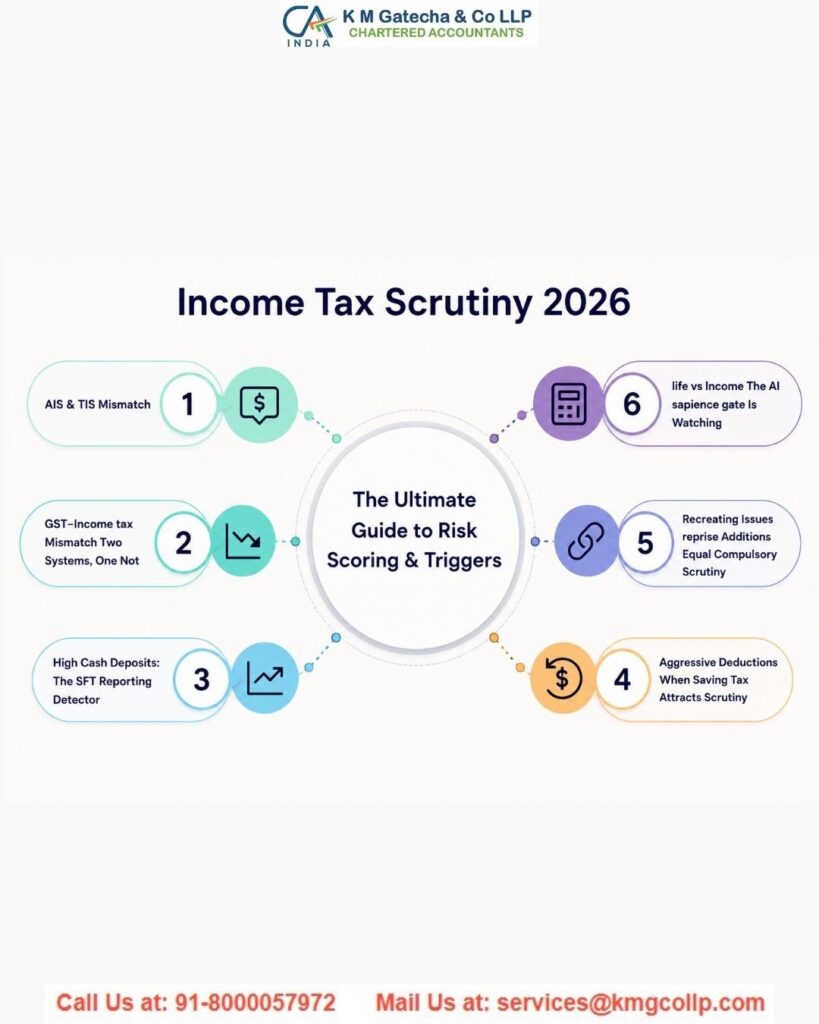
Reasons for Issuing an Income Tax Scrutiny Notice
An Income Tax scrutiny notice may be issued when the Income Tax Department identifies inconsistencies, unusual transactions, or other factors that require further verification of the taxpayer’s return. Some common situations that may result in scrutiny include:
Failure to File an Income Tax Return
Failure to file an income tax return for the relevant financial year, or failure to disclose certain income, may attract the attention of the Income Tax Department. A mismatch between the income reported by the taxpayer and information available with the department may also result in further verification.
Significant Rise or Fall in Income
A substantial change in income over a short period may lead to additional scrutiny. For example, a significant increase in reported income from ₹5 lakh to ₹50 lakh in a financial year could prompt the department to examine the underlying income and supporting records.
High-Value Financial Transactions
Large or unusual transactions during a financial year may result in scrutiny, particularly when they do not appear consistent with the taxpayer’s reported income or financial profile. Examples may include purchasing a high-value asset or receiving a substantial amount in a bank account.
TDS Credit Mismatch
A discrepancy between the TDS credit reported in the income tax return and the information available with the Income Tax Department may result in a notice seeking clarification or supporting documents.
Understatement of Income or Excessive Loss Claims
Scrutiny may be initiated where the department has reason to believe that income has been understated or losses have been overstated. Businesses showing significant fluctuations in income or losses may receive additional attention where the reported figures require verification.
Non-Disclosure of Exempt or Other Reportable Income
Failure to properly disclose income or transactions that are required to be reported in the income tax return can also result in scrutiny. Depending on the circumstances, this may include certain capital gains, interest income, gifts, or other reportable receipts.
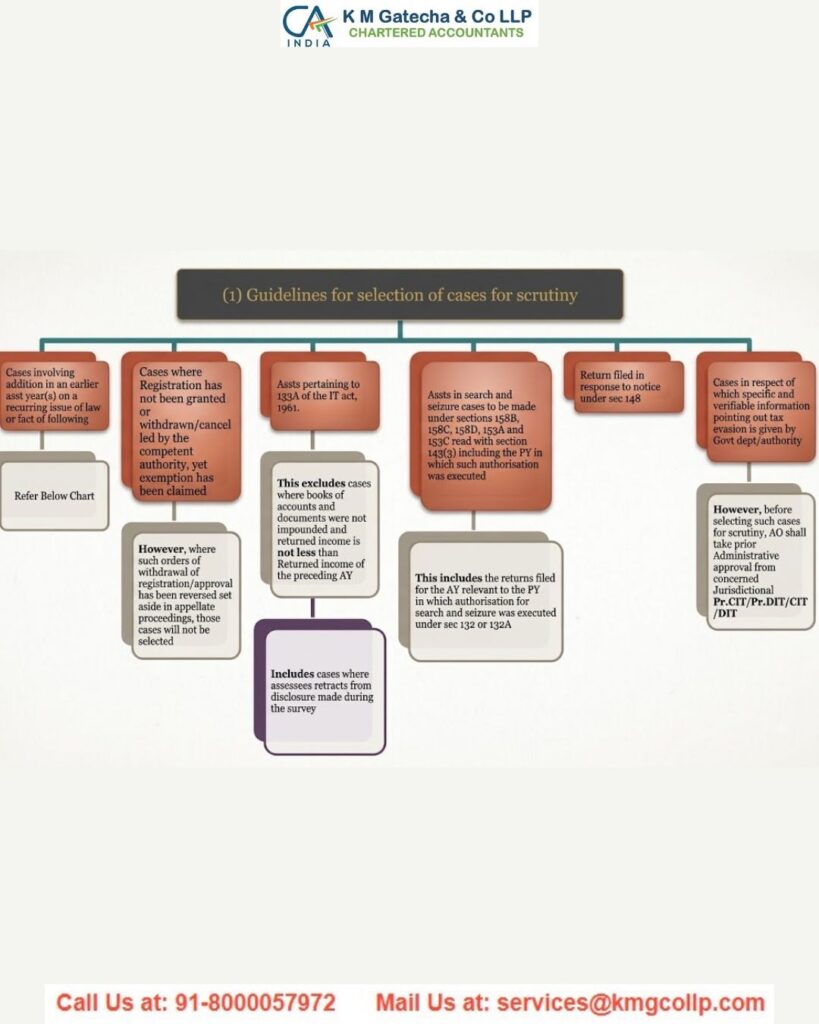
Cases That May Be Subject to Compulsory Scrutiny
Apart from risk-based selection, certain categories of cases may be identified for compulsory scrutiny based on prescribed criteria and instructions issued by the Income Tax Department. These may include:
- Cases where an addition exceeding ₹10 lakh in an earlier assessment year, involving a substantial and recurring question of law or fact, has been confirmed in appeal or remains pending before an appellate authority.
- Cases involving a transfer-pricing addition exceeding ₹10 crore in an earlier assessment year, where the matter involves a substantial and recurring question of law or fact and has either been confirmed in appeal or remains pending before an appellate authority.
- Certain cases relating to surveys conducted under Section 133A of the Income Tax Act, subject to the applicable exclusions and prescribed conditions. Cases involving evidence of undisclosed income or concealment may be selected for scrutiny.
- Cases where the government or other specified authorities provide specific information or verifiable inputs indicating possible tax evasion.
- Cases where registration under Section 12AA has not been granted, but the taxpayer continues to claim exemption under Section 11.
- Cases where approval under Section 10(23C) has been denied, but the taxpayer continues to claim exemption under the relevant provision.
- Computer-Aided Scrutiny Selection: Certain cases may be selected through computer-aided systems based on predefined scrutiny parameters and selection criteria. Such selection is designed to minimize subjective intervention and identify returns requiring further examination.
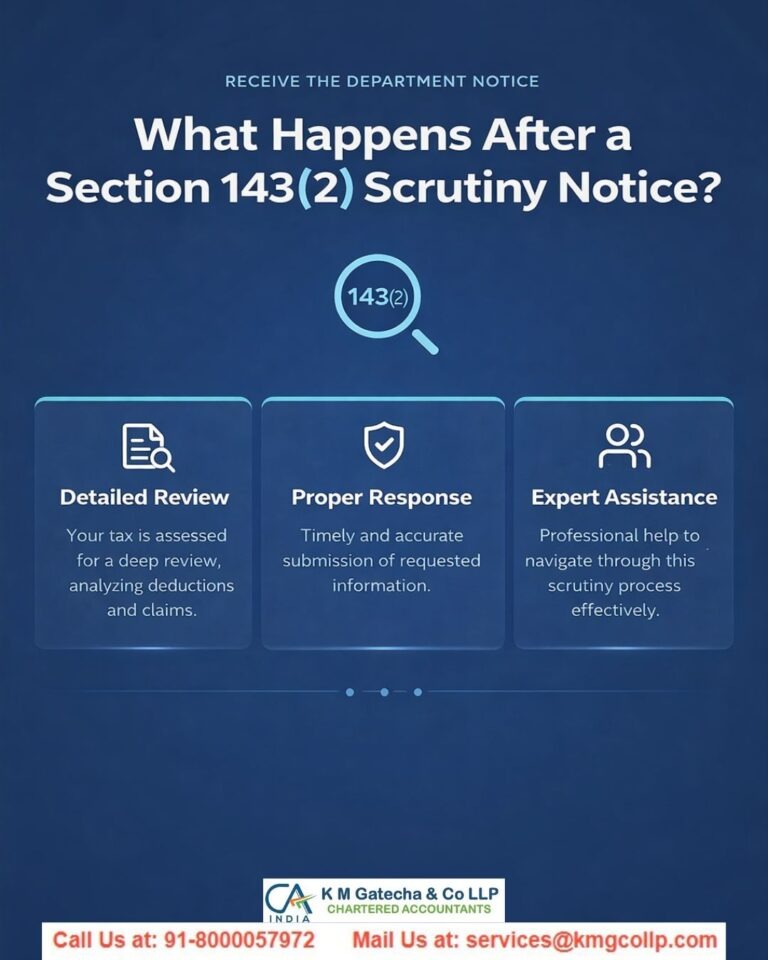
How Should You Respond to an Income Tax Scrutiny Notice?
Receiving an Income Tax scrutiny notice does not necessarily mean that there has been any wrongdoing. The important thing is to understand the notice carefully, gather the required information, and respond within the prescribed timeline.
Stay Calm
Do not panic after receiving a scrutiny notice. A return may be selected for verification based on various criteria, and the notice may simply be part of the department’s assessment process. If your income, expenses, deductions, and other claims are properly supported, focus on preparing an accurate response to the queries raised.
Carefully Review the Notice
Begin by reading the scrutiny notice thoroughly. Verify important details such as:
- PAN
- Name of the taxpayer
- Assessment year
- Financial year
- Notice number
- Information or documents requested
- Date by which the response must be submitted
Understanding exactly what the department has asked for is essential before preparing a response.
Verify the Assessing Officer and Applicable Provisions
Check the details of the concerned office and Assessing Officer, along with the relevant section or provision under which the notice has been issued. If you are unfamiliar with the applicable tax provisions, professional assistance can help you understand the notice and prepare an appropriate response.
Arrange the Required Documents
Start collecting the documents relevant to the issues raised in the notice. Even if you believe that your return has been correctly prepared, supporting records should be kept ready to substantiate the income, expenses, deductions, and other claims reported.
Do Not Ignore the Notice
An Income Tax scrutiny notice should never be ignored. Failure to respond can complicate the assessment process and may result in the department proceeding based on the information available with it. This can potentially lead to additions, tax demands, interest, or penalties, depending on the circumstances.
Provide Complete and Accurate Information
Taxpayers should provide accurate information and supporting documents in response to the queries raised. Avoid withholding relevant information or providing incomplete explanations. The Income Tax Department may have access to transaction and financial information from various sources, so inconsistencies can create additional complications.
Respond Within the Prescribed Due Date
Pay close attention to the deadline mentioned in the notice. All requested information, explanations, and documents should be submitted within the specified time. Delaying the response may make the assessment process more difficult and can affect your ability to properly present your case.
Consider Professional Assistance
Tax notices can contain technical terminology and specific legal requirements that may be difficult to interpret. If you are unsure about the notice or the appropriate response, consider taking assistance from a Chartered Accountant, tax professional, lawyer, or Company Secretary, depending on the nature of the matter.
Professional assistance can help in understanding the notice, reviewing supporting documents, preparing explanations, and ensuring that the response addresses the issues raised by the department.
Maintain Records of All Notices and Responses
Keep a proper record of every notice received, including the notice number, reference number, date of issue, response submitted, supporting documents, and acknowledgement. Maintaining these records makes it easier to track the proceedings and handle future communication with the Income Tax Department.
Consequences of Not Responding to Income Tax Scrutiny Notices
Failing to respond to an Income Tax scrutiny notice within the prescribed time can lead to various consequences. Depending on the circumstances and applicable provisions, these may include:
Best Judgment Assessment
If the taxpayer does not respond to the scrutiny proceedings or fails to provide the required information, the Assessing Officer may complete the assessment under Section 144 of the Income Tax Act. In such cases, the assessment may be completed based on the information and material available with the officer.
Imposition of Penalties
Failure to comply with notices or requirements may attract penalties under the applicable provisions of the Income Tax Act. For instance, a penalty may be imposed for each failure to comply with certain statutory notices or directions.
Search and Seizure Proceedings
In cases involving circumstances that meet the prescribed legal conditions, the Income Tax Department may initiate search and seizure proceedings and issue the necessary authorization in accordance with the applicable provisions.
Prosecution Proceedings
Serious or continued non-compliance may, depending on the facts and applicable provisions, result in prosecution proceedings under the Income Tax Act. In certain cases, prosecution can lead to imprisonment, with or without a fine, as prescribed under the relevant provisions.
Disclaimer: The content on this website is for informational purposes only and does not constitute legal, financial, or professional advice. Please consult qualified experts before acting on any information. K M GATECHA & CO LLP accepts no liability for errors, omissions, or outcomes from the use of this content. This site is not an advertisement or solicitation.