
Foreign Company Registration in India
Foreign Company Registration in India provides international investors with the opportunity to establish a business presence with up to 100% foreign ownership in permitted sectors. India offers a large consumer market, skilled workforce, competitive operating costs, and access to government initiatives such as Startup India and Make in India. Foreign nationals and overseas companies can incorporate an Indian company without being physically present in India, making the registration process efficient and business-friendly.

Company Registration with Foreign Ownership in India
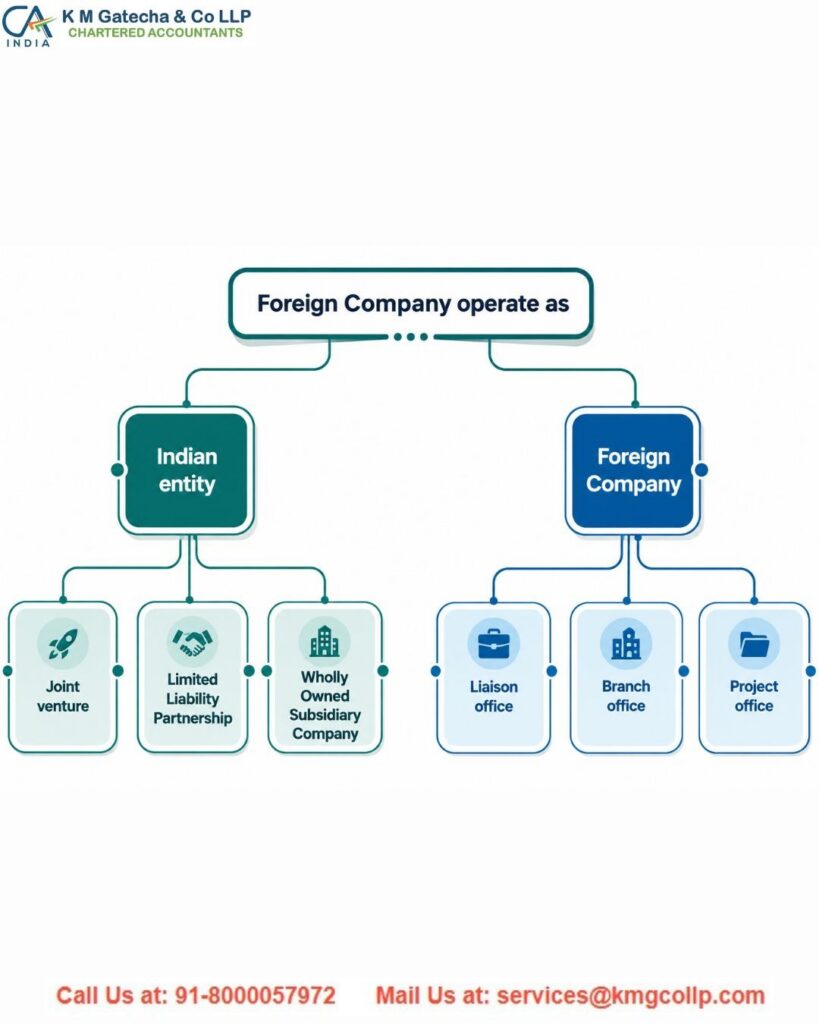
Foreign entrepreneurs and overseas companies can establish a wholly owned subsidiary or a foreign-owned private limited company in India. This structure allows complete ownership and operational control while benefiting from India’s growing economy and favorable investment policies.
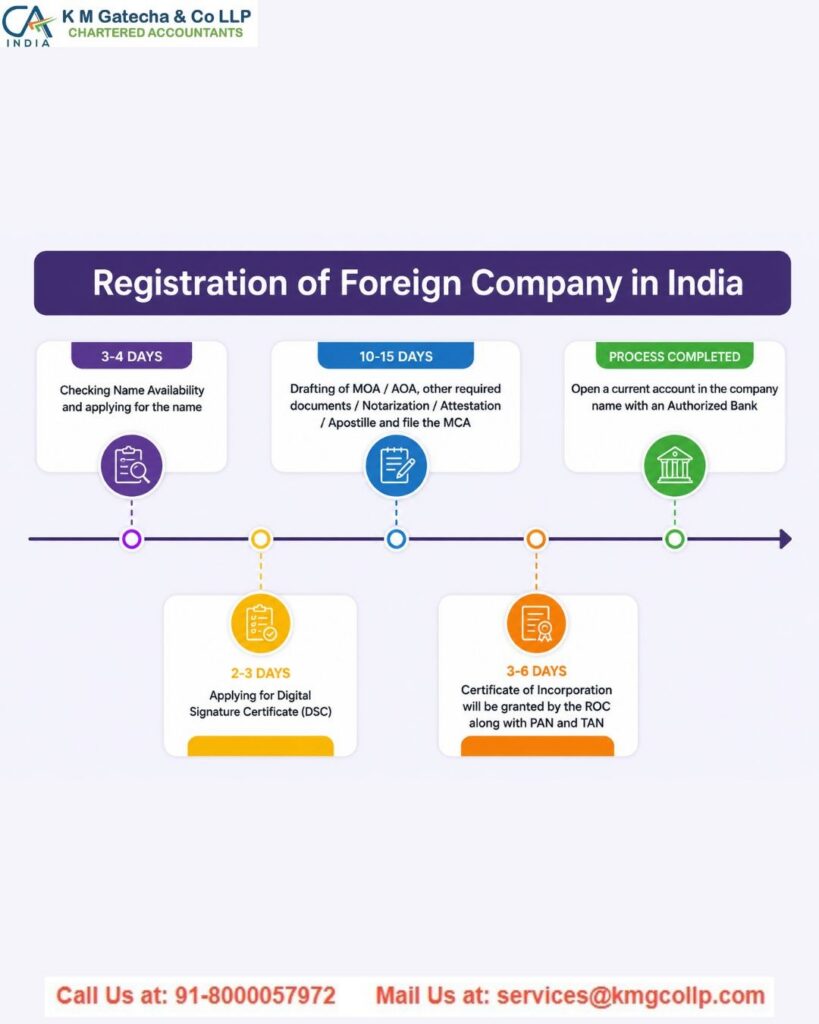
A foreign-owned company can be incorporated with foreign shareholders and directors, subject to compliance with the Companies Act, 2013 and Foreign Direct Investment (FDI) regulations. The registration process involves obtaining Digital Signature Certificates (DSC), Director Identification Numbers (DIN), company name approval, incorporation through the Ministry of Corporate Affairs (MCA), and obtaining the Certificate of Incorporation.
One of the key advantages of setting up a foreign-owned company in India is access to a highly qualified and cost-effective workforce. Many international businesses establish development centers, support offices, and operational units in India to optimize costs while maintaining high service standards.
Benefits of Foreign Company Registration in India
100% Foreign Ownership
Foreign investors can hold complete ownership of the company in sectors where 100% FDI is permitted under the automatic route.
Easy Registration Process
Company incorporation can be completed online with minimal documentation and without the need for foreign promoters to visit India.
Skilled and Cost-Effective Workforce
India offers access to a large pool of skilled professionals at competitive costs, making it an ideal destination for global businesses.
Government Support and Incentives
Businesses can benefit from initiatives such as Startup India, Make in India, and various state-level incentives.
Foreign Directors Permitted
Foreign nationals can serve as directors of the company, subject to applicable compliance requirements.
Export and Tax Benefits
Export-oriented businesses may be eligible for various incentives, refunds, and benefits under applicable regulations.
Business-Friendly Investment Environment
India continues to liberalize FDI policies, encouraging international investment across multiple sectors.
Eligibility Requirements for Foreign Company Registration
To register a foreign-owned company in India, the following requirements must be fulfilled:
- Minimum two directors
- At least one resident Indian director
- Minimum two shareholders
- Registered office address in India
- Valid identification and address proof of all directors and shareholders
- Compliance with FEMA and FDI regulations
Documents Required for Foreign Directors and Shareholders
Foreign nationals generally need to provide:
- Passport
- Passport-size photograph
- Address proof
- Bank statement
- Utility bill not older than two months
- Email address and mobile number
- National identity document (where applicable)
For foreign corporate shareholders:
- Certificate of Incorporation
- Charter documents
- Board Resolution authorizing investment
- Authorized representative documents
All foreign documents must typically be notarized and apostilled or consularized as per applicable requirements.

Process of Foreign Company Registration in India
Step 1: Select Company Name and Business Activity
Choose a unique company name and define the proposed business activities of the Indian subsidiary.
Step 2: Name Reservation
Submit an application through the MCA portal to reserve the proposed company name.
Step 3: Obtain DSC and DIN
Digital Signature Certificates and Director Identification Numbers are obtained for the proposed directors.
Step 4: Draft MOA and AOA
The Memorandum of Association (MOA) and Articles of Association (AOA) are prepared, defining the company’s objectives and governance framework.
Step 5: File Incorporation Application
Submit the SPICe+ incorporation application along with supporting documents and statutory declarations.
Step 6: ROC Approval
The Registrar of Companies reviews the application and issues the Certificate of Incorporation along with PAN and TAN upon approval.
Step 7: Bank Account and Post-Incorporation Compliance
After incorporation, the company can open a bank account, receive foreign investment, and complete RBI and FEMA reporting requirements.
Services for Foreign-Owned Companies
Professional support services may include:
- Company Registration
- FDI Advisory
- FEMA Compliance
- RBI Reporting
- GST Registration
- PAN and TAN Registration
- Import Export Code (IEC)
- Accounting and Bookkeeping
- Payroll Management
- ROC Compliance
- Tax Filing and Audits
- Transfer Pricing Compliance
Why Choose India for Foreign Investment?
India has emerged as one of the most attractive destinations for foreign investment due to its growing economy, strong digital infrastructure, skilled talent pool, and favorable regulatory environment. Foreign-owned companies can leverage these advantages to establish profitable and scalable business operations while maintaining complete ownership and control.
Whether you are a startup, technology company, consulting firm, or multinational corporation, registering a foreign-owned company in India can provide a strategic platform for long-term business growth and expansion.
Disclaimer: The content on this website is for informational purposes only and does not constitute legal, financial, or professional advice. Please consult qualified experts before acting on any information. K M GATECHA & CO LLP accepts no liability for errors, omissions, or outcomes from the use of this content. This site is not an advertisement or solicitation.