

Private Limited Company vs LLP in India: Complete Business Structure Guide
Choosing the right business structure is one of the most important decisions for any entrepreneur in India. The two most common options are a Private Limited Company and a Limited Liability Partnership (LLP). Both offer legal protection and credibility, but they differ in ownership, compliance, taxation, funding ability, and long-term growth suitability.
This guide explains both structures in simple terms so you can understand which one fits your business needs.
What is a Private Limited Company?
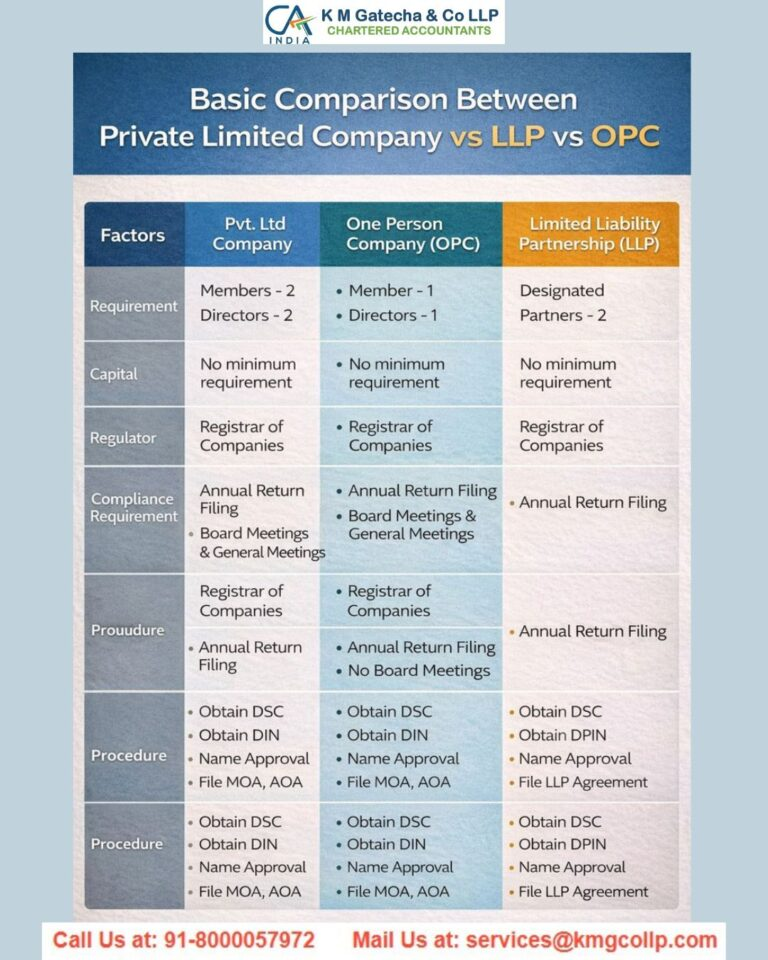
A Private Limited Company is a business structure registered under the Companies Act, 2013. It is a separate legal entity, meaning the company has its own identity different from its owners.
Key features:
- Separate legal identity from owners
- Limited liability for shareholders
- Suitable for startups and scaling businesses
- Easier to raise investment from investors
- Can issue shares to expand ownership
This structure is usually preferred by businesses that want to grow quickly and attract funding.
What is an LLP (Limited Liability Partnership)?
An LLP is a hybrid business structure that combines features of a partnership and a company. It is governed by the LLP Act, 2008.
Key features:
- Separate legal identity
- Limited liability protection for partners
- Flexible internal management
- Lower compliance requirements compared to a company
- Suitable for small and professional businesses
LLPs are commonly chosen by service-based businesses like consultants, professionals, and small firms.
Key Differences Between Private Limited Company and LLP
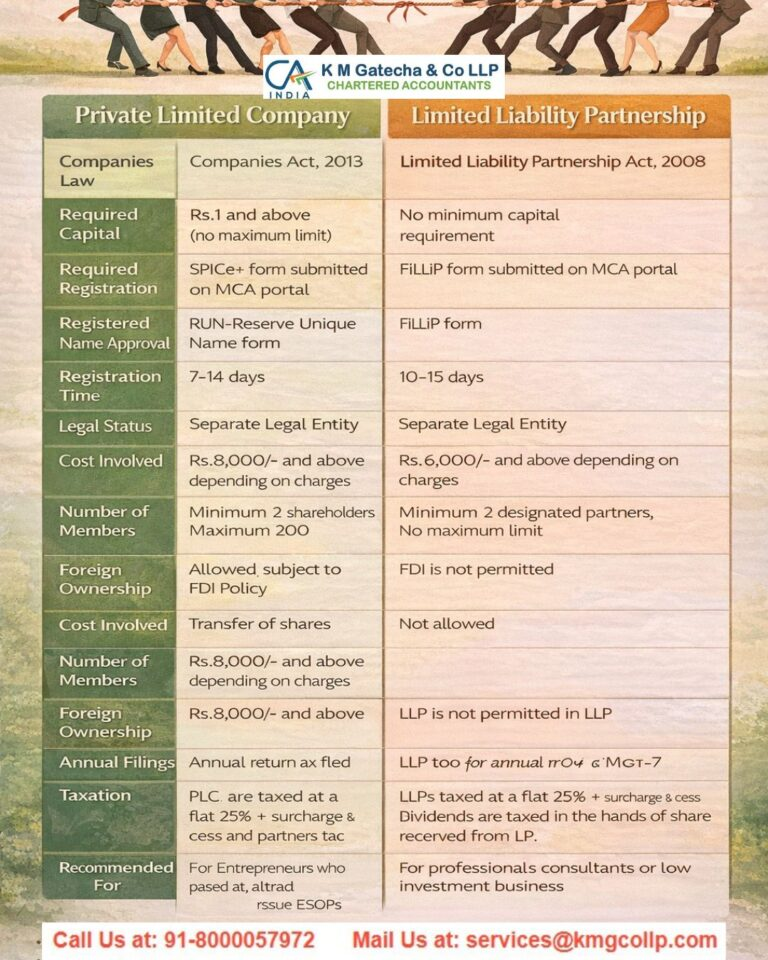
1. Ownership Structure
- Private Limited: Owned through shares
- LLP: Owned through partner contribution
2. Fundraising
- Private Limited: Easier to raise external funding
- LLP: Difficult to bring in investors
3. Compliance Requirements
- Private Limited: Higher compliance (audits, filings, meetings)
- LLP: Comparatively simpler compliance
4. Taxation
- Private Limited: Corporate tax applies + dividend taxation
- LLP: Taxed as partnership, simpler structure
5. Transferability
- Private Limited: Shares can be transferred easily
- LLP: Ownership transfer is more complex
Advantages of Private Limited Company
- Better for business expansion
- Preferred by investors and banks
- Suitable for startups aiming for scale
- Strong brand credibility
- Easier exit or acquisition options
Advantages of LLP
- Lower compliance burden
- More flexibility in operations
- Cost-effective structure for small businesses
- Ideal for professionals and consultants
- Easier day-to-day management
Which One Should You Choose?
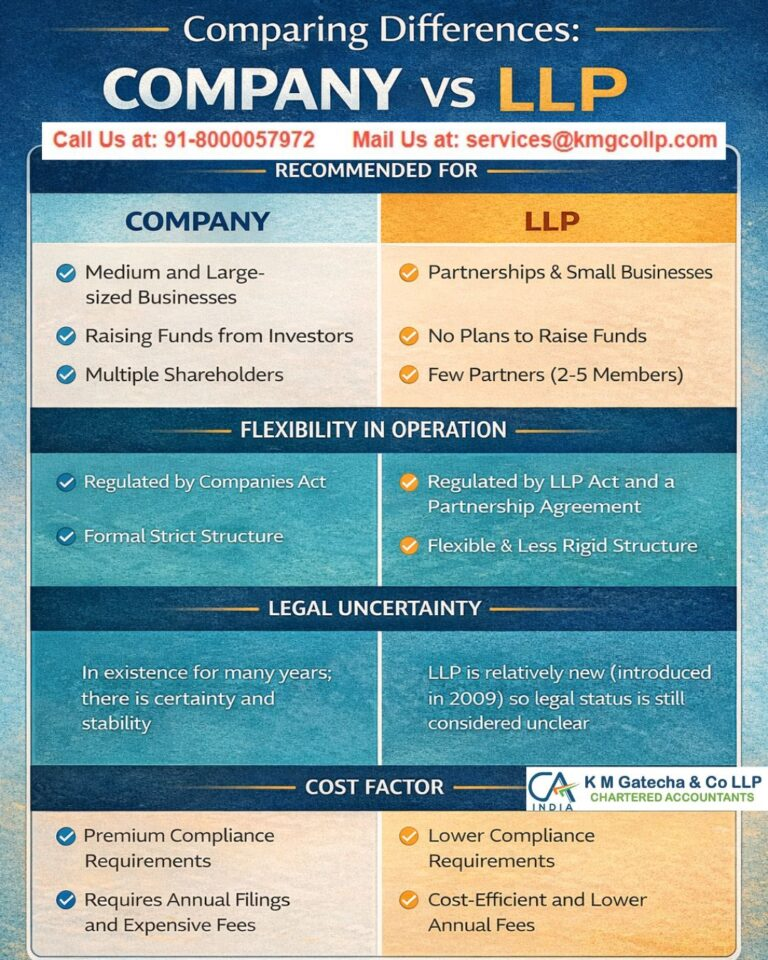
Choose a Private Limited Company if:
- You want to raise funding
- You plan to scale your business
- You want to attract investors or venture capital
- You are building a startup or product-based business
Choose an LLP if:
- You are running a small or service-based business
- You prefer fewer compliance requirements
- You are working with a stable group of partners
- You do not plan to raise external funding
Final Thoughts
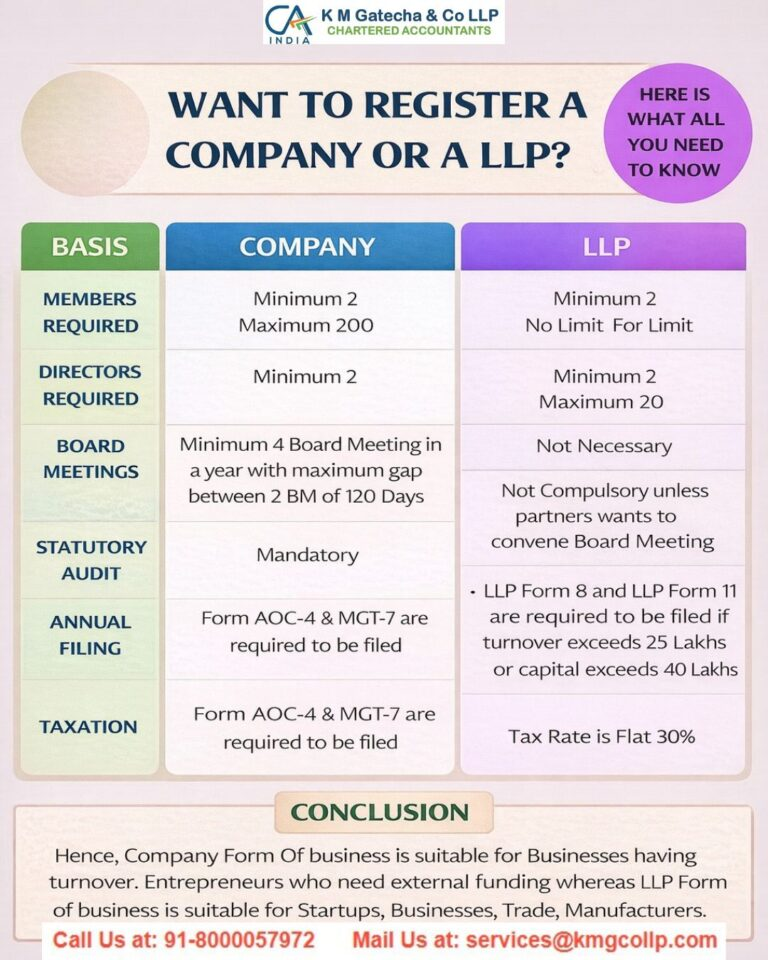
Both Private Limited Companies and LLPs are strong legal structures in India. The right choice depends on your business goals, growth plans, and compliance comfort level. If your focus is scalability and investment, a Private Limited Company is better. If you want flexibility and simplicity, an LLP is more suitable.
Disclaimer: The content on this website is for informational purposes only and does not constitute legal, financial, or professional advice. Please consult qualified experts before acting on any information. K M GATECHA & CO LLP accepts no liability for errors, omissions, or outcomes from the use of this content. This site is not an advertisement or solicitation.


