
NRI Taxation in India 2026: Everything You Need to Know
NRI taxation in India is governed by the Income Tax Act, 1961. NRIs are required to pay tax only on the income that is earned or received in India. This may include salary, rental income, capital gains, business income, or interest earned from Indian bank accounts.
To avoid penalties and tax issues, NRIs should follow TDS rules, tax filing deadlines, and compliance requirements properly.

What is NRI Income Tax in India?
For NRIs, not all income is taxable in India. Only the income that is earned in India or received in India is taxed under Indian income tax laws.
Examples of taxable income for NRIs in India include:
- Salary earned in India or for work performed in India
- Rental income from property located in India
- Capital gains from selling property, shares, or assets in India
- Interest income from Indian bank accounts
Key Points to Remember
- Salary earned in India → Taxable
- Rent from property in India → Taxable
- Capital gains from Indian property or shares → Taxable
- Interest from NRO accounts → Taxable
- Interest from NRE and FCNR accounts → Tax-free
How to Determine Residential Status of an NRI?
Before understanding tax liability, it is important to determine your residential status. Your residential status decides whether only Indian income or your global income will be taxed in India.
You will be considered an Indian resident for a financial year if:
- You stay in India for 182 days or more during the financial year, OR
- You stay in India for 60 days in the current financial year and 365 days in the previous 4 years
Residential status is further divided into:
- Resident and Ordinarily Resident (ROR)
- Resident but Not Ordinarily Resident (RNOR)
If you do not meet these conditions, you may qualify as an NRI (Non-Resident Indian).
Is Foreign Income of NRIs Taxable in India?
Whether your foreign income is taxable depends on your residential status.
- If you are a Resident, your global income may be taxable in India.
- If you are an NRI, only your income earned in India is taxable. Income earned outside India is generally not taxable in India.
Examples of Income Taxable in India for NRIs
- Salary for services performed in India
- Income from house property in India
- Capital gains from assets located in India
- Interest income from Indian bank accounts
Let’s understand different types of taxable income for NRIs.
1. Salary Income
Salary income becomes taxable in India if the services are performed in India.
Important points:
- Salary for work done in India is taxable in India, even if payment is received abroad.
- Salary received in India may be taxable, even if services are provided outside India.
- If an Indian citizen works for the Government of India abroad, the salary may still be taxable in India.
- Diplomats and Ambassadors may get tax exemption in certain cases.
Example
Suppose Ajay, an employee of an Indian company, worked in China for three years. If his salary relates to services performed in India, it may still attract Indian tax depending on the circumstances.
2. Income from House Property
If an NRI owns a property in India and earns rental income, that income is taxable in India.
Important points:
- Rental income from Indian property is taxable for NRIs.
- Tax calculation and deductions are generally similar for residents and NRIs.
- Tax is charged according to applicable income tax slab rates.
- The tenant may need to deduct TDS on rent payments made to an NRI landlord.
Example
If Nandini owns a house in Goa and earns rent while living in Bangkok, the rental income from that property will still be taxable in India.
3. Income from Other Sources
Interest income earned from Indian bank accounts may also be taxable.
Tax Treatment of Different Accounts
- NRO Account Interest → Taxable
- NRE Account Interest → Tax-Free
- FCNR Account Interest → Tax-Free
Interest earned on savings accounts or fixed deposits in India is usually taxable, except for certain exempt accounts.
NRO, NRE, and FCNR Account Taxation for NRIs
Under FEMA rules, NRIs cannot continue using a regular savings account in India after becoming an NRI. Existing savings accounts should generally be converted into an NRO account.
NRO Account (Non-Resident Ordinary)
An NRO account is used to manage income earned in India, such as:
- Rent income
- Pension
- Interest income
- Gifts received in India
- Money from sale of property
Interest earned on an NRO account is taxable in India.
NRE Account (Non-Resident External)
An NRE account is mainly used for managing foreign income in India.
Key features:
- Foreign income is deposited in foreign currency and converted into Indian Rupees
- Interest earned is tax-free in India
- Funds are generally fully repatriable
FCNR Account (Foreign Currency Non-Resident)
An FCNR account allows NRIs to maintain deposits in foreign currency.
- Interest earned is tax-free in India
- Helps avoid foreign exchange fluctuation risk
4. Income from Business or Profession
If an NRI earns income from a business controlled, managed, or set up in India, such income is taxable in India.
This includes:
- Business profits earned in India
- Professional income from services provided in India
5. Capital Gains Income
If an NRI sells a property, shares, or other capital assets located in India, the resulting capital gains are taxable in India.
Important points:
- Capital gains on sale of Indian property are taxable.
- Capital gains from Indian shares and securities are also taxable.
- The buyer may need to deduct TDS while purchasing property from an NRI.
Tax Saving on Capital Gains
NRIs can save tax on capital gains by:
- Investing in another residential property under Section 54
- Investing in capital gain bonds under Section 54EC
6. Special Tax Rules for Investment Income
Some investment income earned by NRIs from specified Indian assets may be taxed at a special tax rate of 20%.
If this is the only income earned in India and proper TDS has already been deducted, the NRI may not be required to file an Income Tax Return (ITR).
Investments Eligible for Special Tax Treatment
Income earned from the following assets purchased in foreign currency may qualify:
- Shares in Indian companies
- Debentures of listed Indian companies
- Deposits with banks and public companies
- Government securities
- Other notified assets approved by the government
Important: Deductions under Section 80 are generally not allowed on such investment income.
Deductions and Exemptions for NRIs
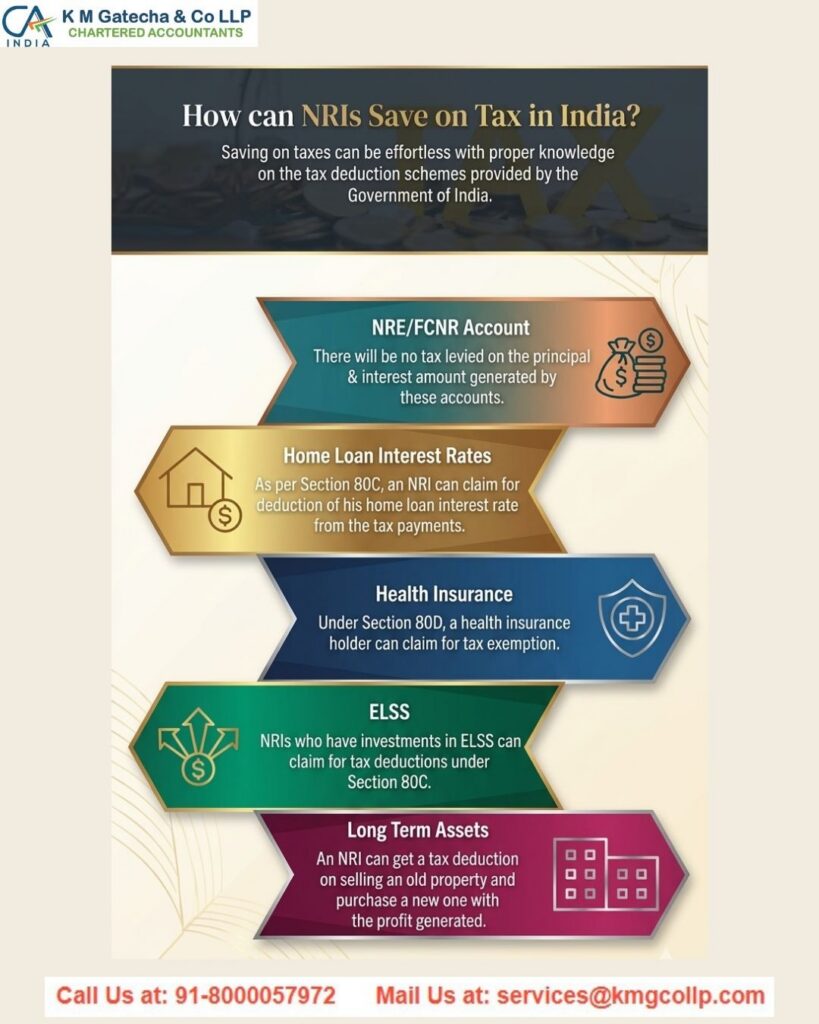
Like resident Indians, NRIs can also claim several tax deductions and exemptions to reduce their taxable income in India. Below are some important deductions available to NRIs.
1. Deduction Under Section 80C
NRIs can claim deductions under Section 80C for certain eligible investments and expenses.
- Maximum deduction allowed: Up to ₹1.5 lakh in a financial year
- Helps reduce total taxable income
Some eligible investments and expenses may qualify for tax benefits under this section.
2. Deductions on House Property Income
If an NRI owns a property in India, they can claim deductions similar to resident taxpayers.
Available deductions include:
- 30% standard deduction on rental income
- Home loan interest deduction under Section 24
- Principal repayment deduction under Section 80C
- Additional deductions under Section 80EE and Section 80EEA, if applicable
These deductions can help reduce tax on rental income or home property.
3. Deduction Under Section 80D (Health Insurance)
NRIs can claim a deduction for health insurance premiums paid for themselves and family members.
Deduction limits:
- Up to ₹25,000 for self, spouse, and dependent children
- Additional ₹25,000 for parents’ health insurance
- Up to ₹50,000 if the insured parent is a senior citizen
4. Deduction Under Section 80E (Education Loan)
NRIs can claim a deduction on interest paid on an education loan.
This loan may be taken for:
- Self
- Spouse
- Children
- A student for whom the NRI is a legal guardian
Key points:
- No maximum limit on deduction amount
- Available for up to 8 years or until interest is fully paid, whichever is earlier
- Deduction is available only on interest, not on loan principal repayment
5. Deduction Under Section 80G (Donations)
NRIs can claim tax deductions for donations made to eligible charitable or social causes under Section 80G.
This helps reduce taxable income while supporting social welfare activities.
6. Deduction Under Section 80TTA
NRIs can claim a deduction of up to ₹10,000 on interest earned from savings bank accounts.
This deduction is available for:
- Savings account with a bank
- Co-operative society bank account
- Post office savings account
Note: This benefit is available only for savings account interest, not for fixed deposits or time deposits.
7. Exemption on Sale of Property for NRIs
If an NRI sells property in India, long-term capital gains tax may apply.
Important points:
- Long-term capital gains are taxed at 12.5%
- TDS may also be deducted at the same rate
However, NRIs can save tax by claiming exemptions under:
- Section 54 – By investing in another residential property
- Section 54EC – By investing in specified capital gain bonds
- Section 54F – By investing sale proceeds into a residential property
These exemptions can help reduce or save capital gains tax legally.
Deductions Not Available to NRIs
Although NRIs can claim many tax deductions in India, some deductions and investment benefits are not available to them.
1. Certain Investments Under Section 80C
NRIs cannot claim deductions for some investments under Section 80C, such as:
- Public Provident Fund (PPF): NRIs cannot open a new PPF account. However, if the account was opened while they were residents, it can continue until maturity.
- National Savings Certificate (NSC) investments
- Post Office 5-Year Deposit Scheme
- Senior Citizen Savings Scheme (SCSS)
2. Deduction Under Section 80DD
Section 80DD provides deductions for expenses related to the medical treatment and care of a dependent person with a disability.
However, this deduction is not available to NRIs.
3. Deduction Under Section 80DDB
This deduction is available for medical expenses related to certain specified diseases or treatment of dependent family members.
However, only resident Indians can claim this deduction, and NRIs are not eligible.
4. Deduction Under Section 80U
Section 80U provides tax benefits to taxpayers with disabilities.
This deduction is available only to resident Indians, and NRIs cannot claim it.
When Should NRIs File Income Tax Return (ITR) in India?
NRIs must file an Income Tax Return (ITR) if their taxable income in India exceeds the basic exemption limit.
Even if income is below the exemption limit, filing an ITR can still be useful if TDS has been deducted on rent, fixed deposits, or interest income, as you may be eligible to claim a tax refund.
Basic Exemption Limit for NRIs
- Old Tax Regime: ₹2.5 lakh (for individuals below 60 years)
- New Tax Regime (FY 2025–26): ₹4 lakh
ITR Filing Due Date for NRIs
The due date to file an Income Tax Return for FY 2025–26 is generally 31 July 2026, unless extended by the government.
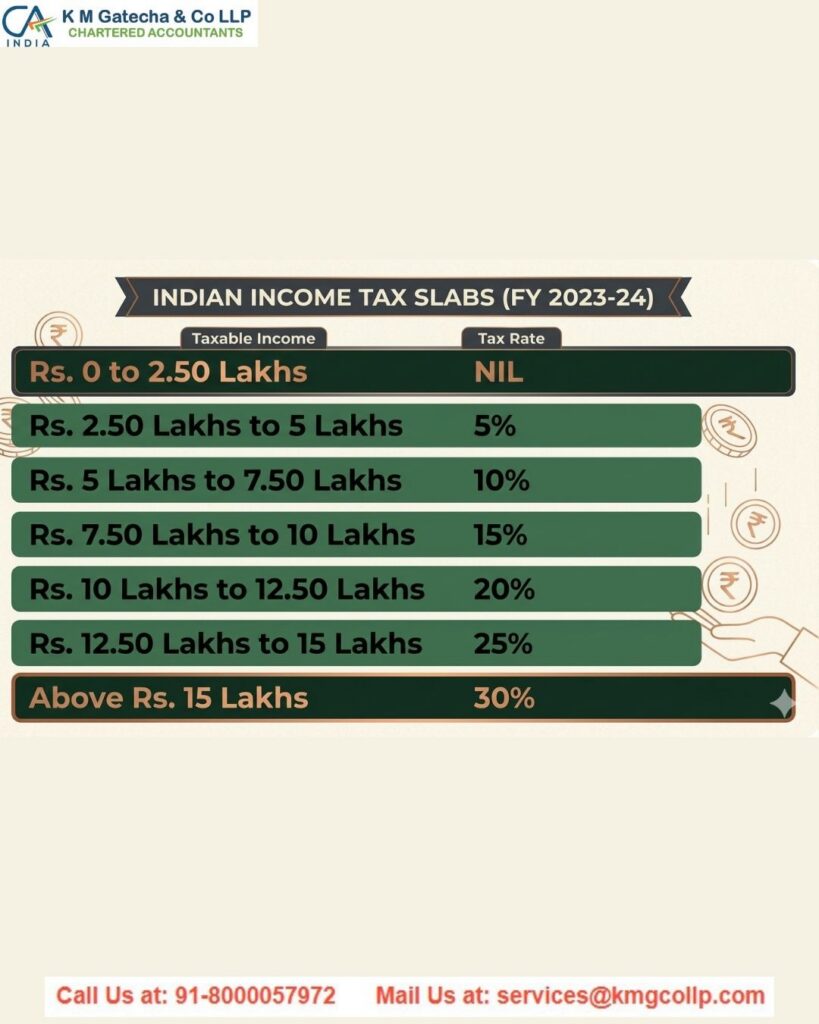
Income Tax Slabs for NRIs (FY 2025–26)
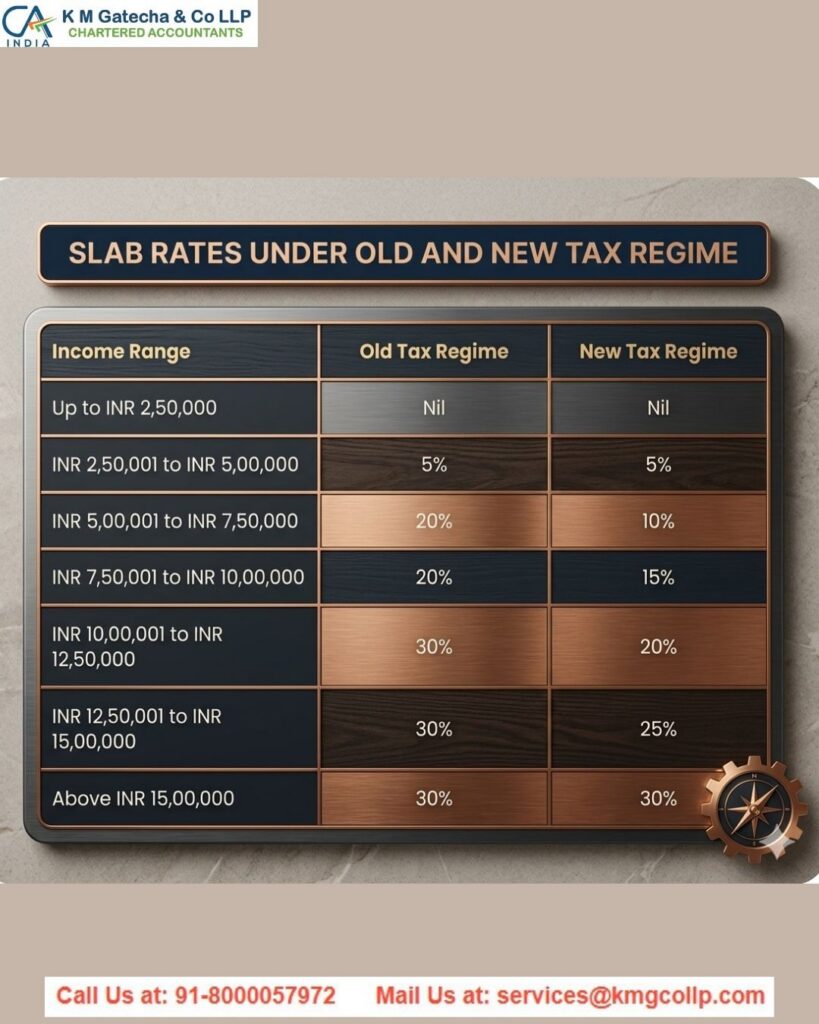
NRIs can choose between the Old Tax Regime and the New Tax Regime for calculating income tax in India. The New Tax Regime is the default option, but NRIs can choose the old regime if it is more beneficial.
1. Income Tax Slabs Under the Old Tax Regime (FY 2025–26)
| Annual Income | Tax Rate |
| Up to ₹2.5 lakh | No Tax |
| ₹2.5 lakh to ₹5 lakh | 5% on income above ₹2.5 lakh |
| ₹5 lakh to ₹10 lakh | ₹12,500 + 20% on income above ₹5 lakh |
| Above ₹10 lakh | ₹1,12,500 + 30% on income above ₹10 lakh |
Under the old tax regime, NRIs may also claim eligible deductions and exemptions such as Section 80C, 80D, home loan benefits, and other tax-saving deductions.
2. Income Tax Slabs Under the New Tax Regime (Default) FY 2025–26
| Annual Income | Tax Rate |
| Up to ₹4 lakh | No Tax |
| ₹4 lakh to ₹8 lakh | 5% |
| ₹8 lakh to ₹12 lakh | 10% |
| ₹12 lakh to ₹16 lakh | 15% |
| ₹16 lakh to ₹20 lakh | 20% |
| ₹20 lakh to ₹24 lakh | 25% |
| Above ₹24 lakh | 30% |
The new tax regime offers lower tax rates but allows fewer deductions and exemptions compared to the old regime.
Surcharge Rates for NRIs
In addition to income tax, surcharge may apply if total income crosses certain limits.
| Total Income | Surcharge Rate |
| ₹50 lakh to ₹1 crore | 10% of income tax |
| ₹1 crore to ₹2 crore | 15% of income tax |
| ₹2 crore to ₹5 crore | 25% of income tax |
| Above ₹5 crore | 37% of income tax |
Important Points About Surcharge
- Surcharge is charged on the income tax amount, not on total income.
- Marginal relief may be available to reduce extra tax burden.
- Surcharge rules also apply to NRIs.
- Under the new tax regime, the maximum surcharge is capped at 25%.
Documents Required for NRI ITR Filing
Before filing an Income Tax Return (ITR) in India, NRIs should keep all important documents ready. This helps avoid errors and makes the filing process easier.
A) Identity and Residency Documents
These documents help confirm your identity and NRI status:
- Passport – Used to verify travel history and residential status
- PAN Card or Tax Identification Number (TIN) – Required for tax filing in India
B) Income Documents
You should collect all documents related to income earned in India.
Form 16
This certificate is issued by your employer and shows:
- Salary received
- Tax deducted at source (TDS) on salary
Form 16A
This certificate is issued for non-salary income where TDS is deducted, such as:
- Rental income
- Interest income
- Professional payments
Form 26AS
This is a tax credit statement available on the Income Tax e-filing portal. It shows:
- TDS deducted
- TCS collected
- Taxes linked to your PAN
AIS (Annual Information Statement)
AIS is available on the Income Tax portal and provides details such as:
- TDS/TCS information
- High-value financial transactions (SFT)
- Tax payments
- Refund and demand details
- Foreign income information received from other countries
C) Bank Account Documents
NRIs should keep statements of their bank accounts ready:
- NRO Account Statement
- NRE Account Statement
- FCNR(B) Account Statement
These documents help calculate interest income and report bank details correctly.
D) Capital Gains Documents
If you sold property, shares, or investments in India, keep these documents ready:
- Sale deed or purchase deed
- Cost of acquisition records
- Capital gains statement
These are useful for calculating capital gains tax correctly.
How to File ITR as an NRI – Step-by-Step Guide
Filing an ITR as an NRI becomes easier if you follow the right steps.
Step 1: Check Your Residential Status
First, confirm whether you qualify as an NRI or resident for the financial year, as this decides your tax liability in India.
Step 2: Choose the Correct ITR Form
Select the right ITR form based on your income sources, such as salary, rent, capital gains, or business income.
Step 3: Select Your Tax Regime
Choose between:
- Old Tax Regime (with deductions and exemptions)
- New Tax Regime (lower tax rates with limited deductions)
Step 4: Collect All Required Documents
Keep all income proofs, bank statements, Form 16, Form 26AS, AIS, and investment details ready.
Step 5: Log in to the Income Tax Portal
Visit the Income Tax e-Filing Portal and log in using your PAN and password.
Step 6: Calculate Your Taxable Income
Add all taxable income earned in India, such as:
- Salary income
- Rental income
- Interest income
- Capital gains
Step 7: Claim Eligible Deductions
Claim deductions available to NRIs under applicable sections like:
- Section 80C
- Section 80D
- Home loan deductions
Step 8: Apply Capital Gains Benefits (If Applicable)
If you sold property or investments, apply available exemptions under:
- Section 54
- Section 54EC
- Section 54F
Step 9: Claim DTAA Benefits (If Applicable)
If you are paying tax in another country, check whether you can claim relief under the Double Taxation Avoidance Agreement (DTAA).
Step 10: Submit and Verify the ITR
Review all details carefully, submit the return, and complete e-verification to successfully file your ITR.
How Can NRIs Avoid Double Taxation?
NRIs may sometimes face double taxation, which means paying tax on the same income in both India and the country where they live. To avoid this, India has signed Double Taxation Avoidance Agreements (DTAA) with many countries.
DTAA helps NRIs reduce or avoid paying tax twice on the same income.
Ways NRIs Can Claim Tax Relief Under DTAA
There are mainly two methods to avoid double taxation:
1. Exemption Method
Under this method, the income is taxed in only one country and remains tax-free in the other country.
For example, if income is taxed in your country of residence, you may not have to pay tax again in India (depending on the DTAA rules).
2. Tax Credit Method
In this method, income may be taxed in both countries, but you can claim a tax credit in your country of residence for the tax already paid in India.
This helps reduce the overall tax burden and prevents paying full tax twice.
Special Relief for NRIs Under Section 89A
The government introduced Section 89A to help NRIs avoid tax problems related to foreign retirement accounts.
This rule mainly applies when:
- Income in a foreign retirement account is not taxed every year in the foreign country
- Tax is charged only when the money is withdrawn or redeemed
In such cases, Section 89A helps reduce double taxation issues and provides relief to eligible NRIs.
Disclaimer: The content on this website is for informational purposes only and does not constitute legal, financial, or professional advice. Please consult qualified experts before acting on any information. K M GATECHA & CO LLP accepts no liability for errors, omissions, or outcomes from the use of this content. This site is not an advertisement or solicitation.