80-IAC Registration 2026: Complete Tax Exemption Guide for Startups
India has become a fast-growing hub for startups, with many new businesses launching in sectors like technology, e-commerce, manufacturing, and innovation. However, one of the biggest challenges for startups in the early stage is managing tax and business expenses.
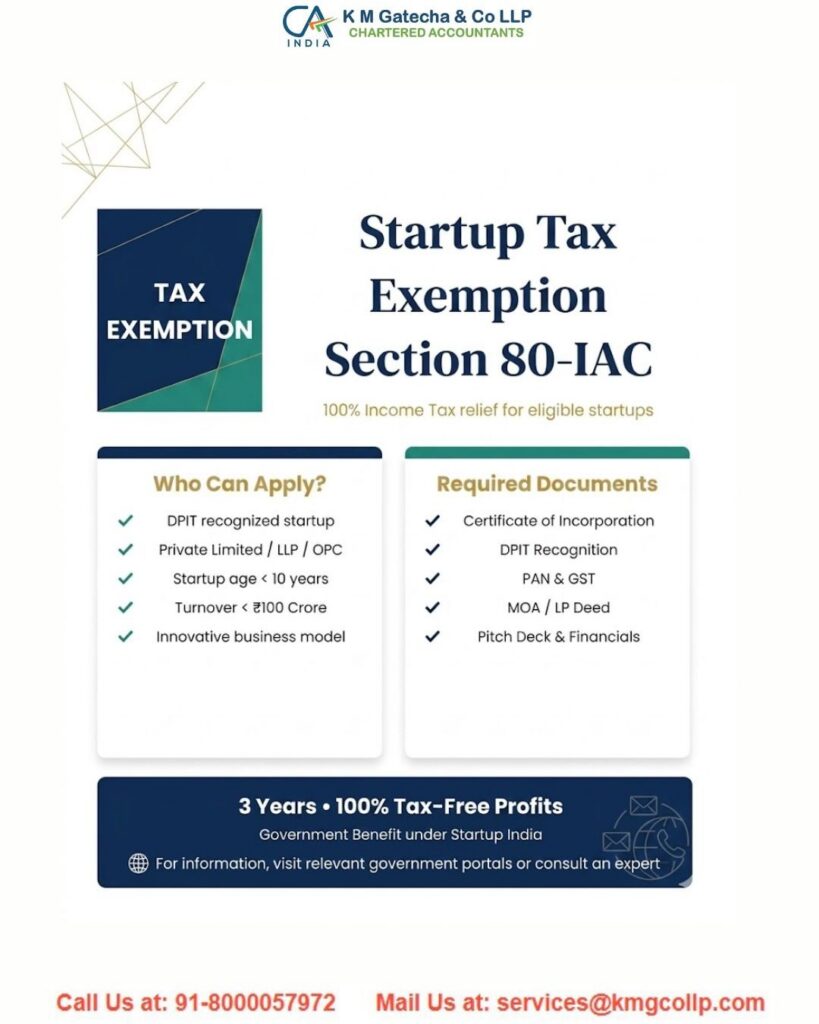
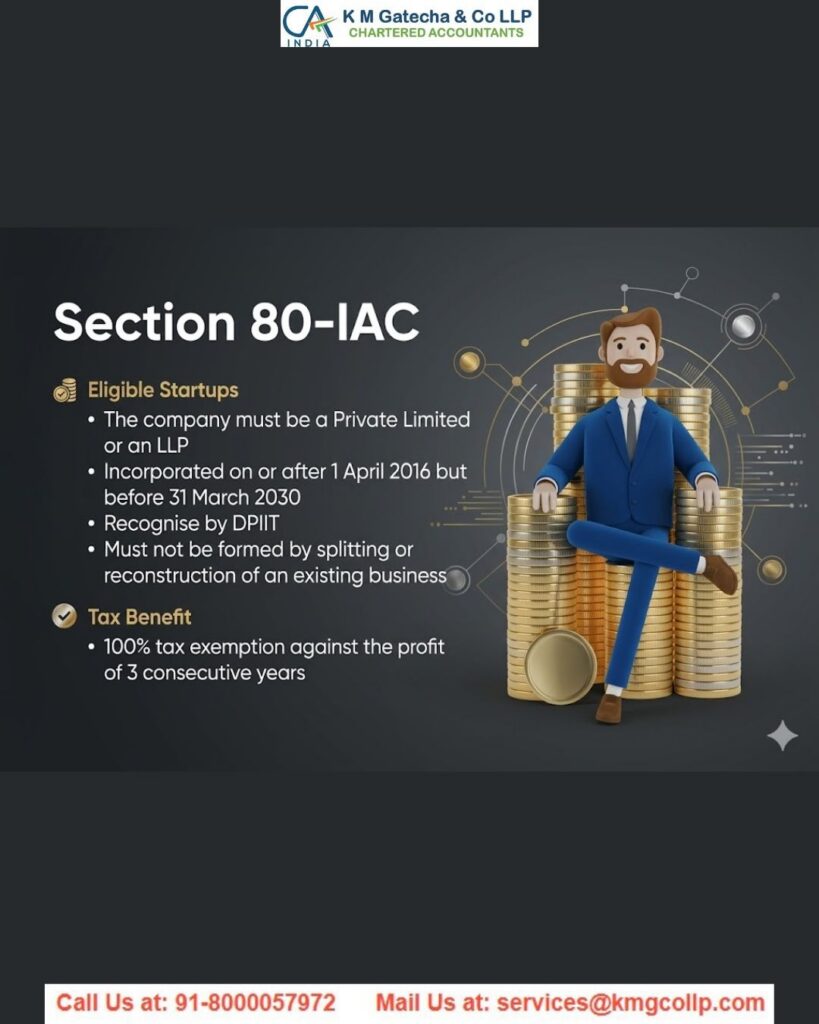
To support startup growth, the government introduced Section 80-IAC under the Income Tax Act. This provision allows eligible startups to claim 100% income tax exemption for any 3 consecutive years out of the first 10 years of business.
This tax benefit helps startups save money that can be used for hiring employees, product development, marketing, research, technology upgrades, and business expansion.
For startups focused on innovation and growth, Section 80-IAC can provide valuable financial support during the early years of business.
Understanding 80-IAC: What It Means for Startup Founders
Many startup founders hear about Section 80-IAC but may not fully understand how valuable it can be for business growth. This provision was introduced to support innovation, technology, and startup development by reducing the tax burden during the early years.
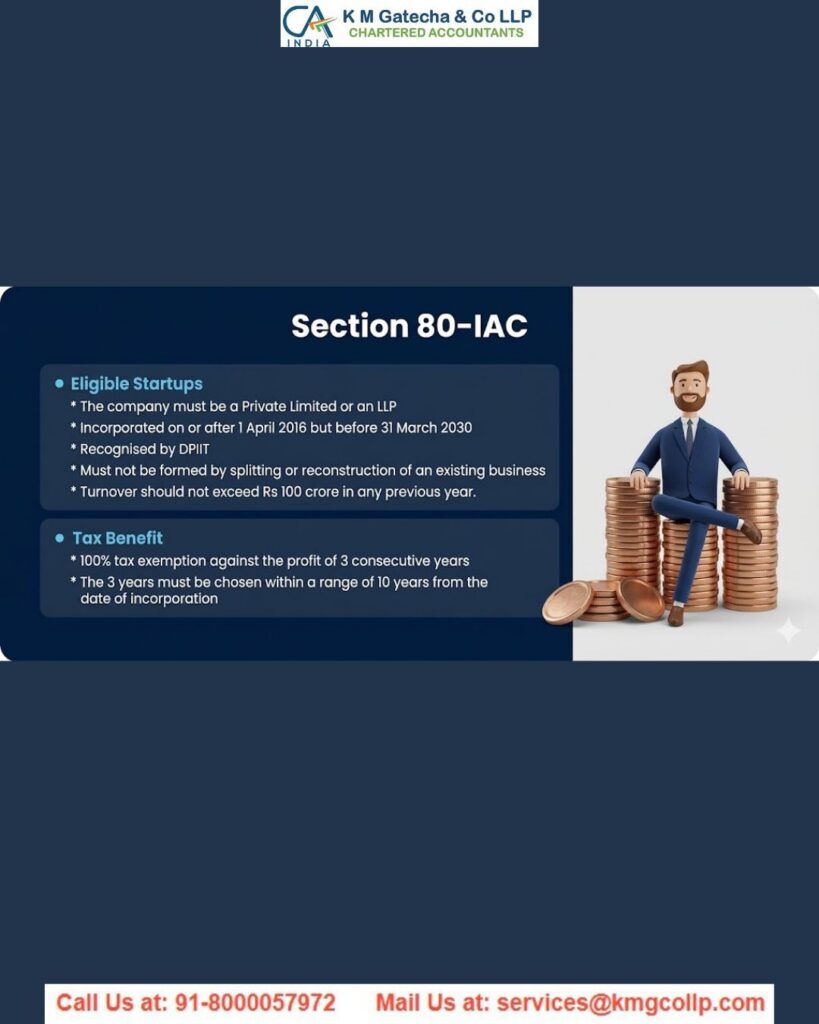
Under Section 80-IAC, eligible startups can claim 100% tax exemption on profits for any 3 consecutive years out of the first 10 years of incorporation. The benefit does not have to be claimed in the first three years. Startups can choose the years when profits are higher and the tax benefit becomes more useful.
In simple words, startups can save tax on profits and use that money for business growth and expansion.
Major Benefits of 80-IAC for Startup Growth
1. 100% Tax Exemption for 3 Years
Eligible startups can enjoy zero tax on profits for three selected years, helping reduce financial pressure during growth stages.
2. Better Financial Support for Growth
The money saved on taxes can be used for:
- Hiring skilled employees
- Product or service improvement
- Technology upgrades
- Marketing and customer acquisition
- Business expansion
3. Increased Investor Confidence
Tax benefits can improve a startup’s financial position, making it more attractive for investors and funding opportunities.
4. Focus on Innovation
Startups can invest more in research, development, patents, team growth, and scaling operations, helping them compete more effectively in the market.
Strategic Cash Flow Stability
One of the major advantages of Section 80-IAC is better cash flow management. Since eligible startups can claim tax exemption, more money stays within the business instead of being spent on taxes during the early growth stage. This helps startups manage operations and expansion more effectively.
Documents Required for Section 80-IAC Approval
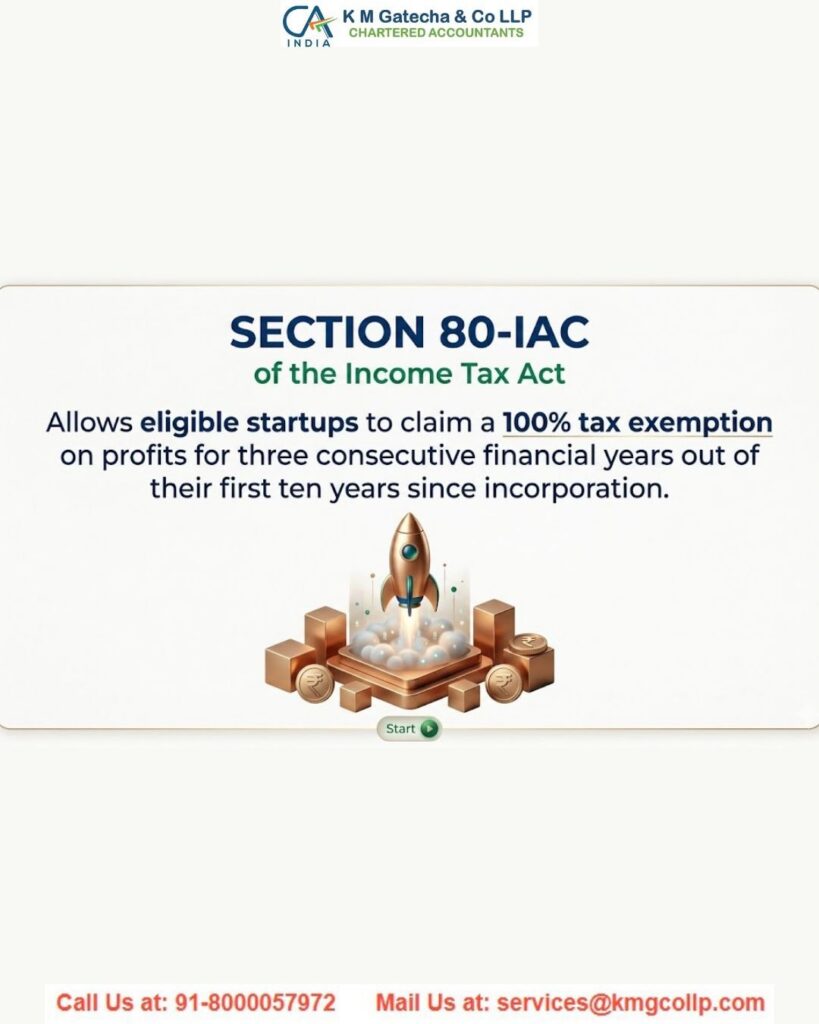
To apply for tax exemption under Section 80-IAC, startups need to submit proper documents to prove eligibility and business innovation.
Basic Documents Required
- Startup Recognition Certificate
- Certificate of Incorporation (COI)
- MOA/AOA or LLP Agreement
- PAN of the Business Entity
- Audited Financial Statements
- Shareholding Details
- Founder and Director Information
Innovation & Business Proof Documents
Startups may also need to provide proof of innovation, such as:
- Patent details (if available)
- Product or prototype information
- Technology or software details
- Product screenshots or demos
- Research or innovation documents
- Business model and market strategy
- Product testing or business growth plans
These documents help show how the startup is unique, innovative, and capable of growth.
Step-by-Step Process for 80-IAC Approval
Step 1: Get Startup Recognition
The startup must first obtain valid startup recognition through the required registration process.
Step 2: Prepare Business & Innovation Details
Create a clear explanation of:
- Business idea and uniqueness
- Innovation or technology used
- Growth and scalability potential
- Market demand and business need
Step 3: Submit Online Application
Apply online by uploading the required documents, financial details, and supporting information.
Step 4: Application Review
The concerned authority reviews the startup based on:
- Innovation and originality
- Business potential
- Scalability and market impact
- Product or service uniqueness
Step 5: Approval Certificate
Once eligibility is verified, the startup receives approval for tax exemption benefits.
Step 6: Choose Exemption Years
Eligible startups can select any 3 consecutive years within the first 10 years of incorporation to claim the tax exemption, depending on profitability.
Why Section 80-IAC Matters for Startups in India
Many startups face financial pressure during the early years due to:
- Employee hiring costs
- Marketing and customer acquisition expenses
- Technology upgrades
- Product development costs
- Business expansion expenses
Section 80-IAC helps reduce this burden by offering tax exemption benefits, allowing startups to save money and reinvest it into business growth. This financial support helps startups manage operations better and grow faster.
When Should Startups Apply for 80-IAC?
The best time to apply is when your startup has:
- A working product or service
- Market validation or customer interest
- Early revenue generation
- Clear business growth potential
Avoid Applying If:
- The product or service is not ready
- Proper documents are not available
- The business mainly focuses on simple trading or reselling without innovation
Fees & Professional Assistance
Government Fee
The applicable fee depends on the current compliance rules and requirements.
Professional Support Charges
Professional fees may vary based on:
- Documentation requirements
- Business model complexity
- Preparation of innovation proof
- Application and compliance support
Expert guidance can help startups complete the process smoothly, from documentation to approval.
Disclaimer: The content on this website is for informational purposes only and does not constitute legal, financial, or professional advice. Please consult qualified experts before acting on any information. K M GATECHA & CO LLP accepts no liability for errors, omissions, or outcomes from the use of this content. This site is not an advertisement or solicitation.