Startup Tax Exemption Under Section 80-IAC of the Income Tax Act, 1961
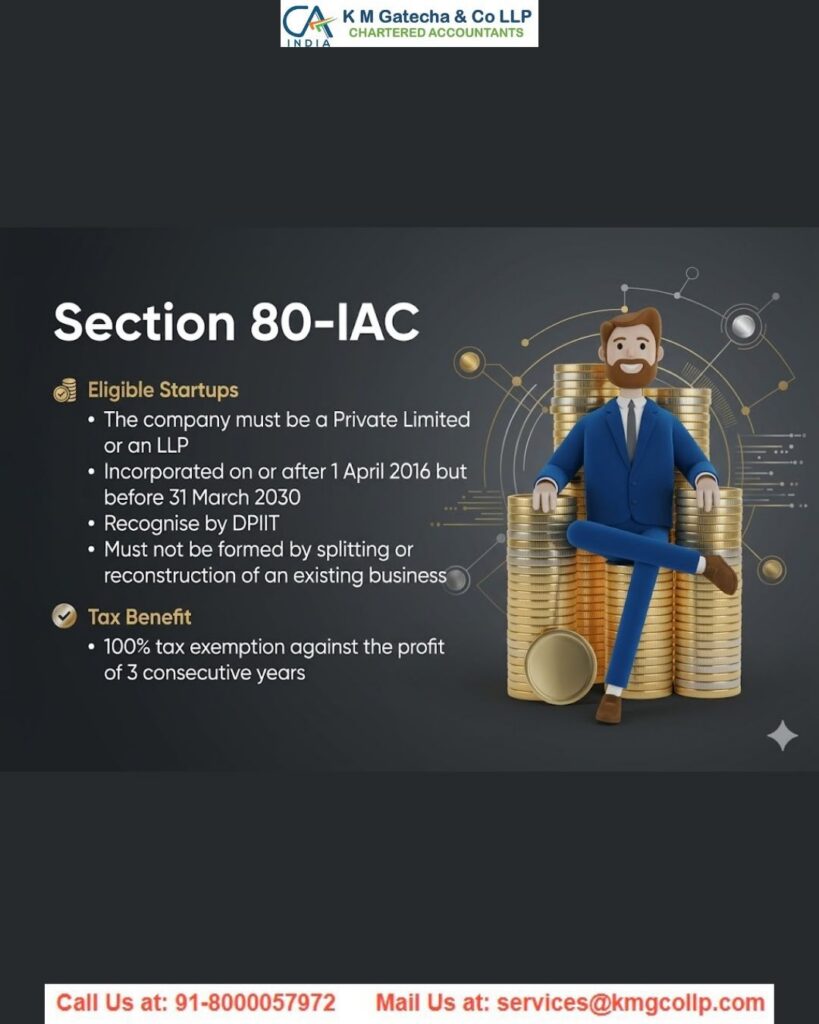
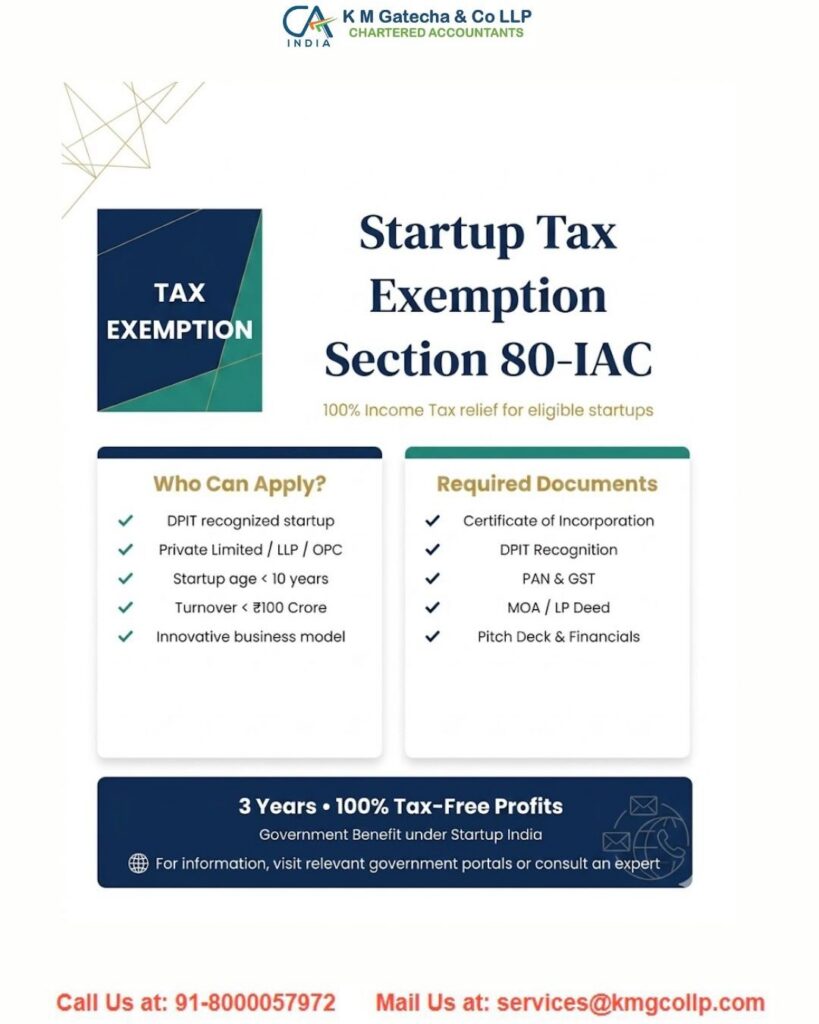
Section 80-IAC of the Income Tax Act, 1961 was introduced to encourage startup growth in India by offering tax benefits to eligible businesses. Under this section, eligible and recognised startups can claim a 100% tax exemption on profits for any three consecutive years.
This benefit is available to Private Limited Companies and LLPs incorporated on or after 1 April 2016 and before 31 March 2030, subject to eligibility conditions.
Startups involved in innovation, development of new or improved products or services, or scalable business models with high employment or wealth creation potential can apply for this tax exemption benefit.
What is Section 80-IAC?
Section 80-IAC was introduced to support the growth of startups in their early stages by offering tax benefits. Its main purpose is to encourage innovation, research, development, and entrepreneurship in India.
This section provides eligible startups with tax incentives, helping them reduce their tax burden during the initial years of business. It also promotes proper tax compliance and encourages startups to operate within a transparent and organised system.
Section 80-IAC Tax Exemption Eligibility Criteria
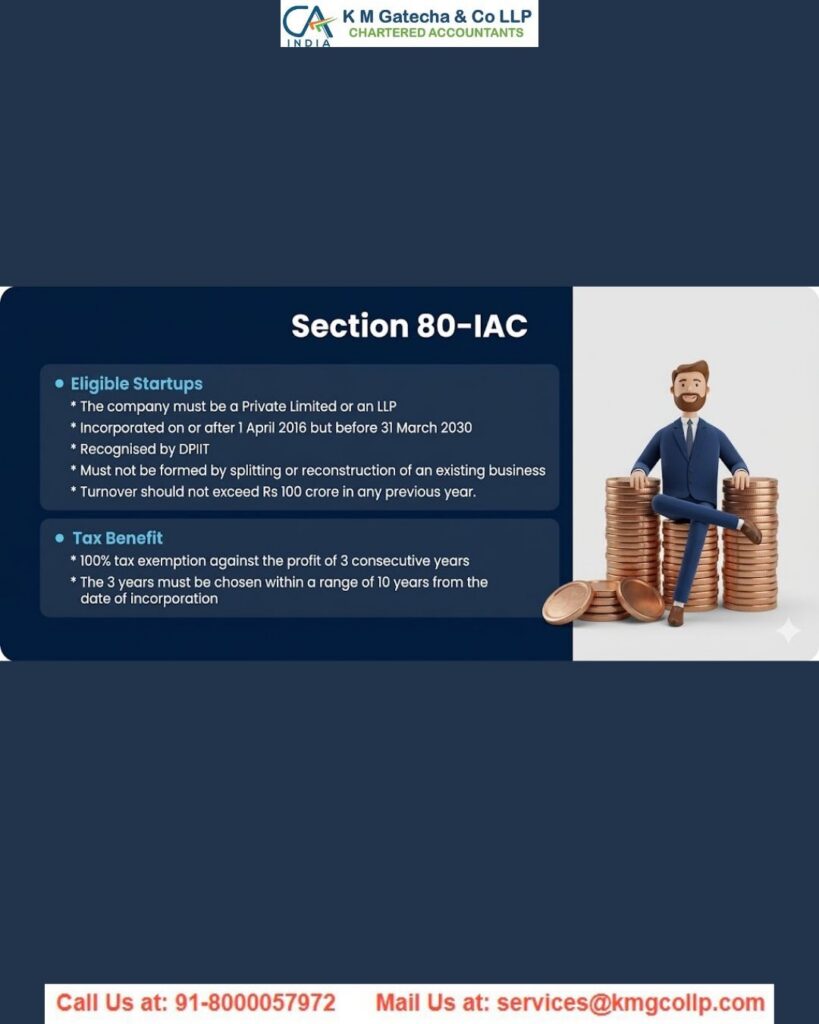
To claim tax benefits under Section 80-IAC of the Income Tax Act, 1961, startups must meet the following conditions:
- The business must be registered as a Private Limited Company or LLP engaged in an eligible business. Eligible businesses include startups involved in innovation, product or service development, improvement, or scalable business models with job or wealth creation potential.
- The company or LLP must be incorporated after 1 April 2016 and before 31 March 2030.
- The startup’s annual turnover should not exceed ₹100 crore in the financial year for which the deduction is claimed.
- The startup must be recognized by the Government of India as an eligible startup.
- It should have the required eligibility certification from the concerned authority.
- The startup should not be formed by splitting or reconstructing an existing business.
- However, businesses restarted after natural disasters, fire, riots, war, or other unexpected events may still qualify in certain cases.
- The business should not be formed by transferring old machinery or equipment from an existing business. However, old machinery can be used if its value does not exceed 20% of the total machinery value.
- For tax deduction calculation, the startup’s eligible business profits are treated as the main source of income during the claim period.
Benefits of Section 80-IAC
Section 80-IAC offers several tax benefits to eligible startups in India. Some key benefits include:
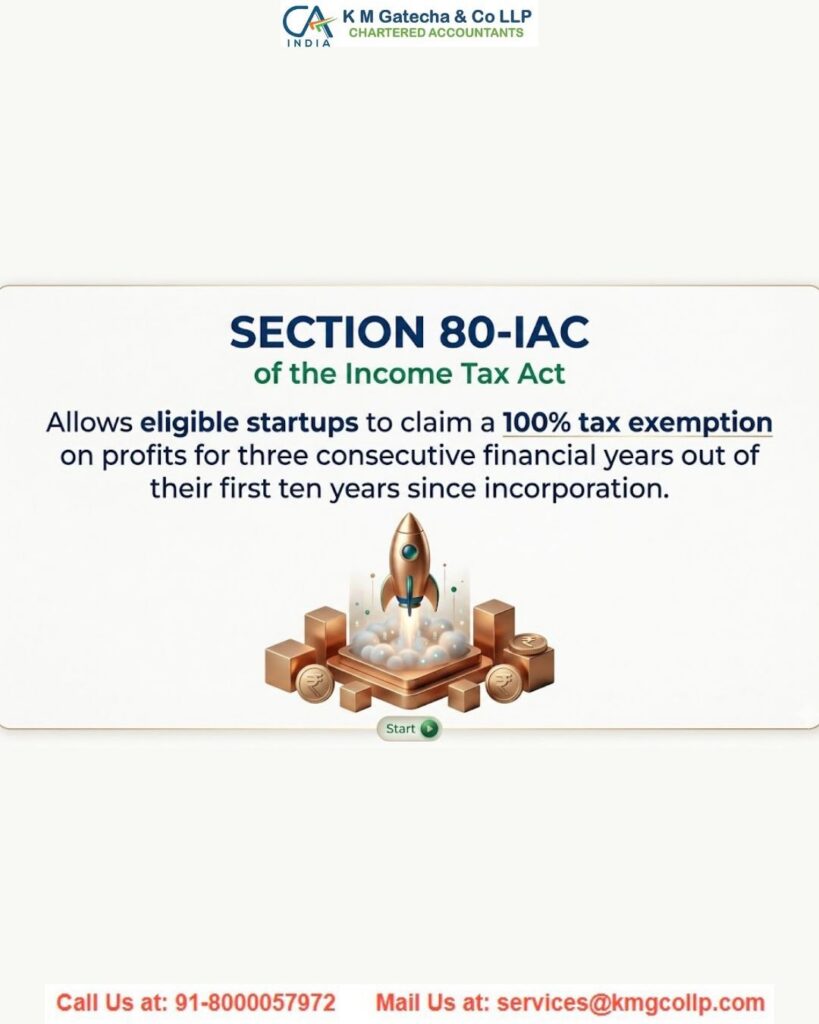
- 100% Tax Exemption on Profits: Eligible startups can claim a 100% deduction on profits and gains from their business.
- Benefit for 3 Years: The deduction can be claimed for any 3 consecutive years out of the first 10 years from incorporation.
- Reduced Tax Burden: Startups can reduce their taxable income, helping them save money during the early growth stage.
- Better Financial Management: Lower tax liability allows startups to invest more in business growth, innovation, and expansion.
- Easy Application Process: The application process is online and simple, with no government fee involved.
How to Apply for Exemption Under Section 80-IAC?
Eligible startups can apply for tax exemption under Section 80-IAC by following these steps:
Step 1: Startup Recognition
Register your startup and obtain the required startup recognition certificate through the official registration process.
Step 2: Apply for Tax Exemption
Choose the option to claim tax exemption and fill in details such as:
- Startup name
- Date of incorporation
- Business address
- Registration number
- Type of business entity (LLP or Private Limited Company)
- Contact details and PAN information
Step 3: Submit Required Documents
Upload the necessary documents in PDF format, such as:
- LLP Agreement or Company incorporation documents
- Financial statements and profit & loss statements
- Income Tax Returns (if applicable)
- Business presentation or pitch deck
- Other supporting business documents
After successful submission and approval, eligible startups can claim the tax benefits available under Section 80-IAC.
Benefits of Section 80-IAC
Section 80-IAC provides valuable tax benefits to eligible startups, helping them reduce financial pressure during their early growth stage.
100% Tax Exemption on Profits
Eligible startups can claim a 100% tax deduction on profits and gains earned from the business.
Tax Benefit for 3 Consecutive Years
Startups can claim this deduction for any 3 continuous years within the first 10 years of incorporation.
Lower Tax Burden
The exemption helps reduce taxable income, allowing startups to save money and manage expenses more efficiently.
Supports Business Growth
Lower tax payments help startups invest more in business expansion, innovation, hiring, and operations.
Simple Online Process
The application process is easy and fully online, making it convenient for eligible startups to apply.
How to Apply for Exemption Under Section 80-IAC?
Eligible startups can apply for tax exemption under Section 80-IAC by following these simple steps:
Step 1: Get Startup Recognition
Complete startup registration and obtain the required startup recognition certificate.
Step 2: Apply for Tax Exemption
Select the option to claim tax exemption and provide details such as:
- Startup name
- Incorporation date
- Business address
- Registration number
- Business type (LLP or Private Limited Company)
- Contact details and PAN information
Step 3: Upload Required Documents
Submit important documents in PDF format, including:
- LLP Agreement or company incorporation documents
- Financial statements and profit & loss reports
- Income Tax Returns (if available)
- Business pitch deck or presentation
- Other supporting business documents
Once the application is reviewed and approved, eligible startups can claim tax benefits under Section 80-IAC.
Disclaimer: The content on this website is for informational purposes only and does not constitute legal, financial, or professional advice. Please consult qualified experts before acting on any information. K M GATECHA & CO LLP accepts no liability for errors, omissions, or outcomes from the use of this content. This site is not an advertisement or solicitation.