Form 146 and Form 147 for NRI Remittance: Complete Guide to Foreign Fund Transfer Compliance
When sending money from India to another country, especially for NRIs and foreign citizens, strict tax and banking rules apply. To ensure compliance with Indian tax laws and FEMA regulations, certain declarations and certificates are required before funds can be transferred abroad.
Among these compliance requirements, Form 146 and Form 147 play an important role in verifying tax treatment and eligibility of foreign remittances.
What is Form 146?
Form 146 is a Chartered Accountant certificate used during foreign remittance from India. It confirms the tax status of the money being transferred abroad and ensures that applicable Indian taxes have been properly evaluated.
This form is generally required when:
- The remittance is taxable in India
- The amount exceeds prescribed limits
- The transaction requires detailed tax verification
- The taxpayer is claiming DTAA benefits
Purpose of Form 146
Form 146 is used to certify:
- Source of funds
- Nature of income (salary, rent, capital gains, etc.)
- Whether income is taxable in India
- Tax paid or payable on the remittance
- Eligibility for tax treaty (DTAA) benefits
- Compliance with Indian Income Tax rules
In simple terms, it is a tax verification certificate before sending money abroad.
What is Form 147?
Form 147 is a declaration form filed by the taxpayer or remitter before sending money outside India.
It works as a self-declaration confirming:
- Details of remitter and recipient
- Amount and purpose of remittance
- Source of funds in India
- Compliance with FEMA rules
- Confirmation of tax deduction or exemption
Purpose of Form 147
This form helps banks and tax authorities to:
- Track foreign remittances
- Ensure correct reporting of overseas transfers
- Verify that tax obligations are fulfilled
- Prevent misuse of foreign remittance channels
Difference Between Form 146 and Form 147
| Basis | Form 146 | Form 147 |
| Nature | Chartered Accountant certificate | Self-declaration form |
| Purpose | Certifies taxability and compliance | Declares details of remittance |
| Prepared by | Chartered Accountant | Taxpayer or remitter |
| Focus | Tax verification | Transaction disclosure |
| Usage | High-value or taxable remittance | All applicable foreign transfers |
When Are These Forms Required?
Form 146 and Form 147 are generally required in cases such as:
- Transfer of funds from NRO account to foreign account
- Repatriation of property sale proceeds
- Large investment withdrawals and remittances
- Income earned in India being sent abroad
- Situations where tax liability needs confirmation
Documents Required for Form 146 and Form 147
For Form 146 (CA Certificate)
- PAN card
- Passport (for NRIs)
- Bank statements
- Proof of income source
- Property sale or investment documents (if applicable)
- Tax payment challans (if any)
For Form 147 (Declaration Form)
- Remitter details
- Beneficiary (foreign recipient) details
- Amount and currency of transfer
- Purpose of remittance
- Bank account details
Process of Foreign Remittance Compliance
Step 1: Identify Nature of Funds
Determine whether the money is taxable or non-taxable in India.
Step 2: Prepare Documentation
Collect income proofs, bank statements, and supporting documents.
Step 3: Obtain Form 146 (if required)
A Chartered Accountant verifies tax liability and issues the certificate.
Step 4: File Form 147
Submit remittance declaration with complete details.
Step 5: Bank Verification
The bank reviews documents before processing the international transfer.
Why These Forms Are Important
These compliance forms ensure:
- Proper tax reporting in India
- Prevention of tax evasion
- Smooth international money transfer
- Legal protection for NRIs
- Transparency in foreign remittances
Without proper documentation, banks may delay or reject the remittance request.
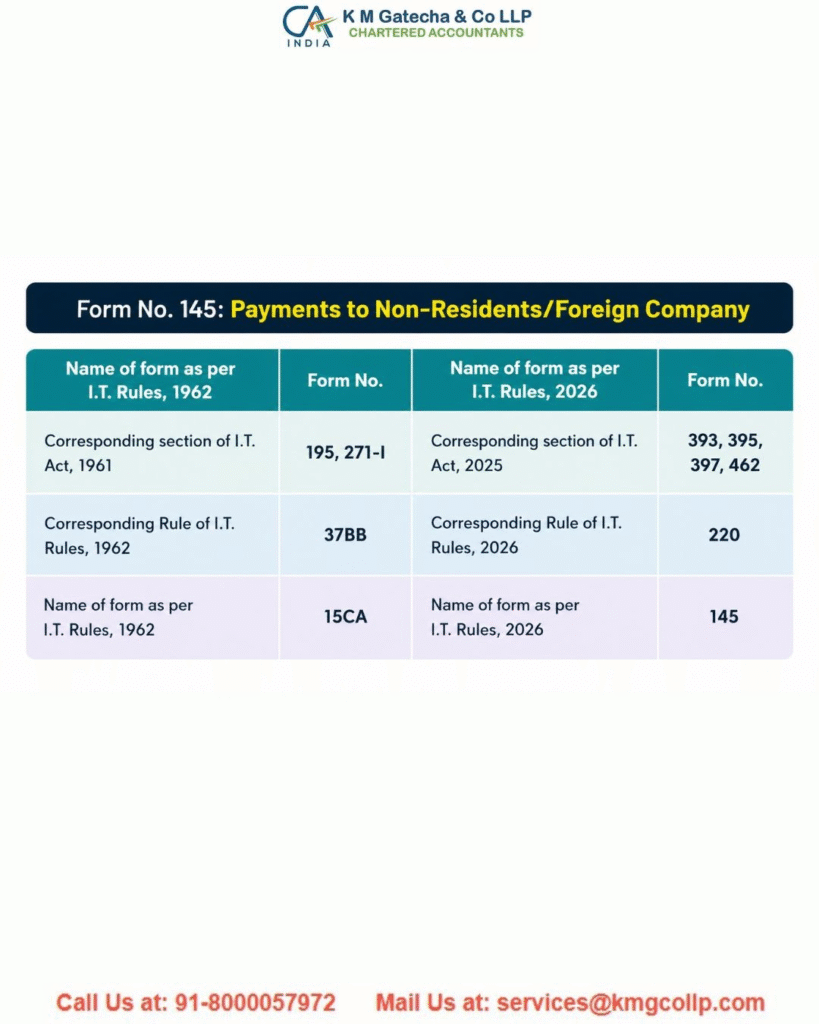
Common Scenarios Where Compliance Is Needed
- Selling property in India and sending money abroad
- Transferring rental income to foreign bank accounts
- Moving investment returns overseas
- Sending inheritance or gift money abroad
- Repatriating business income
Conclusion
Form 146 and Form 147 are essential compliance tools for foreign remittance from India. One ensures tax verification through a professional certificate, while the other confirms transaction details through self-declaration.
Together, they help ensure that international money transfers are legal, transparent, and compliant with Indian tax and FEMA regulations.
Proper documentation and correct filing help avoid delays, penalties, and banking issues during remittance.
Disclaimer: The content on this website is for informational purposes only and does not constitute legal, financial, or professional advice. Please consult qualified experts before acting on any information. K M GATECHA & CO LLP accepts no liability for errors, omissions, or outcomes from the use of this content. This site is not an advertisement or solicitation.