LLP vs Private Limited Company: Tax, Cost & Funding Comparison
Key Highlights
- Select a Private Limited Company if your focus is fundraising, rapid expansion, and stronger investor confidence.
- Opt for an LLP if you prefer lower compliance, easier taxation, and operational flexibility.
- LLPs follow a single taxation system (30%), while Private Limited Companies involve corporate tax along with dividend taxation.
- Private Limited Companies can raise equity funding from angel investors and venture capitalists, whereas LLPs cannot issue equity.
- LLPs generally have lower compliance and maintenance costs, while Private Limited Companies require a more formal governance structure.
Choosing the right business structure affects compliance obligations, tax treatment, and fundraising opportunities. Private Limited Companies must conduct board meetings, annual general meetings, and statutory audits irrespective of revenue. On the other hand, LLPs are free from many of these requirements unless they cross specified limits.
Taxation also differs considerably. LLPs avoid dividend-related complexities, while Private Limited Companies are usually preferred for businesses seeking external investments. Understanding these distinctions helps entrepreneurs choose the structure that aligns with their goals.
What is a Limited Liability Partnership (LLP)?
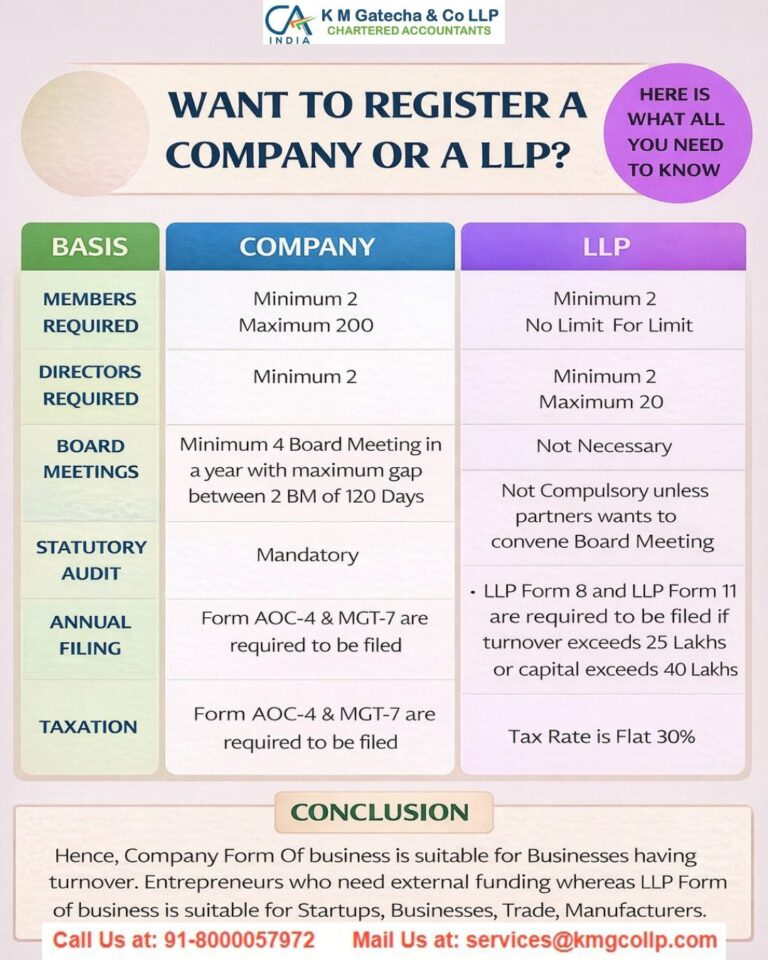
A Limited Liability Partnership (LLP) blends the flexibility of a partnership with the benefit of limited liability protection. Governed by the LLP Act, 2008, it ensures that partners’ personal assets remain protected, as liability is limited to their agreed contribution.
Main Features of an LLP
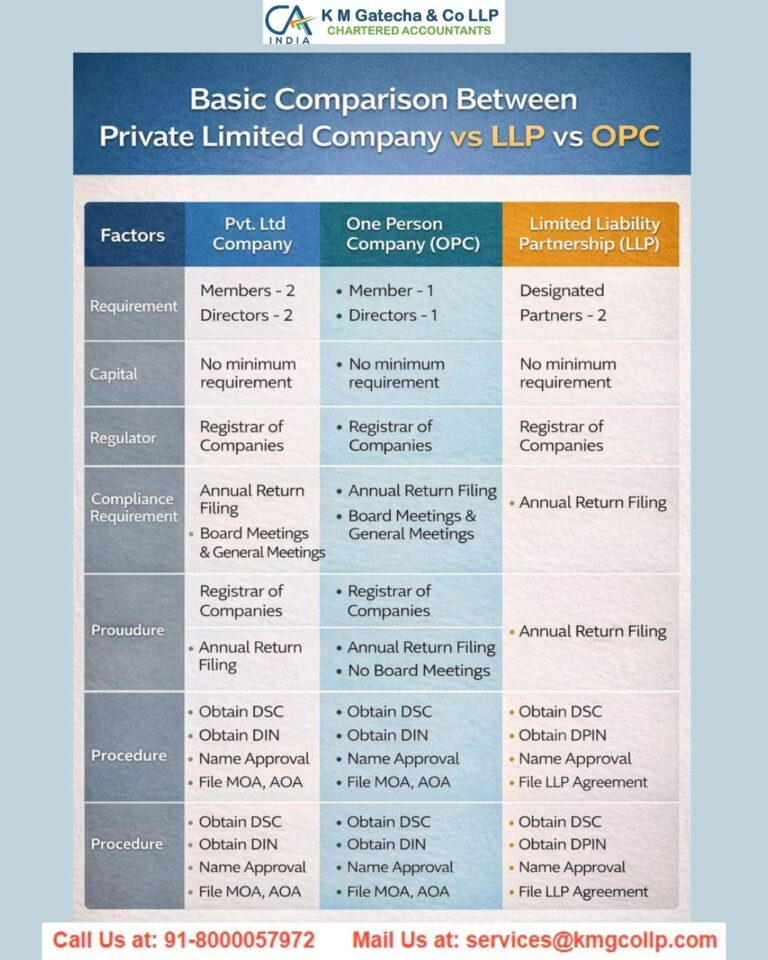
- Minimum of 2 partners required
- No mandatory minimum capital
- No compulsory board meetings
- Regulated under the LLP Act, 2008
- Flexible profit-sharing arrangements
Best suited for: consultants, agencies, professionals, freelancers, and service-based businesses.
What is a Private Limited Company?
A Private Limited Company is a corporate entity governed under the Companies Act, 2013. It exists as a separate legal person and limits shareholder liability to their investment in shares. It also enables businesses to raise capital through equity.
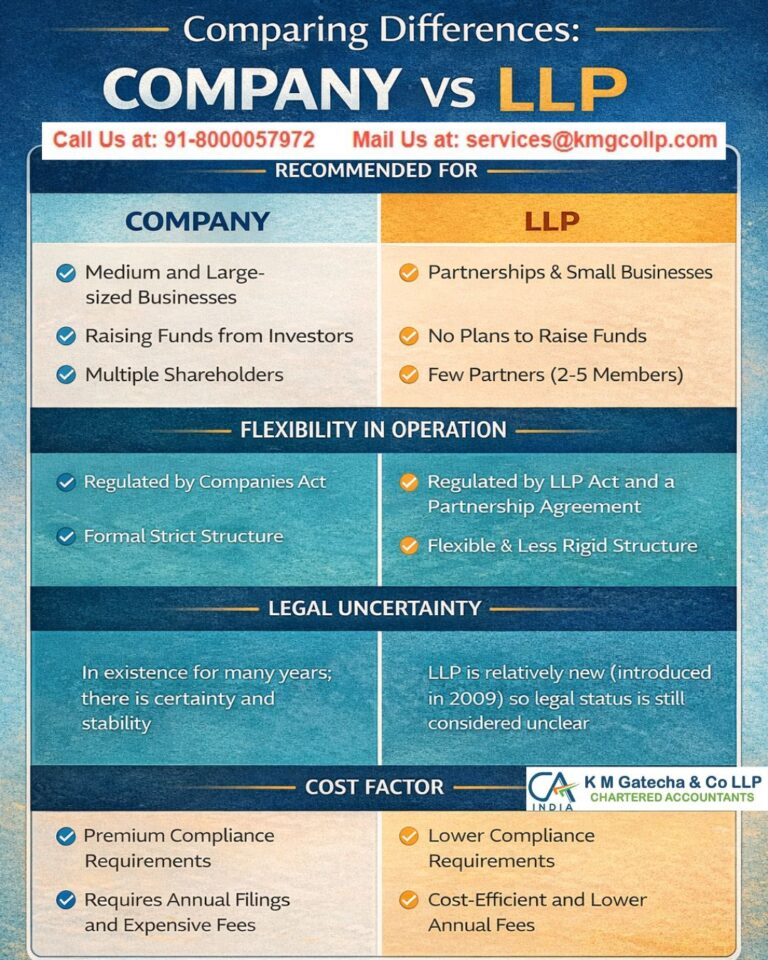
Main Features of a Private Limited Company
- Separate legal identity
- Minimum 2 directors and 2 shareholders required
- Ability to issue shares for fundraising
- Limited liability protection for shareholders
Best suited for: startups, SaaS businesses, and companies planning aggressive growth.
LLP vs Private Limited: Major Differences
1. Compliance Requirements (Meetings, Audit & Filings)
Compliance obligations are significantly different between LLPs and Private Limited Companies. Private companies operate under stricter rules, whereas LLPs enjoy a relatively simplified compliance framework.
Compliance Requirements for Private Limited Companies
Private Limited Companies must follow several statutory compliances, including:
- Board Meetings: Minimum 4 meetings every year with proper notices, agenda, and records.
- Annual General Meeting (AGM): First AGM within 9 months of the financial year-end and subsequent AGMs within 6 months.
- Mandatory Audit: Statutory audit is compulsory, regardless of turnover or profits.
- Annual Filings: Submission of Form AOC-4 (financial statements) and Form MGT-7 (annual return) to MCA.
- Director KYC: DIR-3 KYC filing every year for directors.
Compliance Requirements for LLPs
LLPs have comparatively simpler obligations:
- No Mandatory Meetings: No requirement for board meetings or AGMs.
- Conditional Audit: Audit becomes mandatory only if turnover exceeds ₹40 lakh or capital contribution exceeds ₹25 lakh.
- Annual Filings: Filing of Form 8 (Statement of Accounts and Solvency) and Form 11 (Annual Return).
- Partner KYC: Compliance for designated partners through DPIN and KYC.
2. Taxation & Dividend Treatment: LLP vs Private Limited
Taxation is one of the biggest deciding factors between these two structures. LLPs follow a single-tax system, while Private Limited Companies involve taxation at both company and shareholder levels.
LLP Tax Structure
LLPs are taxed at a flat rate of 30% on profits, along with surcharge and cess where applicable.
Tax Features of LLP
- Tax Rate: Flat 30% on total income
- Surcharge: 12% if income exceeds ₹1 crore
- Profit Withdrawal: Partners can withdraw profits without additional tax liability
- No Dividend Tax: LLPs do not involve dividend-related taxation
- Alternate Minimum Tax (AMT): Applicable at 18.5% if regular tax is lower than adjusted total income
Private Limited Company Tax Structure
Private Limited Companies pay corporate tax, and shareholders are taxed separately on dividends received.
Tax Features of Private Limited Companies
- Corporate Tax: 25% for turnover up to ₹400 crore and 30% beyond ₹400 crore
- Alternative Tax Regime: Reduced 22% tax if exemptions and deductions are not claimed
- Dividend Taxation: Shareholders pay tax on dividends according to their income slab
- Surcharge: Between 7% and 12%, depending on income levels
- ITR Filing: Companies file ITR-6, while LLPs file ITR-5
3. Funding & Investment Opportunities
Fundraising requirements often influence the decision between LLP and Private Limited structures.
Funding Benefits of a Private Limited Company
Private Limited Companies are better suited for raising external capital through:
- Equity Shares: Ability to issue shares to venture capitalists, angel investors, and institutions
- Preference Shares: Option to issue preferred shares with fixed returns and liquidation rights
- Employee Stock Options (ESOPs): Helps attract and retain employees
- Easy Share Transfer: Shareholders can transfer ownership more conveniently
- Future Expansion: Possibility of converting into a public company for stock market access
Funding Benefits of an LLP
LLPs offer a simpler and more flexible funding approach:
- Low Capital Requirement: No minimum capital needed to start operations
- Flexible Profit Sharing: Profit distribution without dividend approvals or additional formalities
- Debt Financing: Business loans can be obtained through banks and NBFCs
- Partner Contributions: New partners can bring capital without complicated valuation processes
- Profit Reinvestment: Businesses can retain profits without shareholder approvals
Registration & Compliance Cost: LLP vs Private Limited
For startups and small businesses, registration and ongoing compliance costs can strongly influence the decision.
Private Limited Company Setup Cost
- Government registration charges: ₹1,000–₹2,000
- Professional fees (CA/CS): ₹5,000–₹8,000
- Digital Signature & DIN: ₹1,000–₹2,000 per director
- Stamp duty: Depends on the state
LLP Setup Cost
- Government registration charges: ₹500–₹1,000
- Professional fees: ₹3,000–₹5,000
- Digital Signature & DPIN: ₹500–₹1,000 per partner
LLP vs Private Limited: Which Business Structure Should You Choose?
There is no one-size-fits-all answer when choosing between an LLP and a Private Limited Company. The ideal option depends on your business objectives, funding requirements, expansion plans, and willingness to manage compliance obligations. Here is a simple way to decide which structure may suit your business better.
Choose a Private Limited Company If:
- You plan to raise funds from venture capitalists or angel investors through equity investment.
- You are building a scalable startup or product-based business targeting future funding rounds.
- Your business has multiple founders and requires a defined ownership and control structure.
- You need easier access to bank funding, as lenders often prefer company structures.
- You want to offer employee stock options (ESOPs) to attract and retain talent.
- You may consider an IPO, acquisition, or large-scale exit in the future.
Choose an LLP If:
- You operate a consultancy, agency, or professional service-based business.
- Business growth can be managed through partner contributions and retained profits.
- Keeping compliance requirements and operating costs low is important.
- You prefer flexible profit-sharing arrangements among partners.
- You run a family-owned or small business with no requirement for external investors.
- Your business model does not heavily rely on corporate credibility for growth.
Many businesses initially begin as LLPs to reduce costs and compliance burden, later converting into a Private Limited Company when they require external funding or larger growth opportunities. Such conversion is possible through MCA procedures, partner approvals, and applicable stamp duty.
Decision Based on Business Type
- Startup seeking investment → Private Limited Company
- Freelancer or Consultant → LLP
- Agency or Small Business → LLP
- SaaS or Tech Startup → Private Limited Company
- Family-Owned Business → LLP
Final Thoughts
Both LLPs and Private Limited Companies provide limited liability protection, but they are designed for different business goals. LLPs are ideal for businesses seeking lower compliance, easier taxation, and operational flexibility. On the other hand, Private Limited Companies are better suited for businesses focused on scaling, attracting investors, and building long-term market credibility.
The right structure ultimately depends on your future vision, capital requirements, and growth strategy.
Disclaimer: The content on this website is for informational purposes only and does not constitute legal, financial, or professional advice. Please consult qualified experts before acting on any information. K M GATECHA & CO LLP accepts no liability for errors, omissions, or outcomes from the use of this content. This site is not an advertisement or solicitation.