1. Introduction
A trust, in simple terms, refers to the transfer of property by one person to another, who manages it for the benefit of a third party. This concept is defined under Section 3 of the Indian Trusts Act, 1882, where a trust is described as an obligation attached to property ownership, arising from confidence placed in and accepted by the owner, for the benefit of another person or even the owner himself.
Trusts help protect the settlor’s assets and ensure that they are distributed to beneficiaries as per the settlor’s intentions. Over time, the purpose and structure of trusts in India have evolved, mainly due to the growing need for estate planning and tax efficiency.
Broadly, trusts governed by the Indian Trusts Act, 1882 are classified into private trusts and public trusts. This section focuses on private trusts, including their formation, registration, classification, and practical aspects.
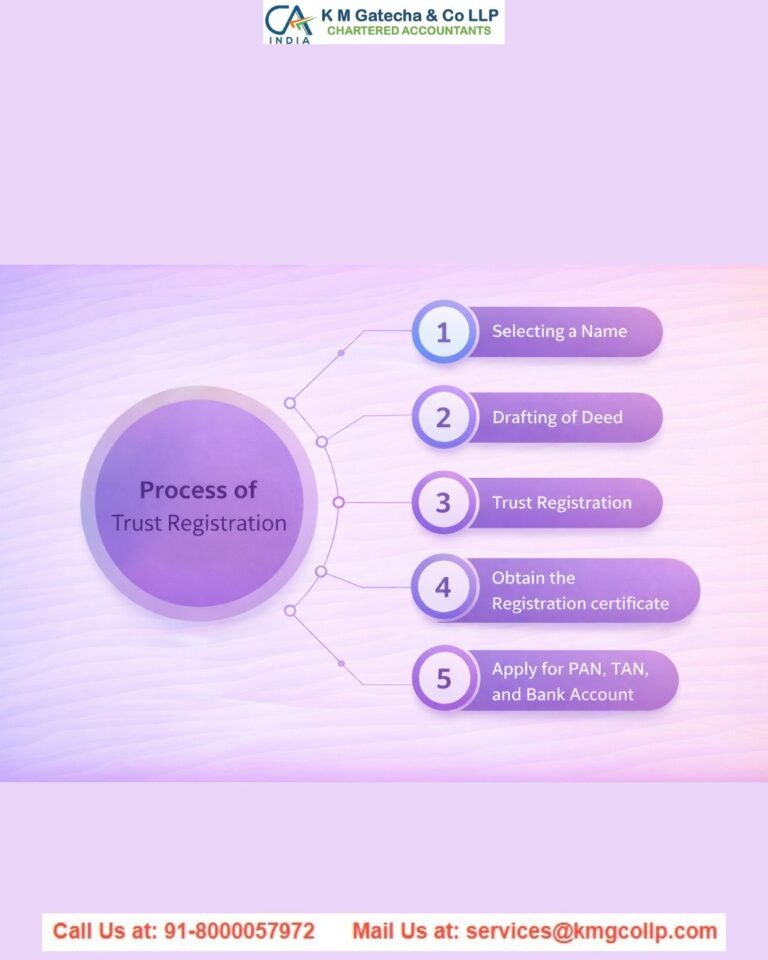
2. Private Trust – Meaning and Basic Understanding
A private trust is a legal arrangement where one person, known as the settlor (or trustor), transfers property to another person, called the trustee, who manages it for the benefit of specific individuals or entities known as beneficiaries.
This arrangement ensures that the property is used only for the intended beneficiaries, usually family members, as per the wishes of the settlor.
Private trusts are widely used for:
- Wealth protection
- Control over assets
- Family succession planning
- Smooth transfer of assets during and after the settlor’s lifetime
They also offer confidentiality and may avoid mandatory probate requirements. The trust continues to operate as per the trust deed even if the settlor becomes incapable of managing the assets. The settlor can clearly define the objectives, beneficiaries, assets, and distribution method to ensure proper management.
Key Components of a Private Trust
A typical private trust structure includes the following elements:
Settlor / Author / Contributor
The settlor creates the trust by transferring property to it. They must clearly express their intention to establish the trust and specify the assets for the benefit of the beneficiaries.
Trustees
Trustees hold legal ownership of the trust assets and are responsible for managing and administering them as per the trust’s objectives.
Beneficiaries
These are the individuals or entities for whose benefit the trust is created. In some cases, companies, firms, or sub-trusts may also be named as beneficiaries.
Trust Property (Assets)
This includes any movable or immovable property such as cash, gold, securities, land, or buildings contributed by the settlor.
Instrument of Trust (Trust Deed)
The trust must be supported by a legal document called the trust deed, which clearly outlines the terms, objectives, and rules governing the trust.
Protector (Optional)
A protector may be appointed to oversee the trustees. They can monitor actions and take corrective steps, including removing trustees in case of misconduct.
3. Distinction Between Private Trusts and Public Trusts
A trust created mainly for the benefit of the general public is known as a public trust. Its purpose is to serve society at large rather than specific individuals, and it should benefit all sections of the public without discrimination.
The key difference between private and public trusts lies in the beneficiaries. In a private trust, beneficiaries are a defined and identifiable group, whereas in a public trust, beneficiaries are not specifically determinable.
Other differences include:
Degree of Permanence
Public trusts are generally permanent and cannot be dissolved. Private trusts, on the other hand, may be dissolved under certain conditions. If created through a trust deed, dissolution follows the terms mentioned in the deed. If created through a will, it can be revoked during the settlor’s lifetime.
Objects
Private trusts cannot be formed for charitable purposes, whereas public trusts can be created for both charitable and religious purposes.
Option to Amalgamate
Public charitable trusts can merge with other trusts having similar objectives, but such an option is not available for private trusts.Governing Law
Public trusts are usually governed by state-specific laws, while private trusts are governed by the Indian Trusts Act, 1882.
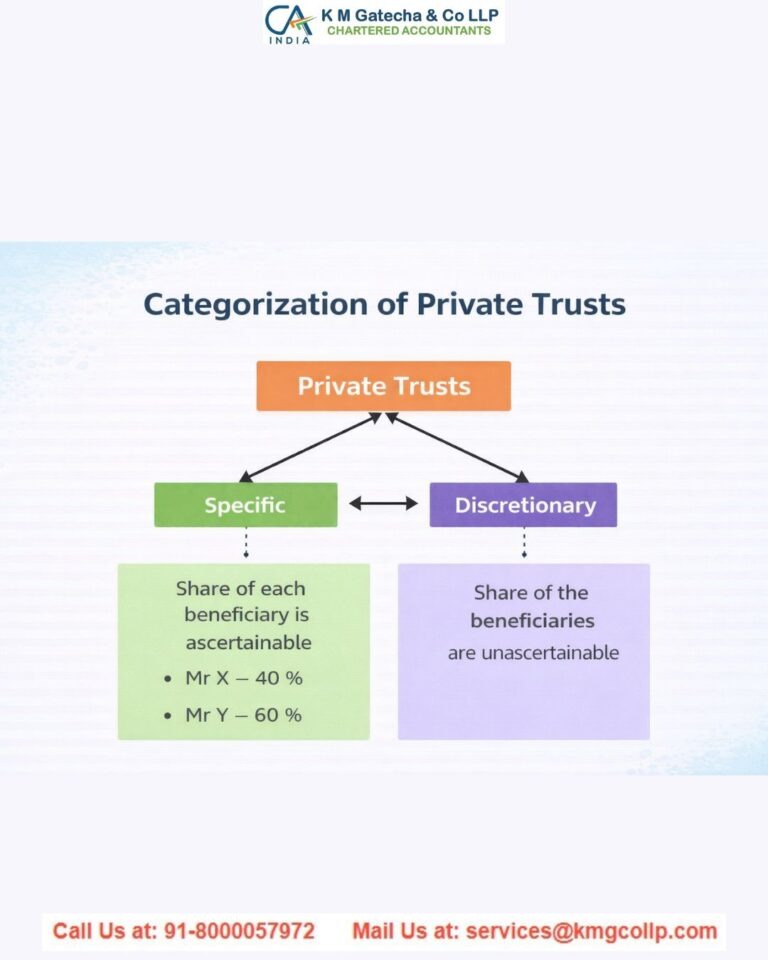
4. Classification of Private Trusts
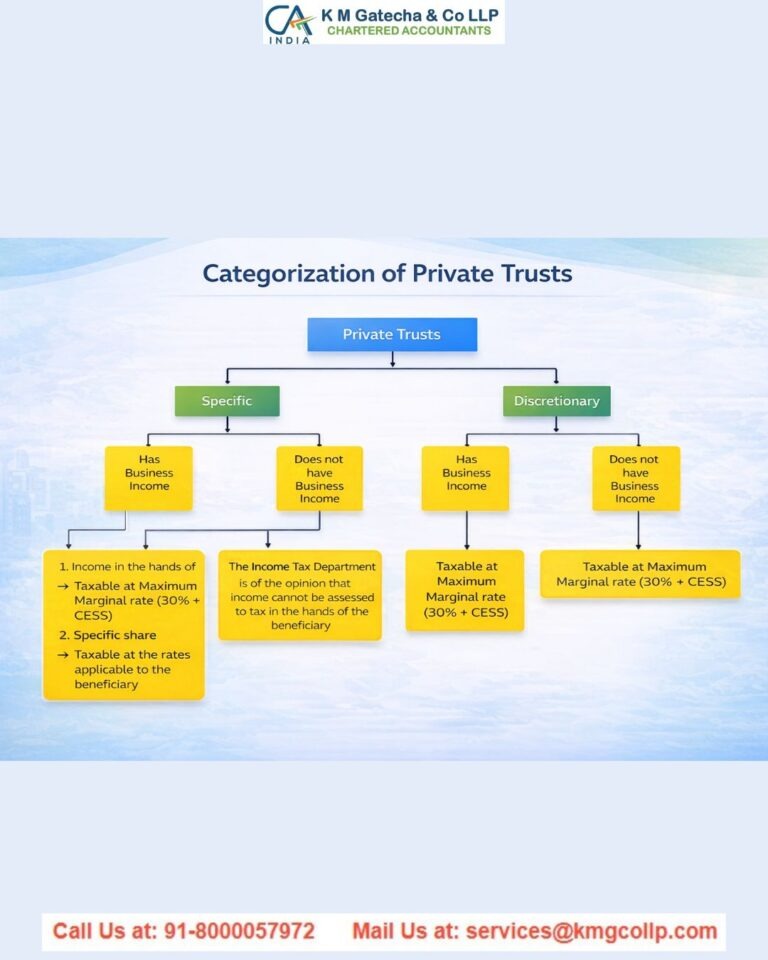
Private trusts can be classified into different types based on their structure and purpose:
1. Non-Discretionary / Specific Trusts
In this type of trust, the settlor clearly decides how the trust assets will be distributed among beneficiaries. The trustee does not have any authority to change the distribution. For example, the settlor may fix the share of each beneficiary.
2. Discretionary Trusts
Here, the settlor identifies the beneficiaries but does not specify their share in the trust assets. The trustee has the authority to decide how much each beneficiary will receive. Such trusts offer flexibility and are often used when beneficiaries are minors or when circumstances may change.
3. Revocable and Irrevocable Trusts
Revocable Trust
A revocable trust allows the settlor to take back or modify the assets or income under certain conditions. As per the Income Tax Act, 1961, income from such transfers is taxable in the hands of the settlor. While this type of trust offers flexibility, it does not provide tax benefits or asset protection.
Irrevocable Trust
An irrevocable trust cannot be altered once it is created. The income generated from such a trust is not taxed in the hands of the settlor. These trusts are generally used for long-term asset protection and tax planning.
4. Testamentary Trusts (Will Trusts)
A testamentary trust is created through a will and comes into effect only after the death of the testator. As per the Indian Succession Act, 1925, a valid will must be made by a person of sound mind and signed in the presence of witnesses.
Such trusts do not require registration during the settlor’s lifetime and can be modified until death. After the testator’s death, the trust becomes irrevocable. These trusts are commonly used for estate planning, especially for minors or dependents.
5. Living Trusts
A living trust, also known as an inter vivos trust, is created during the lifetime of the settlor and becomes effective immediately. Unlike testamentary trusts, it operates while the settlor is alive and can be modified or revoked.
Regardless of the type of private trust, beneficiaries must always be identifiable. A private trust created for uncertain beneficiaries is considered void. This principle was affirmed by the Supreme Court in the case of Deoki Nandan v. Murlidhar AIR 1957 SC 133, which held that beneficiaries in a private trust must be clearly ascertainable.
5. Registration of Private Trusts under the Indian Trusts Act, 1882
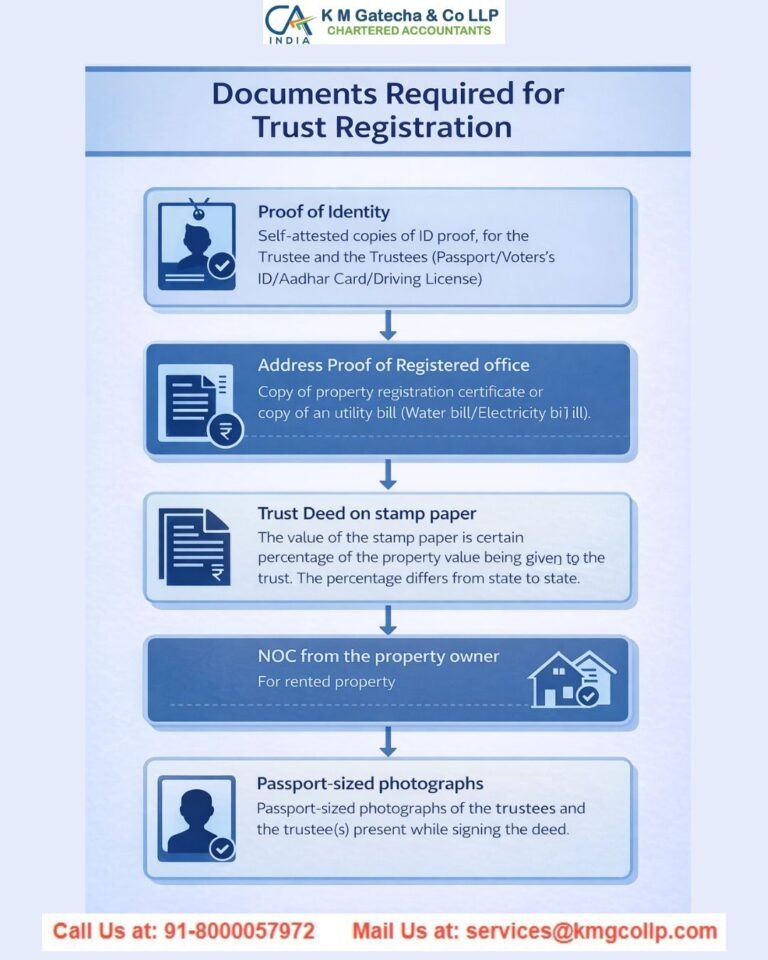
In India, any document that creates or transfers an interest in immovable property must generally be registered. A private trust deed involving immovable property (such as land or a building) falls under this requirement. As per Section 17(1)(b) of the Registration Act, 1908, non-testamentary instruments that create, declare, assign, limit, or extinguish any right or interest in immovable property must be registered.
Accordingly, a trust deed involving immovable property (valued above ₹100) must be executed on non-judicial stamp paper and registered with the Sub-Registrar in the area where the property is located. If not registered, the deed may not be enforceable against third parties and can be challenged even by the parties involved.
For movable assets, registration is not mandatory, although trust deeds are commonly registered as a standard practice. The applicable stamp duty must be paid as per the respective State laws. Once registered, the Sub-Registrar certifies the document, making it valid proof of the trust’s creation.
6. Trust Deed and Drafting
A trust deed is the primary legal document through which a settlor creates a private trust. It not only records the settlor’s intent but also defines how the trust will function. The key roles of a trust deed include:
Specification of Trust Objectives
The deed clearly states the purpose for which the trust is created, ensuring that it operates within legal limits and achieves its intended objectives.
Appointment and Powers of Trustees
It defines how trustees are appointed, removed, or replaced, along with their powers, duties, and responsibilities toward the beneficiaries.
Governance Framework
The trust deed sets out rules for managing and administering the trust, helping ensure proper control and preventing misuse of authority.
Proof of Trust Creation
The written deed serves as primary evidence of the trust’s existence. In case of disputes, it acts as strong legal proof that the trust was intended and established.
Transfer of Trust Property
The deed identifies the assets forming the trust corpus and ensures that legal ownership is transferred to the trustees, who manage them for the beneficiaries.
Contingency and Dissolution Planning
It includes provisions for situations such as resignation, incapacity, or death of trustees. It also outlines the procedure for winding up the trust and distributing remaining assets.
6.1 Key Components of Trust Deed
Preparing a well-structured trust deed is important to ensure the smooth functioning of the trust and to maintain its legal validity and enforceability. A clear and detailed deed helps establish proper governance, defines the rights and responsibilities of all parties, and provides legal clarity to protect both trustees and beneficiaries.
There is no fixed format prescribed for drafting a trust deed. A trust can be created using any wording that clearly reflects the intention to form it, and no specific technical terms are required. However, a properly drafted deed generally includes the following key elements:
- Statement of the trust and its objectives
- Names of the beneficiaries
- Details of the properties transferred to the trust and the method of transfer
- Method for distributing trust assets among beneficiaries
- Type of trust (such as discretionary, specific, or testamentary)
- Procedure for dissolution of the trust
Disclaimer: The content on this website is for informational purposes only and does not constitute legal, financial, or professional advice. Please consult qualified experts before acting on any information. K M GATECHA & CO LLP accepts no liability for errors, omissions, or outcomes from the use of this content. This site is not an advertisement or solicitation.