Form 146 Explained: Complete Guide to the Accountant’s Certificate in India
Role of a Chartered Accountant in Form No. 146
A Chartered Accountant (CA) plays a critical role in the preparation, verification, and certification of Form No. 146. Since the form relates to foreign remittances made to non-residents or foreign companies, the CA is responsible for ensuring that all tax implications are correctly examined and reported in accordance with the Income Tax Act, 2025, applicable tax rules, FEMA provisions, and relevant Double Taxation Avoidance Agreements (DTAAs).
The Chartered Accountant reviews the nature of the remittance and determines whether the payment is taxable in India. This includes examining supporting documents such as agreements, invoices, tax residency certificates, and other relevant records. The CA verifies the remitter and remittee details, the amount proposed to be remitted, and the applicable withholding tax provisions.
One of the primary responsibilities of the CA is to calculate the correct Tax Deducted at Source (TDS) liability under the Income Tax Act, 2025. Where DTAA benefits are claimed, the CA evaluates treaty provisions, verifies the availability of a valid Tax Residency Certificate (TRC), and determines the applicable tax rate.
The Chartered Accountant also certifies that the information furnished in Form No. 146 is true, accurate, and based on the books of accounts, records, and documents produced by the remitter. The CA is required to provide professional details such as Membership Number, Firm Registration Number (FRN), Permanent Account Number (PAN), and Unique Document Identification Number (UDIN) while issuing the certificate.
By certifying Form No. 146, the Chartered Accountant helps ensure regulatory compliance, reduces the risk of incorrect tax deductions, supports smooth processing of foreign remittances, and minimizes the possibility of future tax disputes or penalties.
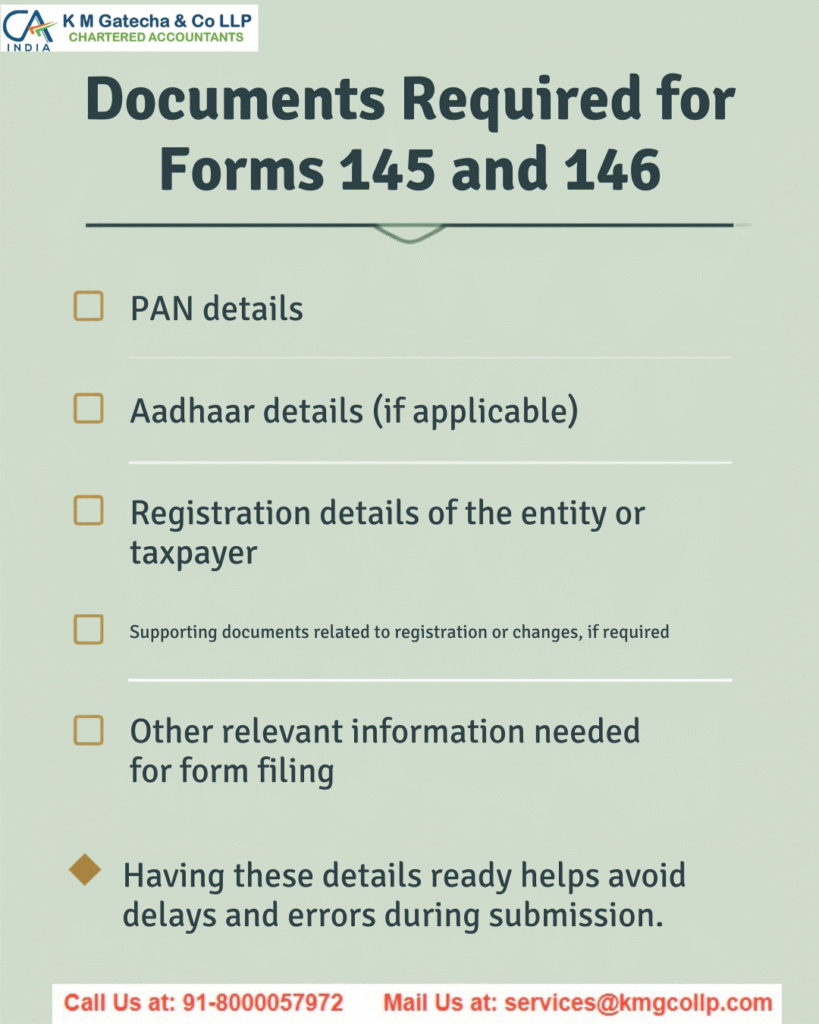
Documents Required for Form No. 146
The following documents are generally required for preparing and filing Form No. 146:
- PAN and TAN of the remitter
- PAN or Tax Identification Number (TIN) of the non-resident recipient
- Invoice, agreement, or contract related to the remittance
- Tax Residency Certificate (TRC), where DTAA benefits are claimed
- Form 10F, if applicable
- No Permanent Establishment (PE) declaration, wherever required
- Bank remittance details and authorized dealer information
- RBI purpose code for the remittance
- Details of TDS deduction and payment
- Computation of income and taxability analysis
- Supporting documents relating to capital gains, royalty, technical services, interest, dividends, or other payments, as applicable
Penalties for Incorrect Certification
The Income Tax Act, 2025 places significant responsibility on professionals certifying Form No. 146. Under Section 463, a Chartered Accountant may be liable for penalties if incorrect information is certified due to negligence, misrepresentation, or failure to exercise due diligence.
Similarly, taxpayers may face consequences for furnishing inaccurate information, failing to deduct tax correctly, or making remittances without complying with prescribed reporting requirements. Such non-compliance can result in penalties, interest liabilities, and scrutiny from tax authorities.
A Chartered Accountant (CA) plays a significant role in the verification and certification of Form No. 146. The CA examines the books of accounts, financial statements, agreements, invoices, and other supporting records to confirm the accuracy of the information provided by the taxpayer.
The accountant certifies that the details furnished in the form are true, correct, and fairly represented based on the available records and in accordance with the provisions of the Income Tax Act, 2025. The CA also verifies that all applicable tax laws, rules, and regulatory requirements have been properly complied with.
One of the key responsibilities of the Chartered Accountant is to determine the taxability of foreign remittances and certify the applicable tax deduction at source (TDS) before the remittance is made. Any claims relating to deductions, exemptions, treaty benefits under a Double Taxation Avoidance Agreement (DTAA), or other specific transactions are carefully reviewed and validated before certification.
Chartered Accountants frequently assist taxpayers in preparing Form No. 146 and may also submit the form on their behalf through the Income Tax portal. By signing the certificate, the CA accepts professional responsibility for the accuracy of the information reported, thereby enhancing the reliability and credibility of the filing.
In addition, the CA provides guidance on documentation requirements, compliance obligations, and best practices to avoid errors, penalties, or regulatory issues. Their involvement promotes transparency, strengthens compliance, and minimizes the risk of misreporting or future tax disputes.
Consequences of Incorrect Filing
Incorrect filing of Form No. 146 or failure to comply with the prescribed requirements may result in several consequences:
- Furnishing incorrect information in Form No. 146 may attract a penalty of up to Rs. 10,000 per certificate under Section 463 of the Income Tax Act, 2025.
- Incorrect determination of taxability may result in short deduction or non-deduction of TDS, leading to additional tax liabilities.
- Non-compliance may trigger notices, inquiries, or scrutiny proceedings from the Income Tax Department.
- Delays in filing can create compliance issues and may affect the smooth processing of foreign remittances.
Withdrawal of Form No. 146
Form No. 146 may be withdrawn within seven days from the date of submission. This facility allows the remitter or Chartered Accountant to rectify errors or reconsider the filing if required. However, once the prescribed period has expired, the form cannot be withdrawn, and any corrections may require fresh compliance procedures.
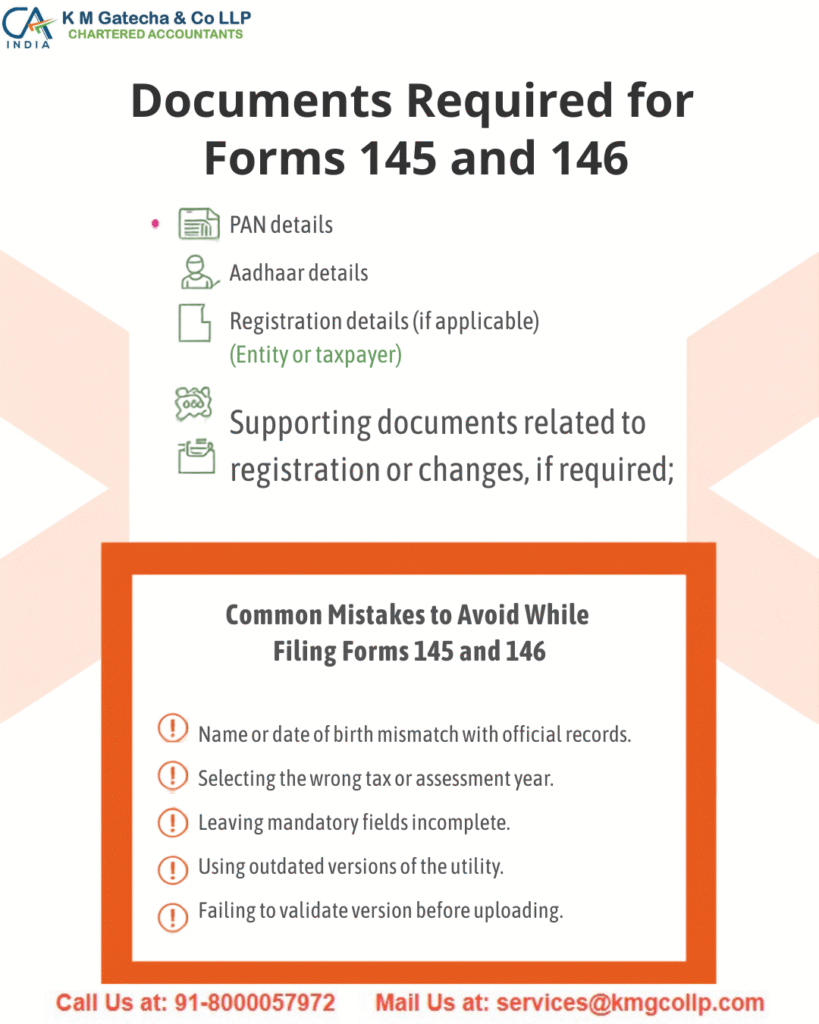
Common Mistakes to Avoid While Filing Form No. 146
Avoiding common filing errors can help prevent delays, rejections, and compliance complications:
- Providing an incorrect PAN of the remitter or remittee.
- Leaving mandatory fields incomplete or blank.
- Reporting information that does not match supporting documents such as invoices, agreements, or bank records.
- Incorrect computation of taxability under the Income Tax Act, 2025, or improper application of DTAA provisions.
- Claiming DTAA benefits without obtaining the required supporting documents, such as a Tax Residency Certificate (TRC).
- Errors in TDS calculation, deduction details, or challan information.
- Failure to correctly assign or authorize the Chartered Accountant on the e-filing portal.
- Submitting the form without reviewing the information through the preview facility.
- Not completing Digital Signature Certificate (DSC) verification.
- Failing to generate or validate the Unique Document Identification Number (UDIN).
- Missing compliance timelines or filing the form after the remittance has been made.
- Not following the latest filing instructions or updated form requirements.
- Ignoring the Rs. 5 lakh applicability threshold prescribed under the rules.
Due Date for Form No. 146
Understanding the filing timeline of Form No. 146 is important for ensuring compliance:
- No specific statutory due date has been prescribed under the Income Tax Rules.
- The form must be filed before making the remittance to the non-resident or foreign company.
- Form No. 146 is transaction-based and must be furnished separately for each remittance that meets the prescribed conditions.
- Filing the form in advance ensures the correct determination and deduction of TDS.
- Filing after the remittance may result in compliance issues, departmental scrutiny, and potential penalties.
Conclusion
Form No. 146 is an important compliance document for foreign remittances made to non-residents and foreign companies under the Income Tax Act, 2025. It helps determine the taxability of cross-border payments, ensures proper deduction of TDS, and facilitates the application of relevant DTAA provisions wherever applicable.
Since the form is transaction-specific, timely filing before the remittance is essential to avoid compliance issues and penalties. By maintaining accurate documentation, obtaining proper certification from a Chartered Accountant, and adhering to prescribed procedures, taxpayers can ensure smooth foreign remittance transactions while remaining fully compliant with Indian tax regulations.
Disclaimer: The content on this website is for informational purposes only and does not constitute legal, financial, or professional advice. Please consult qualified experts before acting on any information. K M GATECHA & CO LLP accepts no liability for errors, omissions, or outcomes from the use of this content. This site is not an advertisement or solicitation.