
Step-by-Step Guide to Establishing a Foreign Company in India
Introduction
India is one of the world’s fastest-growing economies and a preferred destination for global businesses looking to expand internationally. With a large consumer market, a thriving startup ecosystem, and business-friendly government initiatives, India offers significant opportunities for foreign investors and companies.
However, setting up a foreign company in India involves understanding various legal, regulatory, tax, and compliance requirements. Before beginning the registration process, it is important to understand the different business structures available to foreign entities.
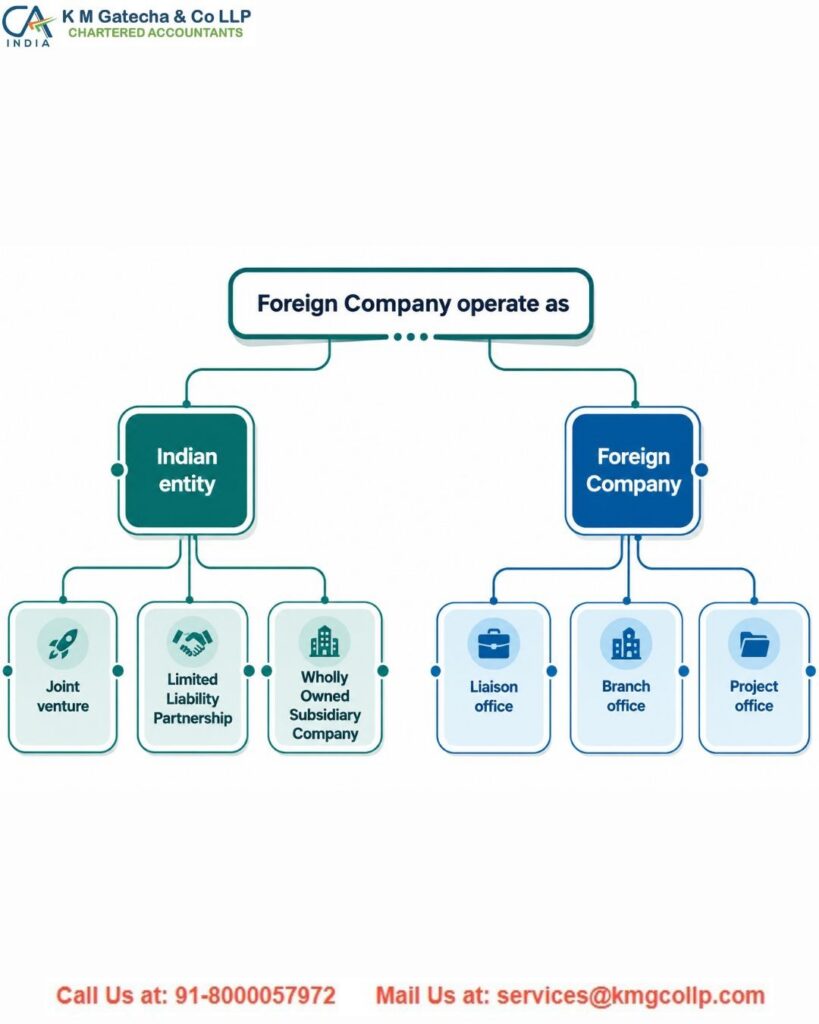
Business Structures Available for Foreign Companies in India
Foreign businesses can establish their presence in India through different legal structures, depending on their objectives, operational requirements, and investment plans.
Liaison Office (Representative Office)
A Liaison Office serves as a communication bridge between the foreign company and Indian customers or business partners. Its activities are generally limited to market research, promotion of the parent company’s products or services, and facilitating business communication.
A Liaison Office cannot undertake commercial activities or generate revenue in India.
Subsidiary Company
A Subsidiary Company is a separate legal entity incorporated under Indian law. It can be established as a Private Limited Company or Public Limited Company and may be wholly or partially owned by a foreign company.
Unlike a Liaison Office, a subsidiary can conduct business operations, enter into contracts, and earn revenue in India.
Wholly Owned Subsidiary (WOS)
In a Wholly Owned Subsidiary, the foreign company owns 100% of the shareholding. This structure provides complete ownership and management control to the foreign parent company.
Joint Venture (JV)
A Joint Venture is formed when a foreign company partners with an Indian entity. Both parties contribute resources, expertise, and capital to operate the business jointly. This structure helps foreign investors benefit from local market knowledge and established business networks.

Other Common Business Structures in India
Sole Proprietorship
A business owned and managed by a single individual without a separate legal identity.
Partnership Firm
A business arrangement where two or more individuals jointly own and operate the business while sharing profits and responsibilities.
Limited Liability Partnership (LLP)
An LLP combines the flexibility of a partnership with limited liability protection for its partners.
Private Limited Company
A separate legal entity that offers limited liability to shareholders and requires at least two directors and two shareholders.
Public Limited Company
A company that can raise funds from the public and is subject to stricter regulatory compliance requirements.
One Person Company (OPC)
A corporate structure that allows a single individual to operate a company with limited liability protection.
When selecting a business structure, foreign companies should evaluate factors such as ownership control, liability protection, taxation, compliance obligations, and long-term business goals. Professional legal and financial advice is highly recommended before making a decision.

Step-by-Step Process for Setting Up a Foreign Company in India
1. Conduct Market Research
Begin by analyzing the Indian market, consumer preferences, industry trends, competition, and regulatory requirements. This assessment helps determine the feasibility and growth potential of your business in India.
2. Choose the Appropriate Entry Strategy
Select the most suitable structure based on your business objectives. Options may include:
- Liaison Office
- Wholly Owned Subsidiary
- Joint Venture
- Acquisition of an Existing Indian Business
Factors such as control, liability, investment requirements, and market access should guide this decision.
3. Obtain Professional Assistance
Engage experienced legal, tax, and business advisors familiar with Indian regulations. Professional guidance helps ensure smooth incorporation and ongoing compliance.
4. Secure Necessary Approvals
Depending on the selected business structure and industry, approvals may be required from authorities such as:
- Reserve Bank of India (RBI)
- Department for Promotion of Industry and Internal Trade (DPIIT)
- Other sector-specific regulatory bodies
5. Register the Company with the Registrar of Companies (ROC)
For a subsidiary company, submit the required incorporation documents, including:
- Memorandum of Association (MOA)
- Articles of Association (AOA)
- Director and shareholder details
- Other statutory documents
Upon approval, the ROC issues the Certificate of Incorporation.
6. Obtain PAN and Tax Registrations
Apply for a Permanent Account Number (PAN) and other applicable tax registrations. These are necessary for tax compliance and business operations in India.
7. Open a Bank Account
Open a corporate bank account in India and comply with RBI guidelines related to foreign investment, capital infusion, and fund repatriation.
8. Fulfil Regulatory and Compliance Requirements
Ensure adherence to all statutory obligations, including:
- Annual filings
- Tax returns
- Financial audits
- Regulatory reporting requirements
Industry-specific compliances should also be addressed.
9. Hire Employees and Establish Operations
Recruit local talent and set up operational infrastructure according to business needs. Compliance with Indian labour and employment laws is essential.
10. Build Business Relationships
Develop strong relationships with customers, suppliers, industry associations, and business partners to support long-term growth and market penetration.
11. Monitor Performance and Adapt
Regularly evaluate business performance, market conditions, and regulatory developments. Continuous assessment helps businesses refine strategies and maintain competitiveness.

Conclusion
Expanding into India can provide substantial growth opportunities for foreign companies. However, successful market entry requires careful planning, regulatory compliance, and a clear understanding of the Indian business environment.
Choosing the right business structure, obtaining necessary approvals, and maintaining ongoing compliance are critical steps in establishing a successful presence in India. Working with experienced legal, tax, and business professionals can simplify the process and help businesses avoid costly mistakes.
With the right strategy and professional support, foreign companies can successfully establish operations in India and benefit from one of the world’s most dynamic and rapidly expanding markets.
Disclaimer: The content on this website is for informational purposes only and does not constitute legal, financial, or professional advice. Please consult qualified experts before acting on any information. K M GATECHA & CO LLP accepts no liability for errors, omissions, or outcomes from the use of this content. This site is not an advertisement or solicitation.