
This article explains the concept of Updated Return under Section 139(8A), introduced through the Finance Bill, 2022. It highlights that taxpayers are now allowed to file an updated return within 24 months from the end of the relevant Assessment Year. It also covers the scope, eligibility, and restrictions related to filing such returns. Additionally, it discusses the penalty applicable, which ranges from 25% to 50% depending on when the return is filed. It also notes that the chances of receiving notices from the Income Tax Department have increased, especially for those who have not filed returns or have underreported income. Despite higher penalties, the provision offers a valuable opportunity for taxpayers to correct and disclose income within the extended timeline.
Biggest Amendment in Budget 2022
The Union Budget 2022 introduced several changes in income tax laws, with the most significant being the introduction of a new type of return—Updated Return.
Earlier, the time limit for filing original and revised returns had been reduced significantly. In cases where taxpayers missed deadlines, the only option available was to apply under Section 119(2)(b) for condonation of delay.
With the introduction of Updated Return under Section 139(8A), taxpayers now get an extended opportunity to file returns, subject to certain conditions and payment of additional tax.
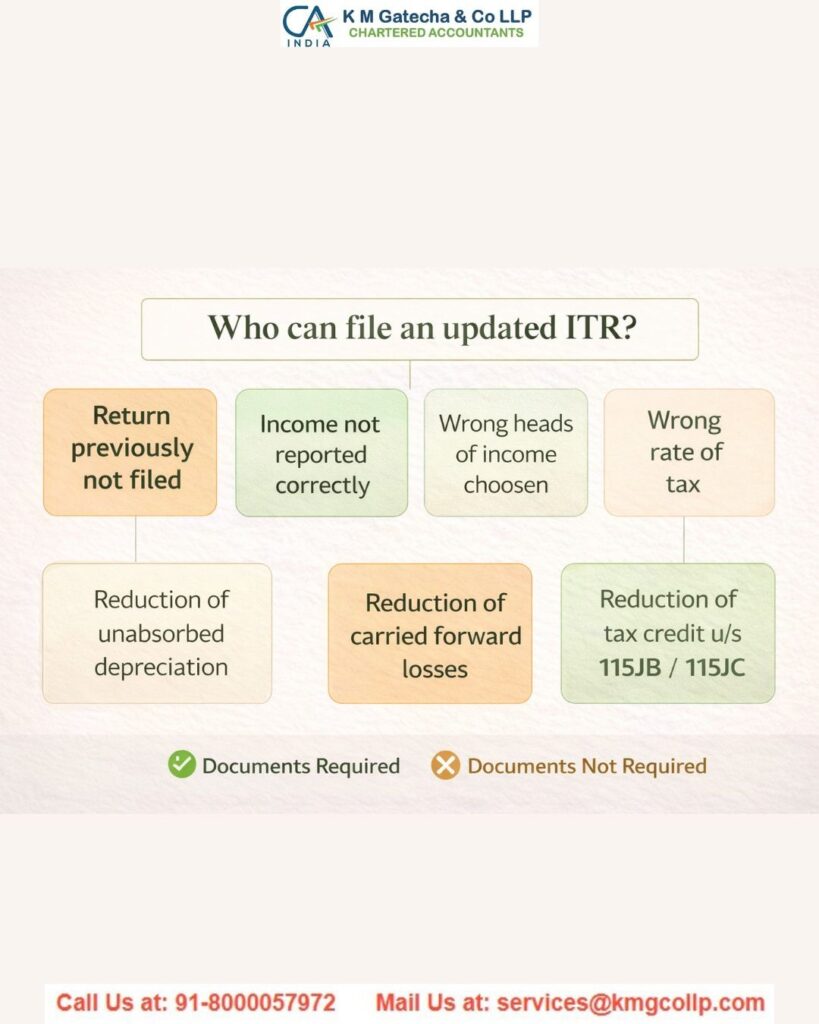
Who Can File an Updated Return?
An updated return can be filed by:
- A taxpayer who has filed a return under Section 139(1)
- A taxpayer who has filed a belated return under Section 139(4)
- A taxpayer who has filed a revised return under Section 139(5)
- A taxpayer who has not filed any return at all
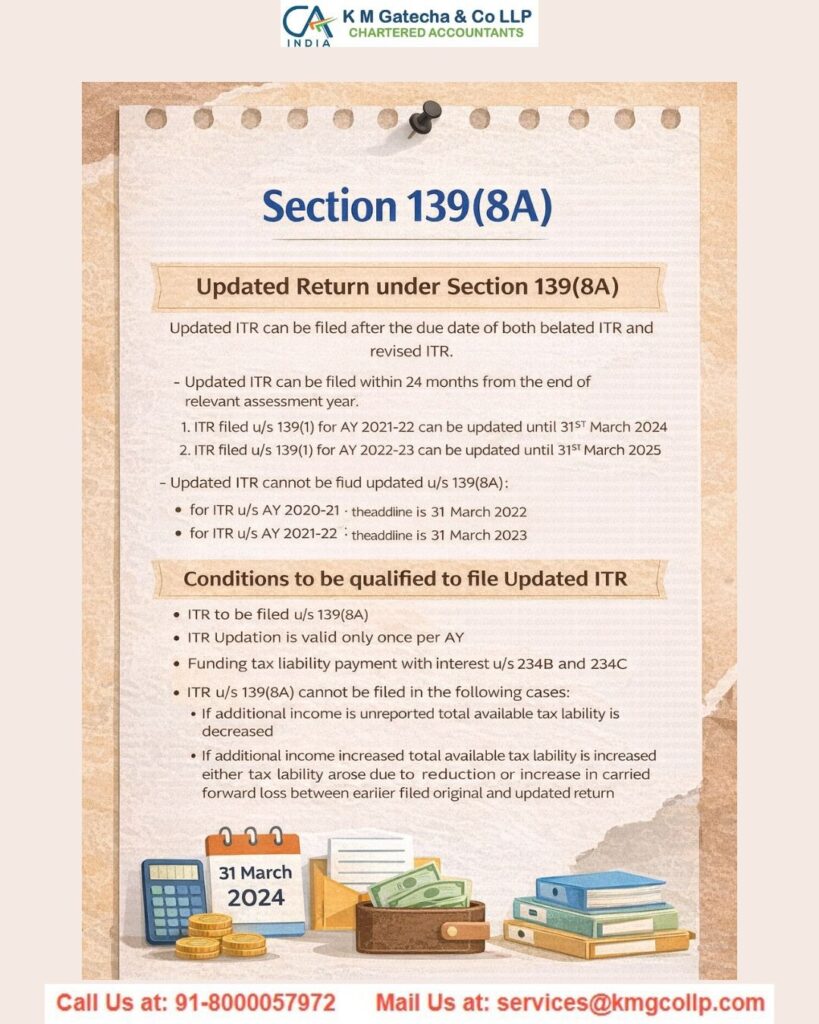
Time Limit for Filing Updated Return
A taxpayer can file an updated return within 24 months from the end of the relevant Assessment Year.
For example, for FY 2021–22 (AY 2022–23):
- Original due date: 31 July 2022
- Belated return due date: 31 December 2022
- Updated return due date: 31 March 2025
Who Cannot File an Updated Return?
The following cases are not eligible for filing an updated return:
- Filing a return of loss
- Reducing tax liability compared to the original return
- Claiming a refund or increasing the refund amount
- Filing more than one updated return for the same year
- Cases involving search (Section 132) or survey (Section 133)
- Where assessment or reassessment proceedings are ongoing
- Cases involving information under PMLA or black money laws
- Where intimation under Sections 90/90A has been received before filing
- Where prosecution has been initiated for that assessment year
This means the benefit is available only when additional income is declared and extra tax is paid.
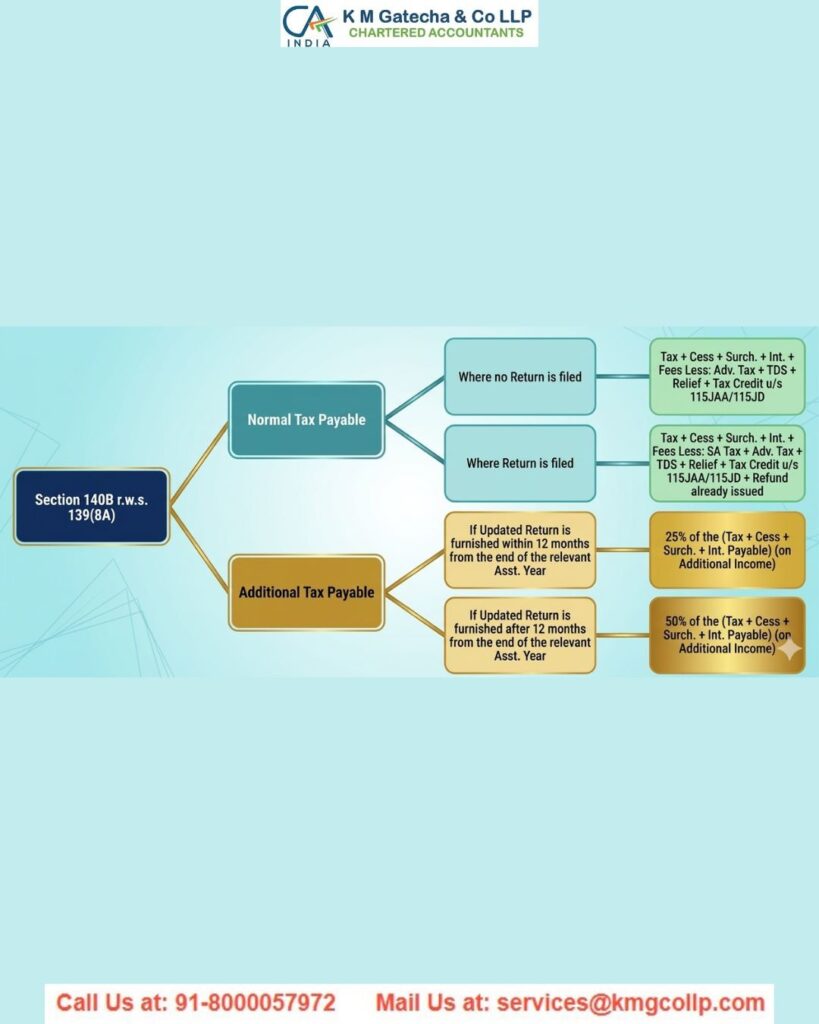
Additional Tax for Filing Updated Return
Filing an updated return requires payment of additional tax along with interest:
- Filed within 12 months from end of AY → 25% of additional tax (including interest)
- Filed after 12 months but within 24 months → 50% of additional tax (including interest)
- After 24 months → Not allowed
For example (FY 2021–22 / AY 2022–23):
- Filed between 31 Dec 2022 and 31 Mar 2024 → 25% additional tax
- Filed between 1 Apr 2024 and 31 Mar 2025 → 50% additional tax
Conclusion
The Updated Return provision provides a valuable chance for taxpayers to correct errors or disclose missed income. With improved data tracking systems like AIS and TIS, the Income Tax Department now has greater access to financial information. This increases the likelihood of notices for non-compliance.
Although the additional tax may seem high, it still offers a practical opportunity to regularise income and stay compliant within the extended time limit.
Disclaimer: The content on this website is for informational purposes only and does not constitute legal, financial, or professional advice. Please consult qualified experts before acting on any information. K M GATECHA & CO LLP accepts no liability for errors, omissions, or outcomes from the use of this content. This site is not an advertisement or solicitation.