Managing taxes in two countries can be difficult, as the same income may be taxed in both the country where it is earned and the country of residence. To avoid this, India and the USA have signed a Double Taxation Avoidance Agreement (DTAA).
The India-USA DTAA helps prevent double taxation by setting clear rules on how different types of income are taxed. It also allows eligible taxpayers to claim tax relief while complying with the tax laws of both countries.
What is DTAA (Double Taxation Avoidance Agreement)?
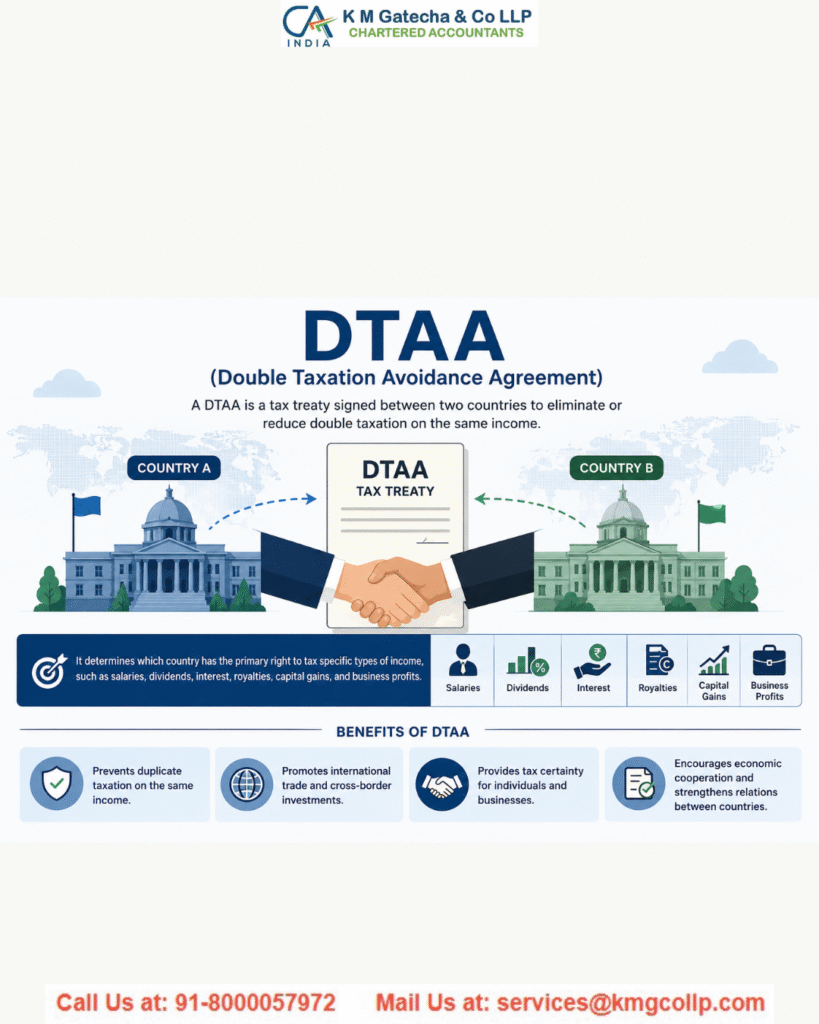
A Double Taxation Avoidance Agreement (DTAA) is a tax treaty signed between two countries to eliminate or reduce double taxation on the same income. It determines which country has the primary right to tax specific types of income, such as salaries, dividends, interest, royalties, capital gains, and business profits. By preventing duplicate taxation, a DTAA promotes international trade, encourages cross-border investments, and provides tax certainty for individuals and businesses operating internationally.
What is the DTAA Between India and the USA?
The India-USA DTAA sets rules for taxing income earned in both countries and helps eligible taxpayers avoid paying tax twice on the same income. Relief is generally available through tax credits or exemptions, subject to the applicable tax laws.
For example, an Indian resident earning income from the USA may claim credit in India for taxes paid in the USA. Similarly, a USA resident earning income or capital gains from India may claim tax relief as per the tax laws of the USA. The agreement also helps reduce tax disputes and supports better tax compliance.
Importance of the India-USA DTAA for NRIs and Expats
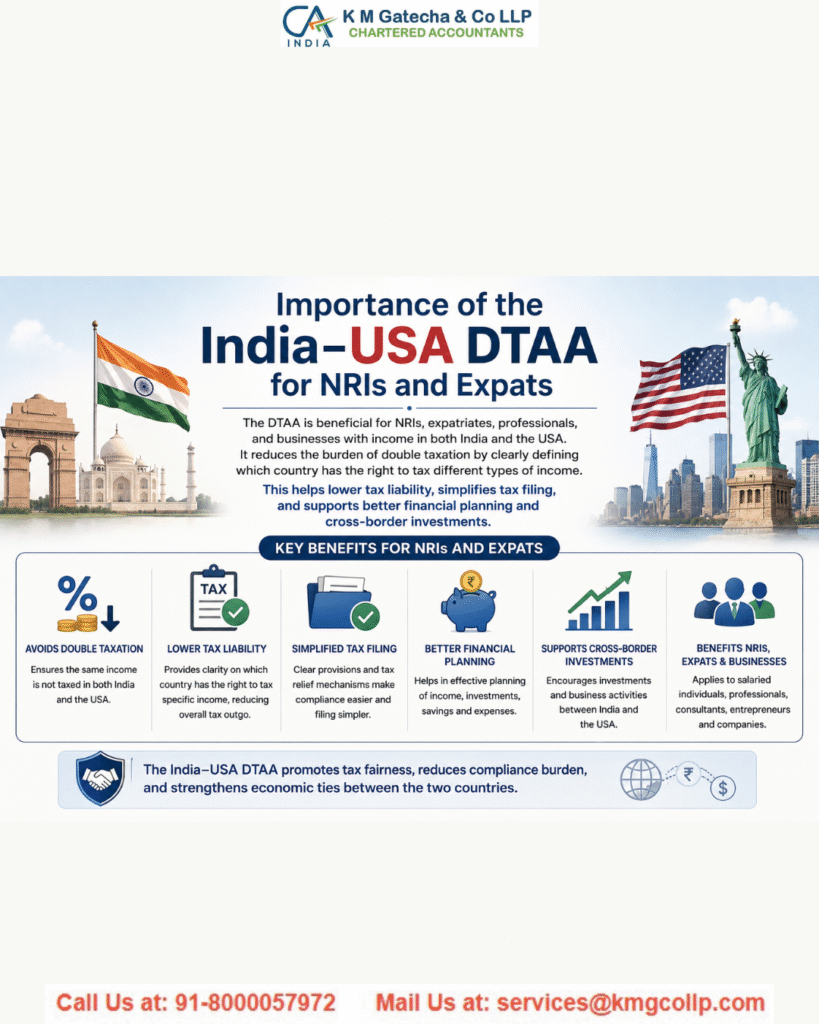
The DTAA is beneficial for NRIs, expatriates, professionals, and businesses with income in both India and the USA. It reduces the burden of double taxation by clearly defining which country has the right to tax different types of income. This helps lower tax liability, simplifies tax filing, and supports better financial planning and cross-border investments.
Key Provisions of the India-USA DTAA
The India-USA DTAA includes several important provisions, such as:
- Allocation of taxing rights between India and the USA.
- Reduced tax rates on dividends, interest, royalties, and fees for technical services in eligible cases.
- Rules for determining tax residency.
- Guidelines for identifying a permanent establishment for businesses.
- Procedures for resolving tax disputes.
- Measures to prevent tax avoidance.
The treaty also contains specific articles for different types of income. For example, Article 15 explains how employment income is taxed between India and the USA.
Types of Income Covered Under the India-USA DTAA
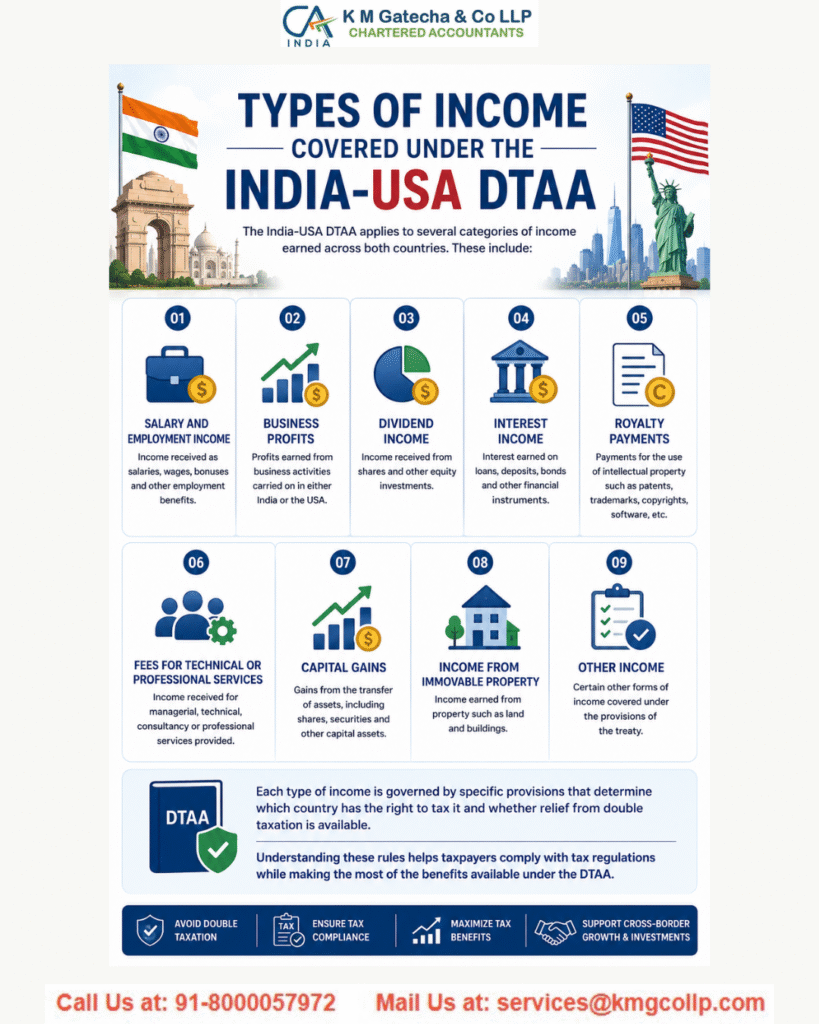
The India-USA DTAA applies to several categories of income earned across both countries. These include:
- Salary and employment income.
- Business profits.
- Dividend income.
- Interest income.
- Royalty payments.
- Fees for technical or professional services.
- Capital gains from the transfer of assets, including shares and securities.
- Income from immovable property, such as land and buildings.
- Certain other forms of income covered under the treaty.
Each type of income is governed by specific provisions that determine which country has the right to tax it and whether relief from double taxation is available. Understanding these rules helps taxpayers comply with tax regulations while making the most of the benefits available under the DTAA.
Tax Rates Under the India-USA DTAA
The India-USA DTAA provides lower tax rates on certain types of income to reduce the burden of double taxation. The applicable rates may vary depending on the type of income and the conditions mentioned in the treaty.
Some commonly applicable withholding tax rates include:
- Dividends: Up to 15%
- Interest: Up to 15%
- Royalties: Up to 15%
- Fees for Technical Services: Up to 15%
These rates are generally lower than the standard domestic tax rates. To claim these reduced rates, taxpayers must meet the eligibility conditions and submit the required documents, such as a Tax Residency Certificate (TRC) and other prescribed forms.
How to Claim DTAA Benefits
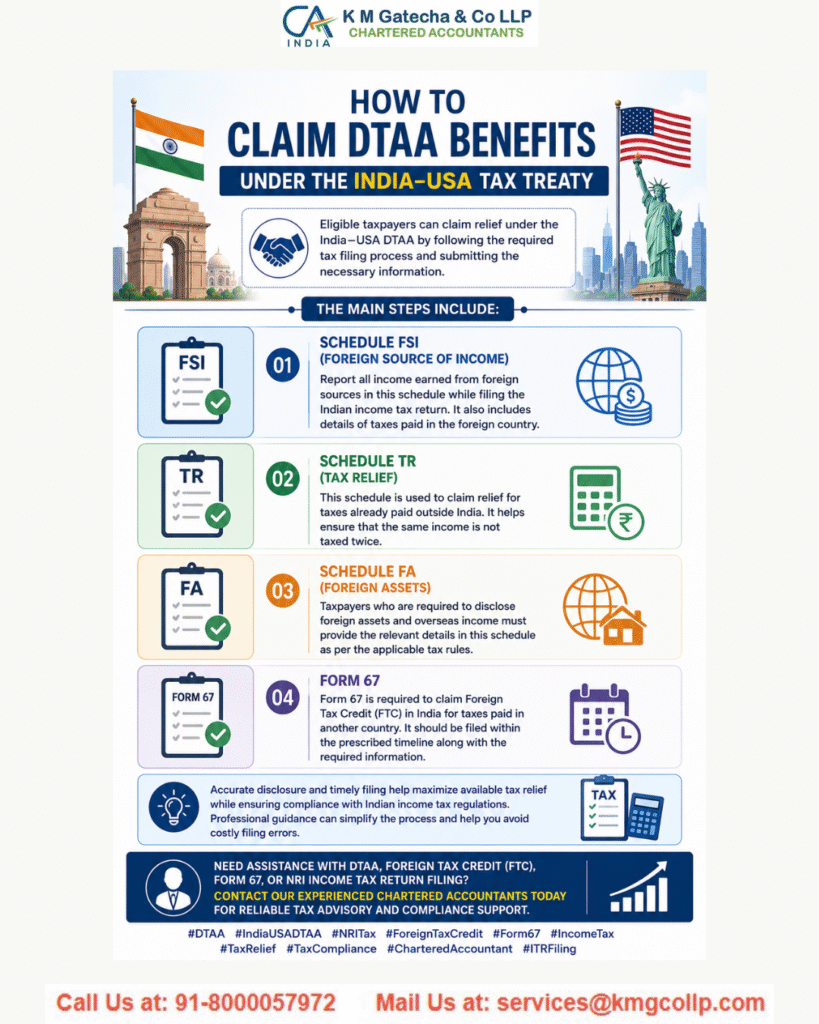
Eligible taxpayers can claim relief under the India-USA DTAA by following the required tax filing process and submitting the necessary information. The main steps include:
Schedule FSI (Foreign Source of Income)
Report all income earned from foreign sources in this schedule while filing the Indian income tax return. It also includes details of taxes paid in the foreign country.
Schedule TR (Tax Relief)
This schedule is used to claim relief for taxes already paid outside India. It helps ensure that the same income is not taxed twice.
Schedule FA (Foreign Assets)
Taxpayers who are required to disclose foreign assets and overseas income must provide the relevant details in this schedule as per the applicable tax rules.
Form 67
Form 67 is required to claim Foreign Tax Credit (FTC) in India for taxes paid in another country. It should be filed within the prescribed timeline along with the required information.
Documents Required to Claim DTAA Benefits
To claim relief under the India-USA DTAA, taxpayers generally need the following documents:
- Tax Residency Certificate (TRC) issued by the tax authority of the country of residence.
- Proof of foreign income earned.
- Proof of taxes paid in the foreign country.
- Permanent Account Number (PAN), if applicable.
- Form 10F, where required.
- Form 67 for claiming Foreign Tax Credit in India.
- Any other supporting documents requested by the tax authorities.
Submitting complete and accurate documents helps ensure faster processing of DTAA claims.
Importance of the Tax Residency Certificate (TRC)
A Tax Residency Certificate (TRC) is one of the most important documents for claiming DTAA benefits. It confirms that an individual or business is a tax resident of a particular country during a specific financial year.
The TRC allows tax authorities to verify eligibility for treaty benefits, including reduced tax rates and relief from double taxation. Without a valid TRC, taxpayers may not be able to claim the benefits available under the India-USA DTAA.
Impact of the India-USA DTAA on Investments and Global Income
The India-USA DTAA helps investors and taxpayers avoid paying tax twice on the same income earned across both countries. It provides clear rules for taxing income such as dividends, interest, royalties, business profits, and capital gains.
By reducing double taxation, the treaty supports cross-border investments, simplifies tax planning, and improves overall financial management. Individuals with income or investments in both India and the USA can better understand their tax obligations and make informed financial decisions while remaining compliant with the tax laws of both countries.
Conclusion
The India-USA Double Taxation Avoidance Agreement (DTAA) helps individuals and businesses avoid paying tax twice on the same income earned in both countries. It provides clear rules on how different types of income are taxed and allows eligible taxpayers to claim tax relief through credits or exemptions.
Understanding the provisions of the India-USA DTAA, keeping the required documents ready, and following the correct tax filing process can help NRIs, expatriates, and investors reduce their tax burden and stay compliant with the tax laws of both countries. Proper tax planning and awareness of DTAA benefits can also make managing cross-border income and investments much easier.
Disclaimer: The content on this website is for informational purposes only and does not constitute legal, financial, or professional advice. Please consult qualified experts before acting on any information. K M GATECHA & CO LLP accepts no liability for errors, omissions, or outcomes from the use of this content. This site is not an advertisement or solicitation.