
Pvt Ltd vs LLP: Which Is Better for Startups in 2026?
The startup ecosystem is evolving rapidly, making it essential for founders to choose the right business structure from the beginning. One of the most common questions entrepreneurs ask is whether a Private Limited Company (Pvt Ltd) or a Limited Liability Partnership (LLP) is the better option for startups in 2026.
The answer depends on factors such as funding goals, scalability, compliance preferences, and the nature of the business. Both structures come with their own advantages and limitations. Understanding these differences can help founders select the model that aligns with their long-term business plans.
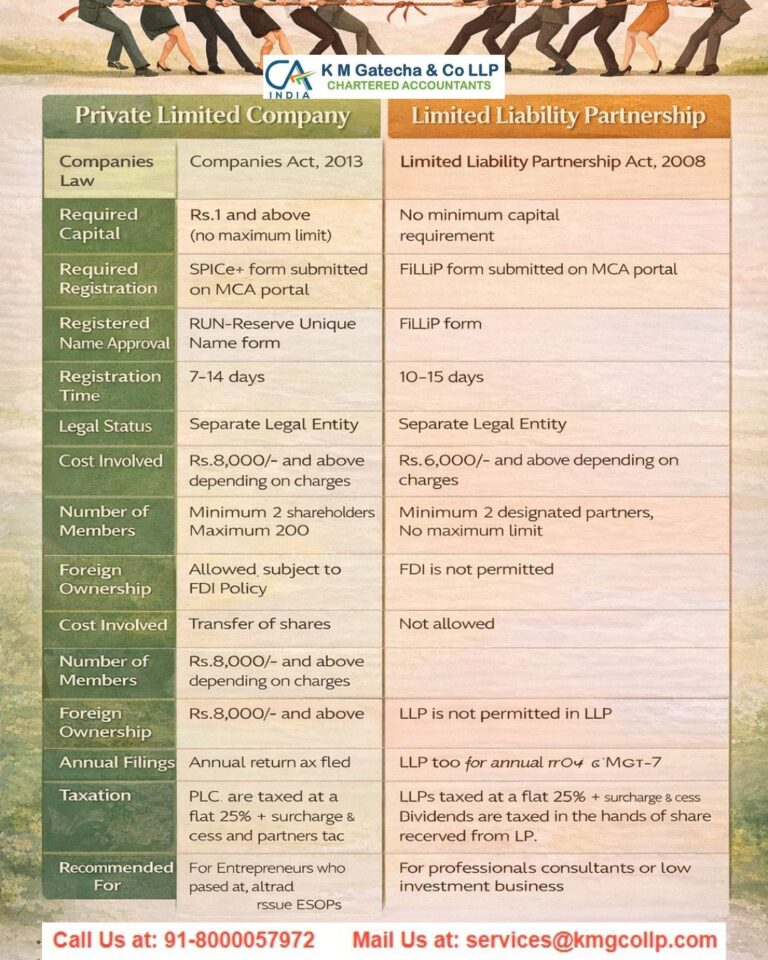
What is an LLP?
A Limited Liability Partnership (LLP) combines the flexibility of a traditional partnership with the advantage of limited liability protection. Governed under the LLP Act, 2008, an LLP ensures that partners are liable only to the extent of their agreed contribution, protecting personal assets from business liabilities.
Unlike companies, LLPs do not require a minimum capital investment, offering greater flexibility to founders. Compliance requirements are also comparatively lower. Statutory audit becomes mandatory only if turnover exceeds ₹40 lakh or capital contribution crosses ₹25 lakh.
What is a Private Limited Company?
A Private Limited Company is incorporated under the Companies Act, 2013 and functions as a separate legal entity independent of its directors and shareholders. This structure limits the liability of shareholders to their shareholding in the company.
A Pvt Ltd company requires at least two directors and two shareholders. It also involves higher compliance obligations, including board meetings, annual filings, statutory audits, and ROC compliance from the very first year. Due to its structured governance, a Private Limited Company often enjoys stronger credibility among investors, banks, and customers.
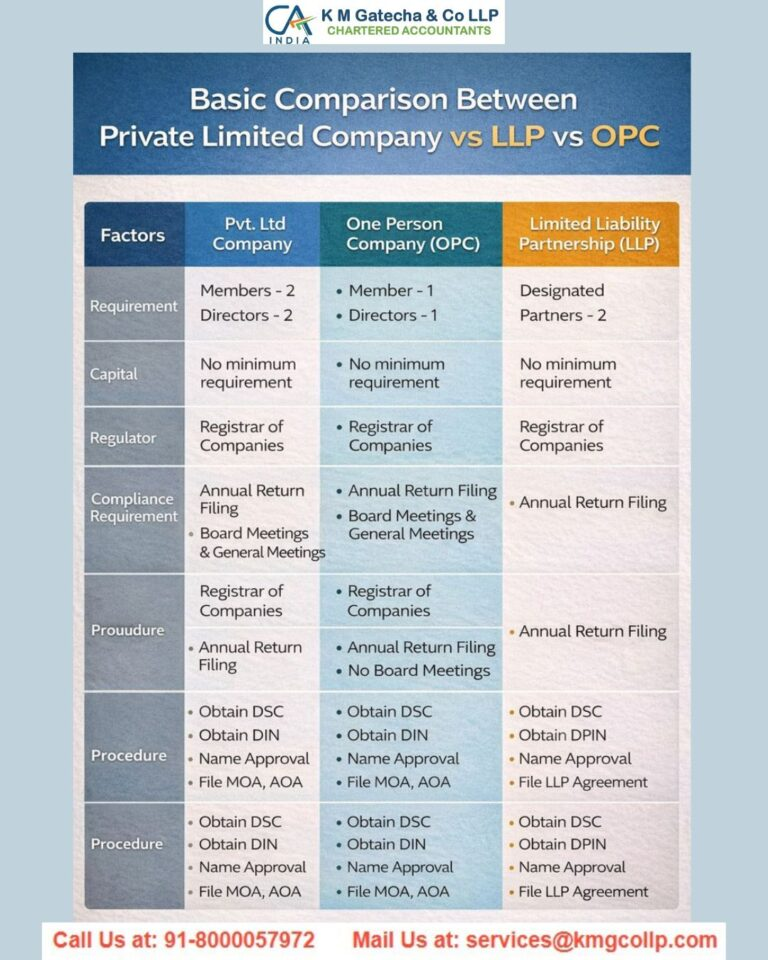
LLP vs Private Limited Company: Key Comparison in 2026
| Feature | LLP | Private Limited Company |
| Regulatory Framework | LLP Act, 2008 | Companies Act, 2013 |
| Minimum Members | 2 designated partners | 2 directors & 2 shareholders |
| Legal Status | Separate legal entity | Separate legal entity |
| Liability | Limited to contribution | Limited to share capital |
| Annual Compliance | Comparatively low | Higher compliance |
| Audit Requirement | Mandatory only beyond turnover/capital limits | Mandatory from the first year |
| Taxation | Generally taxed at 30% plus surcharge & cess | Corporate tax applicable under prescribed rates |
| Fundraising Ability | Cannot issue shares | Can raise equity, ESOPs, and investor funding |
| Market Credibility | Moderate | High credibility with banks and investors |
Benefits of Choosing an LLP for Startups
If your startup is focused on lean operations or service-based activities, an LLP can offer several practical advantages:
Lower Compliance Requirements
LLPs involve fewer regulatory filings and simplified annual compliance. Audits are mandatory only in specific cases, reducing administrative burden.
Flexible Capital Contribution
There is no compulsory minimum capital requirement. Partners can decide contribution amounts based on business needs.
Limited Liability Protection
Partners’ personal assets remain protected, as liability is restricted to the amount invested in the LLP.
Cost-Effective Setup and Maintenance
Registration costs and yearly compliance expenses are generally lower compared to a Private Limited Company.
Direct Profit Sharing
LLPs avoid dividend-related complications, allowing partners to directly receive profits without additional dividend taxation.
Best Suited for Service Businesses
LLPs work particularly well for consultancies, agencies, freelancers, family businesses, and professional service firms.
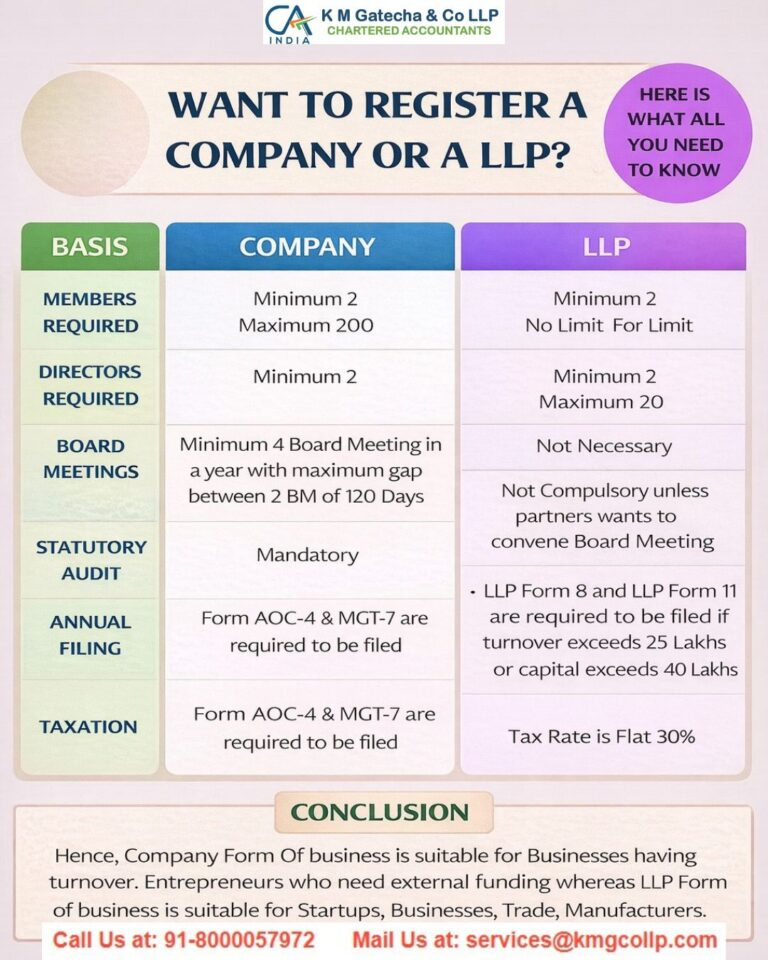
Benefits of Choosing a Private Limited Company for Your Startup
A Private Limited Company offers several advantages, especially for startups aiming for rapid growth and long-term scalability.
Investor-Friendly Structure
A Private Limited Company can issue equity shares, ESOPs, and different categories of shares, making it highly attractive to angel investors, venture capitalists, and institutional investors.
Better Credibility and Trust
Due to stricter governance, mandatory audits, and regulatory transparency, Private Limited Companies often gain greater trust from banks, clients, investors, and business partners.
Limited Liability and Continuous Existence
The company exists independently of its shareholders and directors. Ownership changes do not affect business continuity, while shareholders enjoy limited liability protection.
Potential Tax Advantages
Domestic companies may benefit from lower corporate tax rates under certain tax regimes, making taxation more structured in some cases.
Easy Transfer of Ownership
Shareholders can transfer shares with relative ease, simplifying investor entry and exit processes.
Better Long-Term Growth Opportunities
This structure is ideal for startups planning expansion, mergers, acquisitions, or future public listing, as it supports institutional growth.
Key Drawbacks of Private Limited Companies and LLPs
Before choosing a business structure, founders should also understand the limitations of both models.
Drawbacks of Private Limited Companies
Higher Compliance Costs – Mandatory audits, board meetings, ROC filings, and annual compliance increase both time and operational costs.
Possibility of Double Taxation – Company profits are taxed at the corporate level, and shareholders may also pay tax on dividend income.
Rigid Structure – A Private Limited Company requires at least two directors/shareholders, formal governance, and proper record maintenance.
Higher Setup Cost – Registration, DSC, name approval, and incorporation expenses are usually higher than an LLP.
Drawbacks of LLPs
Difficult to Raise Investment – LLPs cannot issue equity shares, making venture capital and angel funding challenging.
Limited Ownership Transfer Flexibility – Adding new partners or transferring ownership often requires partner approval and amendments.
Taxation Rate – LLPs are generally taxed at a flat rate of around 30% plus surcharge and cess, with Alternate Minimum Tax applicable in certain situations.
Lower Market Perception – Compared to Private Limited Companies, LLPs may carry lower credibility among investors and financial institutions.
Non-Compliance Penalties – Despite simpler rules, delays in filings or record maintenance can attract significant penalties.
Which Structure is Better for Different Types of Startups?
There is no universal answer. The right choice depends on your business model, funding plans, growth expectations, and compliance preferences.
Choose an LLP When:
- You run a service-based or bootstrapped business such as consultancy, freelancing, or an agency.
- You are not planning to raise external funding immediately.
- You want lower compliance costs and simpler management.
- You prefer flexible profit-sharing arrangements among partners.
- You want direct profit distribution without dividend-related complexity.
Choose a Private Limited Company When:
- You plan to raise funds from VCs or angel investors.
- You aim to scale quickly or plan for acquisition or IPO.
- You want stronger credibility with clients, banks, and investors.
- You prefer a structured management framework with formal governance.
- You are comfortable handling higher compliance and paperwork.
Flexibility for the Future: Conversion Between LLP and Pvt Ltd
Many startups begin as LLPs to reduce costs and compliance in the early stages, then convert into a Private Limited Company as they grow or seek funding. While conversion is possible, it involves regulatory filings, approvals, partner consent, stamp duty, and proper tax planning.
Final Thoughts
Choosing between an LLP and a Private Limited Company is one of the most important early decisions for any startup. In 2026, both structures continue to offer strong advantages depending on business goals.
An LLP is ideal for businesses prioritizing flexibility, lower costs, and simpler compliance. A Private Limited Company works better for startups focused on fundraising, rapid growth, and building long-term credibility.
The right choice ultimately depends on your vision, funding plans, operational needs, and future business goals.
Disclaimer: The content on this website is for informational purposes only and does not constitute legal, financial, or professional advice. Please consult qualified experts before acting on any information. K M GATECHA & CO LLP accepts no liability for errors, omissions, or outcomes from the use of this content. This site is not an advertisement or solicitation.