If you are an NRI living in the USA, you may earn income from both India and the USA. In such cases, one of the biggest concerns is paying tax twice on the same income. To prevent this, India and the USA have signed a Double Taxation Avoidance Agreement (DTAA).
The India-USA DTAA helps eligible taxpayers avoid double taxation by providing tax credits or other relief, subject to the applicable tax laws of both countries. Understanding how the treaty works can help you stay compliant and reduce your overall tax liability.

What is the India-USA DTAA?
The India-USA DTAA is a tax treaty that prevents the same income from being taxed in both countries. It defines which country has the primary right to tax different types of income and allows eligible taxpayers to claim relief through Foreign Tax Credit (FTC) or other treaty provisions.
To claim DTAA benefits, taxpayers must satisfy the prescribed conditions and complete the required tax filing procedures.

How Does the India-USA DTAA Work?
In most cases, the DTAA works through the Foreign Tax Credit (FTC) mechanism.
The basic process is:
- Pay tax in the country where the income is earned.
- Report the income in the other country, if required.
- Claim credit for the taxes already paid abroad.
The benefit is not automatic. Eligible taxpayers must claim the relief while filing their income tax returns and submit the required forms and supporting documents.
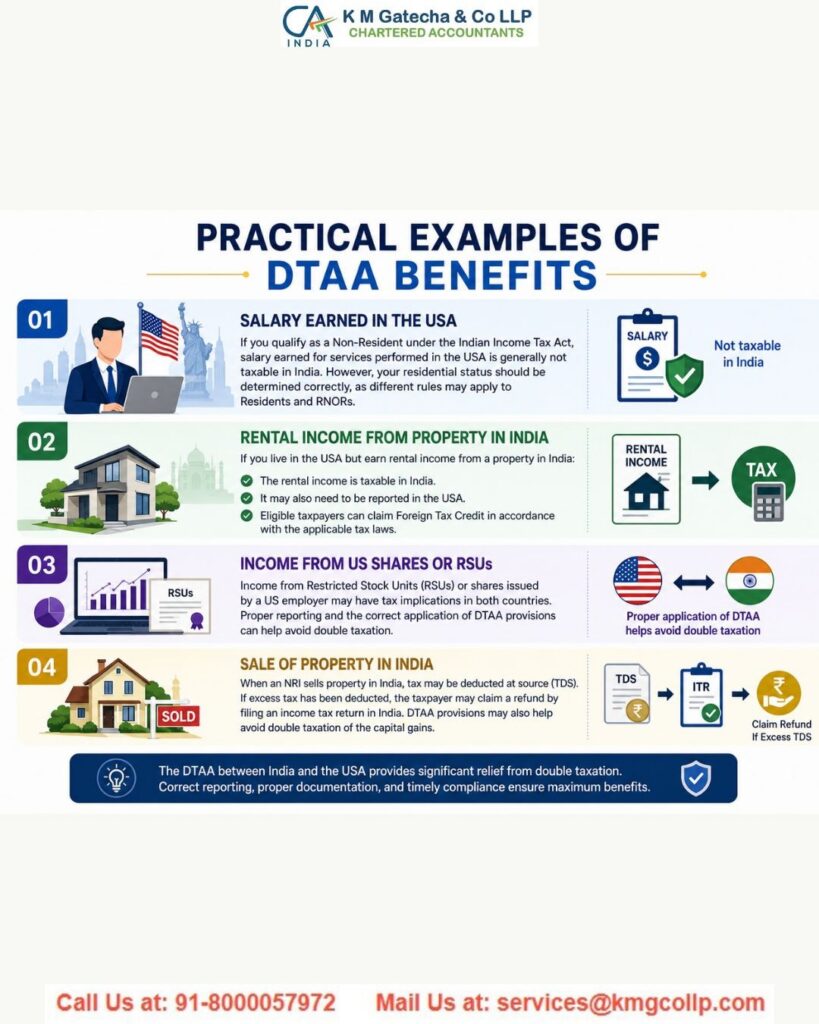
Practical Examples of DTAA Benefits
1. Salary Earned in the USA
If you qualify as a Non-Resident under the Indian Income Tax Act, salary earned for services performed in the USA is generally not taxable in India. However, your residential status should be determined correctly, as different rules may apply to Residents and RNORs.
2. Rental Income from Property in India
If you live in the USA but earn rental income from a property in India:
- The rental income is taxable in India.
- It may also need to be reported in the USA.
- Eligible taxpayers can claim Foreign Tax Credit in accordance with the applicable tax laws.
3. Income from US Shares or RSUs
Income from Restricted Stock Units (RSUs) or shares issued by a US employer may have tax implications in both countries. Proper reporting and the correct application of DTAA provisions can help avoid double taxation.
4. Sale of Property in India
When an NRI sells property in India, tax may be deducted at source (TDS). If excess tax has been deducted, the taxpayer may claim a refund by filing an income tax return in India. DTAA provisions may also help avoid double taxation of the capital gains.
How to Claim Foreign Tax Credit (FTC)
To claim Foreign Tax Credit in India, eligible taxpayers generally need to:
- File Form 67 within the prescribed time.
- Report foreign income in the relevant schedules of the income tax return.
- Provide details of taxes paid outside India.
- Keep supporting documents such as tax payment proofs and Tax Residency Certificate (where applicable).
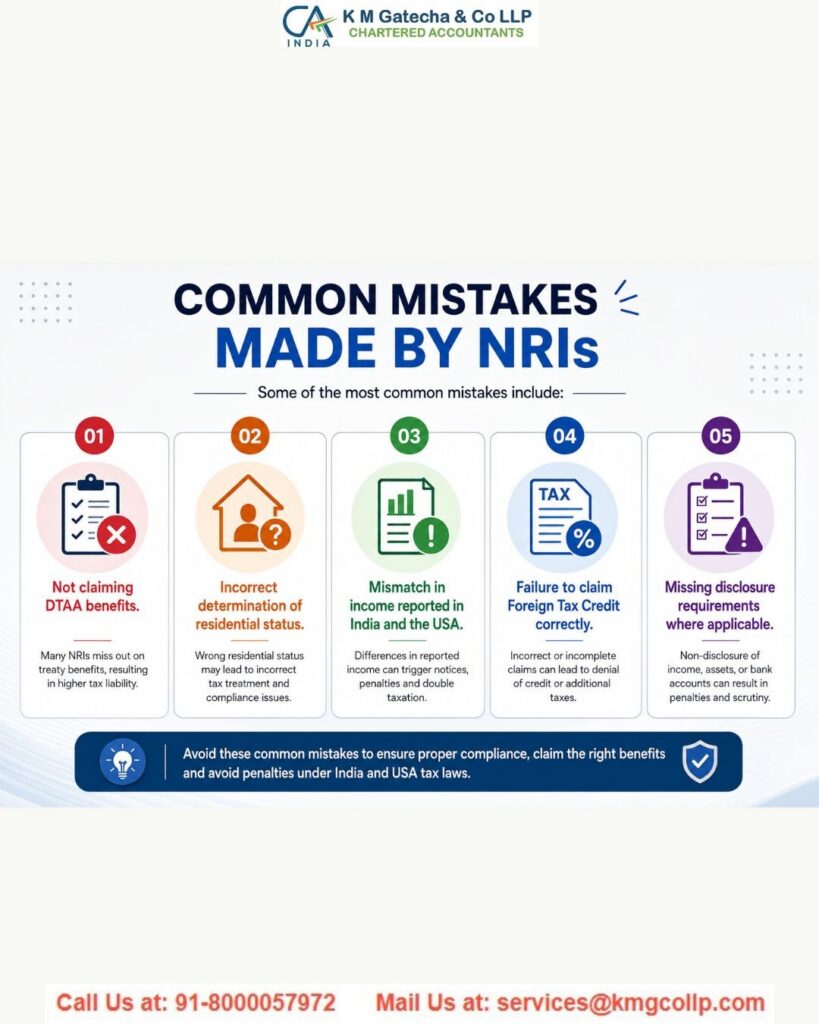
Common Mistakes Made by NRIs
Some of the most common mistakes include:
- Not claiming DTAA benefits.
- Incorrect determination of residential status.
- Mismatch in income reported in India and the USA.
- Failure to claim Foreign Tax Credit correctly.
- Missing disclosure requirements where applicable.
When Should You Seek Professional Advice?
Professional tax advice can be helpful if you:
- Earn income in both India and the USA.
- Receive salary, RSUs, dividends, or investment income from overseas.
- Sell property in India.
- Have foreign investments or assets.
- Need assistance with DTAA benefits or Foreign Tax Credit claims.
- Receive an income tax notice.
Conclusion
The India-USA DTAA helps eligible taxpayers avoid paying tax twice on the same income while ensuring compliance with the tax laws of both countries. Understanding your residential status, reporting income correctly, and claiming Foreign Tax Credit where applicable can significantly reduce tax-related issues. Proper planning and timely compliance can help NRIs manage their cross-border tax obligations more efficiently.
Disclaimer: The content on this website is for informational purposes only and does not constitute legal, financial, or professional advice. Please consult qualified experts before acting on any information. K M GATECHA & CO LLP accepts no liability for errors, omissions, or outcomes from the use of this content. This site is not an advertisement or solicitation.