
Introduction
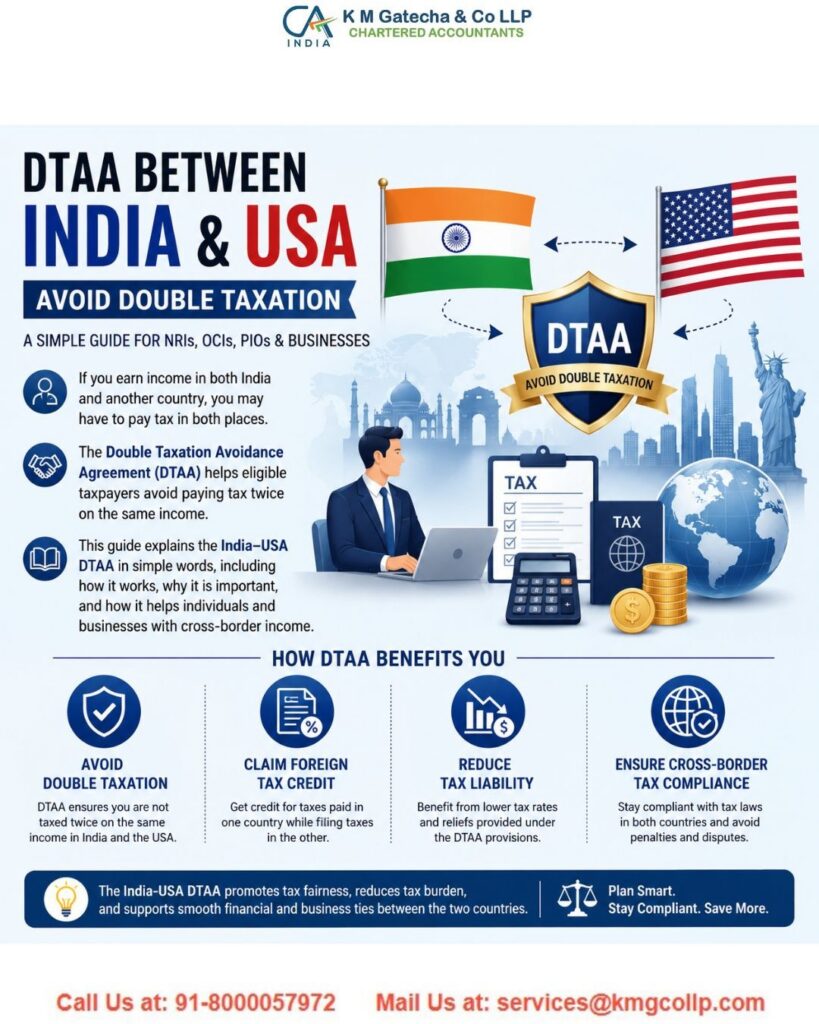
If you earn income in both India and another country, you may have to pay tax in both places. The Double Taxation Avoidance Agreement (DTAA) helps eligible taxpayers avoid paying tax twice on the same income.
This guide explains the India-USA DTAA in simple words, including how it works, why it is important, and how it helps individuals and businesses with cross-border income.
What is DTAA?
The Double Taxation Avoidance Agreement (DTAA) is a tax treaty between two countries. Its main purpose is to prevent the same income from being taxed in both countries.
The agreement also helps make international taxation simpler and provides clear rules for taxpayers with income from more than one country.
Benefits of DTAA
The India-USA DTAA helps to:
- Avoid double taxation on the same income.
- Support international trade and investment.
- Provide clear tax rules for cross-border income.
- Improve transparency in tax matters.
- Reduce the chances of tax disputes.
For example, if a person earns income in the USA and is also required to report that income in India, the DTAA provides tax relief so that the same income is not taxed twice.
How Does DTAA Work?
The India-USA DTAA provides tax relief mainly through two methods:
Exemption Method
Under this method, certain income is taxed in only one country and may be exempt from tax in the other country, depending on the treaty provisions.
This helps reduce the burden of paying tax twice on the same income.
Tax Credit Method
Under this method, income may be taxable in both countries. However, if tax has already been paid in one country, the taxpayer may claim credit for that tax while filing the return in the other country, subject to the applicable rules.
This reduces the overall tax liability and helps avoid double taxation.
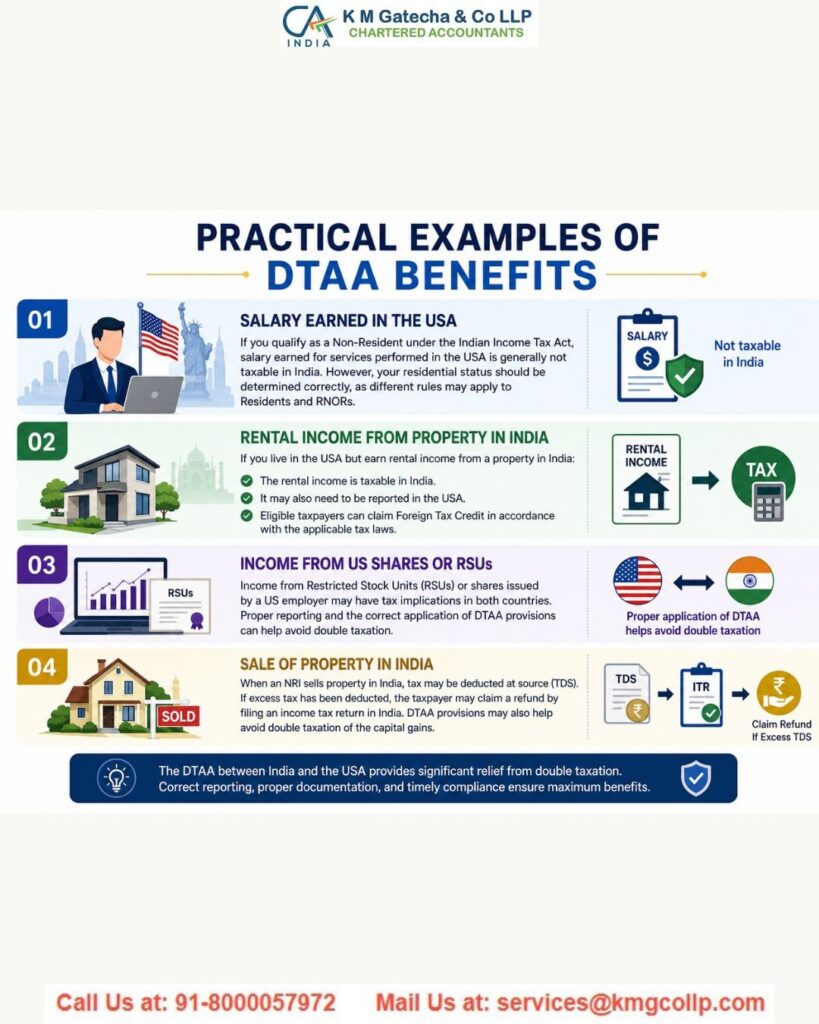
For example, if an Indian resident earns income from the USA and pays tax there, the tax already paid may be claimed as a Foreign Tax Credit while filing the income tax return in India, if the prescribed conditions are satisfied.
The DTAA makes international taxation easier by helping eligible taxpayers claim tax relief and comply with the tax laws of both countries.
India–USA DTAA: Tax Rules for Different Types of Income
The India–USA Double Taxation Avoidance Agreement (DTAA) helps individuals who earn income in both countries avoid paying tax twice on the same income. The agreement explains how different types of income should be taxed and allows eligible taxpayers to claim tax relief.
Salary Income
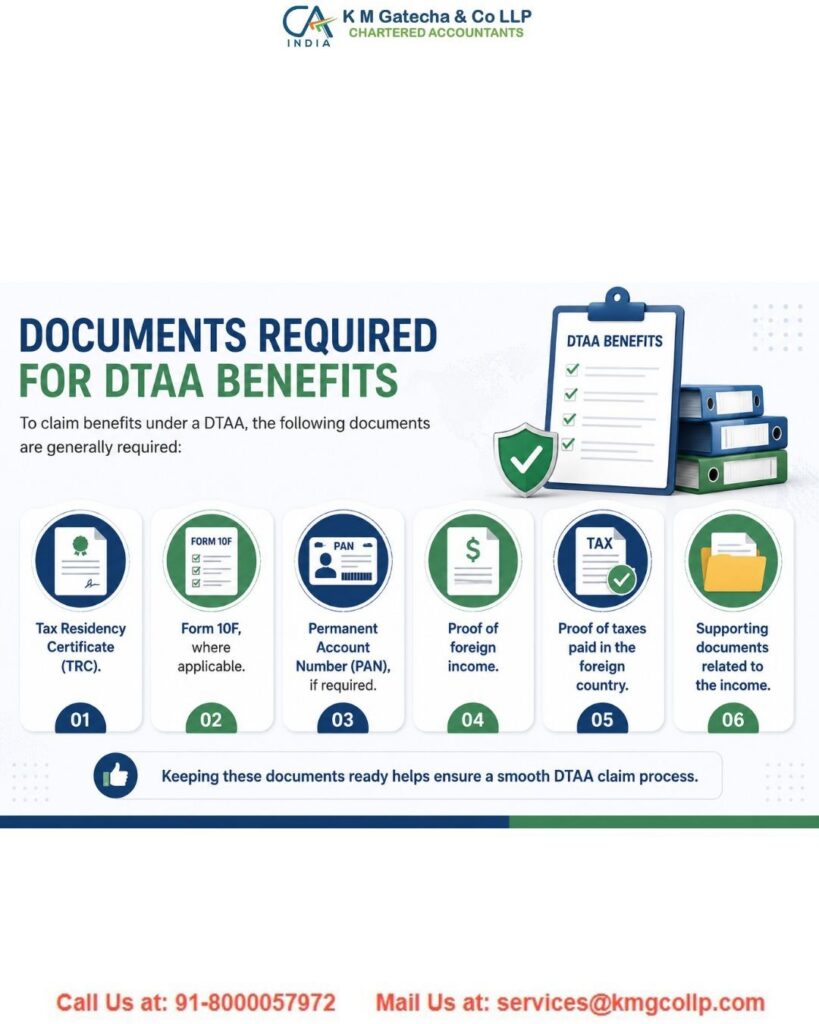
Salary income is generally taxed in the country where the work is performed. If you work in another country, your salary may be taxed there.
If you are also considered a tax resident in India, the same income may become taxable in India. However, you may be able to claim relief under the DTAA through a tax credit or exemption, depending on the applicable rules.
Dividend Income
Dividend income received from investments in another country may be taxable in both countries.
The DTAA provides lower tax rates on dividend income in certain situations. If tax is paid in one country, eligible taxpayers may claim relief in the other country to avoid double taxation.
Interest Income
Interest earned from bank deposits, loans, bonds, or similar investments may also be taxable under the DTAA.
The agreement provides reduced tax rates for certain types of interest income. If tax has already been paid in one country, you may claim tax relief in the other country, subject to the applicable conditions.
Capital Gains
Capital gains arise when you sell assets such as property, shares, or other investments.
For property, tax is generally payable in the country where the property is located. Capital gains from other investments are taxed according to the rules mentioned in the DTAA and the tax laws of the relevant country.
The agreement helps reduce the possibility of paying tax twice on the same capital gain.
Annuity Income
Regular payments received under an annuity arrangement may also be covered under the DTAA.
Depending on the applicable treaty provisions, such income may be taxable only in the country where the recipient is considered a tax resident. Eligible taxpayers can claim the available tax relief to avoid double taxation.
The India–USA DTAA provides clear rules for different types of income and helps individuals manage their tax obligations more efficiently. Understanding these provisions can help ensure correct tax reporting and reduce the chances of paying tax twice on the same income.
Key Requirements for Claiming DTAA Benefits
To claim benefits under the India–USA Double Taxation Avoidance Agreement (DTAA), eligible taxpayers must complete certain tax and documentation requirements.
Tax Residency Certificate (TRC)
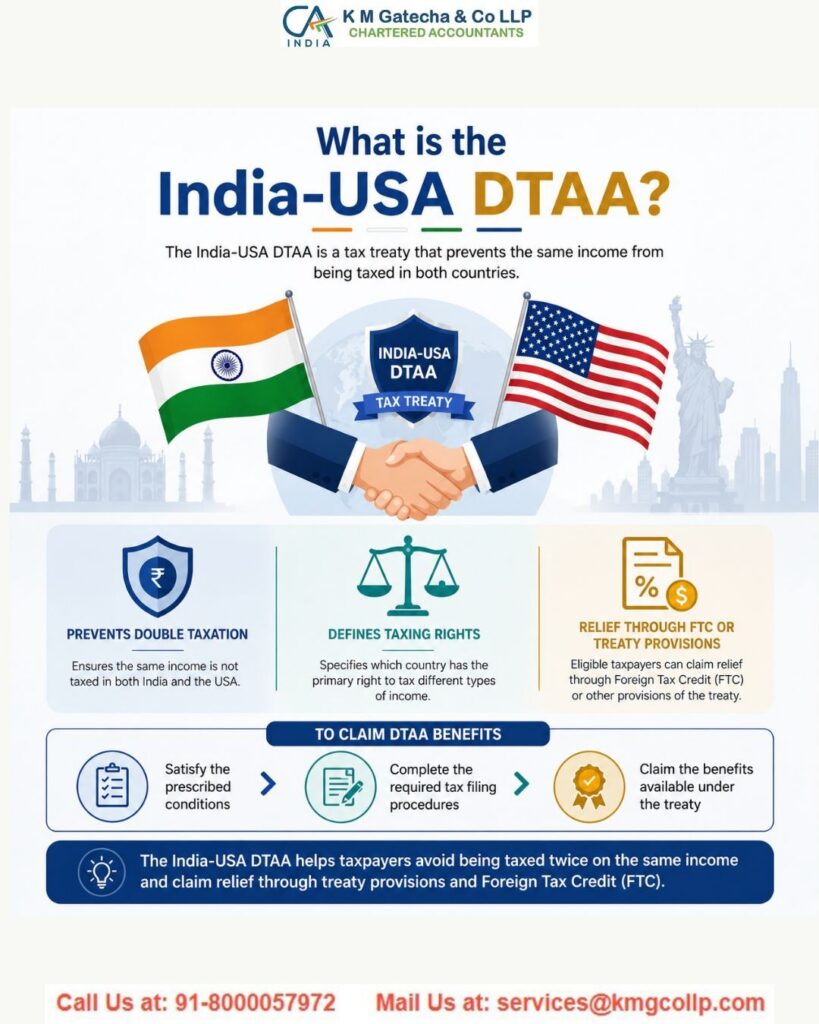
A Tax Residency Certificate (TRC) is one of the most important documents for claiming DTAA benefits. It confirms that you are a tax resident of a particular country.
A TRC generally includes:
- Name of the taxpayer
- Nationality
- Tax Identification Number (TIN), if applicable
- Residential address
- Tax residency period
Form 10F
If your Tax Residency Certificate does not contain all the required details, you may also need to file Form 10F.
This form provides additional information about your tax residency and helps support your DTAA claim.
Income Tax Filing Requirements
To claim tax relief under DTAA, you may also need to complete the required tax forms while filing your income tax return.
Depending on your case, this may include:
- Reporting foreign income in the applicable schedules.
- Claiming tax relief or Foreign Tax Credit (FTC).
- Filing Form 67, wherever required.
Keeping proper tax records and supporting documents makes the filing process easier.
India’s DTAA Network
India has signed Double Taxation Avoidance Agreements with many countries to help taxpayers avoid paying tax twice on the same income.
These agreements help:
- Reduce double taxation.
- Support international business and investments.
- Provide clear tax rules for cross-border income.
- Allow eligible taxpayers to claim tax credits or exemptions.
- Improve tax compliance.
Conclusion
The India–USA DTAA helps individuals and businesses avoid paying tax twice on the same income. By understanding the applicable rules, maintaining proper documents, and filing tax returns correctly, eligible taxpayers can claim available tax relief and meet their tax obligations with confidence.
Since tax laws and treaty provisions may change from time to time, it is important to stay updated and ensure that all filing requirements are completed correctly.
Disclaimer: The content on this website is for informational purposes only and does not constitute legal, financial, or professional advice. Please consult qualified experts before acting on any information. K M GATECHA & CO LLP accepts no liability for errors, omissions, or outcomes from the use of this content. This site is not an advertisement or solicitation.