ROC Compliance Services in India: Annual Filings, Returns and Deadlines
Understanding ROC Compliance in India
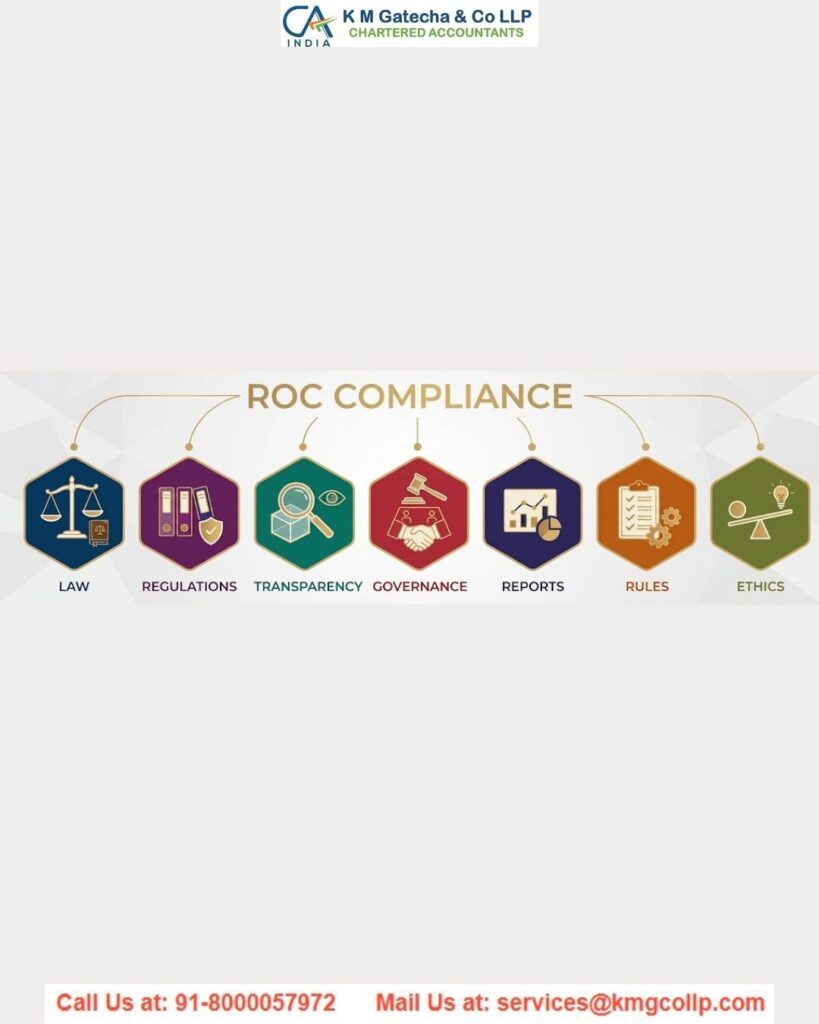
ROC (Registrar of Companies) compliance in India refers to the mandatory legal and regulatory filings that registered companies, LLPs, and other corporate entities are required to complete under the Companies Act, 2013. Professional ROC Compliance Services in India help businesses manage these requirements effectively, including ensuring timely ROC Annual Filing in India.
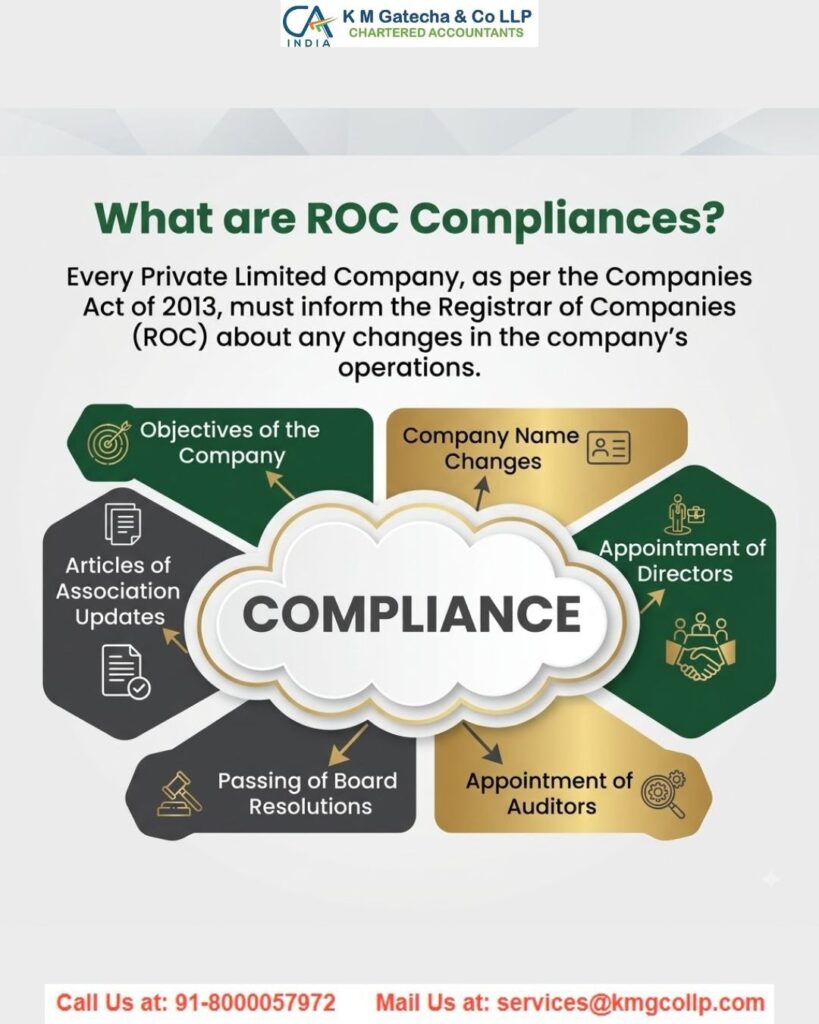
The ROC functions as a statutory authority under the Ministry of Corporate Affairs (MCA) and oversees company registration, annual filings, maintenance of statutory records, and event-based disclosures, including changes in directors, capital, or registered office address.
Meeting Registrar of Companies Compliance requirements involves the timely filing of annual returns such as Form MGT-7, audited financial statements through Form AOC-4, and other forms required for specific corporate events. Failure to comply can result in significant penalties, director disqualification, legal proceedings, or even deregistration of the company.
ROC compliance helps maintain a company’s legal status, strengthens its credibility with investors, banks, and government authorities, and supports funding opportunities and active company status. The MCA21 portal facilitates digital filing, making the compliance process more efficient while promoting transparency and good corporate governance.
What Are ROC Compliance Services?
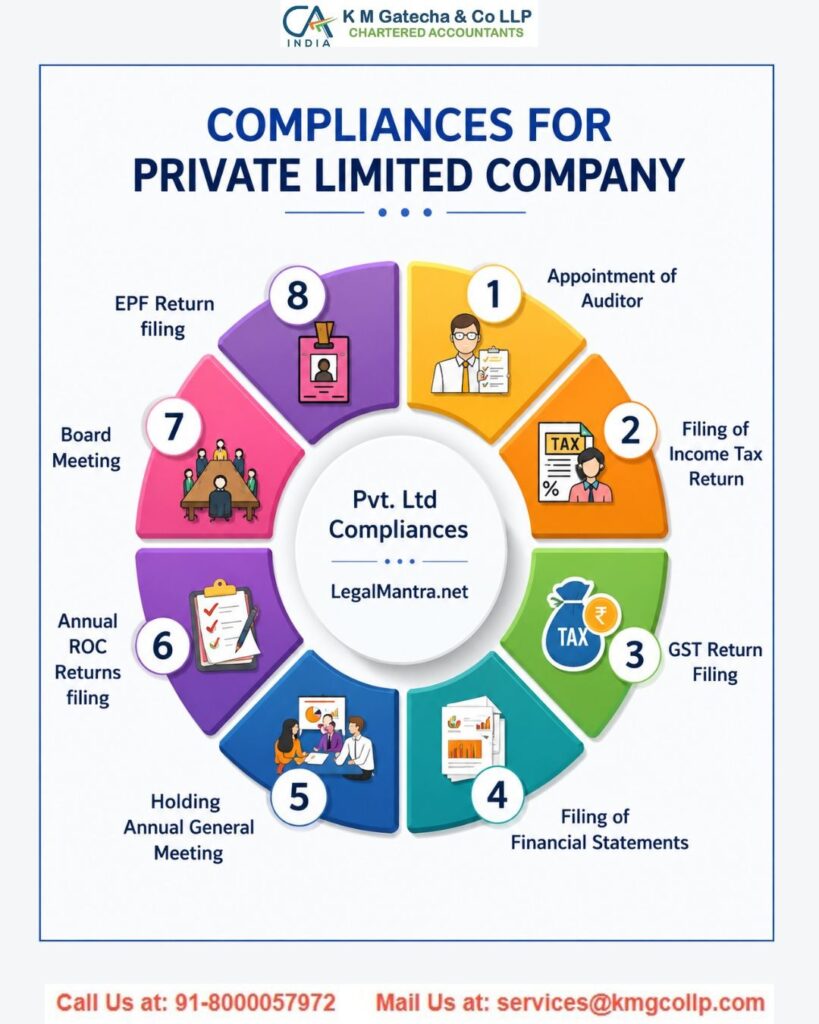
ROC Compliance Services in India offer comprehensive support for corporate compliance requirements, including company registration, ROC Annual Filing in India, board meeting documentation, and director KYC. These services may cover registration, periodic and annual filing of returns such as MGT-7 and AOC-4, director appointment and KYC, board meeting documentation, auditor appointments, and maintenance of statutory registers.
Using ROC filing services helps businesses complete filings on the MCA21 portal within the required timelines, submit accurate legal documents, and reduce the risk of penalties arising from compliance failures.
Professional service providers, including chartered accountants and company secretaries, assist businesses by providing guidance, handling filings, and managing compliance procedures efficiently. These services are relevant for registered entities such as private limited companies, public limited companies, Section 8 companies, and LLPs that aim to maintain their compliance status, minimize risks, and focus on their core business activities.
Importance of ROC Compliance for Companies
The significance of ROC compliance for companies in India can be understood through the following points:
- Proper Registrar of Companies Compliance helps maintain the company’s legal recognition and active status with the authorities, reducing the risk of deregistration or being classified as inactive.
- Timely filings help businesses avoid significant penalties, prosecution, and director disqualification that may arise due to non-compliance. ROC Compliance Services in India can help businesses remain compliant with applicable requirements.
- Updated and verified compliance records are often important when applying for loans, attracting investors, and obtaining government tenders or registrations.
- Promotes good governance: ROC compliance, accurate ROC annual filing in India, and professional MCA compliance services support organized record-keeping, financial discipline, and responsible corporate management.
- Investors are generally more comfortable investing in companies with proper compliance records, as this demonstrates financial discipline and helps reduce perceived risks.
- Maintaining updated records enables companies to access relevant information efficiently during audits, assessments, and business decision-making, thereby minimizing potential disruptions.
Key Annual ROC Filings for Companies in India
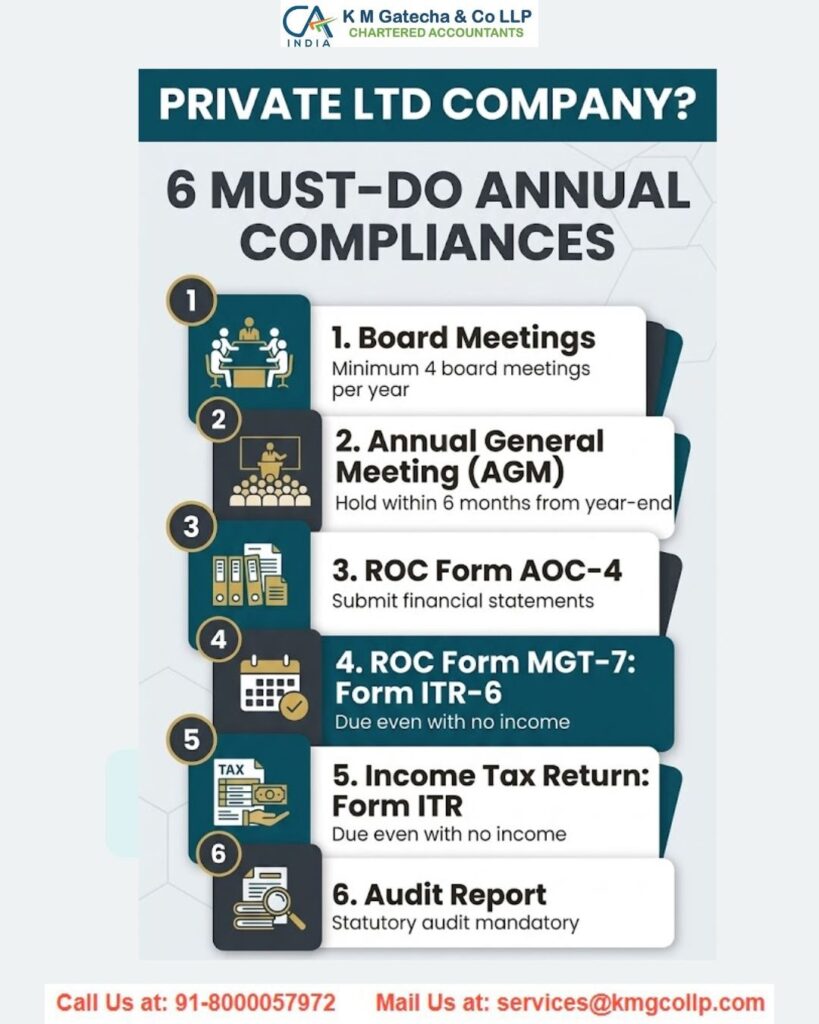
Annual ROC filings are essential compliance requirements for companies in India and must generally be submitted to the Registrar of Companies each year under the Companies Act, 2013. Companies can use ROC Compliance Services in India to manage important filings such as MGT-7, AOC-4, DIR-3 KYC, and DPT-3, along with accurate ROC Annual Filing in India.
- Annual General Meeting (AGM): The AGM must generally be conducted within 6 months from the end of the financial year, typically by September 30, 2025.
- Form MGT-7/MGT-7A (Annual Return): Provides details regarding the company, shareholding structure, changes in directorship, and key management information for the financial year.
- Form AOC-4 (Financial Statements): Contains audited financial statements, board and directors’ reports, and other relevant financial disclosures.
- Form ADT-1 (Auditor Appointment): Used to inform the ROC about the appointment or reappointment of the statutory auditor during the AGM.
- Form DIR-3 KYC: Annual KYC filing for directors to update their personal and identification details.
- Form DPT-3 (Return of Deposits): Annual filing relating to money received that falls within the deposit-related requirements under the Companies Act.
- MSME-1: A half-yearly return concerning payment delays to Micro and Small Enterprises, where applicable.
- Other Forms, as Applicable: Depending on the company’s size and activities, additional filings may include CSR-2 for CSR-related information, MR-3 for secretarial audit reports applicable to certain companies, and BEN-2 for significant beneficial ownership.
Annual ROC Filing Deadlines You Must Know
| Particular | Date / Deadline |
| AGM | Within 30 to 60 days following the conclusion of the AGM |
| Form AOC-4 (Financial Statements) | Within 30 days of the AGM. For an AGM held on September 30, 2025, the deadline is October 30, 2025. |
| Form MGT-7/MGT-7A (Annual Return) | Within 60 days of the AGM. For an AGM held on September 30, 2025, the deadline would be November 29, 2025. |
| Form DIR-3 KYC (Director KYC) | Directors must file it annually by September 30, 2025, to update their DIN details. |
| Form DPT-3 (Return of Deposits) | The annual return relating to deposits must be filed by June 30, 2025. |
| Form ADT-1 (Auditor Appointment) | To be filed within 15 days of the AGM for auditor appointment or reappointment. |
| MSME-1 | Due on April 30 and October 31. |
Professional ROC Compliance Services in India help companies adhere to these compliance timelines, reduce the risk of penalties, and ensure smooth ROC Annual Filing in India.
Documents Required for ROC Filings
For the smooth filing of annual returns, financial statements, KYC forms, and other ROC documents, businesses generally need to prepare the following:
- Audited Balance Sheet and Profit & Loss Account: Financial statements for the relevant financial year.
- Company’s Annual Return: Contains information about shareholders, directors, and the shareholding structure for Form MGT-7.
- Auditor’s Report: Report issued by the auditor certifying the financial statements.
- List of Directors and Key Managerial Personnel (KMP): Details of the company’s directors and applicable KMP.
- Details of Loans, Deposits, Penalties, and Liabilities: Required where applicable, including for filings such as DPT-3.
- Auditor Appointment or Reappointment Letter: Required for filing Form ADT-1.
- Director KYC Documents: Personal and identification details of directors required for DIR-3 KYC.
- Company Documents: Memorandum of Association (MoA), Articles of Association (AoA), and other relevant statutory records may also be required or referred to during the filing process.
Consequences of Non-Compliance with ROC Filings
Failure to comply with ROC filing requirements in India can have serious consequences, including:
- Late Filing Penalties: Delay or non-filing of annual returns (Form MGT-7) or financial statements (Form AOC-4) can attract penalties starting at ₹100 per day. These penalties may go up to ₹5,00,000 for annual returns and ₹10,00,000 for financial statements.
- Penalties on Directors: Directors responsible for non-compliance may face personal fines of up to ₹1,00,000, along with additional penalties of up to ₹1,000 per day for continuing defaults.
- Director Disqualification: If ROC filings remain pending for three consecutive financial years, the concerned directors may be disqualified from holding directorships in any company for five years under Section 164(2) of the Companies Act.
- Inactive or Dormant Status: Failure to file ROC returns for two consecutive years may result in the company being classified as inactive or dormant in MCA records. The Registrar may also initiate strike-off proceedings, making the company unable to legally operate and potentially resulting in the freezing of its bank account.
- Loss of Business Credibility: Persistent non-compliance can negatively affect the company’s reputation among investors, banks, and regulatory authorities, potentially limiting fundraising opportunities and business operations.
- Prosecution and Legal Action: Continued failure to meet ROC compliance requirements may lead to prosecution and other legal proceedings against the company and its officers.
Engaging professional ROC Filing Services can help reduce the risk of penalties, errors, and delays in ROC Annual Filing in India.
How Professional ROC Compliance Services Help Businesses
Businesses using ROC Compliance Services in India can benefit from timely filings, improved legal protection, and greater operational transparency. These services assist businesses in the following ways:
- Avoiding Penalties and Legal Issues: Professionals help prevent penalties, fines, and legal complications caused by delayed or missed ROC filings, protecting the company’s legal status and reducing potential personal liability for directors.
- Maintaining Business Credibility: Timely ROC filings strengthen the company’s credibility with investors, banks, government authorities, and business partners, supporting smoother operations and better access to funding.
- Ensuring Accurate Compliance: Professionals help ensure that filings are complete, accurate, and aligned with applicable ROC requirements while assisting businesses in handling regulatory changes.
- Managing Documentation and Filings: ROC compliance providers assist with collecting documents, preparing financial statements and reports, maintaining board meeting documentation, and completing electronic filings through the MCA portal.
- Reducing Administrative Work: Outsourcing ROC compliance minimizes the administrative burden on management and allows them to concentrate on core business activities.
- Supporting Eligibility for Incentives and Tenders: Proper compliance helps businesses maintain eligibility for government incentives and participate in tenders or contracts where statutory compliance records are required.
- Encouraging Accountable Management: Consistent compliance promotes responsible management practices, supporting sustainable business growth and strengthening investor confidence.
Step-by-Step Process for ROC Annual Filings
The annual ROC filing process for companies in India generally involves the following steps:
1. Preparatory Board Meeting
- Authorize the statutory auditor to prepare the company’s financial statements in accordance with Schedule III of the Companies Act, 2013.
- Assign the Director or Company Secretary to prepare the Board’s Report and annual return containing the company’s particulars as at the end of the financial year.
2. Subsequent Board Meeting
- Review and approve the draft financial statements, Board’s Report, and annual return.
- Approve the appointment or reappointment of the statutory auditor, wherever applicable.
3. Conduct the Annual General Meeting (AGM)
- Present the financial statements and annual return to the shareholders for their consideration and approval.
- Pass the necessary resolutions and approve the statutory documents required for ROC compliance.
4. File E-Forms on the MCA Portal
The applicable ROC forms should be filed electronically through the MCA21 portal, including:
- Form AOC-4
- Form MGT-7
- Form ADT-1
- Form DIR-3 KYC
- Form DPT-3
5. Verify the Filing Status
After submitting the required forms:
- Check the MCA portal to confirm that the filings reflect statuses such as “Approved” or “Taken on Record.”
- Preserve digital as well as physical copies of filing acknowledgements and receipts for future audits, inspections, or reference.
6. Update Statutory Registers and Records
Once the annual filings are completed, the company should update its statutory records, including:
- Register of Members
- Register of Directors and Key Managerial Personnel
- Register of Charges
- Minutes Book for Board and AGM meetings
Companies can use professional ROC compliance services in India to manage these requirements accurately and complete their annual ROC filings within the applicable timelines.
Recent ROC Compliance Rules
Recent developments in ROC compliance requirements for Indian companies during 2025 include the following:
- Companies are required to maintain greater accuracy in their filings and disclosures, including detailed financial-year information and shareholder classifications in forms such as MGT-7.
- Various ROC forms, including GNL-1, CRA-2, CRA-4, MGT-7, MGT-7A, and MGT-15, have been amended or replaced to improve transparency, simplify filing procedures, and strengthen digital compliance. Certain filings may also require photographs of the registered office showing the company’s name.
- Additional disclosures may be required regarding debenture-related indebtedness, ongoing investigations, and the status of rectification in compounding matters.
- The ROC compliance calendar for FY 2025-26 focuses on timely filing of forms such as AOC-4, MGT-7, DIR-3 KYC, DPT-3, and MSME-1, with penalties applicable for delays.
- The transition from the MCA V2 platform to MCA V3 is introducing more streamlined digital procedures for filings and amendments while maintaining corporate governance standards.
Keeping track of changing regulations is essential for maintaining proper ROC compliance. Professional ROC compliance services can help companies stay updated with MCA requirements and manage their annual ROC filings efficiently.
Conclusion
ROC compliance under the Companies Act, 2013 is an important statutory responsibility for companies operating in India. It is more than a routine filing obligation, as it promotes transparency, accountability, and adherence to corporate regulations. Timely compliance helps businesses avoid penalties, director disqualification, and other legal complications while strengthening their credibility with investors, banks, and regulatory authorities.
We provide professional ROC Filing Services to assist companies across India with their statutory filing obligations under the Companies Act, 2013. Our services cover the preparation and timely filing of annual returns, financial statements, director KYC, and other applicable compliance forms through the MCA portal. Our experienced professionals focus on accurate submissions, reducing compliance risks and helping maintain the company’s good statutory standing.
Disclaimer: The content on this website is for informational purposes only and does not constitute legal, financial, or professional advice. Please consult qualified experts before acting on any information. KM GATECHA & CO LLP accepts no liability for errors, omissions, or outcomes from the use of this content. This site is not an advertisement or solicitation.