What Is an Income Tax Scrutiny Notice?
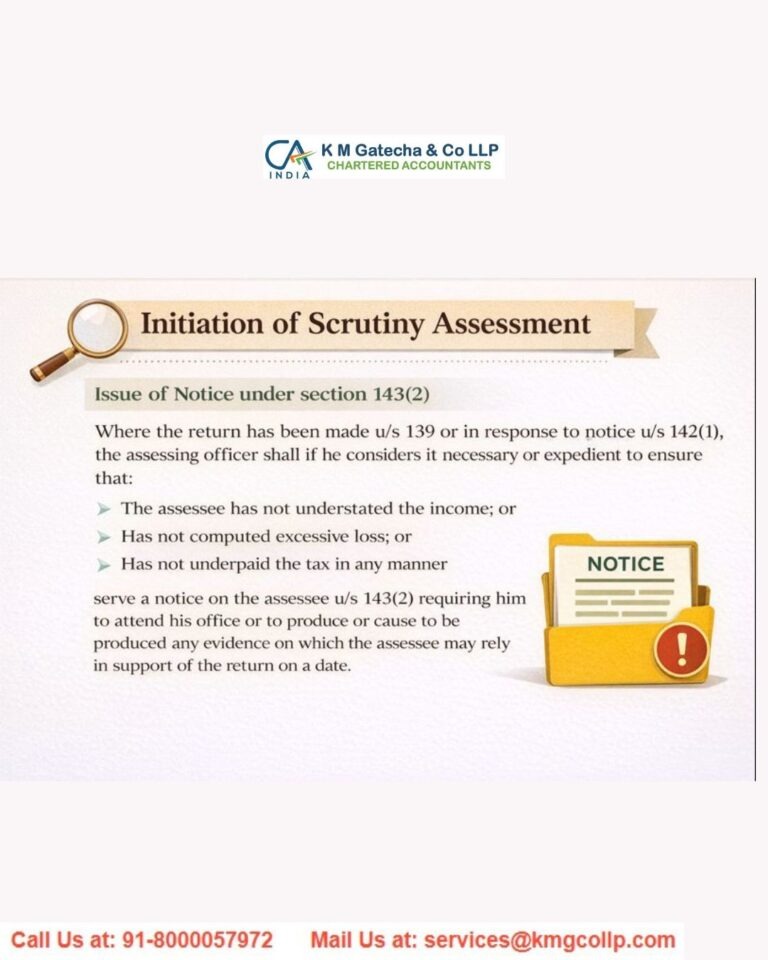
An Income Tax scrutiny notice is an official communication issued by the Income Tax Department when a taxpayer’s income tax return is selected for detailed verification. A notice under Section 143(2) of the Income Tax Act is generally issued when the department wants to examine whether the information reported in the ITR is accurate and consistent with the data available through sources such as Form 26AS, Form 16, AIS, and other records.
Types of Scrutiny Assessment Under the Income Tax Act
Scrutiny assessment involves a detailed examination of the taxpayer’s financial information and the return filed for the relevant assessment year.
An ITR may be selected for closer examination based on risk parameters, data analysis, information available with the department, or other prescribed selection criteria. A notice under Section 143(2) is commonly associated with the scrutiny assessment process.
The major forms of scrutiny include:
Limited Scrutiny Under Section 143(2)
In a limited scrutiny, the Assessing Officer focuses on specific issues or selected aspects of the taxpayer’s return rather than examining the entire return.
Common areas that may require verification include:
- Mismatch between Form 26AS, AIS, and TDS credits
- High-value foreign travel compared with reported income
- Significant cash deposits during the financial year
- Sudden changes in reported income or expenses
- Difference between the declared property sale value and the applicable stamp duty value
Example:
If a taxpayer has bank deposits of ₹15 lakh during a financial year but reports annual income of only ₹6 lakh in the ITR, the department may seek clarification regarding the source and nature of the remaining funds.
Complete Scrutiny Under Section 143(2)
Complete scrutiny involves a broader examination of various aspects of the taxpayer’s income tax return.
It may arise where the department identifies significant inconsistencies, undisclosed high-value transactions, or other information requiring detailed verification.
During complete scrutiny, the Assessing Officer may request documents and explanations relating to:
- Income and sources of income
- Deductions and exemptions
- Investments and assets
- Loans and liabilities
- Property transactions
- Business expenses
- Bank transactions
- Other financial information relevant to the assessment
The taxpayer may be required to provide supporting documents and explanations for the information reported in the return.
Manual Scrutiny
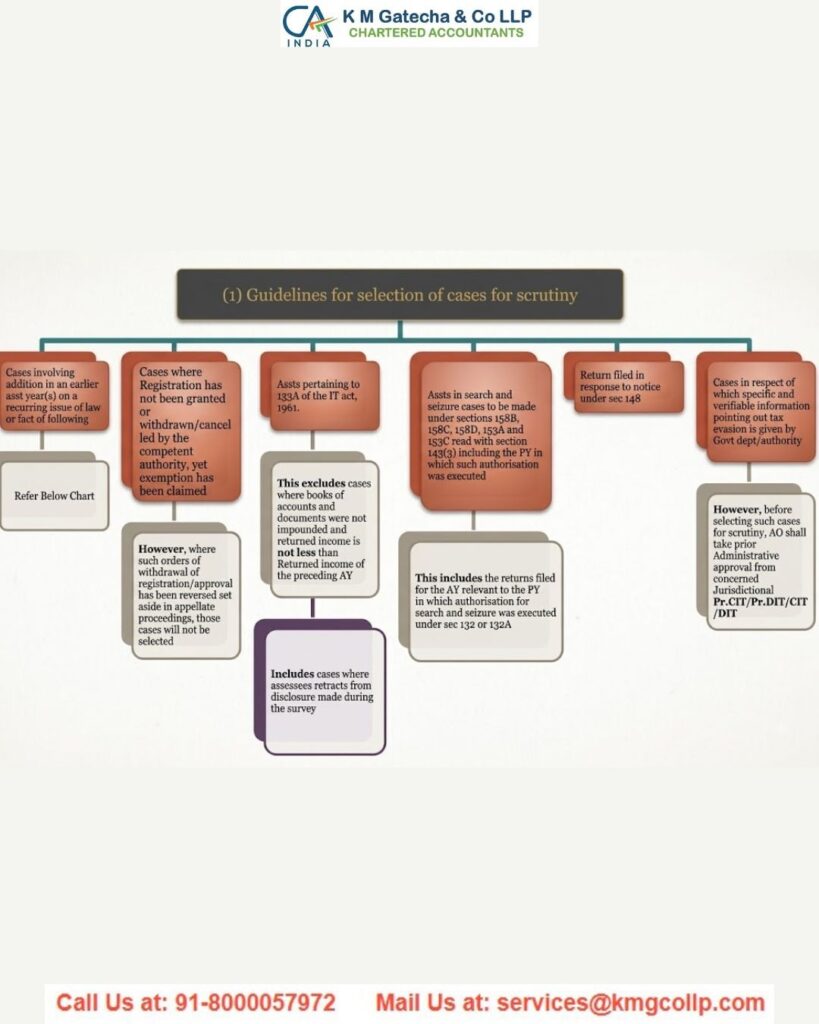
Manual selection of cases is less common and may be undertaken in specific circumstances based on criteria or instructions prescribed by the Central Board of Direct Taxes (CBDT).
Examples of situations that may warrant closer examination include:
- Suspicious or high-value purchases and transactions
- Cases flagged based on information received from other government authorities
- Undisclosed assets or income
- Failure to file an income tax return
- Non-disclosure of relevant exempt income
- Certain cross-border or international transactions
What Triggers a Scrutiny Notice?
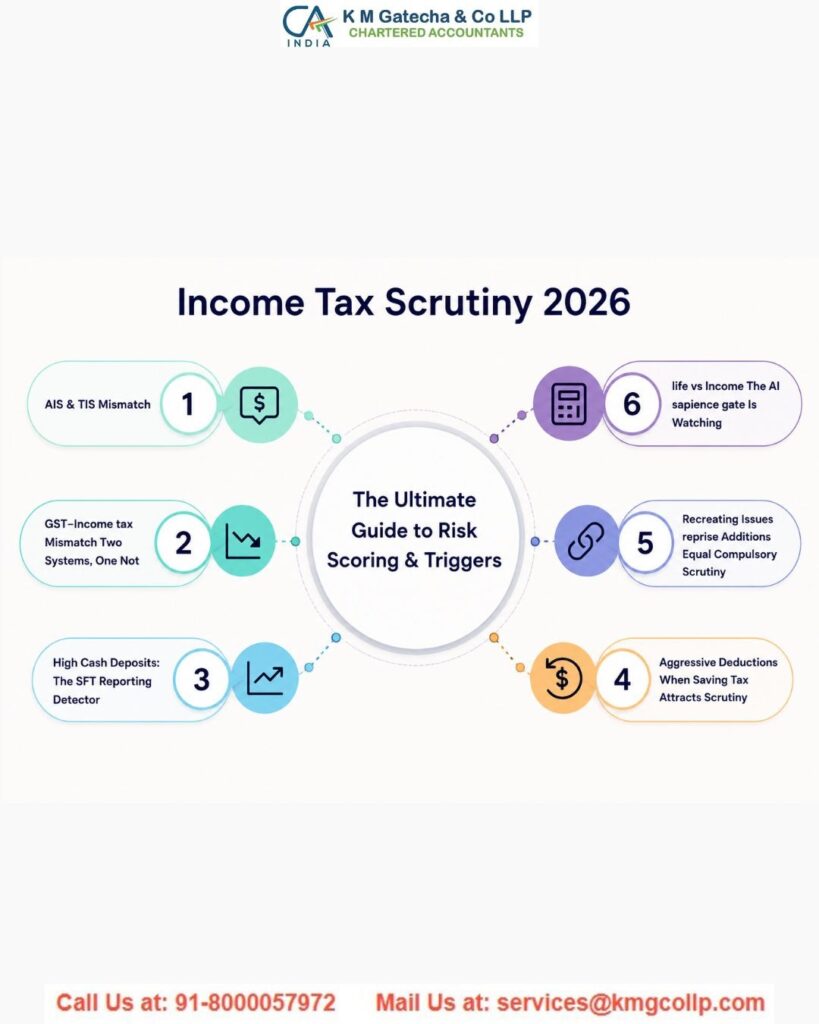
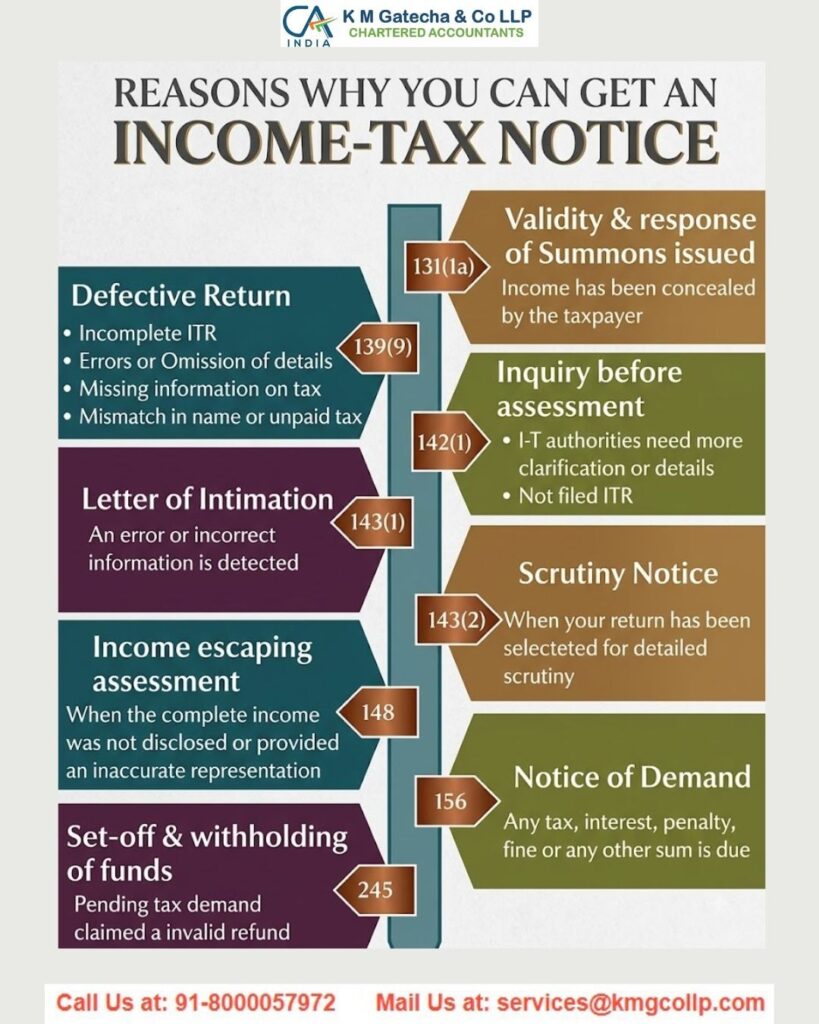
An income tax scrutiny notice may be issued when the information reported in your ITR differs from the information available with the Income Tax Department. Some common factors that may result in scrutiny include:
- Non-filing of ITR: The department may select a taxpayer for scrutiny if they are required to file an income tax return but have failed to do so.
- Errors, omissions, or inaccurate information: Incorrect income details, TDS mismatches, incomplete disclosures, or other inaccuracies in the return may lead to further verification.
- Non-disclosure of income: Income from sources such as bank interest, fixed deposits, or other investments that has not been reported in the ITR may attract attention, even where TDS has already been deducted.
- Unusual or high-value transactions: Significant cash deposits, high-value purchases, property transactions, or other transactions that appear disproportionate to the reported income may be flagged for verification.
- Mismatch with information available from other sources: Differences between the information declared in the ITR and data reflected in sources such as Form 26AS or AIS may result in the return being selected for scrutiny.
Timeline & Deadlines for Income Tax Scrutiny Notices
Understanding the applicable timeline for scrutiny notices is important so that taxpayers can respond appropriately and avoid unnecessary complications.
- A notice under Section 143(2) is subject to the time limit prescribed under the Income Tax Act for the relevant assessment year.
- For example, where an ITR is filed during FY 2024–25, the applicable statutory deadline for issuing a Section 143(2) notice should be determined based on the provisions applicable to that assessment year.
- If a notice is not issued within the prescribed statutory period, the scrutiny proceedings under Section 143(2) may not be validly initiated.
- Once a scrutiny notice is received, the taxpayer should carefully check the response deadline mentioned in the notice and submit the required information within the specified period.
- Failure to comply with the notice can result in further assessment proceedings and may attract additional consequences depending on the nature and extent of the default.
Time Deposit vs Demand Deposit: Which Should You Choose?
The choice between a time deposit and a demand deposit depends on factors such as the depositor’s return expectations, liquidity requirements, financial objectives, and tax considerations.
- Desired Returns: Term deposits generally offer higher interest rates than demand deposits. Depositors looking for predictable returns may therefore prefer a term deposit.
- Liquidity Needs: Demand deposits provide easier access to funds, making them more suitable for individuals who require greater liquidity.
- Financial Goals: Those who want readily available emergency funds may prefer demand deposits, while individuals focused on longer-term savings may consider term deposits such as fixed or recurring deposits.
- Tax-Saving Needs: Interest earned on both demand and term deposits is generally taxable according to the applicable tax provisions. Certain five-year tax-saving fixed deposits may qualify for a deduction under Section 80C, subject to the applicable conditions and the taxpayer choosing the old tax regime.
What to Do When You Receive an Income Tax Scrutiny Notice?
Receiving an income tax scrutiny notice does not necessarily mean that there is a problem with your return. It is generally a request from the Income Tax Department for additional information, clarification, or supporting documents. You should review the notice carefully and respond within the specified time.
Step 1: Log in to the Income Tax Portal
Use your credentials to access your income tax e-filing account. Navigate to the Worklist section and select e-Proceedings to view the proceedings related to the notice.
Step 2: Review the Notice
Open the relevant notice and select “View Notice” to understand the issues or information being examined by the tax department. Carefully review the questions, documents requested, and response deadline before preparing your submission.
Step 3: Submit Your Response
Click “Submit Response” and select the appropriate option, such as “Agree” or “Disagree,” based on whether you accept the observations or requirements mentioned by the department.
Step 4: Upload Supporting Documents
If you agree with the department’s observations, provide the requested information and supporting documents, such as the ITR JSON file, bank statements, deduction proofs, or other relevant records.
If you disagree, select the appropriate option and provide the reason for your disagreement along with supporting evidence wherever required.
Step 5: Save the Transaction Number
After submitting your response, the portal will generate a transaction number or acknowledgement. Keep this information safely for future reference and communication regarding the scrutiny proceedings.
Once the response is submitted, the Assessing Officer will review the information and documents provided and take further action as applicable.
Documents Required for Scrutiny Assessment
The documents required will depend on the nature and scope of the scrutiny. Commonly requested documents may include:
- Copy of the filed Income Tax Return and computation of income.
- Bank statements for all relevant accounts for the assessment period.
- Form 16 and Form 16A, where applicable.
- Proof of deductions and tax-saving investments, such as insurance premium receipts, health insurance payments, home loan interest certificates, tax-saving fixed deposit documents, and eligible mutual fund investment proofs.
- Business financial statements, purchase and sales invoices, and supporting bills for taxpayers carrying on a business or profession.
- Any other documents or explanations specifically requested in the scrutiny notice.
Scrutiny Assessment Under Section 143(3)
Scrutiny assessment under Section 143(3) involves a detailed examination of an income tax return by the Assessing Officer (AO) to verify whether the reported income, deductions, exemptions, and taxes paid have been correctly declared.
After an ITR is filed, or after a taxpayer responds to a notice under Section 142, the AO may determine that a detailed examination is required. In such cases, a scrutiny notice under Section 143(2) may be issued, requiring the taxpayer to provide relevant documents and explanations.
After completing the examination, the AO issues an assessment order under Section 143(3). Depending on the findings, the order may:
- Accept the income and claims reported in the original return, or
- Disallow certain deductions, make additions to the taxable income, and result in an additional tax liability or penalty, where applicable.
How to Reduce the Risk of a Scrutiny Notice?
While receiving a scrutiny notice cannot always be avoided, maintaining accurate and consistent tax records can help reduce the possibility of issues arising during assessment. Taxpayers should follow these basic practices:
- File your Income Tax Return on time: Submit your ITR within the prescribed due date.
- Report all sources of income: Disclose income from salary, interest, rent, investments, business, and other applicable sources.
- Match your ITR with available tax information: Ensure that the figures reported in your return are consistent with Form 26AS, AIS, and TIS.
- Claim only eligible deductions: Make sure every deduction or exemption claimed is supported by valid documents.
- Maintain proper financial records: Keep bank statements, investment proofs, receipts, invoices, and documents relating to significant financial transactions.
- Seek professional assistance when required: Taking support from a qualified tax professional can help identify inconsistencies and reduce errors while preparing and filing your income tax return.
Penalties or Consequences of Not Responding
Failing to respond to an income tax scrutiny notice within the prescribed time can result in several consequences, including:
- If a notice under Section 143(2) is ignored, the Assessing Officer may proceed with a best-judgment assessment under Section 144, which may result in a higher tax demand.
- A penalty of ₹10,000 may be imposed for each instance of non-compliance under the applicable provisions.
- If the assessment results in an additional tax demand and you decide to appeal, the applicable pre-deposit requirements may increase your financial burden.
- In serious cases, deliberately suppressing material information or providing incorrect details in the ITR may also result in prosecution and imprisonment, depending on the circumstances.
Disclaimer: The content on this website is for informational purposes only and does not constitute legal, financial, or professional advice. Please consult qualified experts before acting on any information. K M GATECHA & CO LLP accepts no liability for errors, omissions, or outcomes from the use of this content. This site is not an advertisement or solicitation.