Accounting and Bookkeeping Outsourcing Services in India
Ideal for startups and foreign companies looking to keep their day-to-day financial records accurate and up to date.
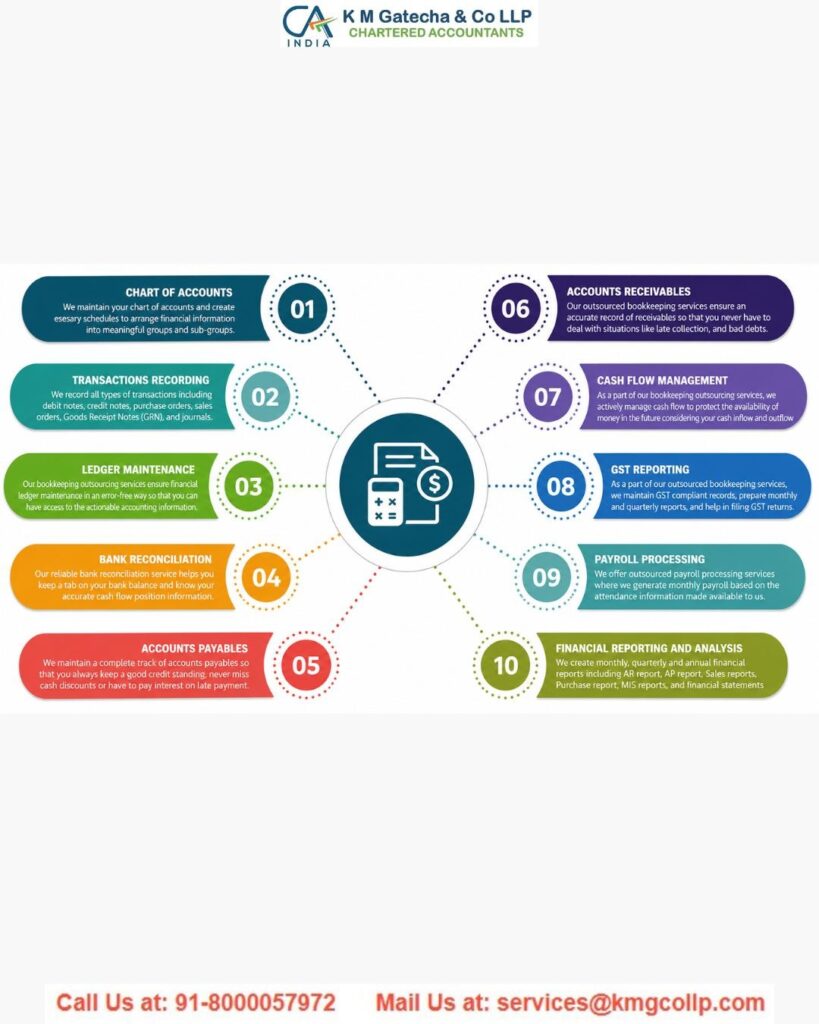
Bookkeeping and Accounting Services at a Glance
Bookkeeping and accounting are often used interchangeably, but they are distinct activities. Bookkeeping is the foundation of accounting, as it involves systematically recording a business’s financial transactions.
Examples of bookkeeping include maintaining day books, journals, and ledgers.
Legal Requirements for Maintaining Books of Accounts
Businesses in India are required to maintain proper books of accounts under various laws and regulations, including:
- Income Tax Act
- Companies Act, 2013
- GST Act
Depending on the applicable laws, books and financial records may need to be preserved for 6 to 8 years.
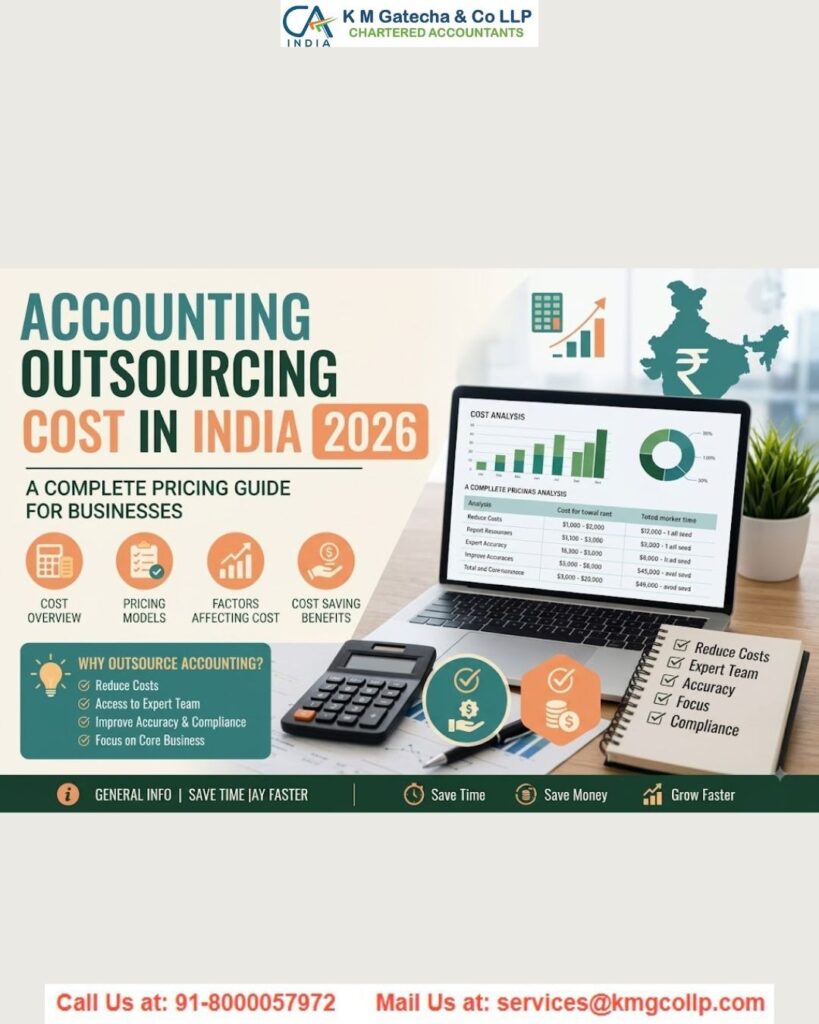
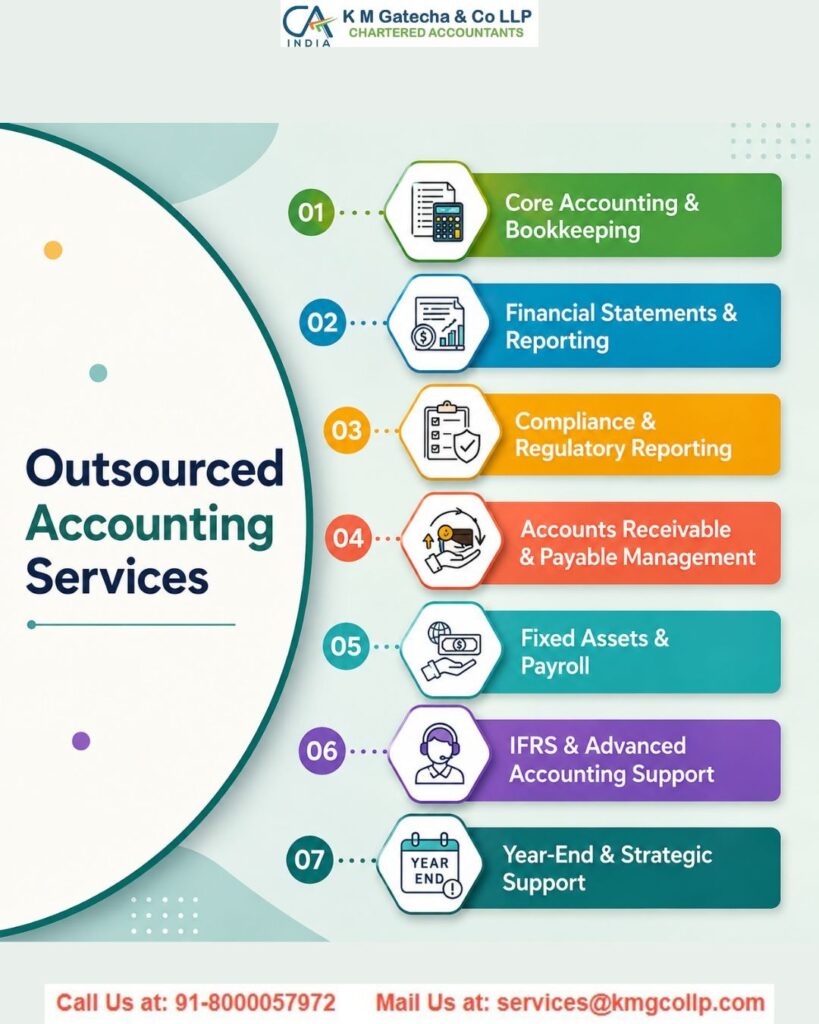
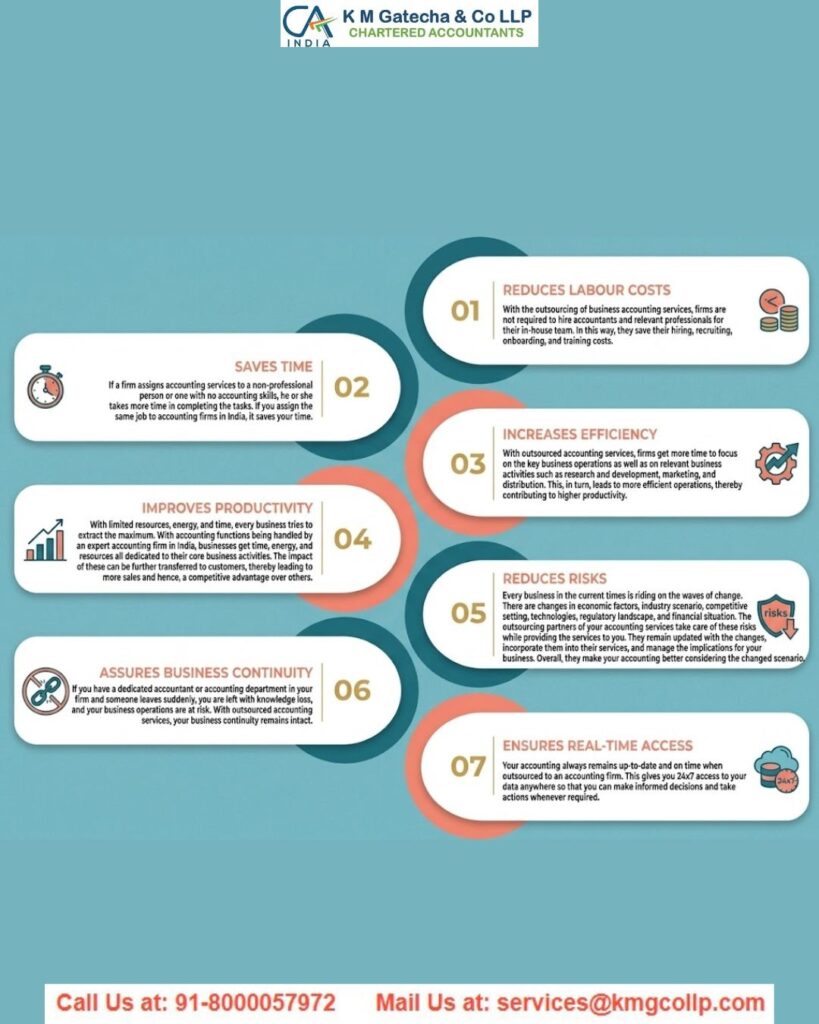
By outsourcing bookkeeping and accounting, businesses can maintain accurate records while focusing on their core operations. Regular reporting and financial analysis can also help management evaluate performance, plan ahead, and make informed business decisions.
Benefits of Maintaining Proper Books of Accounts
| Benefit | How It Helps |
| Compliance with Legal Requirements | Proper books help businesses comply with the Income Tax Act, Companies Act, GST Act, and other applicable regulations. Accurate records also support correct tax calculations, return filing, and compliance with applicable accounting standards. |
| Better Business Forecasting | Financial statements such as the Balance Sheet, Profit & Loss Account, Cash Flow Statement, and financial ratios provide useful insights for future planning and business projections. |
| Better Management of Customers and Suppliers | Updated books make it easier to track invoices, receivables, supplier payments, and outstanding balances, helping businesses maintain organized financial relationships. |
| Simplified Management Reporting | Accurate financial records allow business owners and management to monitor income and expenses and identify potential financial issues at an early stage. |
| Easy Access to Important Financial Data | Organized accounting records make it easier to retrieve critical information and calculate financial ratios to evaluate business performance. |
| Support for Bank Finance and Private Funding | Well-maintained financial statements demonstrate the financial position and credibility of a business. Historical Balance Sheets, Profit & Loss Accounts, and Cash Flow Statements can support funding applications and financial projections. |
| Helps Avoid Interest and Penalties | Companies have statutory obligations to maintain books of accounts using the appropriate accounting system and keep them available for inspection at the registered office during business hours. Proper maintenance helps reduce the risk of non-compliance. |
Our Bookkeeping & Accounting Retainership Service Package Includes
Accounting Entries
Recording day-to-day expenses, income, payments to parties, receipts, and statutory tax liabilities.
Invoicing
Preparation and issuance of sales invoices.
Receivable Accounting
Maintaining customer (debtor) ledgers, receivable ageing analysis, sales entries, payment collection accounting, and debit/credit note entries.
Payable Accounting
Maintaining supplier (creditor) ledgers, payable ageing analysis, purchase entries, purchase payment accounting, and debit/credit note entries.
Reconciliation
Bank reconciliation with bank statements, inter-branch reconciliation, and reconciliation of party statements.
Financial Statements
Preparation of the Balance Sheet, Profit & Loss Account, and Cash Flow Statement for companies.
Tax Computation
Monthly and periodic computation of GST, TDS, TCS, and other applicable taxes to facilitate timely payment to the Government.
Use of Accounting Software
Use of suitable accounting software based on the nature of the business and the volume of transactions.
How We Maintain Books of Accounts for Various Clients
For Indian Companies
For private and public limited companies, we maintain books of accounts in accordance with the provisions of the Companies Act and apply the applicable Accounting Standards issued by the Institute of Chartered Accountants of India (ICAI).
- Prepare financial statements in accordance with the applicable requirements of the Companies Act for statutory audit and tax compliance.
- Prepare monthly or quarterly Balance Sheet, Profit & Loss Account, and Cash Flow Statement.
- Provide accounting backups periodically.
- Share invoices, ledgers, and party statements as required.
- Preserve soft copies of accounting records for 8 years.
For Firms / LLPs
For firms and LLPs, we follow Generally Accepted Accounting Principles (GAAP) applicable in India while maintaining books of accounts and preparing financial statements.
- Prepare Balance Sheet and Profit & Loss Statements in accordance with applicable requirements under Income Tax and GST laws.
- Prepare quarterly Balance Sheet, Profit & Loss Account, and Cash Flow Statement.
- Provide accounting backups periodically.
- Share invoices, ledgers, and party statements as required.
- Preserve soft copies of accounting records for 8 years.
For Foreign Companies
For foreign companies, we can provide either complete bookkeeping and accounting support or handle specific accounting functions based on their requirements.
Full Accounting Support:
- Complete bookkeeping and accounting services for the business.
Partially Outsourced Accounting:
- Receivable accounting
- Payable accounting
- Invoicing
- Other specific accounting functions as required
Legal Requirements for Accounting and Maintaining Books of Accounts in India
A. Under the Income Tax Act
- Under Section 44AA of the Income Tax Act, specified persons are required to maintain prescribed books of accounts.
- Under Section 44AB, tax audit requirements apply when the business turnover or other prescribed conditions cross the applicable limits. Proper books of accounts are required for conducting such audits.
B. Under the Companies Act, 2013
- Every company is required to maintain books of account, relevant books and papers, and financial statements at its registered office. These records should provide a true and fair view of the company’s financial position, including its branch offices, where applicable.
- Books of accounts are required to be maintained on an accrual basis and according to the double-entry system of accounting under Section 128(1).
- Companies are required to file applicable audited financial statements and audit reports with the ROC annually.
- Companies must also comply with the applicable Accounting Standards issued by the Institute of Chartered Accountants of India.
- Books of accounts and relevant records are required to be preserved for a minimum period of 8 years.
- Non-Compliance Penalty: Under Section 128(6), the managing director, whole-time director in charge of finance, Chief Financial Officer, or another person responsible for compliance may face imprisonment of up to one year, a fine ranging from ₹50,000 to ₹5 lakh, or both, for contravening the applicable provisions.
C. Under the GST Act
Section 35 requires every registered person to maintain true and correct records relating to various business and tax transactions, including:
- Invoices, debit notes, and credit notes
- Production or manufacture of goods, where applicable
- Inward and outward supplies of goods or services
- Stock of goods
- Input tax credit availed
- Output tax payable and paid
- Goods or services imported or exported
- Other prescribed particulars
Disclaimer: The content on this website is for informational purposes only and does not constitute legal, financial, or professional advice. Please consult qualified experts before acting on any information. K M GATECHA & CO LLP accepts no liability for errors, omissions, or outcomes from the use of this content. This site is not an advertisement or solicitation.