

Form 141: New TDS Form for Property Purchase, Rent, Professional Payments and VDA
The income tax compliance system has introduced Form 141 from 1 April 2026 to simplify certain Tax Deducted at Source (TDS) reporting requirements.
Form 141 is designed as a unified challan-cum-statement for specified TDS transactions. It brings together multiple categories that were earlier reported through separate forms, including TDS on certain property purchases, rent payments, professional or contractor payments, and transfers of Virtual Digital Assets (VDAs).
The objective is to reduce the number of separate filings and combine payment and reporting into a single process. However, this does not mean that all transactions can be reported through one common form. Form 141 remains category-specific and month-specific, and individual deductees must still be reported separately.
This guide explains what Form 141 is, who needs to use it, which earlier forms it replaces, how the filing system works, and what changes for transactions involving multiple buyers and sellers.
What Is Form 141?
Form 141 is a unified challan-cum-statement for specified TDS payments under the new income tax framework applicable from 1 April 2026.
It consolidates the reporting mechanism for certain transactions that were previously covered through different forms.
The earlier forms included:
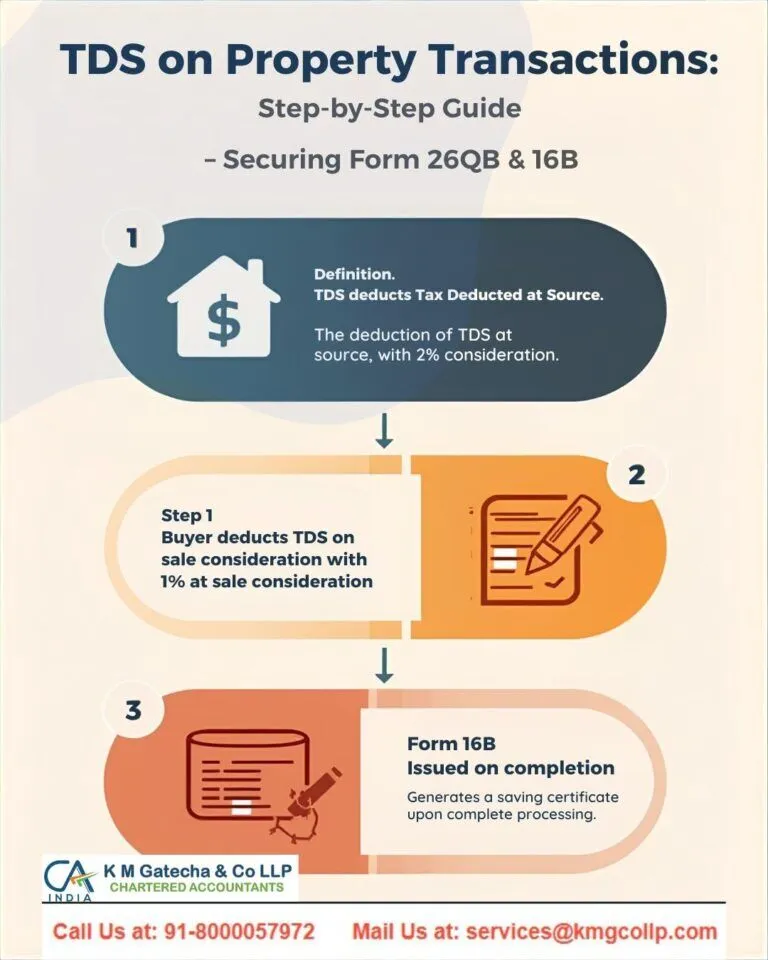
- Form 26QB for TDS on certain purchases of immovable property
- Form 26QC for specified rent payments
- Form 26QD for specified professional or contractual payments
- Form 26QE for specified Virtual Digital Asset transactions
Under the new system, these specified categories are brought together through Form 141.
The form combines the payment of TDS and submission of the statement, reducing duplication in the compliance process.
When Is Form 141 Applicable?
Form 141 applies from 1 April 2026, meaning it is relevant for the applicable transactions falling under the new tax framework from Financial Year 2026-27.
It is primarily relevant to individuals and Hindu Undivided Families (HUFs) that are not liable to tax audit, for the specified transactions covered by the form.
The main categories covered are:
- Purchase of certain immovable property
- Specified rent payments
- Specified professional or contractor payments
- Transfer of Virtual Digital Assets
The applicable threshold and conditions depend on the category of payment.
Which Earlier Forms Are Replaced by Form 141?
Form 141 consolidates the reporting that was earlier handled through four separate forms.
| Earlier Form | Broad Purpose | New Form |
| Form 26QB | TDS on specified immovable property purchases | Form 141 |
| Form 26QC | TDS on specified rent payments | Form 141 |
| Form 26QD | TDS on specified professional/contract payments | Form 141 |
| Form 26QE | TDS on specified VDA transfers | Form 141 |
Therefore, the key change is not that TDS itself has disappeared. Instead, the reporting and payment structure has been consolidated.
What Transactions Are Covered Under Form 141?
Form 141 covers different categories of specified payments.
1. Purchase of Immovable Property
TDS on specified purchases of immovable property is covered under the property-related section of Form 141.
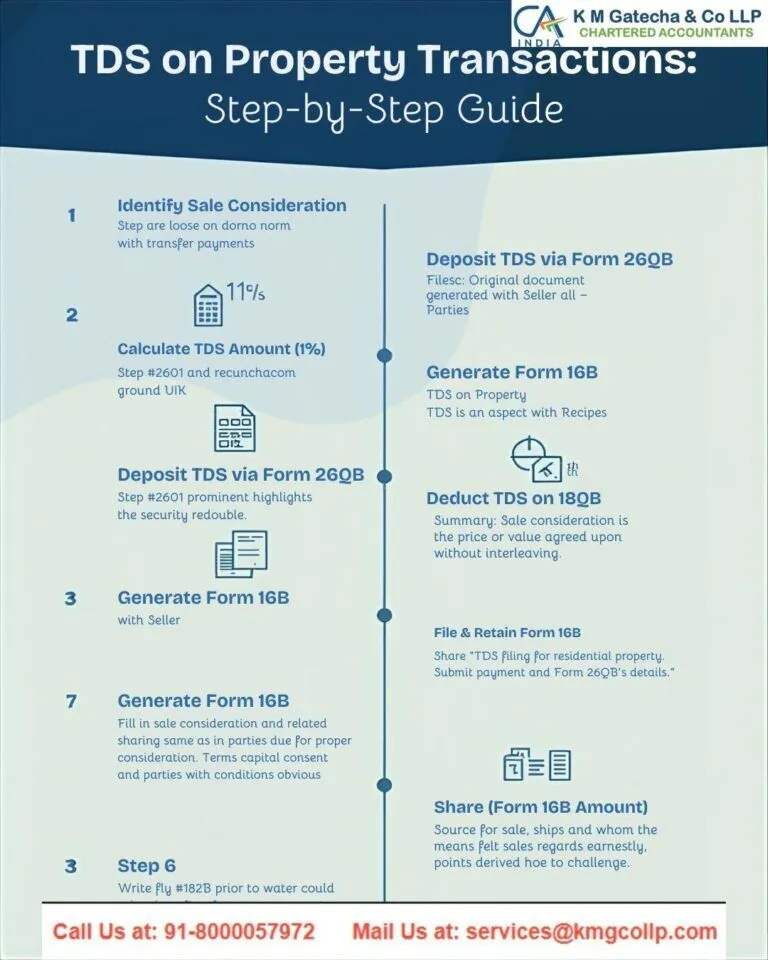
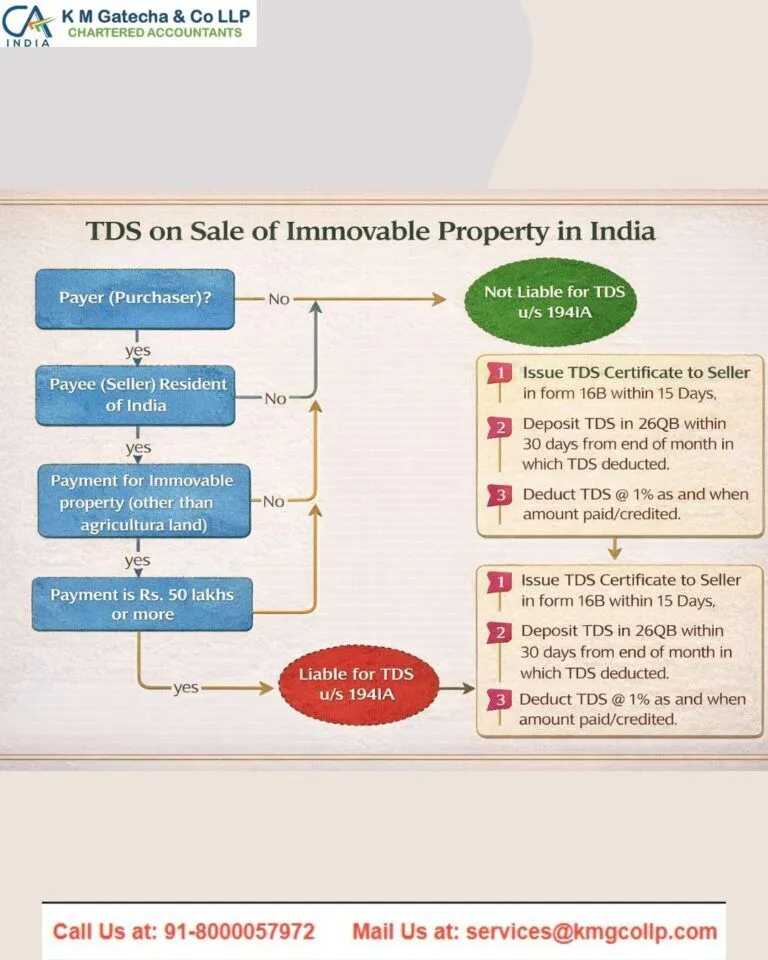
The earlier property TDS mechanism was associated with Section 194-IA and Form 26QB.
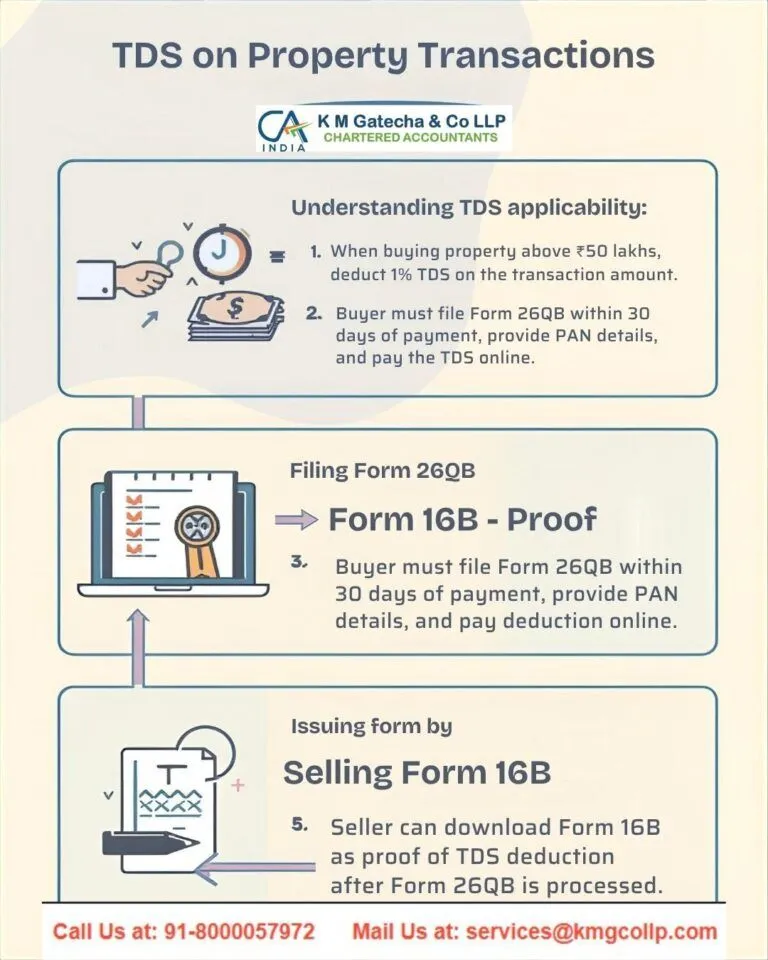
For covered property transactions, the commonly applicable threshold is ₹50 lakh, subject to the relevant provisions.
2. Rent Payments
Specified rent payments covered by the applicable TDS provisions are also included.
The source identifies rent exceeding ₹50,000 per month as the relevant trigger for the covered category.
3. Professional or Contractor Payments
Certain payments made by individuals or HUFs to professionals or contractors can fall within the applicable TDS provisions.
The source identifies payments exceeding ₹50 lakh in aggregate for the relevant category.
4. Virtual Digital Assets
Transfers involving Virtual Digital Assets, including specified crypto-related transactions, can also fall within the Form 141 framework where the applicable threshold and conditions are met.
The applicable requirements depend on the nature of the transaction and the relevant provisions.
Form 141 for Property Purchase
One of the important applications of Form 141 is TDS on the purchase of immovable property.
Under the earlier system, Form 26QB was generally filed separately for each buyer-seller combination.
This could create a large number of filings when a property had multiple buyers and sellers.
For example, if a property transaction involved:
- 2 buyers, and
- 3 sellers,
the earlier buyer-seller based system could require multiple separate forms.
Form 141 changes this approach by allowing consolidation buyer-wise, provided the transactions belong to the same category and month.
However, this does not remove the requirement to provide seller-wise information.
Each seller still needs to be reported separately within the relevant Form 141.
How Does Buyer-Wise Filing Work?
Under Form 141, a buyer can generally file one Form 141 per month per category.
For a property transaction, multiple sellers can be included in the same form when the relevant conditions for consolidation are satisfied.
However, the details of each seller must remain separately identifiable.
For each deductee, the required information may include:
- Seller’s PAN
- Amount paid or credited
- TDS deducted
- Other required transaction details
Therefore, Form 141 reduces the number of forms but does not eliminate seller-level reporting.
Form 141 Does Not Mean One Form for Every Transaction
The term “unified form” should not be misunderstood.
It does not mean that a person can combine property purchases, rent payments, professional payments, and VDA transactions into one single filing.
The filing remains category-specific.
For example:
- Property transactions are reported under the relevant property category.
- Rent transactions are reported under the relevant rent category.
- Professional or contractor payments are reported under their relevant category.
- VDA transactions are reported under the relevant VDA category.
The filing is also connected to the month in which the deduction is made.
Therefore, Form 141 is a unified format, but it does not create unlimited consolidation.
Form 141 Filing Rule: Buyer + Month + Category
A practical way to understand the new filing system is:
One Form 141 per deductor/buyer + month + transaction category, subject to the applicable rules.
For example, a buyer making covered property-related TDS deductions in one month may consolidate the relevant seller details into the applicable Form 141.
If payments or deductions occur in another month, a separate filing may be required for that month.
Similarly, property and rent transactions cannot simply be combined into one Form 141 merely because they involve the same buyer.
Form 141 Due Date
The source states that the filing timeline remains 30 days from the end of the month in which the TDS is deducted.
Therefore, although the form has changed, the basic filing timeline for the covered transactions remains important.
Taxpayers should ensure that both TDS payment and statement filing are completed within the applicable deadline.
Has the TDS Rate Changed Under Form 141?
The introduction of Form 141 is primarily a change in the reporting and filing mechanism.
It does not, by itself, mean that the applicable TDS rates have changed.
For example, the source refers to rates such as 1% and 5% for relevant categories, depending on the transaction and applicable provisions.
The applicable rate should always be checked against the relevant provision and transaction because different categories can have different requirements.
Form 132 and TDS Certificates
The new system also introduces changes to the certificate mechanism.
According to the source, Form 132 replaces the earlier certificates associated with Forms 16B, 16C, 16D, and 16E.
This is another part of the broader effort to bring different TDS processes into a more unified framework.
Form 141 vs Form 26QB
The most noticeable change for property transactions is the shift from a buyer-seller combination-based filing structure toward a more consolidated buyer-wise approach.
Earlier System: Form 26QB
Under the earlier mechanism, a separate Form 26QB was generally required for each buyer-seller combination.
This meant that the number of forms could increase rapidly when multiple buyers and sellers were involved.
For example:
2 buyers × 3 sellers = 6 buyer-seller combinations
This could result in a significant compliance burden.
New System: Form 141
Under Form 141, consolidation is possible within the same category and month.
For a covered property transaction:
- Buyer 1 can file one relevant Form 141.
- Buyer 2 can file one relevant Form 141.
- Each form can include the required details of multiple sellers.
The number of forms therefore becomes more closely linked to the number of buyers rather than every buyer-seller combination.
However, seller-wise reporting is still required.
Before and After: Simple Example
Suppose a property transaction involves:
- 2 buyers
- 2 sellers
- Payments falling within the same applicable month
Under the earlier system:
2 buyers × 2 sellers = 4 Forms 26QB
Under the new system:
2 buyers = 2 Forms 141
The individual seller details would still need to be reported within the respective forms.
| Scenario | Earlier Form 26QB | Form 141 |
| 2 buyers × 2 sellers | 4 forms | 2 forms |
| Multiple sellers | Separate filings | Multiple seller rows can be included |
| Different payment months | Separate forms | Separate monthly filing |
| Different categories | Separate applicable forms | Separate category-wise filing |
Example: Property Worth ₹1.2 Crore With Multiple Buyers and Sellers
Consider a property worth ₹1.2 crore purchased by two buyers from three sellers.
Each seller has a defined share in the property.
Under the new Form 141 system:
Buyer 1
Buyer 1 files one Form 141 for the applicable month and property category.
The form contains:
- Seller 1’s PAN and transaction details
- Seller 2’s PAN and transaction details
- Seller 3’s PAN and transaction details
- Seller-wise consideration
- Seller-wise TDS
Buyer 2
Buyer 2 similarly files one Form 141 containing the relevant details of all three sellers.
Therefore:
2 buyers = 2 Forms 141
But the three sellers must still be reported separately within each applicable form.
This distinction is important because consolidation of the form does not mean elimination of deductee-level reporting.
What Has Changed With Form 141?
The main changes can be summarised as follows:
Fewer Forms
The number of separate forms can reduce substantially because different covered TDS categories have been brought into a unified form structure.
Payment and Statement Combined
Form 141 functions as a challan-cum-statement, allowing TDS payment and reporting to be handled together.
Buyer-Wise Consolidation
For covered property transactions, filing can be consolidated buyer-wise within the same month and category.
Seller-Wise Reporting Continues
Every seller or deductee must still be separately identified.
More Importance to Data Accuracy
Because multiple deductees can be reported in one form, an error in important information can have a wider impact.
Month-Wise Filing
Transactions falling in different months cannot simply be combined into one filing.
Category-Wise Filing
Different transaction categories continue to have separate reporting requirements.
Compliance Risks Under Form 141
Although Form 141 reduces the number of filings, it does not eliminate compliance risks.
In some respects, accurate data becomes even more important.
1. Incorrect PAN Details
PAN is an important identifier for both the deductor and deductee.
An incorrect PAN can result in reporting mismatches and may create problems for the taxpayer or deductee.
2. Incorrect Seller-Wise Allocation
In transactions involving multiple sellers, the consideration and TDS must be correctly allocated to each seller.
An incorrect allocation can lead to a mismatch in the seller’s tax records and potentially result in queries or notices.
3. Errors Affecting Consolidated Filings
Under the earlier system, an error in one form was generally limited to that individual filing.
With a consolidated Form 141, an error may affect a larger set of transaction details reported through the same form.
This makes verification especially important before submission.
4. Month-Wise Errors
If payments are made across multiple months, taxpayers must correctly track the month of deduction.
A single Form 141 should not be assumed to cover payments made across different months.
5. Mixing Different Categories
The fact that Form 141 is a unified form does not mean that all types of payments can be combined.
Property, rent, professional/contract payments, and VDA transactions remain separately categorised.
6. Late Deduction and Late Filing
Changing the form does not remove the consequences of non-compliance.
Interest and applicable late filing fees can still arise where TDS is deducted late, deposited late, or the required statement is filed late.
The source specifically highlights exposure to interest under Section 201(1A) and late filing fee under Section 234E, where applicable.
Form 141 and PAN-Based Reporting
A major theme behind Form 141 is greater PAN-level reporting and reconciliation.
The new structure is designed to improve the connection between TDS information and broader income-tax reporting systems.
Accurate PAN-level information can support:
- Better reconciliation
- More accurate tax records
- Easier matching with reported income
- Better integration with AIS
- More reliable pre-filled tax information
This means taxpayers need to pay close attention to PAN details, transaction amounts, and deductee-wise allocation.
Form 141 and AIS Reporting
The move toward more structured PAN-level reporting is also connected with the wider development of systems such as the Annual Information Statement (AIS).
TDS information reported against a taxpayer’s PAN can form part of the information available in the income-tax reporting ecosystem.
Therefore, errors in TDS reporting can create mismatches that may eventually affect the taxpayer’s records.
Accurate reporting at the time of filing is therefore important.
Form 141: Old vs New Compliance Structure
| Particular | Earlier System | Form 141 |
| Forms | Multiple forms | Unified Form 141 for specified categories |
| Filing basis | Mainly transaction/buyer-seller based for covered property TDS | Buyer/deductor + month + category |
| Property multiple sellers | Separate buyer-seller filings | Multiple sellers can be included |
| Payment and statement | Challan-cum-statement forms | Challan-cum-statement |
| Deductee reporting | Separate form for applicable combination | Separate deductee details within form |
| Number of forms | Higher | Lower in eligible consolidated cases |
| Data accuracy | Important | Even more important |
| Different months | Separate filings | Separate monthly filings |
| Different categories | Separate applicable forms | Category-wise Form 141 |
Does Form 141 Reduce TDS Compliance?
Form 141 reduces the number of forms in eligible situations, but it does not remove the underlying TDS responsibilities.
The taxpayer still needs to:
- Identify whether TDS applies
- Determine the correct category
- Calculate the applicable TDS
- Deduct tax at the correct time
- Report the deductee correctly
- Provide accurate PAN details
- Deposit the tax within the applicable timeline
- File Form 141 within the prescribed period
- Maintain supporting records
- Correct errors where necessary
Therefore, Form 141 should be viewed as a simplification of the filing structure, not as a reduction in the taxpayer’s overall responsibility.
Key Points to Remember About Form 141
The most important points are:
- Form 141 is applicable from 1 April 2026.
- It is a unified challan-cum-statement for specified TDS transactions.
- It replaces Forms 26QB, 26QC, 26QD, and 26QE for the covered categories.
- It covers specified property, rent, professional/contract, and VDA transactions.
- The filing remains category-specific.
- The filing also remains month-specific.
- Multiple sellers can be reported in the same applicable form where consolidation is permitted.
- Seller-wise or deductee-wise information remains mandatory.
- PAN-level accuracy is extremely important.
- Form 141 does not eliminate TDS liability or applicable interest and late filing consequences.
- The main benefit is a reduction in the number of separate filings.
- The new system increases the importance of accurate transaction allocation and reporting.
Conclusion
Form 141 represents a major change in the way certain TDS transactions are reported from 1 April 2026.
Instead of using multiple separate forms for specified property, rent, professional or contractor payments, and VDA transactions, the new system brings the covered reporting into a unified challan-cum-statement.
For property transactions in particular, the move from separate buyer-seller filings toward buyer-wise consolidation can significantly reduce the number of forms required.
However, taxpayers should not assume that consolidation means less responsibility. Seller-wise reporting, PAN accuracy, correct allocation of consideration and TDS, month-wise filing, and category-wise reporting remain important.
In simple terms, Form 141 means fewer forms, but greater importance of accurate data. Taxpayers dealing with multiple buyers, sellers, payment instalments, or different transaction categories should carefully track each payment and deduction to avoid mismatches, notices, interest, or late filing consequences.
Disclaimer: The content on this website is for informational purposes only and does not constitute legal, financial, or professional advice. Please consult qualified experts before acting on any information. K M GATECHA & CO LLP accepts no liability for errors, omissions, or outcomes from the use of this content. This site is not an advertisement or solicitation.


