

Outsourced Finance and Accounting: A Complete Guide
Outsourcing finance and accounting has evolved from a cost-saving experiment into a standard business practice. 87% of investor-backed finance leaders now collaborate with an external finance and accounting provider. Establishing a complete senior finance team internally can be costly, time-consuming, and challenging due to hiring requirements. Businesses that outsource these functions effectively benefit from audit-ready financial records, quicker financial closes, and real-time financial visibility without the expense of employing a full-time CFO, controller, and accounting team.
This guide explains why businesses outsource finance and accounting, how to identify when outsourcing may be necessary, what an external partner provides, the main advantages and disadvantages, and how to select the right provider. Leading service providers manage an entire finance operation, including systems, automation, and experienced professionals, allowing businesses to achieve measurable results such as faster financial closes, audit-ready records, and real-time visibility.
Why Businesses Outsource Finance and Accounting
Finance and accounting play a major role in determining your company’s valuation. When a business raises funds or prepares for a sale, investors, buyers, and valuation experts assess revenue and income trends, process maturity, and the effectiveness of financial controls. Outdated technology, inadequate documentation, and dependence on a single overburdened bookkeeper can negatively affect business value. In contrast, accurate financial statements supported by strong controls can help improve it.
Many growing businesses cannot afford to maintain a complete team of senior finance professionals, even though they require high-level financial expertise and results. Outsourcing helps bridge this gap.
Businesses commonly choose outsourcing for the following reasons:
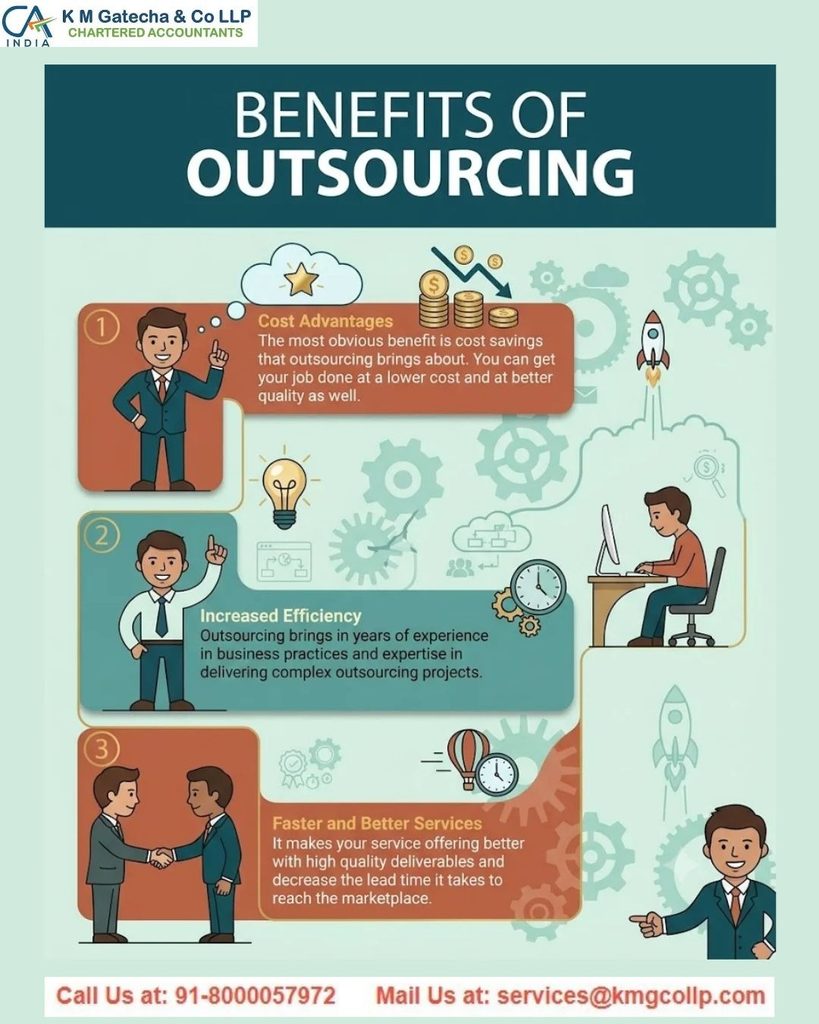
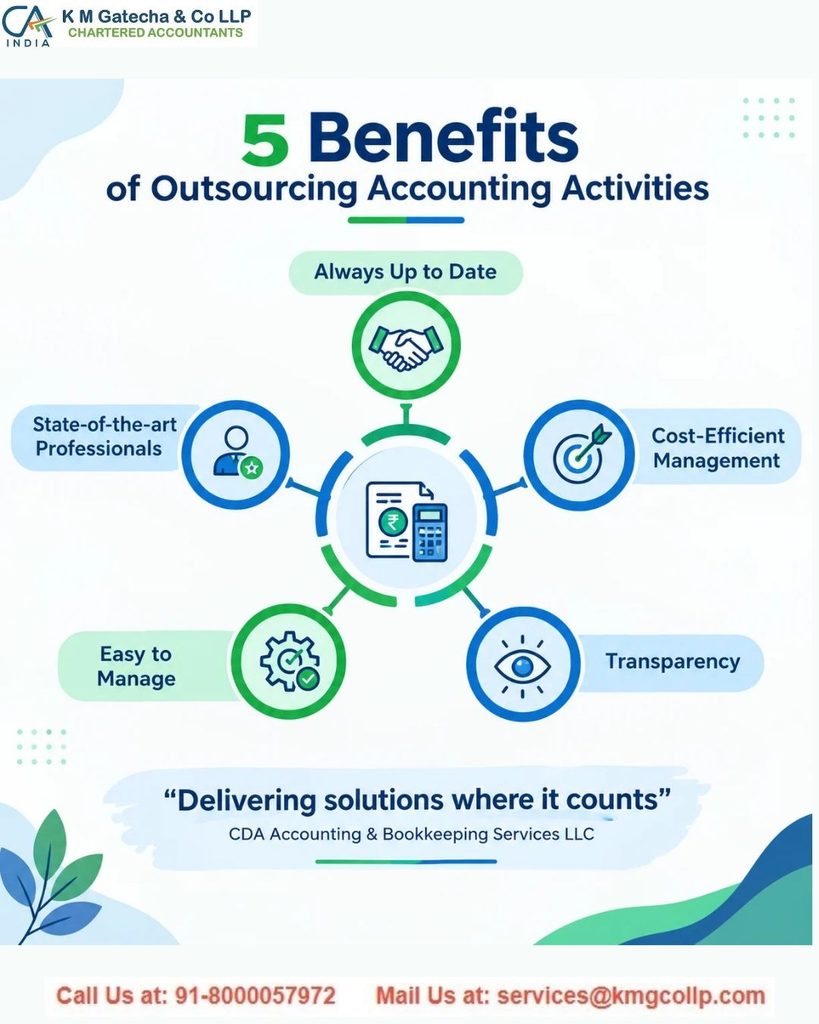
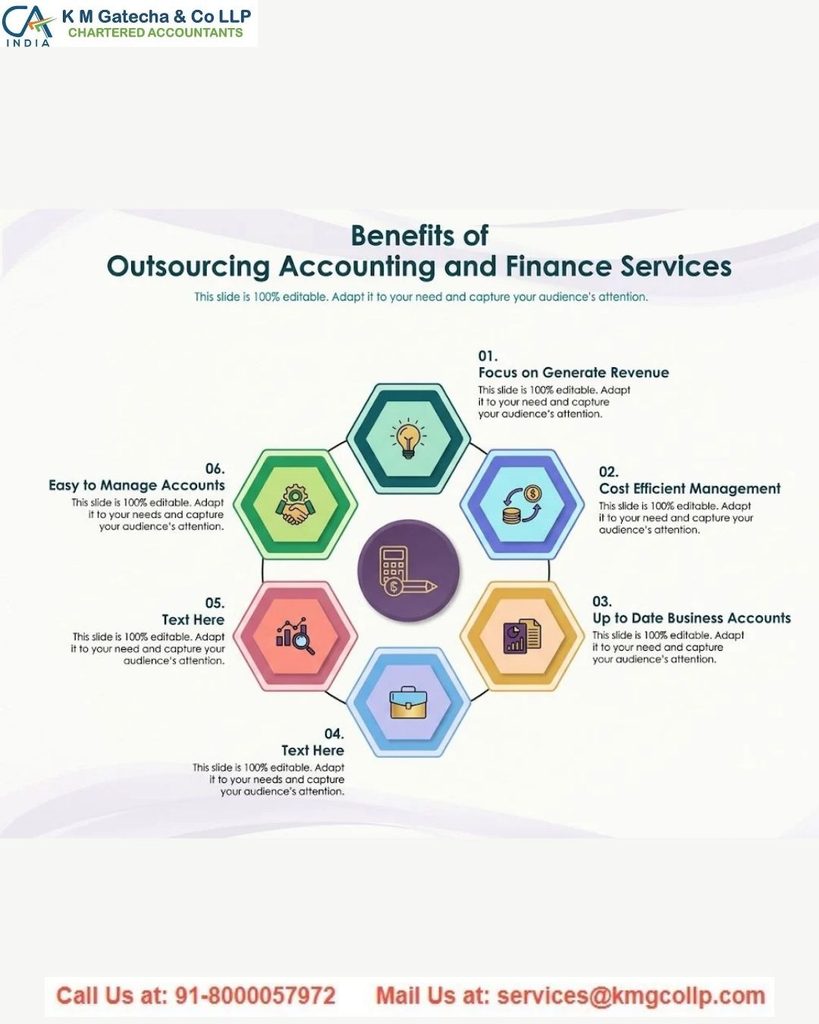
- Lower and more flexible costs: Instead of covering the full expenses of an in-house team, including salaries, benefits, payroll taxes, recruitment, and software, businesses pay a predictable service fee. This can be 20% to 50% lower than developing equivalent capabilities internally.
- Access to senior-level expertise: Businesses increasingly outsource strategic financial responsibilities to gain access to controller- and CFO-level professionals who may be difficult and time-consuming to recruit directly.
- Modern systems without the development burden: An external partner provides an integrated technology platform and automation from the beginning, eliminating the need for an internal systems implementation project that could take 18 to 24 months.
- Greater strategic focus: Delegating routine financial tasks allows company founders and CFOs to devote more time to business growth, fundraising, and strategic planning.
- Scalability: Businesses can increase financial support during acquisitions or fundraising activities and reduce it when demand declines, without going through repeated hiring and workforce reductions.
Outsourcing provides access to senior finance expertise and modern infrastructure while reducing the cost and time required to establish both internally.
Signs It’s Time to Outsource Your Finance Function
Outsourcing is often most suitable for businesses generating approximately $5 million to $200 million in annual revenue. These companies typically need a reliable financial infrastructure but may not yet be large enough to maintain a complete senior finance team cost-effectively.
Several indicators suggest that it may be time to outsource:
- Business leaders spend more time overseeing financial matters than managing core business operations.
- Business growth is exceeding the capacity of the existing finance team.
- Recruiting and retaining the required finance professionals is difficult, and the hiring process continues to take too long.
- Limited real-time financial information makes it challenging to make informed business decisions.
- Meeting investor and board reporting requirements consistently has become difficult.
- Existing financial systems are outdated or disconnected, requiring manual reconciliation.
- A single employee manages most transaction processing, creating a lack of separation of duties and increasing the risk of fraud.
The difficulty of hiring finance professionals is particularly significant. 81% of finance leaders now need at least four months to fill a senior accountant or analyst position, while approximately half say their finance departments are understaffed. When recruitment takes this long, partnering with a provider that can supply an entire finance team is often the quickest way to establish an effective finance operation. Outsourcing can also eliminate dependence on a single employee immediately when an essential team member leaves.
What an Outsourced Finance and Accounting Firm Does
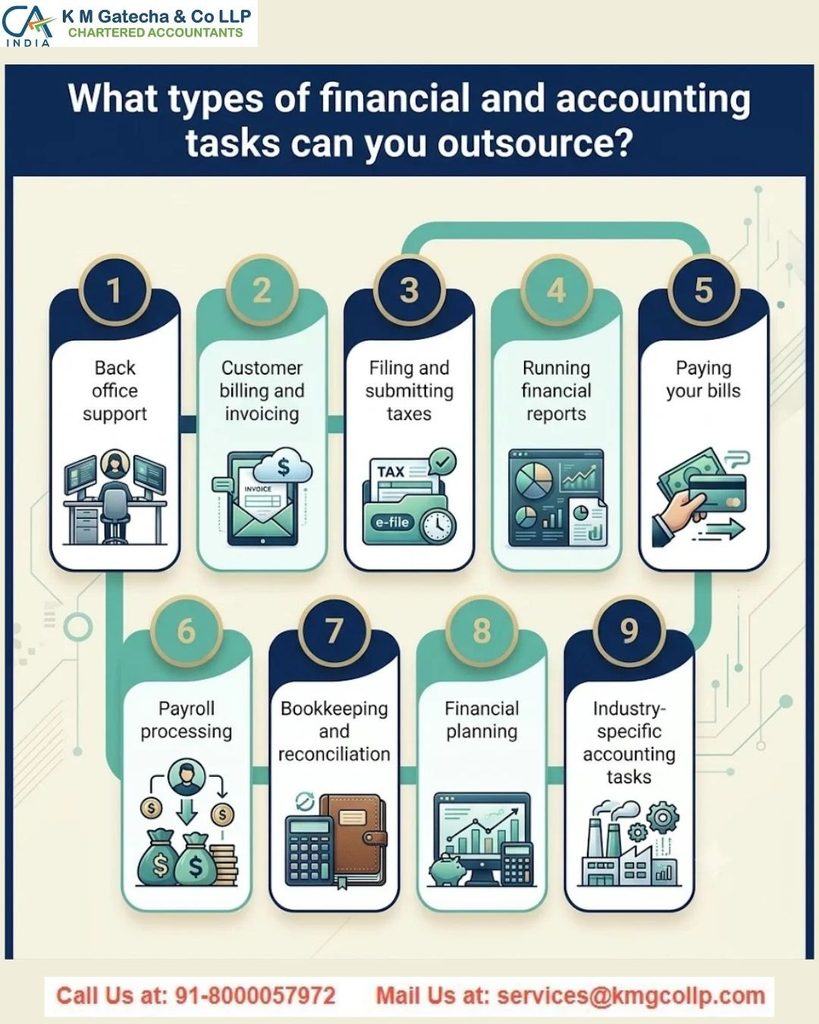
You do not need to outsource every finance function immediately. Reliable outsourcing partners allow businesses to begin with routine transactional tasks and gradually expand into more advanced services as the relationship develops. Their services generally cover four levels:
| Tier | Services Included | Best Suited For |
| Bookkeeping and Back-Office Services | Accounts payable (AP), accounts receivable (AR), payroll support, expense and transaction processing, reconciliations, and general ledger management | Delegating high-volume, routine accounting activities |
| Controller Services | Month-end closing, financial reporting, internal controls, audit assistance, and technical accounting | Improving accuracy, maintaining compliance, and ensuring reliable financial closes |
| Financial Planning and Analysis (FP&A) | Budget preparation, forecasting, scenario analysis, KPI dashboards, and board and investor reporting | Supporting future-oriented business decisions |
| CFO Advisory Services | Fundraising and transaction support, investor and board representation, mergers and acquisitions (M&A) support for buyers and sellers, and post-transaction integration | Providing strategic financial leadership during critical business stages |
The most effective outsourcing arrangements integrate all four service levels through a unified platform supported by strong internal controls. This enables transactional information to flow directly into financial reports without requiring manual transfers between teams. This is what distinguishes a complete finance operation from a simple staffing arrangement: the objective is to establish one integrated system that connects individual transactions to board-level reporting.
Technology implementation also contributes significantly to this value. An experienced outsourcing partner manages the ERP implementation process, helping businesses deploy enterprise-level platforms such as Sage Intacct within 30 to 90 days. By comparison, a similar internal implementation typically takes 12 to 18 months. This allows businesses to access modern, fully integrated financial systems without managing a software implementation project spanning multiple quarters.
What’s Changing in Outsourced Finance and Accounting
The outsourced finance model has evolved considerably over the past few years, and its adoption has grown alongside these changes. The percentage of investor-backed finance leaders partnering with external finance and accounting providers increased from 79% in 2024 to 87% in 2026. This reflects how outsourcing has developed from a cost-saving measure into an essential part of business infrastructure.
Five major developments are shaping the future of outsourced finance and accounting:
- Real-Time, Continuous Accounting. Integrated cloud-based platforms update financial records as transactions occur. This allows businesses to review their financial position and make data-driven decisions throughout the month without waiting for the month-end accounting rush.
- AI and Automation at the Core. Machine learning and automated workflows now manage many manual tasks that previously occupied finance teams, including invoice coding, cash application, and data extraction. These technologies help reduce errors and accelerate processing. AI adoption is widespread, with 97% of investor-backed companies now actively engaged in AI, and most report achieving a positive return within one year. Leading outsourced finance providers are integrating AI directly into their workflows.
- Advanced Financial Modeling. Access to more comprehensive data enables service providers to develop more precise forecasts and scenario plans. This helps businesses identify potential cash flow challenges earlier and make better-informed financial plans.
- Continuous Audit Readiness. Document management systems and automated audit trails keep financial records organized and ready for review. As a result, audit preparation becomes an ongoing process rather than a last-minute effort.
- Flexible, Customized Service Packages. The traditional all-or-nothing outsourcing approach has increasingly shifted toward tailored service options. Businesses can outsource specific functions, ranging from transactional bookkeeping to CFO-level advisory services, and adjust the scope of their engagement as their requirements evolve.
Modern outsourced finance relies on integrated platforms and automation to deliver real-time financial visibility and maintain continuous audit readiness.
The Pros and Cons of Outsourcing Finance and Accounting
Outsourcing may not be the right choice for every business or operating model. The following comparison highlights its main advantages and potential drawbacks.
| Advantages | Disadvantages to Consider |
| Lower and more predictable costs than maintaining a complete in-house team | A perceived reduction in day-to-day control |
| On-demand access to senior-level expertise | Initial setup is required for integration and communication |
| Access to modern systems and automation from the outset | Standardized processes may require customization |
| Faster and more dependable financial closing | May not suit every business model |
| Built-in flexibility to support growth and business transactions | Pricing differs according to service scope and engagement requirements |
Reduced control is generally the primary concern for businesses considering outsourcing. This concern can be addressed through a shared platform that provides greater financial visibility than many internal teams have, along with a senior contact who works closely with company leadership. A well-structured onboarding process can also minimize integration challenges over time.
Outsourcing is more suitable for certain businesses than others. Companies with large inventories or highly specialized operations may require more customization than a standard service package provides. In such cases, a hybrid approach, in which some functions remain in-house while others are outsourced, may be the most effective solution.
Before entering into an outsourcing agreement, businesses should pay particular attention to three potential risks:
- Scope: Clearly specify the functions and business units the outsourcing partner will manage, particularly when the organization operates across multiple entities. Unclear responsibilities are one of the most common reasons for dissatisfaction.
- Regulatory Compliance: If your business must comply with SOX, HIPAA, ERISA, or other regulatory frameworks, establish how compliance responsibilities and risks will be allocated. Ensure that the agreement clearly defines each party’s responsibilities and includes shared-risk arrangements and collaborative risk management.
- Hidden Transition Costs: Migration and implementation expenses during the initial months can reduce early returns on investment. Request a realistic transition plan and consider beginning with a limited pilot project if your organization is not fully prepared for a complete transition.
How to Choose a Finance and Accounting Partner
After deciding to outsource your finance and accounting functions, selecting the right service provider becomes more important than the decision to outsource itself. Follow a structured approach to identify the most suitable partner:
- Identify Your Requirements and Budget. Determine which service levels you need and define your desired outcomes, such as faster financial closing, audit-ready records, or improved financial reporting.
- Evaluate the Technology. Choose a provider that offers an integrated, cloud-based platform with genuine automation rather than one that simply supplies staff to operate your existing systems. Technology plays a crucial role in making the outsourcing model scalable.
- Assess Processes and Team Expertise. Look for established workflows, clearly defined performance indicators (KPIs), and an experienced team with relevant professional qualifications rather than a frequently changing group of junior employees.
- Verify Data Security. Request a current SOC 2 report and review the provider’s data-handling policies. Strong security practices are essential when dealing with sensitive financial information.
- Evaluate Cultural Compatibility and Onboarding. Since you will work closely with the provider’s team, assess its onboarding procedures, client references, and responsiveness. Whenever possible, begin with a trial project to determine whether the partnership is suitable before making a long-term commitment.
The most effective finance and accounting partners operate as an extension of your leadership team, with a senior contact who maintains a close understanding of your business. KMG CO LLP combines a carefully selected software platform and automation with a dedicated team of professionals. The advantages of the Finance as a Service model come from bringing these three elements together.
If you are still deciding whether to build an internal finance function, our comparison of Finance as a Service versus an in-house finance department provides a detailed overview of the key considerations.
Outsourcing, Audit Readiness, and Funding Events
For businesses backed by investors, one of the greatest benefits of outsourcing is maintaining readiness for important transactions. Financial records remain prepared for due diligence throughout the year, reports align with the expectations of investors and potential acquirers, and the outsourcing partner manages integration activities following a deal.
Research highlights the difference in preparedness. 74% of CFOs working with a finance partner feel completely prepared for their next funding event, compared with 62% of those without a partner. Companies working with external partners also report significantly higher levels of audit readiness and technological maturity. With 99% of investor-backed businesses anticipating a significant transaction in the coming year, audit and exit readiness has become an essential requirement rather than an optional advantage.
Making Outsourced Finance Work for Your Business
When implemented effectively, outsourced finance and accounting provide businesses with a senior-level financial operation that combines systems, automation, and specialized expertise at a lower cost and with less risk than building the same capabilities internally. This approach helps companies remain prepared for audits and investor requirements while allowing leadership to concentrate on business growth.
Bringing all these capabilities together internally can be challenging, which is why finance leaders increasingly rely on third-party providers such as KMG CO LLP. Its model combines a carefully selected software platform, automation, and a dedicated team of experts within a unified finance operation.
If your finance team is struggling with its workload, your existing systems are limiting progress, or an important transaction is approaching, consider exploring your options. Request a consultation to understand how a modern finance operation could support your company’s requirements.
Disclaimer: The content on this website is for informational purposes only and does not constitute legal, financial, or professional advice. Please consult qualified experts before acting on any information. K M GATECHA & CO LLP accepts no liability for errors, omissions, or outcomes from the use of this content. This site is not an advertisement or solicitation.


