Is your business facing financial challenges, cash flow issues, or slow growth? KMG CO LLP’s Fractional CFO Services can help you address these concerns through tailored financial strategies, detailed analysis, and expert guidance. With flexible access to experienced financial leadership, businesses can strengthen financial management, improve decision-making, and work towards sustainable growth.
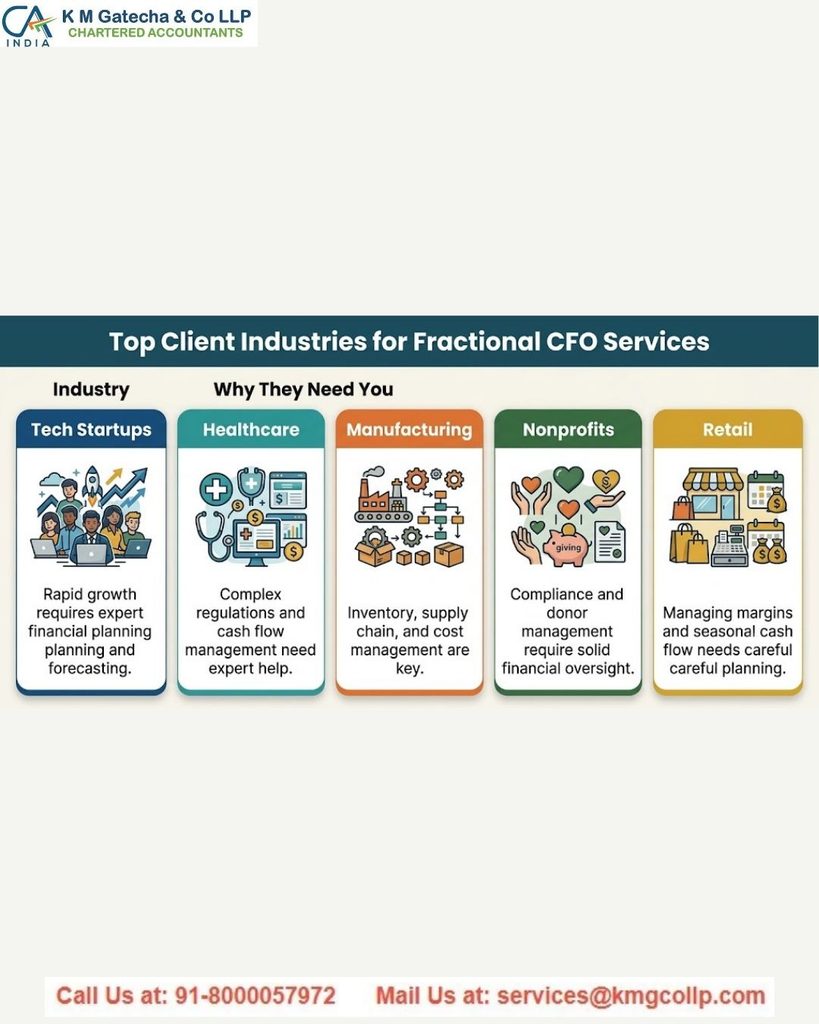
Fractional CFO Services – An Overview
A Fractional CFO is an experienced finance professional who provides part-time or project-based financial leadership to an organisation. These services help businesses manage complex financial matters, make strategic decisions, and navigate important transitions without the cost of hiring a full-time Chief Financial Officer.
A Fractional CFO works with the organisation to improve financial performance within its available resources and budget. Their responsibilities may include developing financial strategies, improving operational processes, supporting fundraising, managing cash flow, and coordinating financial audits or transactions. Their guidance helps businesses address financial challenges while working towards their broader objectives.
What Is a Fractional CFO?
A Fractional CFO, also known as an outsourced CFO, is a finance professional who provides senior-level financial expertise on a part-time, flexible, or project-specific basis. This arrangement allows startups, small businesses, and growing organisations to access strategic financial guidance according to their needs.
The role extends well beyond basic bookkeeping services. A Fractional CFO helps build financial models, monitor cash flow, develop funding strategies involving debt or equity, prepare annual budgets, and evaluate financial performance. They also support business planning and help leadership teams make informed decisions based on reliable financial information.
Top 5 Characteristics of an Effective Fractional CFO
A Fractional CFO can help a startup or growing business overcome financial difficulties and establish a foundation for long-term growth. To perform this role effectively, a professional needs a strong combination of financial expertise, analytical ability, communication skills, and adaptability.
The five essential characteristics of a good Fractional CFO are:
- Financial Expertise: Must possess extensive knowledge of financial management, budgeting, forecasting, and strategic planning, ideally supported by experience across different industries and business models.
- Adaptability: Should be able to understand a business’s operating model, financial priorities, and specific challenges quickly, adjusting strategies to meet its changing requirements.
- Strong Communication Skills: Must communicate complex financial information clearly and effectively to business owners, employees, investors, and other stakeholders, helping them understand financial insights and make informed decisions.
- Analytical Skills: Should be capable of interpreting financial data, identifying trends, assessing risks, and providing practical insights that support strategic planning and business performance.
- Flexibility and Responsiveness: Must adapt to changing business conditions, respond promptly to financial concerns, and provide guidance that aligns with the organisation’s evolving priorities and growth objectives.
What Are the Benefits of Fractional CFO Services in India?
Hiring a Fractional CFO offers several advantages for startups and growing businesses. It provides access to experienced financial leadership, improves financial management, and supports strategic decision-making without the expense of employing a full-time CFO.
Here are the key benefits of Fractional CFO services in India:
- Cost-Effective Financial Leadership: Hiring a Fractional CFO is a budget-friendly alternative for startups that need senior financial expertise but may not have the resources to afford a full-time CFO’s salary and associated employment costs.
- Improved Budgeting and Accounting: A Fractional CFO develops budgeting and accounting processes that align with the organisation’s financial capacity. They help monitor salaries, operating costs, and expenditures to improve financial discipline and resource allocation.
- Increased Profitability: By analysing expenses and business performance, a Fractional CFO identifies inefficiencies, reduces unnecessary spending, and recommends ways to use available resources more effectively. These measures can help improve profit margins and overall financial performance.
- Valuable Financial Insights and Feedback: A Fractional CFO evaluates the company’s financial position and operational performance to identify areas for improvement. They establish and monitor key performance indicators (KPIs) to help management assess progress and make informed decisions.
- Proactive Risk Assessment: A Fractional CFO identifies potential financial, operational, and compliance risks and recommends appropriate mitigation strategies. This proactive approach helps businesses prepare for challenges and protect their financial stability.
- Better Focus on Business Objectives: Through financial analysis and market monitoring, a Fractional CFO helps management evaluate business opportunities, refine strategies, and establish practical plans for achieving organisational goals.
- Strategic Growth Guidance: A Fractional CFO assesses the company’s financial position, business model, and market opportunities to develop customised strategies for sustainable growth and long-term success.
- Support with Investor Identification and Fundraising: A Fractional CFO helps businesses evaluate potential funding sources, prepare financial information for investors, and assess financing options that align with their growth plans.
- Business Valuation Support: A Fractional CFO can coordinate or support business valuation exercises by analysing assets, liabilities, financial performance, and relevant market conditions. This information can assist with fundraising, investment decisions, mergers, and other corporate transactions.
- Organisational Structuring and Efficiency: A Fractional CFO reviews financial responsibilities, reporting processes, and organisational structures to identify opportunities for improved coordination and efficiency. They may recommend structural changes in collaboration with business leadership to support future growth.
What Is the Role of a Fractional CFO in India?
Although a Fractional CFO generally works on a part-time or outsourced basis rather than as a full-time employee, they provide experienced financial leadership to help businesses resolve financial challenges and achieve their objectives. Their responsibilities may vary depending on the organisation’s size, industry, and requirements.
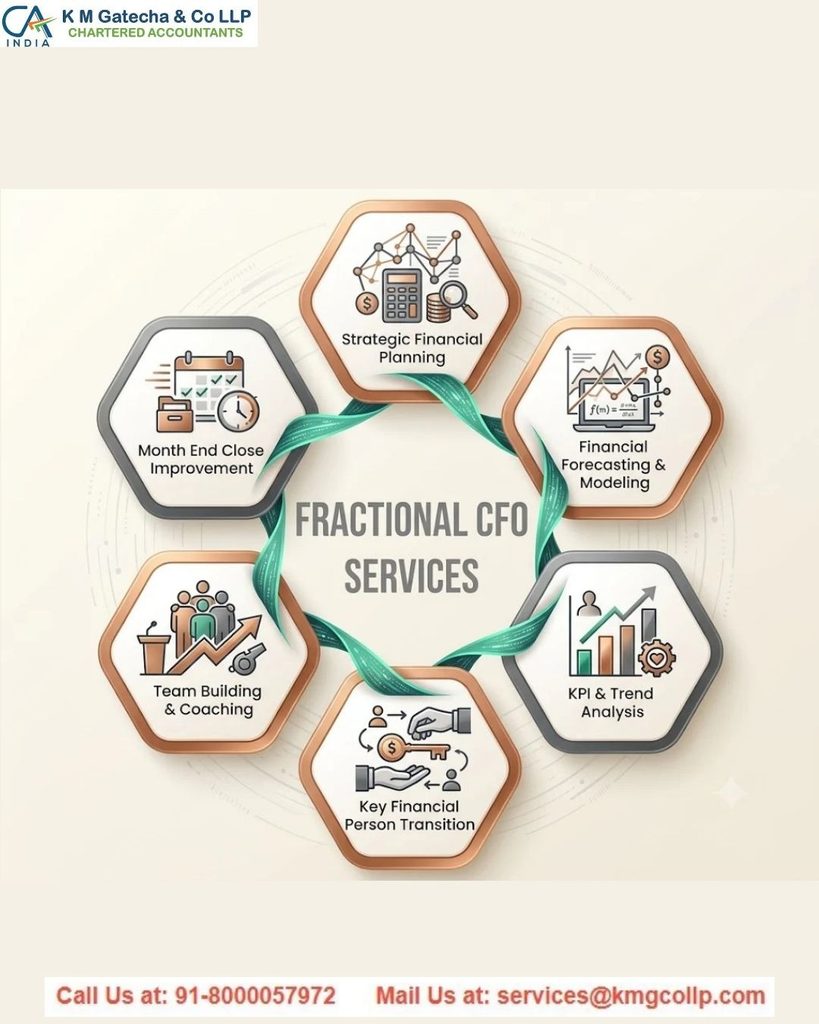
The key roles of a Fractional CFO in India include:
- Strategic Financial Planning: Developing financial strategies to address existing challenges, improve performance, and align financial decisions with the company’s business objectives.
- Defining Key Performance Indicators: Establishing relevant KPIs to evaluate financial results, operational efficiency, and progress towards business targets.
- Business Plans and Fundraising Presentations: Preparing detailed business plans, financial projections, and investor pitch decks to support fundraising discussions and demonstrate the company’s growth potential.
- Financial Modelling and Performance Evaluation: Building financial models to assess business performance, projects, assets, investments, and different financial scenarios while considering applicable accounting and regulatory requirements.
- Business Valuation Support: Analysing financial statements, assets, liabilities, earnings, and market information to support business valuation exercises and strategic transactions.
- Mergers and Acquisitions (M&A) Due Diligence: Coordinating financial due diligence to evaluate potential acquisition targets, examine financial risks, and support informed transaction decisions.
- Virtual Data Room Management: Helping establish and organise a Virtual Data Room (VDR), a secure online repository used to store and share confidential documents during fundraising, mergers, acquisitions, and due diligence processes.
- Budgeting, Forecasting, and Variance Analysis: Preparing budgets and financial forecasts to estimate future performance, then comparing actual results against projections to identify discrepancies and take corrective action.
- Cash Flow Management: Monitoring and analysing cash inflows and outflows, improving working capital management, and maintaining sufficient liquidity to meet business obligations.
- Banking and Financing Relationships: Supporting discussions with banks and financial institutions on lending terms, financing arrangements, banking facilities, and relevant contractual and compliance requirements.
- Business Intelligence and Financial Analysis: Using financial data and business intelligence tools to identify trends, evaluate performance, support strategic decisions, and improve financial planning.
- Financial Planning and Analysis (FP&A): Overseeing or supporting budgeting, forecasting, financial performance monitoring, and strategic analysis to help management understand the financial implications of business decisions.
- Financial Reporting and Stakeholder Communication: Preparing financial reports and presentations for founders, investors, board members, and other stakeholders to communicate the organisation’s financial position and performance clearly.
- Data-Driven Decision Support: Analysing financial information, evaluating alternative scenarios, and presenting actionable recommendations to help leadership make well-informed business decisions.
- Business Negotiations and Transaction Support: Evaluating financial proposals, assessing deal terms, and supporting negotiations to help the company pursue commercially appropriate arrangements that align with its strategic objectives.
- Investor Relations and Stakeholder Management: Communicating financial performance, responding to investor queries, maintaining transparent reporting practices, and building stakeholder confidence in the organisation’s financial strategy.
Fractional CFO vs. Full-Time CFO
Startups often operate in competitive business environments with limited budgets and evolving financial needs. They require experienced professionals who can manage financial operations, support strategic decisions, and help the business grow without creating excessive overhead costs. A Fractional CFO offers a flexible alternative by providing senior-level financial expertise according to the organisation’s requirements.
Here are the key differences between hiring a Fractional CFO and a full-time CFO:
- Employment Arrangement: A Fractional CFO works with an organisation on a part-time, outsourced, or project-based arrangement and may serve multiple clients, subject to their contractual obligations. A full-time CFO is generally employed by a single organisation and dedicates their working time to its financial management and strategic priorities.
- Compensation and Overheads: A Fractional CFO typically charges fees based on the agreed scope of services, hours, or engagement period. A full-time CFO generally receives a regular salary along with applicable benefits and employment-related costs. For businesses that do not need continuous, full-time financial leadership, the fractional model can help control expenditure.
- Hiring and Availability: Engaging a Fractional CFO may be faster than recruiting a permanent executive, depending on the professional’s availability and the complexity of the assignment. Hiring a full-time CFO usually involves a more extensive recruitment and onboarding process, and the selected candidate may need to complete a notice period before joining.
- Hiring and Transition Risks: A Fractional CFO arrangement allows businesses to assess the effectiveness of the engagement and adjust the scope or duration according to their needs. Hiring a full-time CFO involves a longer-term commitment and may require additional time and resources if the appointment does not meet expectations.
- Flexibility: A Fractional CFO provides support based on specific financial priorities, making this model suitable for startups experiencing changing requirements. A full-time CFO offers dedicated leadership but generally involves a more fixed employment arrangement.
- Scalability: Fractional CFO services can often be expanded or reduced as a business grows, enters new markets, or experiences changes in its financial position. Adjusting a full-time CFO’s role and associated costs may require a more extensive organisational review.
- Business Valuation and Investment Readiness: A Fractional CFO can help improve financial reporting, prepare forecasts, strengthen financial controls, and support valuation exercises ahead of fundraising or strategic transactions. These activities can begin without waiting to recruit a permanent CFO.
- Focus on Core Business Activities: By delegating selected financial management responsibilities to an experienced Fractional CFO, founders and senior leaders can devote more attention to product development, customer relationships, operations, and business expansion.
- Financial Risk Management: A Fractional CFO can provide targeted support during cash flow challenges, financial uncertainty, or periods of rapid growth. A full-time CFO, meanwhile, may be better suited to organisations that need continuous, in-house oversight of complex financial risks and operations.
- Professional Network: Fractional CFOs may bring experience and professional relationships developed across different businesses and industries, including connections with bankers, auditors, tax professionals, and investors. These relationships can be useful when relevant to the company’s requirements, although access to any particular contact is not guaranteed.
When Should You Avail Fractional CFO Services?
Startups frequently face changing financial priorities as they work towards growth, fundraising, improved cash flow, business expansion, or mergers and acquisitions. However, hiring a full-time CFO may not be practical during the early stages of development or when the need for senior financial leadership is limited to specific areas.
Fractional CFO services can be a suitable option when a business needs experienced financial guidance without committing to a permanent executive appointment. A Fractional CFO can help improve budgeting, strengthen financial controls, evaluate funding opportunities, manage cash flow, and support strategic planning.
Businesses may consider engaging a Fractional CFO when:
- They need expert financial guidance but cannot justify the cost of a full-time CFO.
- Cash flow problems or budgeting challenges require closer financial oversight.
- They are preparing for fundraising, investment discussions, or business valuation.
- They need more reliable financial reports, forecasts, and performance analysis.
- They are expanding operations, entering new markets, or considering strategic transactions.
- Their existing finance team requires senior-level guidance and strategic direction.
The right arrangement depends on the organisation’s size, financial complexity, growth stage, and need for ongoing executive involvement.
Top Fractional CFO Services Your Business May Need
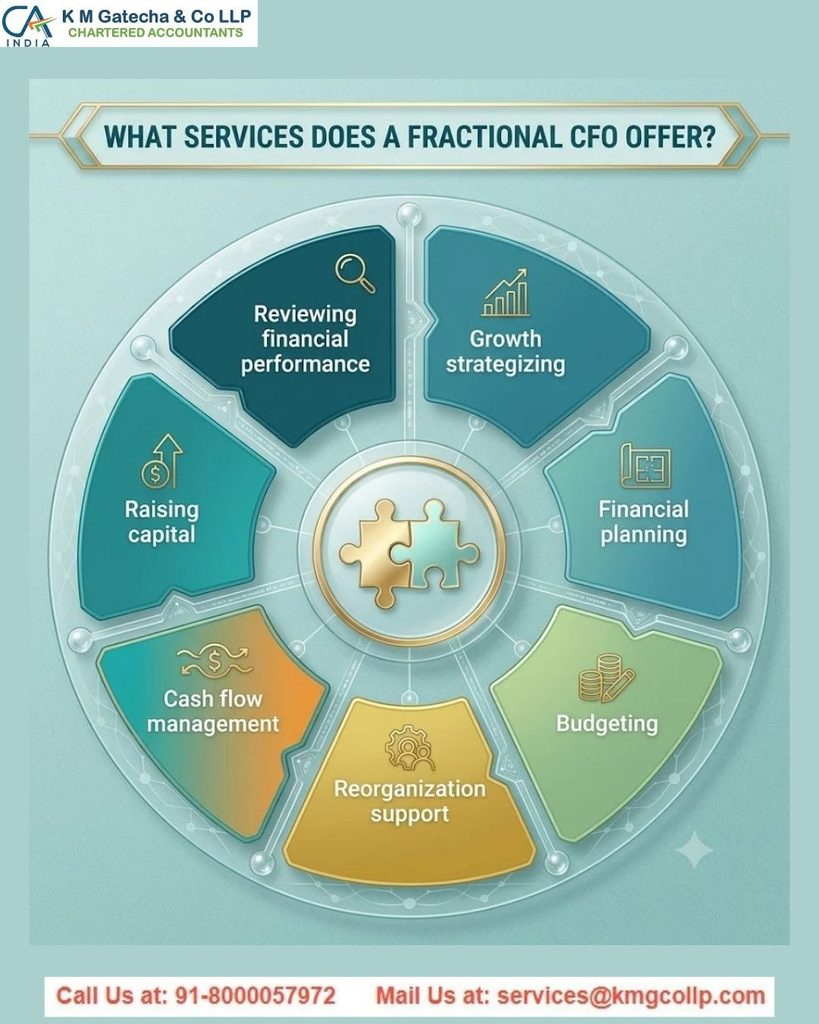
Startups and growing businesses can benefit from Fractional CFO services that address their financial management requirements and long-term objectives. The scope of engagement can be customised according to the company’s stage of development, available resources, and strategic priorities.
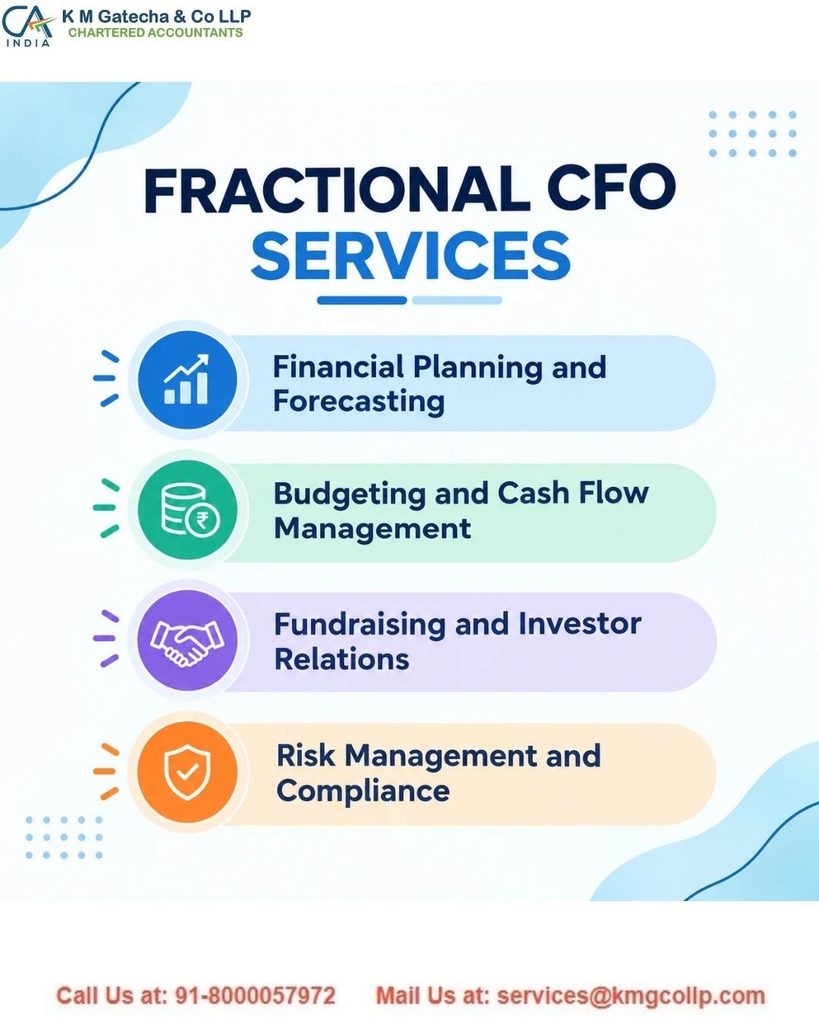
Common Fractional CFO services include:
- Financial Planning and Analysis: Developing budgets, forecasts, financial models, and performance reports to support informed business decisions.
- Cash Flow Management: Monitoring cash inflows and outflows, improving working capital, and planning for upcoming financial obligations.
- Strategic Financial Guidance: Aligning financial decisions with business goals, growth plans, and operational priorities.
- Fundraising Support: Preparing financial projections, organising financial information, and supporting investor discussions and funding strategies.
- Investor Relations: Helping communicate financial performance, respond to investor queries, and maintain transparent financial reporting.
- Financial Reporting and Compliance: Improving financial records, management reports, and processes for meeting applicable accounting and regulatory requirements.
- Risk Management: Identifying financial risks, evaluating potential business challenges, and developing suitable mitigation strategies.
- Financial Systems Development: Establishing or improving budgeting processes, internal controls, reporting systems, and financial workflows.
How Much Does a Fractional CFO Cost in India?
The cost of hiring a Fractional CFO in India depends on several factors, including the professional’s experience, the complexity of the business, the scope of services, the duration of the engagement, and the time commitment required.
Some startups may need only a limited number of hours each month, while businesses preparing for fundraising, expansion, or complex transactions may require more extensive support.
As an indicative estimate, Fractional CFO fees may range from ₹50,000 to ₹2,00,000 or more per month, depending on the engagement. Actual fees can vary significantly, so businesses should confirm the scope and pricing directly with the service provider.
Common pricing arrangements include:
- Hourly Billing: Fees are calculated according to the number of hours worked. This arrangement may suit businesses that need occasional advice or support with specific financial tasks.
- Monthly Retainer: The business pays an agreed monthly fee for a defined scope of services or time commitment. The contract should clarify the included responsibilities, availability, and charges for additional work.
Before engaging a Fractional CFO, businesses should assess their financial priorities, expected level of involvement, and budget to select an arrangement that delivers the right balance of expertise and cost.
Disclaimer: The content on this website is for informational purposes only and does not constitute legal, financial, or professional advice. Please consult qualified experts before acting on any information. K M GATECHA & CO LLP accepts no liability for errors, omissions, or outcomes from the use of this content. This site is not an advertisement or solicitation.