

TDS on Purchase of Property: Form 141 Complete Guide
What Is TDS on Property Purchase?
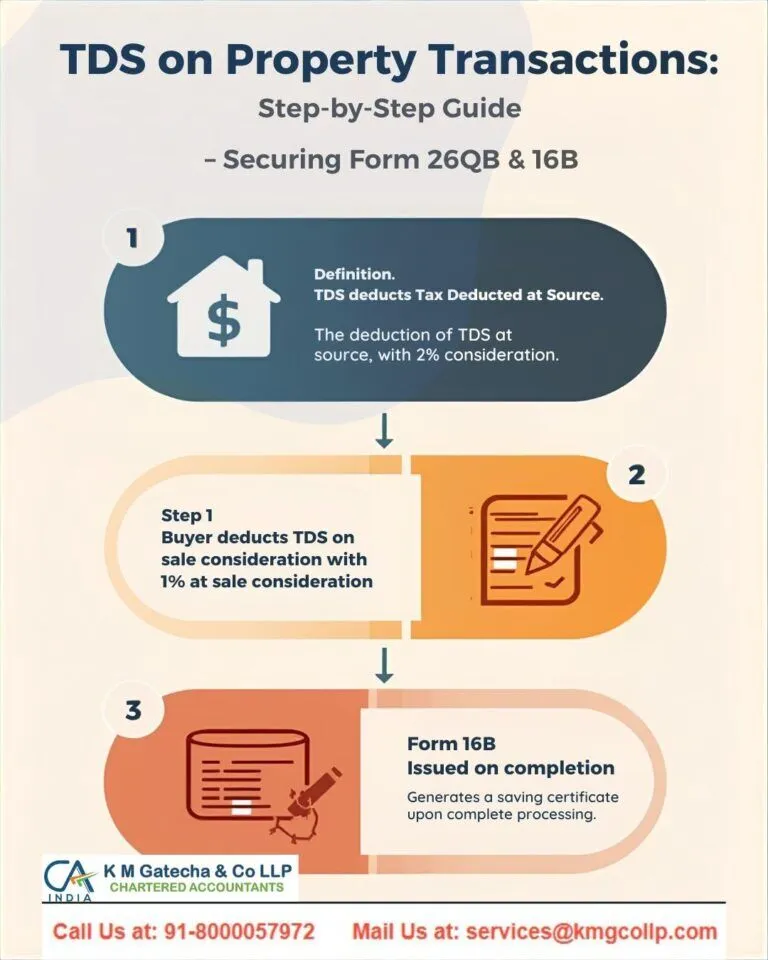
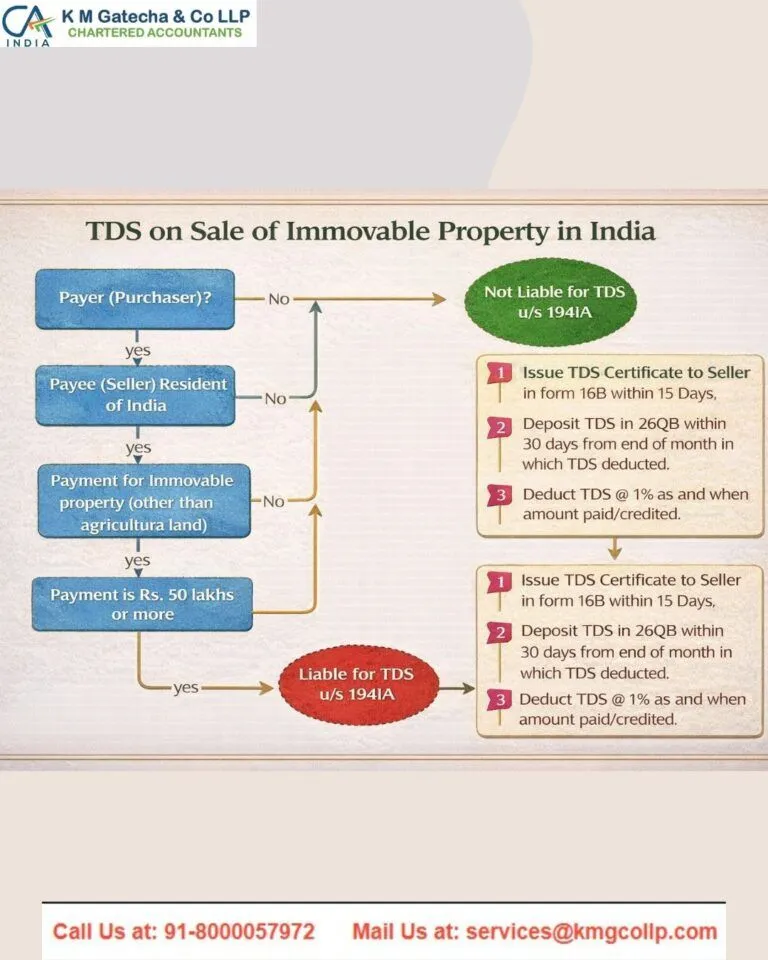
Under Section 393(1), Table Serial No. 3(i), of the Income-tax Act, 2025, tax deducted at source (TDS) applies to the purchase of immovable property, other than agricultural land, when the applicable threshold is met.
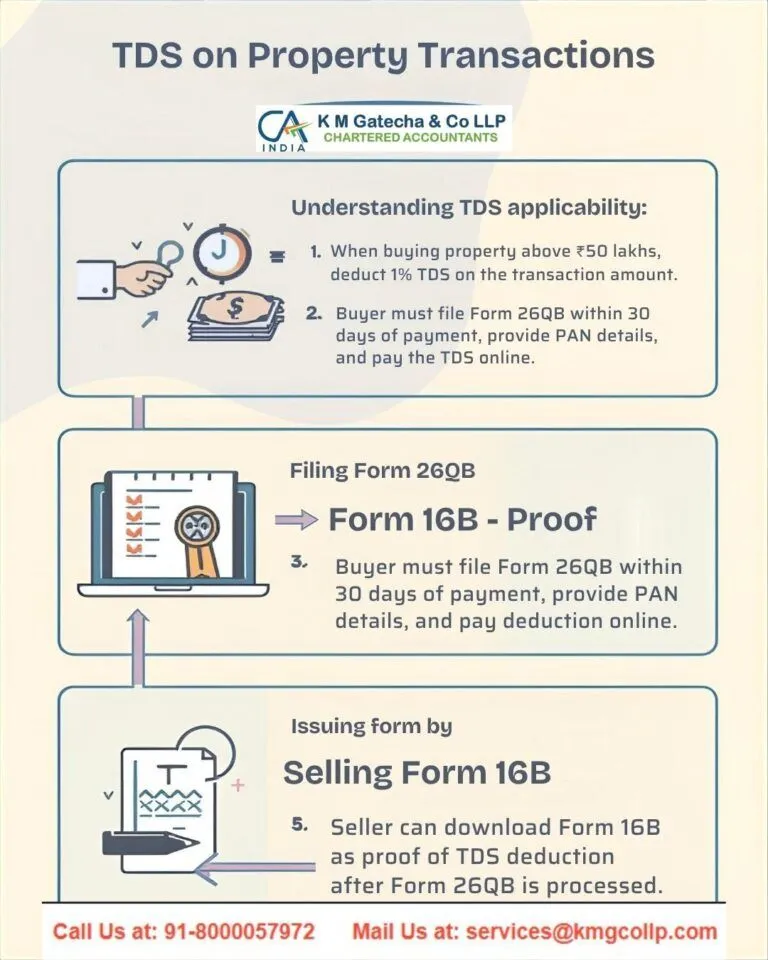
Generally, the buyer must deduct TDS at 1% of the sale consideration or applicable amount under the law when purchasing property valued at ₹50 lakh or more from a resident seller. The applicable rules should be checked where the seller is a non-resident, as a different provision and compliance process may apply.
TDS must be deducted at the time of payment or credit to the seller, whichever occurs earlier. This requirement helps the Income Tax Department track property transactions and promotes tax compliance among buyers and sellers.
What Is Form 141?
Form 141 is a challan-cum-statement used to deposit TDS and report specified transactions under the Income-tax Act, 2025. For property purchases from resident sellers, Schedule B of Form 141 is used to report TDS on the transfer of immovable property.
Form 141 consolidates several earlier PAN-based TDS forms, including Form 26QB, into a unified filing process. Buyers can access it through the Income Tax Department’s e-filing portal by logging in with their PAN credentials and navigating to e-File → e-Pay Tax → New Payment → Form 141.
After successfully filing Form 141 and depositing the applicable TDS, the buyer should obtain the prescribed TDS certificate and provide it to the seller within the applicable statutory deadline.
Key Parameters of TDS on Property Purchase
| Parameter | Details |
| Applicable provision | Section 393(1), Table Serial No. 3(i), Income-tax Act, 2025 |
| TDS rate | Generally 1% for a qualifying purchase from a resident seller |
| Threshold | ₹50 lakh or more, subject to applicable statutory conditions |
| Property covered | Immovable property other than agricultural land |
| Form to file | Form 141, Schedule B |
| Payment and filing deadline | Within one month from the end of the month in which TDS is deducted |
| TAN requirement | Generally not required for the applicable PAN-based filing |
| TDS certificate | Prescribed certificate to be issued to the seller within the applicable deadline |
Note: The applicable rate, threshold, filing procedure, and certificate requirements may differ for transactions involving non-resident sellers or other special circumstances. Verify the rules applicable to your transaction before filing.
Documents and Details Required to File Form 141
Keep the following information and documents ready before starting the filing process:
- PAN details: PAN of the buyer and seller.
- Aadhaar details: Keep Aadhaar information available if required for applicable verification or portal-related requirements.
- Property agreement: Sale agreement or other relevant property transaction documents.
- Property details: Complete property address and type of immovable property.
- Transaction details: Agreement date, total sale consideration, stamp duty value, and payment or credit details.
- Payment information: Details of the amount paid or credited, including instalment information where applicable.
- Banking details: Information needed to complete the online tax payment.
- Previous filing details: Earlier Form 141 acknowledgement details, where applicable for subsequent or final instalments.
- Payment confirmation: Challan or payment receipt, if the tax payment has already been completed.
Review the buyer’s and seller’s details carefully before submitting Form 141. Accurate information helps reduce filing errors and avoid delays in crediting TDS to the seller.
Three Key Areas of Compliance
When purchasing immovable property, buyers should focus on three essential areas to ensure proper TDS compliance.
| Documents and Registration | Forms and Certificates | TDS Deduction and Filing |
| PAN of buyer and seller | Form 141 | Deduct TDS when payment is made or credited, whichever is earlier |
| Aadhaar details, where applicable | Form 132 — TDS certificate | Deposit TDS and submit the prescribed statement |
| Sale agreement or deed | Form 141 acknowledgement | Verify the applicable filing deadline |
| Property and transaction details | Previous acknowledgement number, if applicable | Provide the TDS certificate to the seller within the prescribed period |
| e-Filing portal access | Challan/payment confirmation | Retain records of payment and filing |
Note: TRACES access may be required to download the TDS certificate. The exact process depends on the applicable transaction and current portal requirements.
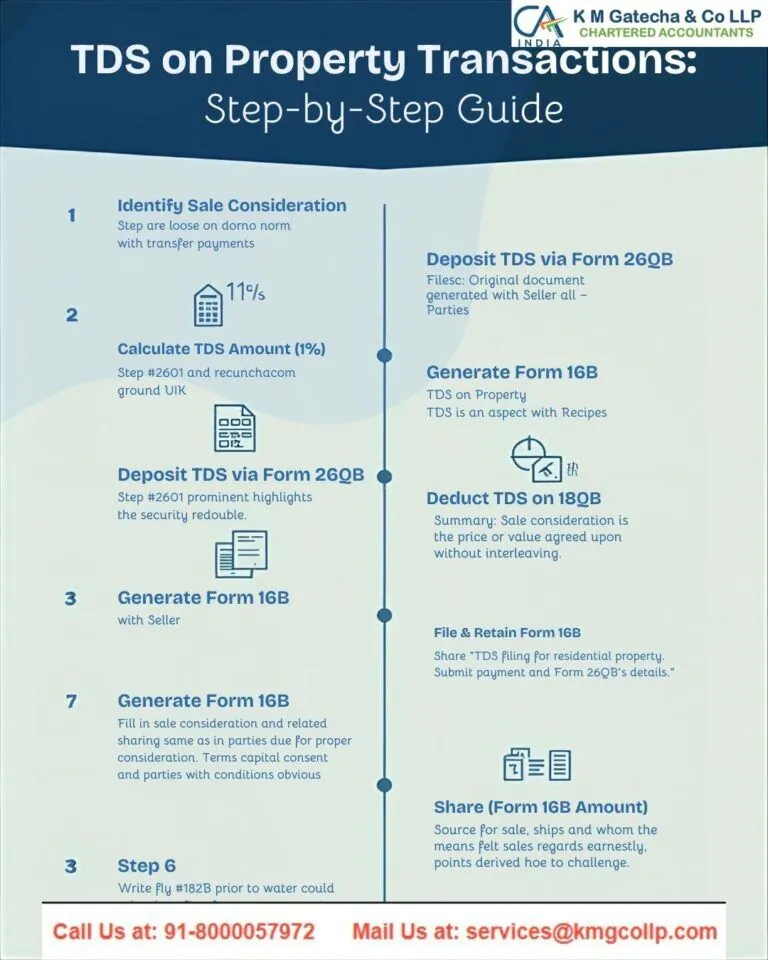
Step-by-Step Process to File Form 141
Follow these steps to file Form 141 for a qualifying property purchase from a resident seller.
Step 1: Access the Income Tax Portal
Visit the official Income Tax e-Filing Portal and log in using your PAN credentials. Navigate to e-File → e-Pay Tax.
Step 2: Select Form 141
Choose New Payment and select the Form 141 option applicable to TDS under Section 393(1) of the Income-tax Act, 2025. Select the relevant property transaction schedule, generally Schedule B for the transfer of immovable property from a resident seller.
Step 3: Enter the Transaction Details
Provide the required information, including:
- PAN and other applicable details of the buyer and seller
- Complete property address and property type
- Agreement date and registration date, where applicable
- Total sale consideration and stamp duty value
- Payment mode, including lump-sum or instalment payments
- Amount paid or credited and applicable TDS details
- Previous Form 141 acknowledgement number, where required for subsequent instalments
Review the information carefully before proceeding.
Step 4: Complete the Tax Payment
Verify the TDS amount and any applicable interest or fee. Follow the portal instructions to generate the payment reference and complete the payment using an available payment method.
Step 5: Submit and Save the Acknowledgement
After successful payment and filing, download or save the payment receipt, acknowledgement, and other available transaction records. Keep these documents for future reference.
Step 6: Download the TDS Certificate
Once the certificate is available, log in to the official TRACES portal. Navigate to the relevant certificate download section, select the applicable form, and enter the requested details, such as the acknowledgement number and seller’s PAN.
Submit the request and retrieve the certificate from the requested downloads section when it becomes available. Provide the prescribed certificate to the seller within the applicable statutory deadline.
Important: Form 141 is the challan-cum-statement, while Form 132 is the TDS certificate under the Income-tax Act, 2025. Follow the current portal instructions for the certificate download process. <Cite refs={[“turn237318search0″,”turn237318search1″,”turn237318search18”]}/>
Special Rules for Multiple Buyers or Sellers
Property transactions involving multiple buyers or sellers require careful reporting of each party’s share and the corresponding TDS.
Multiple Buyers
Where two or more buyers jointly purchase a property, each buyer generally needs to comply with the applicable filing requirements for their share and the relevant seller or sellers. TDS must be calculated using the applicable rules and the parties’ respective shares.
Do not assume that one buyer’s filing automatically fulfils the obligations of all co-buyers.
One Buyer and Multiple Sellers
Where a property is purchased from multiple sellers, the buyer must report the relevant seller details and calculate TDS according to the applicable rules and each seller’s share. Form 141 may permit multiple sellers to be included in the same filing where the prescribed conditions are met.
Check the portal’s current requirements before deciding whether separate filings are necessary.
Payments Made in Instalments
If the sale consideration is paid in instalments, TDS must be deducted at the applicable time on the amount required to be considered for deduction. The filing process should reflect whether the payment is the first, a subsequent, or the final instalment.
For subsequent or final instalments, the portal may require the acknowledgement number of the earlier Form 141 filing. Enter the previous acknowledgement details accurately to maintain continuity between the filings.
When Is Land Treated as Agricultural Land for TDS Purposes?
The treatment of agricultural land depends on the applicable statutory provisions and the nature and location of the property. Do not assume that every plot described as agricultural land automatically qualifies for an exemption.
Under the Income-tax Act’s rules concerning urban agricultural land, the distance from a municipality or cantonment board and the population of the relevant area can be important in determining whether land qualifies as a capital asset. The commonly referenced distance thresholds are:
| Population of the Relevant Municipality or Cantonment Board | Relevant Distance Threshold |
| More than 10,000 and up to 1 lakh | Within 2 kilometres |
| More than 1 lakh and up to 10 lakh | Within 6 kilometres |
| More than 10 lakh | Within 8 kilometres |
These thresholds relate to the statutory treatment of agricultural land and should not be used in isolation to decide whether TDS applies to a property transaction. Confirm the property’s legal classification, location, and the specific exclusion under the applicable TDS provision before claiming an exemption.
Penalties and Interest for Non-Compliance
Failure to deduct, deposit, or report TDS correctly can result in interest, fees, and other consequences under the applicable tax law.
| Type of Default | Possible Consequence |
| Failure to deduct TDS | Interest may apply for the period of default under the applicable provisions |
| TDS deducted but not deposited on time | Interest may apply until the tax is deposited |
| Late filing of Form 141 | A late filing fee or other statutory consequence may apply, depending on the applicable provisions |
| Failure to file or incorrect reporting | Additional penalties may apply in circumstances specified by law |
| Failure to issue the TDS certificate | A penalty may apply under the relevant statutory provision |
The applicable rates, penalty amounts, and section references depend on the governing law and the nature of the default. Verify the current provisions before relying on a specific amount or penalty calculation.
Authorised Banks and Payment Options for TDS
Form 141 payments should be completed using the payment methods and banks displayed on the official Income Tax e-Filing portal. Available options may include net banking and other supported electronic payment methods.
Banks commonly used for tax payments include:
- State Bank of India
- HDFC Bank
- ICICI Bank
- Axis Bank
- Bank of Baroda
- Punjab National Bank
- Canara Bank
- Union Bank of India
- Indian Bank
- Bank of India
- Central Bank of India
- Bank of Maharashtra
- Indian Overseas Bank
- IDBI Bank
- UCO Bank
- Punjab and Sind Bank
- Jammu and Kashmir Bank
This is an illustrative list, not a guarantee that every bank or payment method will be available for every transaction. Always confirm the available options on the e-Filing portal before making payment.
How to Download Form 132 from TRACES
Form 132 is the TDS certificate issued under the Income-tax Act, 2025. Once the certificate is available, follow the current TRACES process to download it.
Step 1: Visit TRACES
Open the official TRACES portal and log in or register, as required.
Step 2: Open the Certificate Download Section
Navigate to the relevant downloads area and select the applicable TDS certificate option.
Step 3: Enter the Required Details
Provide the requested transaction information, which may include the tax year, Form 141 acknowledgement number, and seller’s PAN.
Step 4: Submit the Download Request
Submit the request and save the request number or reference generated by the portal, if provided.
Step 5: Retrieve the Certificate
Open the requested downloads section, locate the relevant request, and download the certificate once it is available. Check the details before providing it to the seller.
Reminder: Portal labels and download procedures may change. Refer to the latest TRACES instructions if the options differ from those described above.
Common Mistakes to Avoid
Avoid these common errors when handling TDS on property purchases:
- Entering an incorrect PAN: Verify the buyer’s and seller’s PAN details before submitting the form.
- Missing the filing deadline: Check the statutory deadline and complete the payment and filing within the prescribed time.
- Incorrect reporting for joint transactions: Review each buyer’s and seller’s share and follow the portal’s rules for multiple parties.
- Forgetting the TDS certificate: Download the prescribed certificate and provide it to the seller within the applicable deadline.
- Applying resident-seller rules to a non-resident: Transactions involving a non-resident seller may require a different schedule or procedure. Check the seller’s residential status and applicable provisions before filing.
- Assuming all agricultural land is exempt: Verify the legal classification of the property and the applicable statutory exclusion.
- Entering incorrect instalment details: For subsequent or final instalments, provide the previous acknowledgement number when required.
- Ignoring payment records: Retain the challan, acknowledgement, transaction details, and certificate for future reference.
Key Takeaways
- TDS generally applies at 1% to qualifying property purchases from resident sellers where the applicable consideration threshold of ₹50 lakh or more is met.
- Form 141 is the challan-cum-statement used for specified TDS transactions under the Income-tax Act, 2025.
- Schedule B of Form 141 covers qualifying property transfers involving resident sellers.
- The buyer must follow the applicable deduction, payment, and filing deadlines.
- Joint purchases and multiple-seller transactions require accurate reporting of the relevant parties and shares.
- Instalment payments must be reported according to the applicable rules, including previous acknowledgement details where required.
- Form 132 is the relevant TDS certificate under the new Act; the buyer should provide it to the seller within the prescribed period.
- Non-compliance can result in interest, fees, and penalties, depending on the circumstances and the applicable provisions.
- Transactions involving non-resident sellers and agricultural land require particular care because different rules or exclusions may apply.
Disclaimer: The content on this website is for informational purposes only and does not constitute legal, financial, or professional advice. Please consult qualified experts before acting on any information. K M GATECHA & CO LLP accepts no liability for errors, omissions, or outcomes from the use of this content. This site is not an advertisement or solicitation.

