

GST Registration for LLP: Step-by-Step Guide (2026)
GST registration requirements for Limited Liability Partnerships (LLPs) in India depend on factors such as annual aggregate turnover, the nature of supplies, and applicable GST rules. In many states, the general registration threshold is ₹40 lakh for eligible businesses exclusively supplying goods and ₹20 lakh for service providers. Lower thresholds and specific compulsory registration provisions may apply in certain circumstances. Eligible LLPs may also opt for voluntary registration.
Businesses operating in India must comply with applicable tax regulations, and Limited Liability Partnerships (LLPs) are no exception. An LLP combines the flexibility of a partnership structure with limited liability protection for its partners. Although GST registration is not mandatory for every LLP, it may be required when the business crosses the applicable turnover threshold or meets other compulsory registration criteria.
This guide explains the GST registration process for LLPs, the documents required, post-registration compliance obligations, and common challenges businesses should understand before applying.
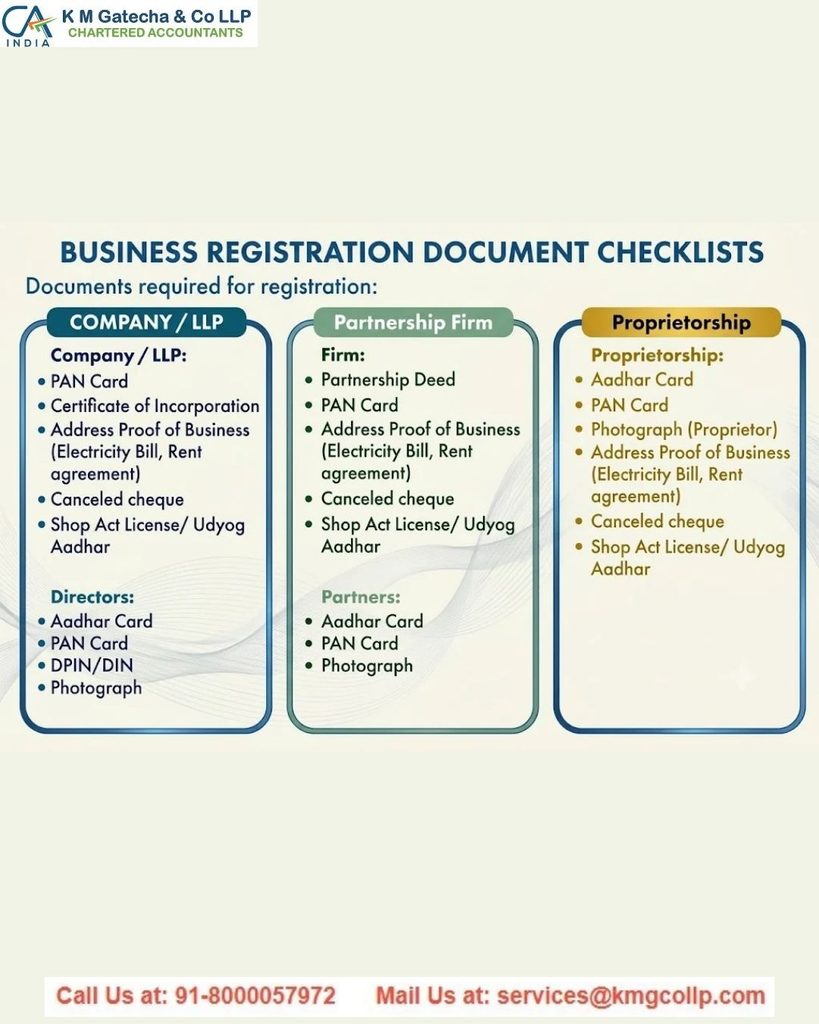
Looking for a Virtual Office?
Finding a suitable business address for your LLP can be an important part of the registration process. We offer virtual office solutions designed to simplify the process, with features such as digital KYC, agreements, and document support. The provider also advertises a 72-hour document turnaround, a lowest-price guarantee, and a money-back guarantee if GST or company registration is rejected, subject to its applicable terms and conditions.
What Is GST and Why Does It Matter for LLPs?
Goods and Services Tax (GST) is a destination-based, multi-stage indirect tax introduced in India on July 1, 2017, following the enactment of the relevant legislation in March 2017. It replaced several earlier indirect taxes, including service tax, central excise duty, and state VAT on many goods and services. GST is generally levied on the supply of goods and services, with eligible registered businesses able to claim input tax credit (ITC), subject to applicable conditions. The ultimate tax burden generally falls on the final consumer.
For Limited Liability Partnerships (LLPs), GST compliance is separate from income tax compliance. An LLP may need to register for GST when its aggregate turnover exceeds the applicable threshold or when another compulsory registration provision applies. Registration can also be voluntary where permitted.
LLPs are generally taxed under the income-tax rules applicable to firms, including LLPs. The applicable income-tax rate is generally 30% of taxable income, subject to applicable surcharge, cess, and other provisions. Partners are taxed separately on taxable remuneration, interest, or other payments received from the LLP, where applicable. A partner’s share of the LLP’s profit is generally exempt from tax in the partner’s hands under Section 10(2A) of the Income-tax Act, subject to the relevant conditions.
GST registration can create additional responsibilities, including issuing compliant invoices, filing applicable returns, paying GST, and maintaining records. However, it may also allow an eligible LLP to claim input tax credit, improve transaction transparency, and meet the GST requirements of business customers and suppliers.
Understanding when registration is required—and the compliance obligations that follow—helps an LLP manage its tax responsibilities and operate more efficiently.
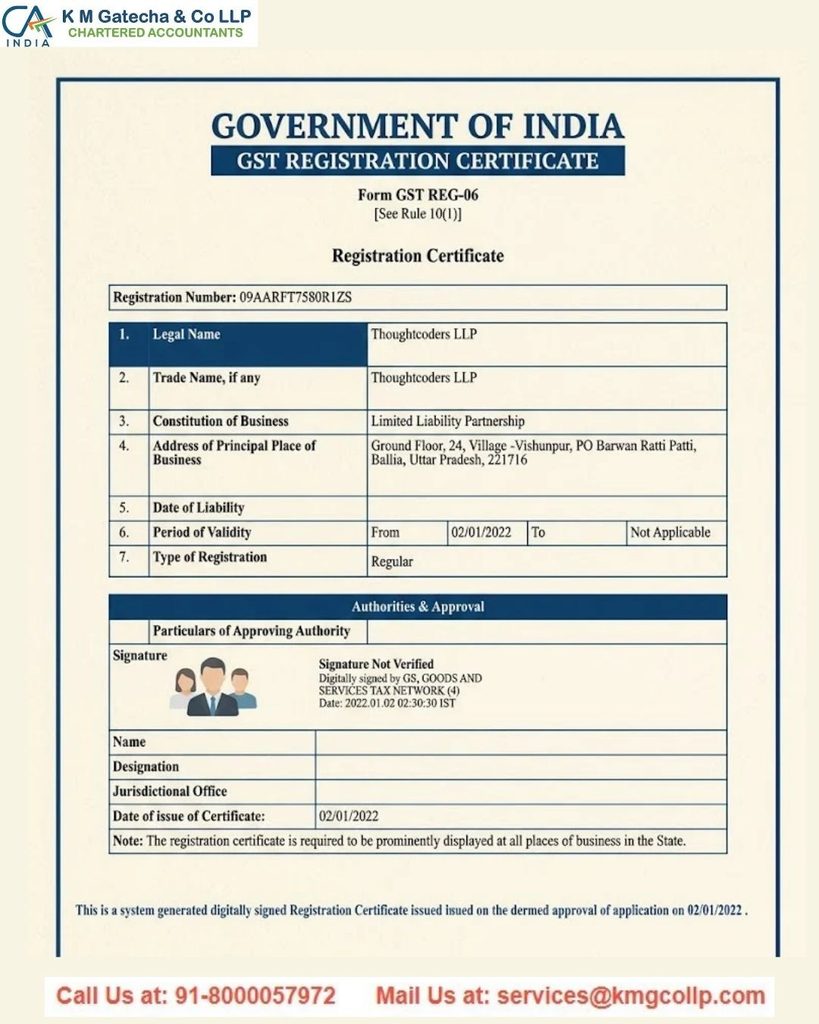
5 Key Benefits of GST Registration for LLPs
GST registration can help Limited Liability Partnerships (LLPs) meet tax requirements and expand their business opportunities. Key benefits include:
- Recognition as a Registered Supplier: GST registration enables an LLP to operate as a registered supplier under the GST system and issue applicable GST tax invoices.
- Input Tax Credit (ITC): Eligible LLPs can claim credit for GST paid on qualifying business purchases, subject to the applicable conditions and restrictions.
- Support for Interstate Trade: GST registration helps LLPs comply with tax requirements when supplying goods or services across state borders, where registration is required.
- Access to E-commerce Opportunities: GST registration can help LLPs meet the requirements of e-commerce platforms and sell through online marketplaces, subject to applicable GST rules and exemptions.
- Improved Business Credibility: GST registration may make it easier to work with larger companies and GST-registered customers that require compliant invoices and tax documentation.
When Is GST Registration Mandatory for an LLP?
GST registration requirements for LLPs depend on aggregate annual turnover, the nature and location of supplies, and specific provisions under GST law. The following table provides a general overview.
| Scenario | Is GST Registration Required? |
| Eligible business exclusively supplying goods, with turnover exceeding the applicable threshold (often ₹40 lakh in many states) | Generally mandatory, subject to conditions and exceptions |
| Business supplying services, with turnover exceeding the applicable threshold (often ₹20 lakh in many states) | Generally mandatory, subject to conditions and exceptions |
| Business operating in a state with a lower applicable registration threshold | Mandatory once the relevant threshold is exceeded, subject to applicable rules |
| Interstate supplies of goods or services | Depends on the nature of the supply and applicable exemptions; not universally mandatory in every case |
| Sales through an e-commerce platform | Depends on the business model, type of supply, and applicable GST provisions and exemptions |
| Turnover below the applicable threshold, with no other compulsory registration requirement | Generally not mandatory; voluntary registration may be available |
Important: GST registration thresholds and compulsory registration rules are subject to conditions and exceptions. The ₹40 lakh threshold generally applies to eligible suppliers exclusively dealing in goods in many states, while the ₹20 lakh threshold commonly applies to service providers. Lower thresholds may apply in certain states. Specific exemptions also exist for certain interstate and e-commerce supplies.
Rather than relying on turnover alone, an LLP should assess its business activities, state of operation, and applicable provisions of the CGST Act and relevant state GST laws before determining whether registration is required.
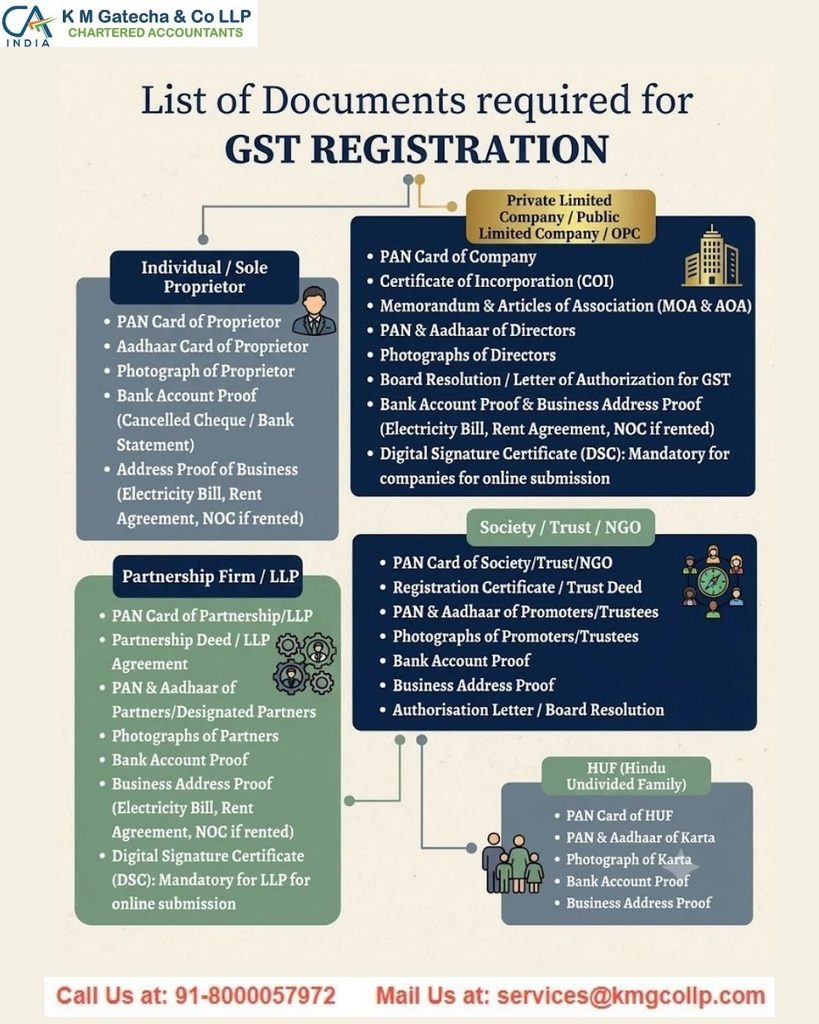
Documents Required for GST Registration for an LLP
Before applying for GST registration, an LLP should prepare its incorporation records, partner details, business address proof, and authorization documents. All information should match the details entered in the GST application to help prevent avoidable queries or delays.
| Document Type | Description |
| LLP’s PAN Card | PAN issued in the name of the LLP. This is essential for GST registration. |
| PAN of Designated Partners | PAN details of the designated partners, as required by the application. |
| Aadhaar Details of Designated Partners | Aadhaar authentication or other prescribed verification may be required, depending on the applicable GST registration procedure and circumstances. |
| Photographs | Recent photographs of the designated partners or authorized signatory, where required. |
| LLP Agreement | The agreement outlining the LLP’s structure, partners, and terms of operation. |
| Certificate of Incorporation | Certificate issued by the Ministry of Corporate Affairs (MCA) confirming the LLP’s incorporation. |
| Registration Details | Relevant LLP registration information maintained by the Registrar of Companies (RoC), where applicable. |
| Identity Details of Designated Partners | Identity information required for the designated partners, in accordance with the GST application process. |
| Business Address Proof | Acceptable evidence of the principal place of business, such as a utility bill or other prescribed document. See this guide to address proof for GST registration. |
| Ownership Proof, Where Applicable | Ownership documents or other acceptable evidence for premises owned by the LLP or its partners. |
| Rent Agreement and NOC, Where Applicable | A rent or lease agreement and consent or NOC from the property owner, where required for rented premises. |
| Bank Account Details | Bank account information and supporting evidence, such as a cancelled cheque or bank statement, when required. Bank details may be furnished after initial registration within the prescribed period, where permitted. |
| Authorization Letter | Document authorizing a designated person to act as the LLP’s authorized signatory for GST-related matters. |
| Partner Authorization or Resolution | An appropriate authorization or decision by the LLP’s partners, where necessary. A company’s board resolution is not a standard requirement for an LLP. |
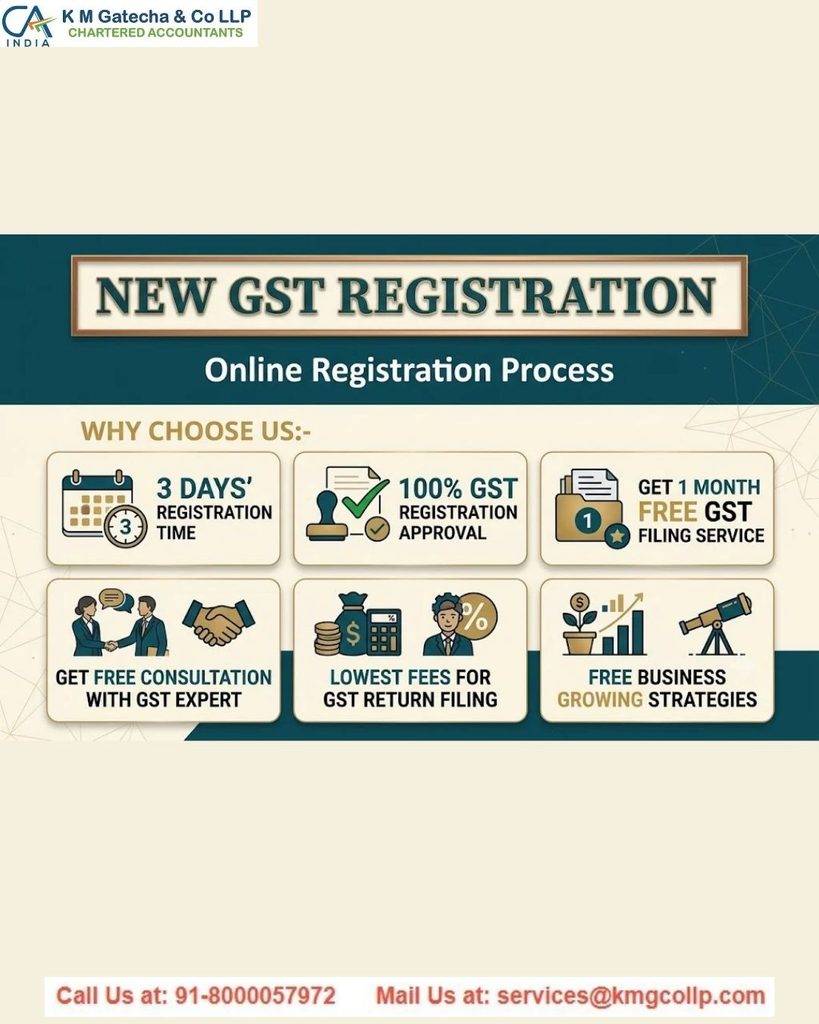
Important Document Preparation Tips
- Ensure the LLP’s legal name and PAN match its official registration records.
- Confirm that the business address documents support the declared premises and the LLP’s right to use them.
- Provide the authorization details for the person submitting the application.
- Follow the latest requirements displayed on the official GST portal, as the documents and verification steps may vary by application.
Preparing the required documents in advance can help an LLP submit a more complete application and reduce the likelihood of registration delays.
Disclaimer: The content on this website is for informational purposes only and does not constitute legal, financial, or professional advice. Please consult qualified experts before acting on any information. K M GATECHA & CO LLP accepts no liability for errors, omissions, or outcomes from the use of this content. This site is not an advertisement or solicitation.


