

A Fractional CFO is an experienced financial professional who provides strategic financial leadership on a part-time, contractual, or outsourced basis rather than working as a permanent, full-time employee.
Fractional CFO services are particularly useful for startups, small and medium-sized enterprises (SMEs), MSMEs, and growing businesses that need senior financial expertise but may not have the budget or requirement for a full-time Chief Financial Officer.
Unlike a full-time CFO, who works as a permanent member of the organisation, a Fractional CFO allocates time according to the business’s needs and may work with multiple clients. Engagements can range from ongoing financial management to specific projects, depending on the company’s objectives.
Businesses can choose flexible engagement models, including monthly retainers, project-based fees, or hourly billing. This allows them to access senior financial expertise without taking on all the fixed employment costs associated with a permanent executive.
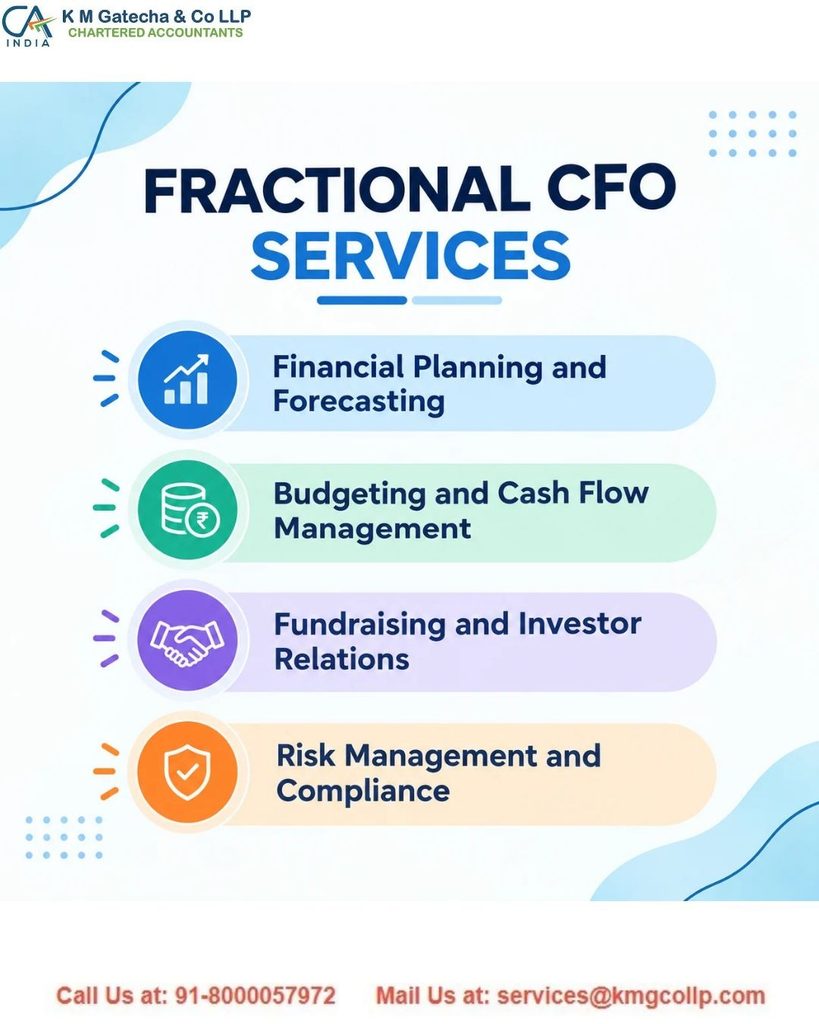
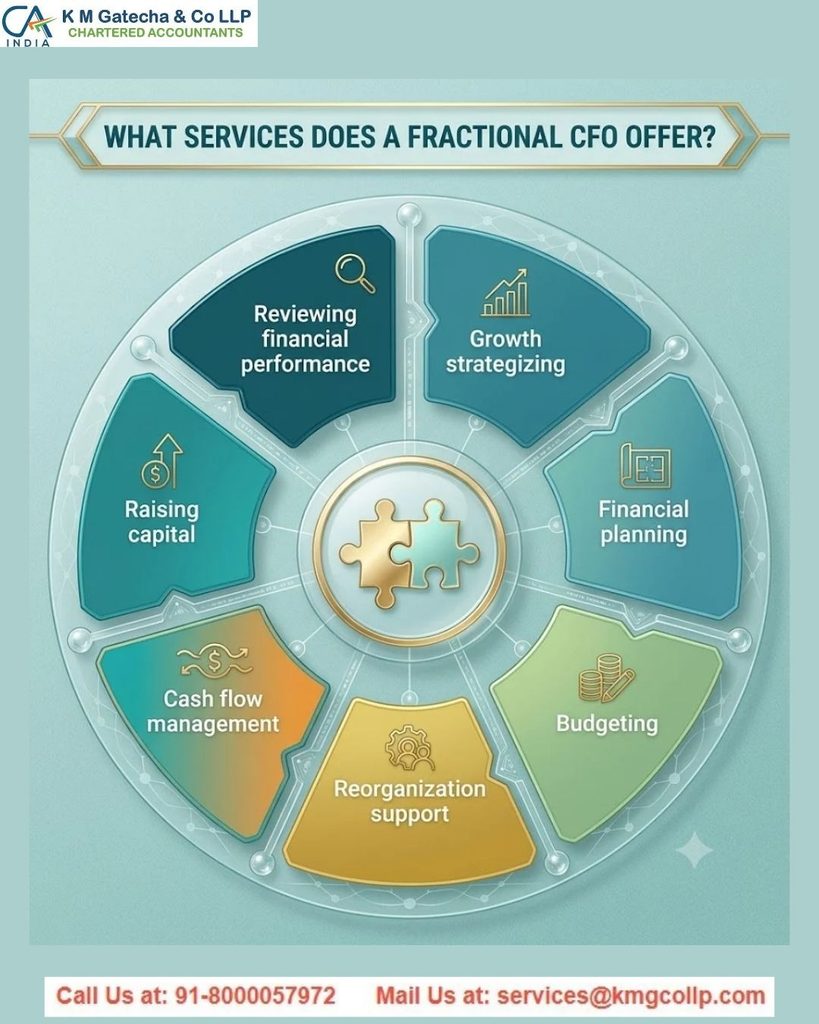
Core services typically include financial planning, cash flow management, risk assessment, fundraising support, financial reporting, and compliance oversight. A Fractional CFO can help businesses address cash flow challenges, improve gross margins, strengthen financial controls, and increase profitability.
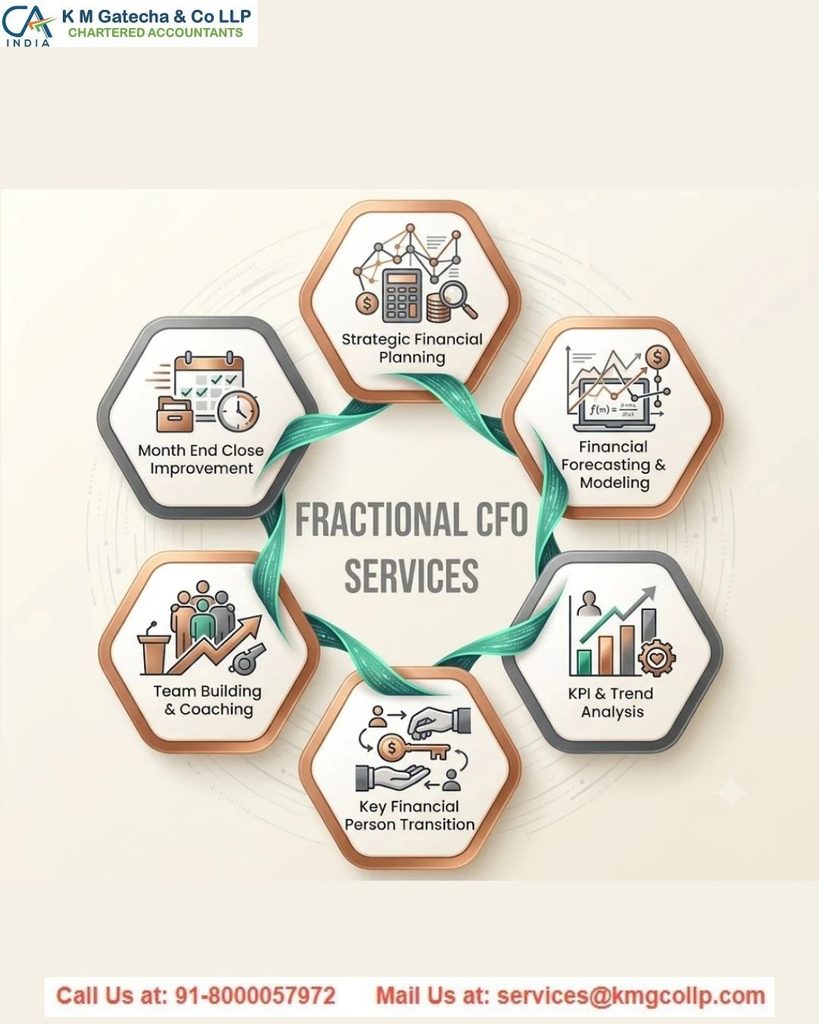
Beyond routine financial management, Fractional CFOs support strategic growth by improving financial systems, streamlining internal processes, evaluating vendor relationships, and helping businesses scale sustainably. They can also provide guidance during major financial events, including capital raising, business sales, mergers, and acquisitions.
What Is a Fractional CFO?
A Fractional CFO, also known as a part-time CFO, is an experienced financial executive who provides strategic financial guidance and leadership to a business on a part-time, contractual, or outsourced basis.
Fractional CFOs typically work with startups, SMEs, MSMEs, and fast-growing companies that require advanced financial expertise but are not yet ready to hire a full-time Chief Financial Officer.
Unlike a permanent CFO, who works within one organisation and oversees its financial strategy as a full-time employee, a Fractional CFO allocates a defined amount of time to each client and may serve multiple businesses simultaneously. This arrangement allows companies to access senior-level financial guidance without committing to the full cost of an in-house executive, including salary, benefits, bonuses, and other employment-related expenses.
A Fractional CFO also differs from an interim CFO. An interim CFO generally fills a temporary leadership vacancy or manages a transition until a permanent appointment is made. A Fractional CFO, on the other hand, usually provides ongoing strategic support or works on specific financial projects according to the company’s requirements.
Definition of Fractional CFO / Part-Time CFO
A Fractional CFO is a seasoned financial professional who delivers CFO-level services without the cost or long-term commitment associated with a full-time executive.
Their responsibilities may include financial planning, budgeting, forecasting, cash flow management, risk assessment, fundraising support, and compliance oversight.
Businesses can engage a Fractional CFO through flexible arrangements, such as monthly retainers, project-based contracts, or hourly engagements. This makes experienced financial leadership accessible to companies at different stages of development and with varying budgets.
Core Value Proposition of Fractional CFO Services
The primary value of Fractional CFO services lies in giving businesses access to experienced financial leadership that aligns with their current needs, growth plans, and available resources.
Instead of hiring a permanent executive, a business can engage a Fractional CFO to strengthen financial decision-making, improve reporting, manage risks, and plan for sustainable growth.
This model helps businesses achieve several objectives:
- Overcome Financial Challenges: Address cash flow constraints, identify low-margin activities, and develop strategies to improve profitability.
- Improve Financial Visibility: Build financial models, strengthen forecasting, and gain a clearer understanding of business performance.
- Support Strategic Growth: Improve financial systems, streamline internal processes, and assess vendor relationships to support profitable expansion.
- Prepare for Major Financial Events: Obtain guidance on fundraising, business sale preparation, mergers, acquisitions, and other significant financial transactions.
- Strengthen Financial Management: Establish effective financial controls, improve reporting practices, and support compliance with applicable requirements.
By providing tailored financial expertise, Fractional CFO services help businesses make informed decisions and build a stronger foundation for long-term growth.
Difference Between a Full-Time CFO and a Fractional CFO
A full-time CFO and a Fractional CFO both provide financial leadership, but they differ in employment structure, time commitment, cost, and scope of responsibilities.
| Aspect | Full-Time CFO | Fractional CFO (Part-Time CFO) |
| Employment Status | Permanent employee | Contractual or outsourced professional |
| Time Commitment | Typically full-time, around 40 hours or more per week | Part-time, based on agreed hours and business requirements |
| Cost | Fixed salary, incentives, and employment-related expenses | Flexible fees based on the engagement model |
| Scope of Work | Oversees broad, company-wide financial management | Focuses on agreed priorities, projects, and strategic requirements |
| Availability | Dedicated to one organisation | Availability depends on the contract and engagement schedule |
| Suitability | Larger organisations or businesses requiring dedicated financial leadership | Startups, SMEs, and growing businesses seeking flexible CFO expertise |
How Does a Part-Time CFO Fit into a Business?
A part-time CFO performs many of the strategic responsibilities associated with a full-time CFO but works according to an agreed schedule and the business’s financial requirements.
This arrangement is particularly suitable for startups and growing businesses in India that need experienced financial leadership but may not be ready to commit to the cost of a permanent CFO.
A part-time CFO can support budgeting, cash flow forecasting, fundraising, regulatory compliance, financial reporting, and risk management. Their guidance helps business owners and management teams make informed decisions while maintaining control over financial resources.
They can also work alongside founders, operational teams, accountants, and other senior executives to strengthen financial planning during periods of growth, restructuring, or business transition.
By offering flexible access to senior financial expertise, the part-time CFO model enables businesses to improve financial oversight without necessarily hiring a full-time executive.
Why Do Indian Startups Need Fractional CFO Services?
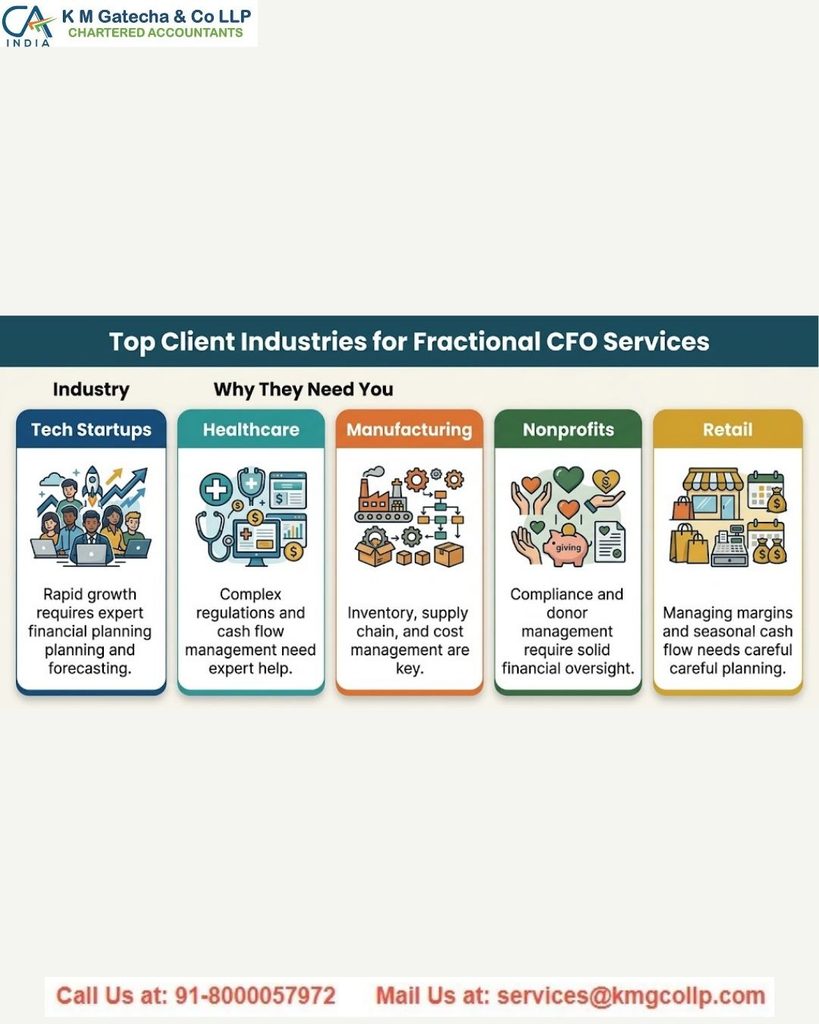
Indian startups operate in a competitive business environment where financial planning, regulatory compliance, and effective capital management are essential for sustainable growth. Although experienced financial leadership can make a significant difference, hiring a full-time CFO may not be practical for every early-stage company.
Fractional CFO services provide an alternative by giving startups access to senior financial expertise based on their current requirements and budgets.
Specific Financial Challenges Faced by Indian Startups
Startups in India often encounter several financial and operational challenges:
- Limited Budget for Senior Financial Talent: Early-stage businesses may not have sufficient resources to hire a full-time CFO with extensive experience.
- Complex Regulatory Compliance: GST, income tax, company law, and foreign exchange regulations can require specialised financial guidance, depending on the business’s activities.
- Cash Flow Management: Irregular revenue, operating expenses, and investment requirements can make cash flow forecasting difficult.
- Fundraising and Investor Relations: Preparing financial models, investor reports, and reliable financial projections can be challenging without experienced oversight.
- Rapid Business Scaling: Expansion requires effective budgeting, financial controls, risk assessment, and systems that can support increasing operational complexity.
A Fractional CFO can help address these challenges by improving financial visibility, strengthening internal processes, and aligning financial decisions with business objectives.
Cost-Effectiveness of Hiring a Fractional CFO vs. a Full-Time CFO
Hiring a full-time CFO involves a substantial financial commitment, including salary, incentives, benefits, and other employment-related costs. Depending on the professional’s experience, company size, and location, annual compensation can vary considerably.
Fractional CFO services offer a flexible alternative through engagement models such as monthly retainers, hourly billing, or project-based fees.
Key cost advantages include:
- Lower Fixed Costs: Pay for the level of financial support required rather than committing to a permanent executive salary.
- Reduced Employment Overheads: Avoid certain costs associated with a full-time employee, such as employee benefits and performance bonuses, depending on the engagement arrangement.
- Access to Senior-Level Expertise: Obtain strategic financial guidance without necessarily hiring a full-time CFO.
- Flexible Engagement Terms: Adjust the scope of work according to the company’s financial needs and growth stage.
The actual cost savings depend on the professional’s fees, engagement duration, and the level of support required.
Flexibility and Scalability Offered by Fractional CFO Services
A startup’s financial requirements can change significantly as it develops products, raises capital, expands into new markets, or adjusts its business model. Fractional CFO services allow businesses to adapt their financial leadership arrangements as these needs evolve.
Important advantages include:
- Diverse Expertise: Fractional CFOs may bring experience across industries, business models, and growth stages, helping companies develop financial strategies suited to their circumstances.
- Flexible Onboarding: Businesses can define the scope of engagement and begin with their most pressing financial priorities.
- Remote and Hybrid Support: Financial leadership can be delivered remotely, on-site, or through a combination of both, depending on the agreement.
- Scalable Involvement: The level of support can be adjusted as business operations, fundraising requirements, and reporting needs change.
For Indian startups, engaging a Fractional CFO can be a practical way to balance financial expertise with budget flexibility. The arrangement can strengthen financial management, support risk mitigation, and help founders make more informed decisions as the business grows.
How to Engage a Fractional CFO with us
Engaging a Fractional CFO begins with identifying your business’s financial priorities and finding a professional whose expertise aligns with your objectives. The following steps can help structure the engagement process.
Step 1: Assess Your Financial Leadership Needs
Identify the areas where your business needs additional financial expertise, such as cash flow management, fundraising, budgeting, reporting, or compliance.
Determine the level of involvement required, whether through a part-time arrangement, a project-based engagement, or an ongoing monthly retainer.
Step 2: Define the Scope of Work and Objectives
Outline the services you expect from the Fractional CFO, such as financial forecasting, management reporting, investor relations, or strategic planning.
Establish clear objectives, deliverables, and timelines to measure progress and maintain accountability.
Step 3: Formalise the Engagement Through a Service Agreement
Prepare a service agreement outlining the scope of work, duration, fees, confidentiality requirements, and termination conditions.
Define communication procedures, reporting responsibilities, and the frequency of review meetings to ensure a clear working relationship.
Step 4: Onboard and Collaborate
Provide the Fractional CFO with access to the relevant financial records, reporting systems, and business information required for the engagement.
Schedule regular meetings to review financial performance, discuss challenges, and align financial strategies with the company’s goals. Ongoing collaboration helps ensure that financial recommendations remain relevant as the business evolves.
Core Responsibilities and Work of a Fractional CFO
A Fractional CFO in India provides strategic financial leadership and operational support tailored to a business’s goals, financial position, and growth stage. Although they do not work as permanent, full-time employees, their expertise helps organisations address financial challenges, improve decision-making, manage risks, and build a foundation for sustainable growth.
Strategic Financial Planning and Execution
- Strategic Financial Planning: Work with business owners and leadership teams to develop financial strategies that align with business objectives, long-term plans, and opportunities in the Indian market.
- Key Performance Indicators (KPIs): Identify and monitor relevant financial and operational KPIs to evaluate business performance, measure progress, and identify areas for improvement.
- Business Plans and Fundraising Presentations: Prepare business plans, financial projections, and investor pitch decks to support fundraising efforts involving venture capital, private equity, or debt financing from Indian and international investors.
- Financial Modelling and Valuation: Develop financial models to assess business performance, evaluate investment opportunities, estimate future cash requirements, and support business valuation using appropriate assumptions and accounting practices.
Mergers, Acquisitions, and Corporate Transactions
- M&A Due Diligence: Coordinate or support financial due diligence to evaluate a target company’s financial position, liabilities, performance, and potential risks during mergers and acquisitions.
- Virtual Data Room Preparation: Organise and maintain documents in a secure virtual data room (VDR), helping investors, buyers, and advisers access the information required for due diligence.
- Transaction Negotiations: Support negotiations involving acquisitions, mergers, financing arrangements, and other commercial agreements by analysing financial terms, assessing risks, and evaluating their impact on business objectives.
Financial Operations and Controls
- Forecasting, Budgeting, and Variance Analysis: Prepare budgets and financial forecasts to estimate revenue, expenses, profitability, and capital requirements. Compare actual results with projections to identify deviations and recommend corrective measures.
- Cash Flow Management and Optimisation: Monitor cash inflows and outflows, improve working capital management, and plan funding requirements to maintain liquidity and reduce the risk of cash shortages.
- Banking Relationship Management: Coordinate with banks and financial institutions to explore financing options, review lending terms, manage banking requirements, and maintain compliance with applicable financial agreements.
Data-Driven Insights and Reporting
- Business Intelligence and Financial Analysis: Analyse financial and operational data to identify trends, evaluate performance, and uncover opportunities to improve efficiency and profitability.
- Financial Planning and Analysis (FP&A): Oversee budgeting, forecasting, performance monitoring, and profitability analysis to help management make informed financial decisions.
- Financial Reports and Stakeholder Presentations: Prepare clear financial reports and presentations for business owners, management teams, boards, investors, and lenders, as appropriate.
- Decision Support: Translate complex financial information into practical recommendations that help leadership teams evaluate opportunities, allocate resources, and make timely business decisions.
Risk Management and Regulatory Compliance in India
- Risk Identification and Mitigation: Identify financial risks arising from market changes, cash flow constraints, operational weaknesses, and regulatory developments. Develop strategies to reduce their potential impact.
- Regulatory Compliance Oversight: Support financial compliance processes relating to applicable Indian regulations, including GST, the Companies Act, SEBI requirements, and the Foreign Exchange Management Act (FEMA), where relevant to the business.
- Internal Controls and Audit Coordination: Help establish financial controls, safeguard business assets, improve the accuracy of financial records, and coordinate with external auditors. Support compliance with applicable Indian Accounting Standards (Ind AS) or Accounting Standards (AS), depending on the entity’s requirements.
Investor Relations and Stakeholder Engagement
- Investor Relations Management: Support communication with investors by presenting financial performance, explaining business developments, preparing investor updates, and addressing financial queries.
- Stakeholder Communication: Maintain transparent financial communication with shareholders, board members, lenders, and other relevant stakeholders to build trust and support informed decision-making.
By combining strategic planning, financial oversight, risk management, and stakeholder support, a Fractional CFO serves as a valuable financial partner for Indian businesses. Their involvement helps organisations strengthen financial processes, improve performance, and pursue growth opportunities while aligning financial management with their available resources and long-term objectives.
Benefits of Hiring a Fractional CFO in India
For startups, small businesses, and SMEs in India, hiring a Fractional CFO provides access to experienced financial leadership without the expense of employing a full-time executive. This flexible approach helps businesses manage financial complexities, improve operational efficiency, and build a strong foundation for sustainable growth.
Here are the key benefits of hiring a Fractional CFO in India:
- Significant Cost Savings: Access senior-level financial expertise without the salary, benefits, and overhead costs associated with a full-time CFO. Businesses can engage a Fractional CFO based on their specific requirements and budget.
- Expert Financial Leadership and Strategic Insights: Benefit from the experience of finance professionals who understand different industries and India’s regulatory environment, including GST, the Companies Act, and applicable SEBI regulations. They provide strategic planning, financial modelling, risk analysis, and data-driven recommendations to support informed decisions.
- Improved Financial Control and Risk Management: Strengthen cash flow management, improve compliance processes, and establish effective internal controls. A Fractional CFO can identify financial weaknesses early and recommend measures to reduce potential risks.
- Strategic Growth and Performance Optimization: Receive guidance on fundraising, capital allocation, business expansion, and profitability improvement. By analysing financial performance and operational efficiency, a Fractional CFO helps businesses identify opportunities for growth and measure progress against relevant industry benchmarks.
- Flexibility Without Long-Term Commitment: Adjust the level of financial support according to changing business needs. Whether a company is preparing for expansion, managing a difficult financial period, or planning a new investment, this model offers flexibility without necessarily requiring a permanent executive appointment.
- Faster Onboarding and Practical Impact: Bring experienced financial leadership into the business without the lengthy process of recruiting a full-time CFO. Depending on the company’s existing systems and financial position, a Fractional CFO may identify important improvements and opportunities within the initial weeks of engagement.
- Better Budgeting and Accounting Practices: Establish structured budgeting and accounting processes that align with business objectives. A Fractional CFO can help monitor salaries, operating expenses, cash requirements, and other costs to improve financial discipline.
- Higher Profitability and Efficient Resource Utilization: Identify unnecessary expenses, reduce inefficiencies, and allocate resources more effectively. These improvements can help businesses control costs, strengthen margins, and improve overall financial performance.
- Effective Feedback and KPI Monitoring: Gain a clearer understanding of financial and operational performance through regular reporting and expert analysis. A Fractional CFO helps establish and monitor key performance indicators (KPIs) to track progress and support continuous improvement.
- Proactive Risk Assessment: Identify potential financial, operational, and compliance risks before they become significant problems. Risk management strategies can be tailored to the company’s business model, industry, and regulatory obligations in India.
- Greater Market Responsiveness: Use timely financial analysis and market insights to evaluate changing conditions, assess business opportunities, and adjust strategies. This helps companies make informed decisions while remaining competitive.
- Long-Term Strategic Guidance: Develop practical business and financial strategies aligned with the organisation’s goals. A Fractional CFO can guide leadership on sustainable expansion, financial planning, and building a stronger long-term business model.
- Improved Investor Readiness and Business Valuation: Prepare for fundraising by strengthening financial reports, forecasts, and investor presentations. A Fractional CFO can also coordinate valuation exercises by reviewing assets, liabilities, earnings, and relevant market factors to help businesses assess their position during investment or financing discussions.
- Support for Organisational Structuring: Review financial responsibilities, reporting relationships, and organisational structures to identify opportunities for greater efficiency. This guidance helps businesses align their teams and resources with their growth objectives.
Fractional CFO vs. Interim CFO: Understanding the Key Differences
Both Fractional CFOs and Interim CFOs provide senior-level financial expertise, but they differ in their engagement duration, responsibilities, and overall objectives. Understanding these differences helps businesses choose the right financial leadership model based on their current challenges, operational requirements, and long-term goals.
Interim CFO: Temporary Financial Leadership or Project-Based Support
An Interim CFO is appointed for a specific period to address a temporary leadership gap or manage a particular financial initiative. Businesses commonly engage an Interim CFO when their existing CFO leaves, ensuring financial operations and strategic decision-making continue while the company searches for a permanent replacement.
The primary characteristics of an Interim CFO include:
- Fixed-Term Engagement: The appointment typically lasts for a defined period, depending on the business’s immediate requirements and the time needed to resolve the leadership gap or complete a project.
- Leadership Continuity: An Interim CFO maintains financial oversight, manages essential operations, and supports business stability during a transition between permanent CFOs.
- Internal Succession Opportunities: A company may appoint an experienced employee as an acting CFO to assess their leadership capabilities and suitability for a permanent role. The business can then evaluate the employee alongside external candidates before making a final decision.
- Project-Specific Responsibilities: Interim CFOs may also be engaged to lead short-term financial projects, such as mergers and acquisitions (M&A), fundraising initiatives, finance automation, digital transformation, or other complex financial assignments.
Fractional CFO: Ongoing Financial Leadership on a Part-Time Basis
A Fractional CFO, also referred to as a part-time CFO, provides ongoing financial management and strategic guidance without working as a full-time executive. This model allows businesses to access experienced financial leadership through a flexible engagement tailored to their operational needs and budget.
The key characteristics of a Fractional CFO include:
- Continuous Financial Support: The engagement typically continues over an extended period, providing consistent financial oversight and strategic guidance as the business evolves.
- Part-Time Engagement: A Fractional CFO works for an agreed number of hours or days per week or month. They may support multiple businesses, depending on their engagement arrangements.
- Strategic and Operational Guidance: They work closely with business leaders on financial planning, budgeting, forecasting, cash flow management, risk assessment, performance monitoring, and operational improvements.
- Cost-Effective Expertise: This model is particularly suitable for startups and small to medium-sized businesses that need experienced financial leadership but may not require or be able to afford a full-time CFO.
In summary, an Interim CFO is generally suited to temporary leadership requirements, organisational transitions, or specific short-term projects. A Fractional CFO, on the other hand, provides ongoing, part-time financial leadership to help businesses maintain financial discipline, make informed decisions, and pursue sustainable growth.
Cost and Benefit Comparison: Full-Time CFO vs. Fractional CFO
The following table highlights the key differences between hiring a full-time CFO and engaging a Fractional CFO in India.
| Feature | Full-Time CFO | Fractional CFO |
| Indicative Annual Cost (INR) | ₹25–₹60 lakh or more, plus benefits | ₹5–₹15 lakh, depending on scope and engagement |
| Employment Overheads | Generally includes salary, benefits, and employment-related costs | Typically lower fixed overheads, with fees based on the agreed arrangement |
| Flexibility | Primarily a permanent, full-time commitment | Flexible engagement based on business requirements |
| Access to Expertise | Dedicated financial leadership for one organisation | May offer experience gained across multiple businesses and industries |
| Scalability | Role and cost are generally more fixed | Services and time commitment can be adjusted as needs change |
| Onboarding | Recruitment and onboarding may take considerable time | Engagement may begin more quickly, depending on availability and scope |
| Risk Management | Provides continuous, organisation-wide financial oversight | Focuses on agreed risk priorities while adapting support to business needs |
Note: The cost figures are indicative estimates, not fixed market rates. Actual fees depend on the CFO’s experience, company size, industry, location, and scope of responsibilities.
Top 5 Essential Qualities of an Effective Fractional CFO
A Fractional CFO can play a significant role in shaping a startup’s financial future, helping it overcome early-stage challenges and prepare for sustainable growth. Success in this position requires more than financial experience. It also demands a combination of analytical ability, adaptability, communication, and strategic thinking.
Here are five essential qualities that distinguish an effective Fractional CFO:
1. Extensive Financial Expertise
An effective Fractional CFO has a strong understanding of financial management, strategic planning, and business operations. Experience across different industries and business models enables them to apply proven practices and develop practical solutions to complex financial challenges. This broad perspective helps businesses make informed decisions and establish a stronger financial foundation.
2. Strong Adaptability
Every business has its own operating model, priorities, and financial challenges. A capable Fractional CFO must quickly understand these differences and adjust their approach accordingly. The ability to work across different organisational cultures, business stages, and market conditions ensures that financial advice remains relevant to each company’s specific needs.
3. Excellent Communication Skills
Clear communication is essential for effective financial leadership. A Fractional CFO must explain complex financial information in straightforward terms that founders, employees, investors, and board members can understand. By presenting financial insights clearly and communicating recommendations effectively, they help stakeholders make informed decisions and build confidence in the company’s financial strategy.
4. Strong Analytical and Problem-Solving Skills
An experienced Fractional CFO can interpret financial statements, evaluate business performance, identify trends, and uncover potential problems. By analysing financial data and translating it into actionable insights, they help businesses improve profitability, manage costs, allocate resources efficiently, and identify opportunities for growth.
5. Flexibility and Responsiveness
Growing businesses often face changing priorities, unexpected challenges, and evolving market conditions. An effective Fractional CFO must be able to respond quickly, adjust financial strategies, and provide timely guidance as circumstances change. This flexibility enables businesses to address immediate concerns while remaining focused on their long-term objectives.
Choosing the Right Fractional CFO Service in India
Choosing the right Fractional CFO service in India can help startups and small and medium-sized enterprises (SMEs) strengthen their financial management and pursue sustainable growth. We offer financial and business support designed to address the needs of growing Indian companies, including Virtual CFO services that provide flexible financial leadership.
Our Value Proposition for Startups and SMEs
- Comprehensive Virtual CFO Services: We offer Virtual CFO (VCFO) solutions, incorporating fractional financial leadership to help businesses access support based on their requirements and stage of growth.
- Cost-Effective Financial Expertise: Businesses can access experienced financial professionals without necessarily hiring a full-time CFO, helping them manage financial operations while controlling overhead costs.
Experience with the Indian Startup Ecosystem
- We provide support tailored to the Indian business environment, including financial management, taxation, regulatory requirements, and investor-related considerations.
- Its services cater to startups across different sectors, helping businesses address financial challenges and develop strategies suited to their industry and growth stage.
Fractional CFO Solutions Aligned with Business Goals
- Customized Financial Planning: Financial planning, budgeting, fundraising preparation, and risk management can be aligned with a company’s specific objectives, operational needs, and stage of development.
- Scalable Financial Support: A flexible approach allows financial guidance to evolve as the business expands, enters new markets, or prepares for important milestones.
Support for Compliance, Reporting, and Financial Strategy
- Compliance and Financial Reporting: Support with statutory compliance, financial reporting, and audit preparation can help businesses maintain organised financial records and address applicable regulatory obligations.
- Strategic Financial Advisory: Guidance on cash flow management, profitability, financial planning, and investment readiness can help businesses improve financial visibility and prepare for potential fundraising opportunities.
By selecting a Fractional CFO service that aligns with their business objectives, startups and SMEs can strengthen financial oversight, improve decision-making, and build a more sustainable foundation for growth.
Disclaimer: The content on this website is for informational purposes only and does not constitute legal, financial, or professional advice. Please consult qualified experts before acting on any information. K M GATECHA & CO LLP accepts no liability for errors, omissions, or outcomes from the use of this content. This site is not an advertisement or solicitation.

