

Form 141 TDS New Rule 2026: Complete Guide to Unified Challan-Cum-Statement
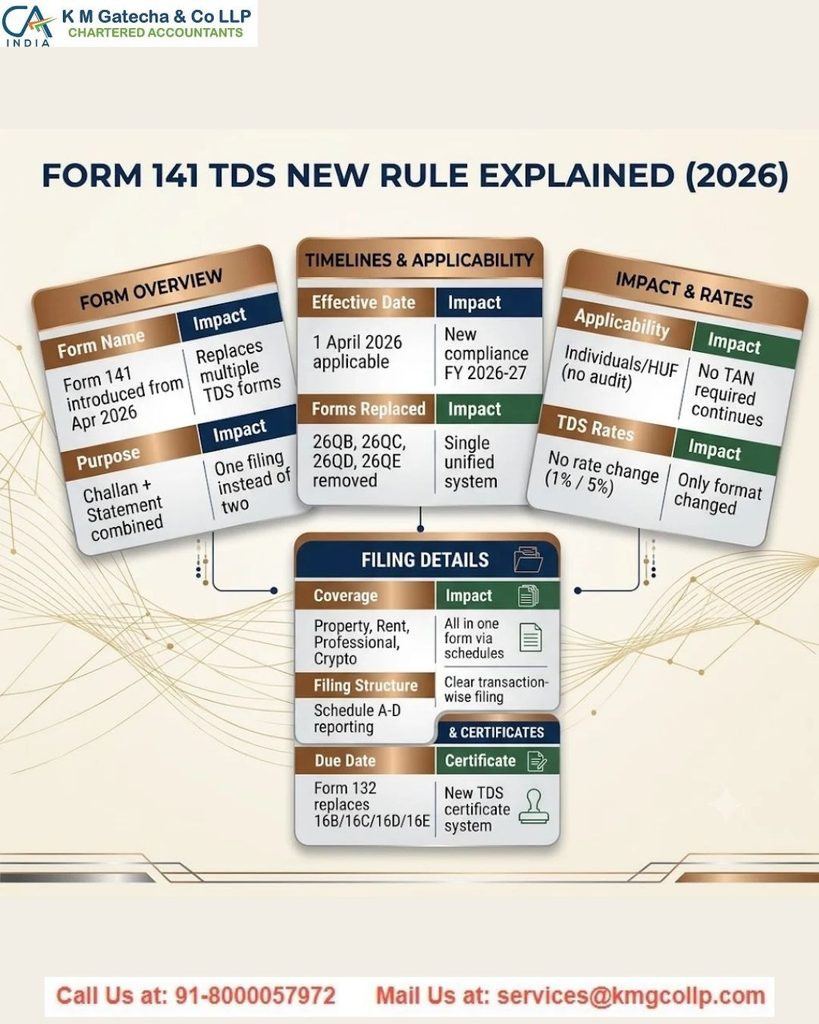
The Income Tax Department has introduced Form 141 as a significant procedural change in TDS compliance, effective from 1 April 2026. It replaces the earlier system of using multiple challan-cum-statements with a single consolidated reporting mechanism.
Previously, taxpayers had to use different forms, including Forms 26QB, 26QC, 26QD, and 26QE, depending on the type of transaction. Managing these separate forms could create confusion, duplicate work, and increase the possibility of errors. Form 141 aims to simplify the process by bringing the covered transactions under one unified structure.
Key Highlights of Form 141 TDS
- Effective Date: 1 April 2026, for FY 2026–27
- Forms Replaced: Forms 26QB, 26QC, 26QD, and 26QE
- Applicability: Individuals and Hindu Undivided Families (HUFs) in non-audit cases
- Filing Deadline: Within 30 days from the end of the month in which TDS is deducted
- TAN Requirement: No TAN is required; filing is completed using PAN
- Unified Process: Combines TDS payment and statement filing into a single process
What Is Form 141 in TDS? (Meaning and Overview)
Form 141 is a unified challan-cum-statement introduced for reporting and paying tax deducted at source (TDS) on specified transactions.
It brings three key activities together in one process:
- TDS Payment: Paying the tax deducted at source.
- Transaction Reporting: Reporting the relevant transaction details.
- Deductee Information: Providing the required details of the person from whose payment tax has been deducted.
By combining these activities, Form 141 is intended to streamline TDS compliance, reduce repetitive work, and minimise reporting errors.
Why Was Form 141 Introduced for TDS Compliance?
Form 141 applies to specified TDS provisions, primarily covering transactions in which individuals or HUFs who are not liable to tax audit under Section 44AB are required to deduct tax.
The form covers the following sections:
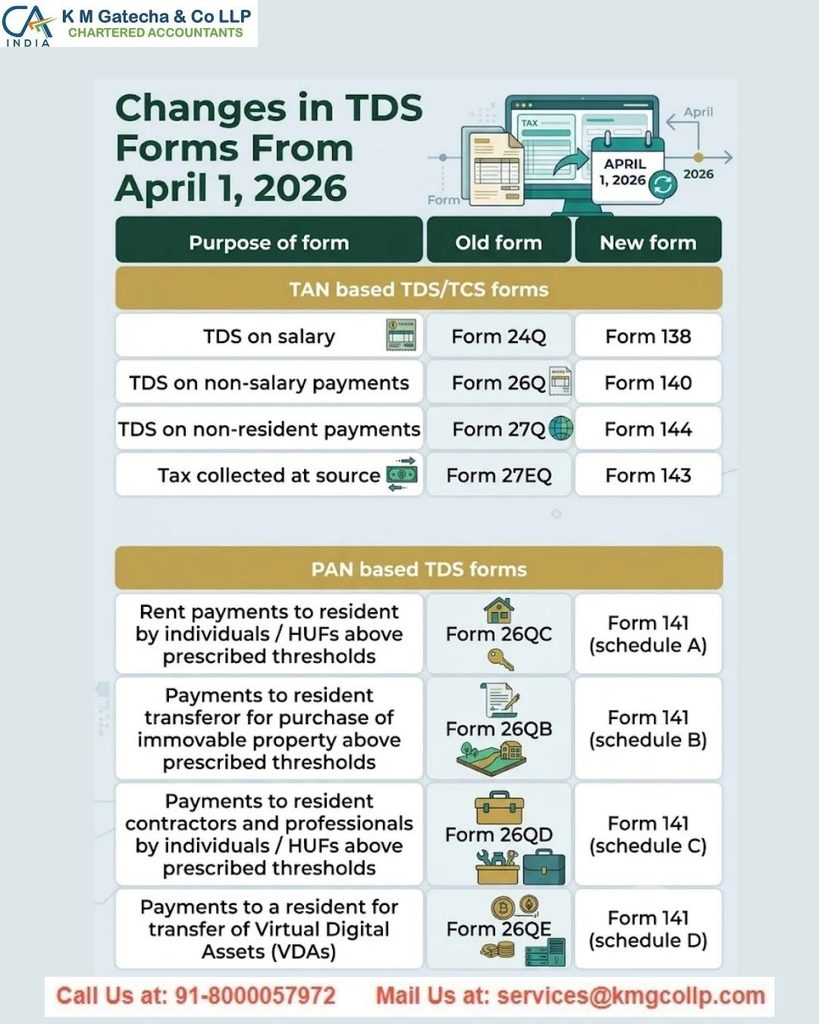
- Section 194-IA: TDS on the purchase of immovable property.
- Section 194-IB: TDS on rent exceeding ₹50,000 per month.
- Section 194M: TDS on payments to contractors or professionals.
- Section 194S: TDS on the transfer of virtual digital assets, including cryptocurrencies and NFTs.
The introduction of a unified form aims to make compliance more straightforward for individuals and HUFs involved in these specified financial transactions.
Applicability of Form 141 TDS (Sections Covered)
Form 141 applies to specified TDS provisions under which individuals or HUFs who are not required to undergo a tax audit under Section 44AB must deduct tax at source.
Sections Covered Under Form 141
- Section 194-IA – Purchase of Immovable Property: Applies to TDS on qualifying property purchase transactions.
- Section 194-IB – Rent Payments: Covers TDS on rent exceeding ₹50,000 per month.
- Section 194M – Contractor and Professional Payments: Covers specified payments made to contractors or professionals.
- Section 194S – Virtual Digital Assets: Applies to TDS on the transfer of virtual digital assets, such as cryptocurrencies and NFTs.
Form 141 brings these specified transactions into a consolidated reporting framework, simplifying the process of making TDS payments and submitting the associated statements.
Who Should File Form 141 TDS in 2026?
Form 141 is intended for taxpayers who are required to deduct TDS on specified transactions covered by the form. The applicable deductors generally include:
- Individuals
- Hindu Undivided Families (HUFs)
- Taxpayers not liable to tax audit under Section 44AB
- Individuals or HUFs making specified payments on which TDS is applicable
The filing requirement depends on the nature of the transaction and the applicable TDS provisions.
Forms Replaced by Form 141 (26QB, 26QC, 26QD, 26QE)
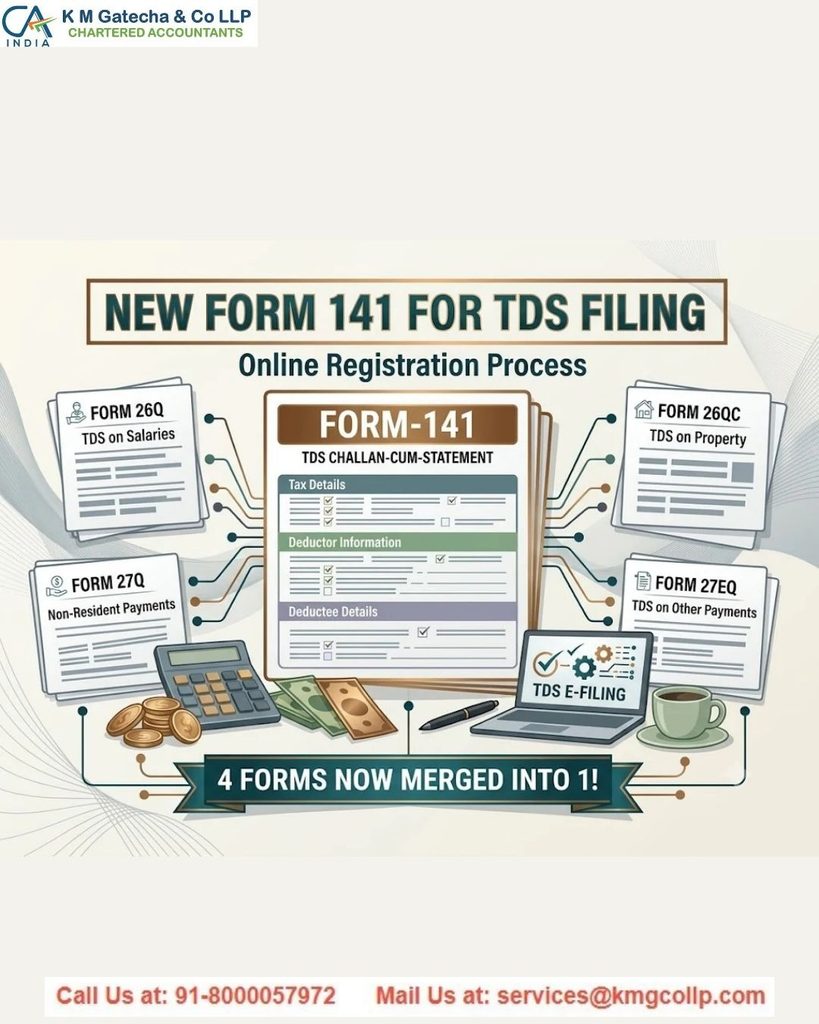
Form 141 consolidates the reporting process previously handled through separate challan-cum-statements:
- Form 26QB: TDS on the purchase of immovable property.
- Form 26QC: TDS on specified rent payments.
- Form 26QD: TDS on specified payments to contractors or professionals.
- Form 26QE: TDS on the transfer of virtual digital assets.
By bringing these reporting requirements together, Form 141 aims to provide a more streamlined filing process and reduce the need to navigate multiple forms.
Form 141 Applicability Date: When Does It Become Effective?
Form 141 is stated to apply from 1 April 2026, beginning with Financial Year 2026–27.
For transactions falling before the effective date, the applicable earlier forms and procedures may continue to apply, subject to the relevant transitional rules and official instructions.
Taxpayers should confirm the applicable form based on the transaction date and the Income Tax Department’s notified requirements.

Form 141 Due Date for Filing TDS
The stated filing deadline for Form 141 is within 30 days from the end of the month in which TDS is deducted.
Taxpayers should ensure that the required transaction information is reported and the tax is paid within the applicable deadline to avoid potential interest, fees, or other consequences of non-compliance.
The applicable due date should be verified against the official rules governing the relevant transaction.
Step-by-Step Filing Process of Form 141 TDS
The proposed filing process for Form 141 involves entering transaction details, paying the applicable TDS, and submitting the consolidated statement through the Income Tax Department’s online system.
Steps to File Form 141
- Log in to the Income Tax Portal: Access the official portal using the appropriate login credentials.
- Select Form 141: Navigate to the relevant TDS filing section and choose Form 141, if available for the transaction.
- Choose the Applicable Schedule: Select the schedule corresponding to the transaction type, according to the portal’s official instructions.
- Enter the Required Details: Provide the relevant information, including the PAN of the deductor and deductee, transaction value, payment or credit date, and TDS amount.
- Pay the TDS: Complete the tax payment through the prescribed challan facility.
- Submit the Form: Review the entered information and submit the statement.
- Download the Acknowledgement: Save the acknowledgement and payment details for future reference.
The integrated process is intended to connect TDS payment with transaction reporting, helping reduce duplication and simplify compliance.
Important: Confirm the schedule names and portal workflow against the official Form 141 instructions before filing.
Details Required for Filing Form 141
Taxpayers should keep the relevant transaction and payment information ready before beginning the filing process.
The details may include:
- PAN of the Deductor and Deductee: Identification details of the parties involved.
- Nature and Value of the Transaction: Information about the payment or transaction subject to TDS.
- Date of Payment or Credit: The relevant date for determining the applicable TDS requirements.
- TDS Amount: The tax deducted and payable to the government.
- Property, Rent, or Contract Details: Information relevant to the type of transaction.
- Instalment Details: Required where the transaction involves multiple payments or instalments.
Accurate data entry is important because discrepancies in PAN, payment amounts, dates, or transaction details may result in validation errors or incorrect reporting.
Example of Form 141 for a Property Transaction
Consider an individual purchasing an immovable property for ₹75 lakh. Assuming the transaction is subject to TDS under Section 194-IA at 1%, the calculation would be as follows:
| Particulars | Amount |
| Property value | ₹75,00,000 |
| Assumed TDS rate | 1% |
| TDS amount | ₹75,000 |
How Would the Filing Work?
Under the proposed consolidated process:
- The buyer would select the applicable property-related schedule in Form 141, as specified by the official instructions.
- The buyer would enter the property transaction details and the PAN information of the parties.
- The buyer would calculate and pay the applicable TDS.
- The buyer would submit the form and retain the acknowledgement within the prescribed deadline.
Note: Section 194-IA generally applies to qualifying transfers of immovable property where the consideration or stamp duty value, as applicable, meets the statutory threshold. The calculation above assumes the entire ₹75 lakh is subject to TDS at 1%. The actual liability should be determined under the applicable law and official Form 141 guidance.
Disclaimer: The content on this website is for informational purposes only and does not constitute legal, financial, or professional advice. Please consult qualified experts before acting on any information. K M GATECHA & CO LLP accepts no liability for errors, omissions, or outcomes from the use of this content. This site is not an advertisement or solicitation.

