

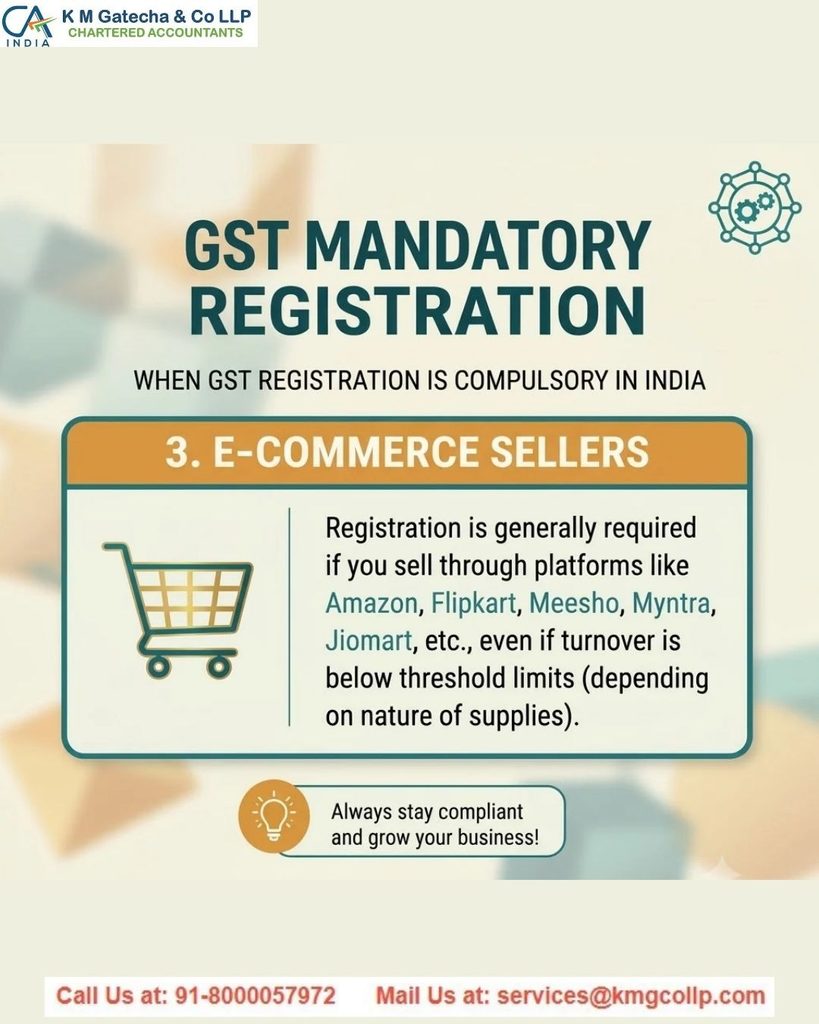
GST registration is an important compliance requirement for eCommerce businesses operating in India. Registration obligations depend on the nature of the business, the type of supplies made, and the applicable GST provisions. While certain eCommerce operators must register regardless of turnover, eligible suppliers may qualify for specific exemptions subject to prescribed conditions.
Upon successful registration, a business receives a unique Goods and Services Tax Identification Number (GSTIN), which is used for relevant tax transactions and must be mentioned on invoices wherever required under GST regulations.
This guide explains the GST registration requirements and eligibility criteria for eCommerce businesses in India.
What is GST Registration?
GST registration is the process through which a business obtains a unique 15-digit Goods and Services Tax Identification Number (GSTIN). This number enables registered businesses to collect GST on applicable taxable supplies and deposit the tax with the government.
For eCommerce businesses, GST registration helps fulfil applicable tax obligations and supports compliant business operations.
Why is GST Registration Mandatory for eCommerce Operators?
Understanding the importance of GST requires examining its fundamental principles and its application to online businesses.
Goods and Services Tax (GST) is a destination-based tax, meaning it is generally levied at the point of consumption rather than where goods or services originate. It replaced several indirect taxes that previously created a cascading tax structure and increased administrative complexity.
GST compliance is particularly important for eCommerce businesses because of their expanding reach and the volume of transactions they facilitate. Registration requirements depend on the business’s activities, turnover, and the relevant provisions of GST law.
Certain eCommerce operators must obtain GST registration irrespective of turnover, while suppliers selling through online platforms may qualify for specific registration exemptions if they satisfy the prescribed conditions. These rules help promote consistent tax compliance, accountability, and fair competition across the eCommerce sector.
Eligibility Criteria for eCommerce Business
GST registration eligibility for eCommerce businesses depends on the nature of the business, annual aggregate turnover, and the applicable statutory provisions.
The following table provides a general overview of the registration requirements:
| Business Type | Turnover Threshold | Registration Requirement |
| Suppliers of Goods | Generally ₹40 lakh in eligible states; lower limits may apply in certain states | Registration is generally required when turnover exceeds the applicable threshold, subject to conditions and exemptions. |
| Suppliers of Services | Generally ₹20 lakh; lower limits may apply in certain states | Registration is generally required when turnover exceeds the applicable threshold, subject to relevant provisions. |
| eCommerce Operators | Depends on the applicable provisions | Operators covered by mandatory registration requirements must register irrespective of turnover. |
| Suppliers Through eCommerce Platforms | Depends on the type of supply and applicable rules | Registration may be mandatory, although eligible suppliers may qualify for specific exemptions. |
| OIDAR Service Providers Based Outside India | Depends on the applicable provisions and nature of supplies | Registration is required where prescribed under GST law, including certain supplies to recipients in India. |
Documents Required for GST Registration for an eCommerce Business
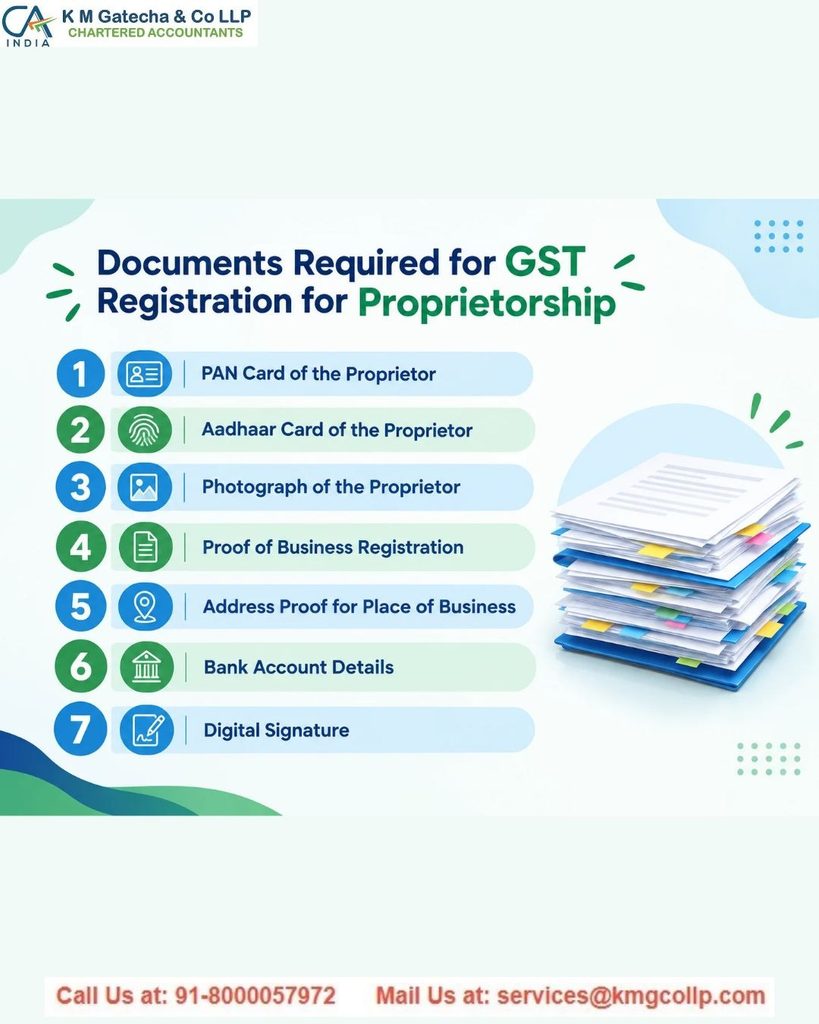
The following documents may be required for GST registration, depending on the business structure and applicable registration requirements:
- PAN Card of the proprietor or company director
- Memorandum of Association (MOA)
- Articles of Association (AOA)
- PAN Card of the authorised signatory
- Aadhaar Card of the authorised signatory
- Tax Collected at Source (TCS) details, where applicable
- Certificate of Incorporation
- PAN Card of the company
GST Requirements for eCommerce Operators and Sellers
eCommerce businesses must comply with the GST provisions applicable to their activities. The key requirements include:
- GST Registration: Registration requirements depend on the nature of the business, turnover, and applicable GST provisions. Certain eCommerce operators must register irrespective of turnover, while eligible suppliers may qualify for specific exemptions. Registered businesses must mention their GSTIN on invoices and display it where required by law.
- GST Collection and Payment: Registered sellers must charge GST on taxable supplies at the applicable rate and pay the tax to the government within the prescribed deadlines. The applicable rate depends on the type of goods or services supplied.
- GST Return Filing: Registered businesses must file the applicable GST returns to report their sales, purchases, and tax liabilities. These may include GSTR-1 for outward supplies and GSTR-3B for summarising supplies and tax liability. Filing frequency depends on the applicable scheme and eligibility criteria.
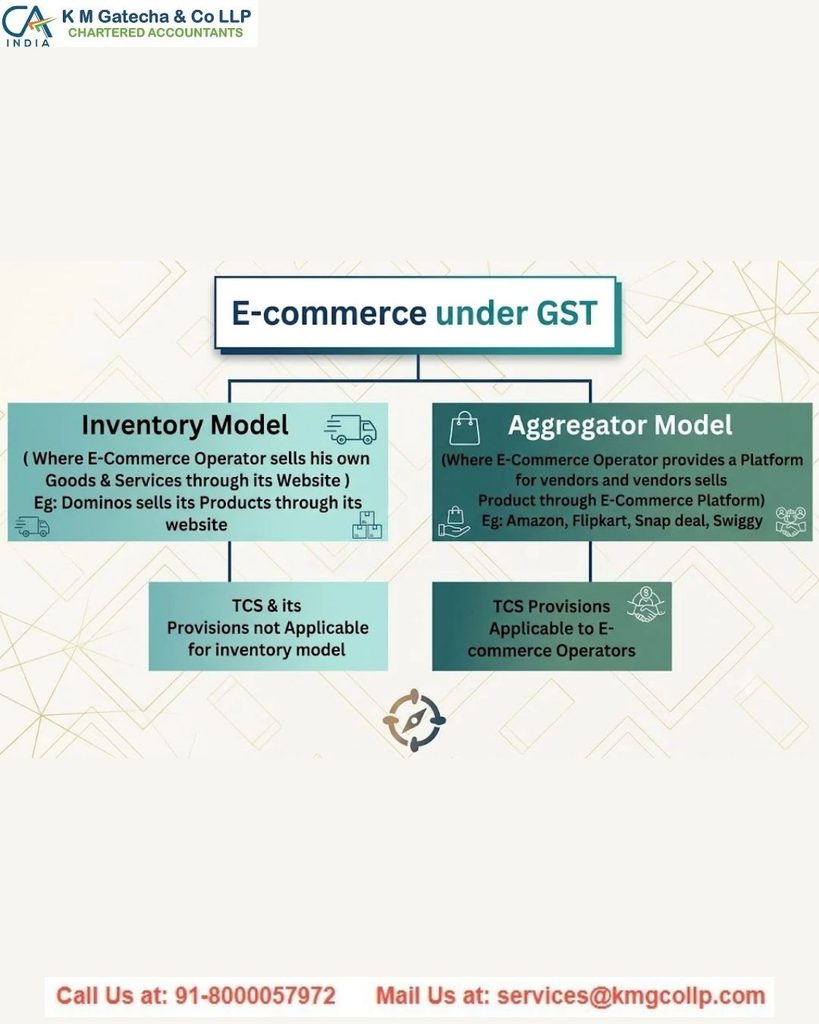
- Tax Collected at Source (TCS): eCommerce operators covered under Section 52 of the CGST Act must collect TCS on applicable taxable supplies made through their platforms by other suppliers. The collected amount must be deposited with the government and reported in GSTR-8. The applicable rate and requirements should be checked under the current GST provisions.
Exemptions and Restrictions
- Exemption for Certain Service Suppliers: Eligible suppliers of services may qualify for exemption from GST registration when their turnover is below the applicable threshold and they meet the prescribed conditions. Specific rules apply to suppliers making supplies through eCommerce operators, so the exemption depends on the nature of the supply and the relevant GST provisions.
- Composition Scheme: Eligibility for the GST composition scheme depends on the type of business and the applicable conditions. eCommerce operators required to collect TCS under Section 52 are not eligible to opt for the composition scheme in that capacity. The scheme allows eligible taxpayers to pay GST at prescribed rates on turnover, subject to restrictions and simplified compliance requirements.
Steps to Obtain GST Registration for eCommerce Businesses
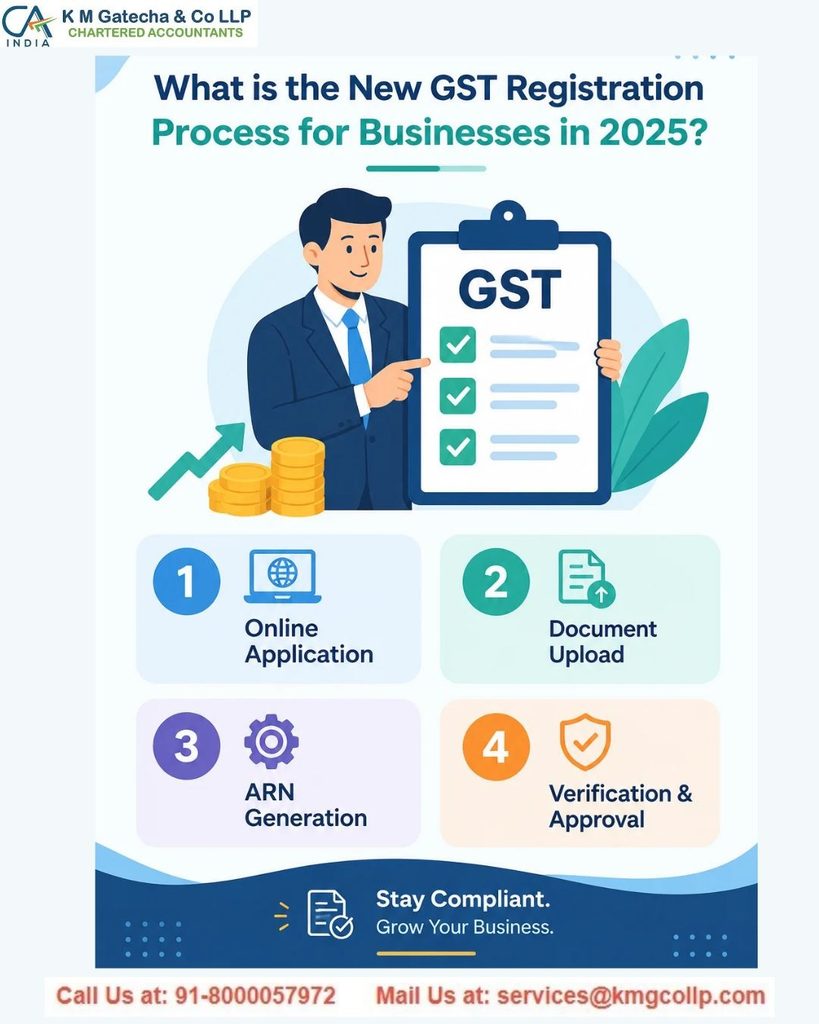
Follow these steps to apply for GST registration for an eCommerce business in India.
Step 1: Access the GST Portal
- Visit the official GST portal.
- Navigate to Services > Registration > New Registration.
Step 2: Begin the Registration Process
- Select Taxpayer under the “I am a” field.
- Enter the required details, including the state, district, legal name of the business, PAN, email address, and mobile number.
- Enter the captcha and click Proceed.
Step 3: Verify Your Contact Details
- An OTP will be sent to your registered mobile number and email address.
- Enter the OTPs to verify your contact details.
- Once verified, Part A of Form GST REG-01 is completed.
Step 4: Generate a Temporary Reference Number (TRN)
- After completing Part A, you will receive a Temporary Reference Number (TRN).
- Return to the registration page, select the TRN option, and enter your TRN and captcha.
- Complete the OTP verification process to access your saved application.
Step 5: Complete the GST Registration Application
- Open your saved application using the TRN. The application generally remains available for completion for 15 days.
- Fill in the applicable sections, including:
- Business Details
- Promoters or Partners
- Authorised Signatory
- Authorised Representative, where applicable
- Principal Place of Business
- Additional Places of Business, if any
- Goods and Services
- State-Specific Information, where applicable
- Aadhaar Authentication, where applicable
- Verification
- Select the authorised signatory and provide the required details before proceeding to verification.
Step 6: Sign and Submit the Application
Complete the verification and submit the application using an available method, as applicable:
- Digital Signature Certificate (DSC): Required for specified categories of applicants.
- e-Sign: Electronic signature using the applicable authentication process.
- Electronic Verification Code (EVC): Verification through an OTP sent to the registered contact details.
After successful submission, a confirmation message will appear.
Step 7: Receive the Acknowledgement and Track Your Application
- An Application Reference Number (ARN) is generated after successful submission and is generally communicated by SMS and email.
- Use the Track Application Status option on the GST portal to monitor the application.
Step 8: Receive Your GSTIN
Once the application is approved, the business receives a 15-digit Goods and Services Tax Identification Number (GSTIN) and a registration certificate in Form GST REG-06.
Processing time may vary depending on the application, verification requirements, and whether additional information is requested.
Post-Registration Requirements
After obtaining GST registration, eCommerce businesses must fulfil the applicable compliance obligations, including:
- Display the GSTIN: Mention the GSTIN on tax invoices and display it on the website wherever required under applicable rules.
- File GST Returns: Submit the relevant returns within the prescribed deadlines:
- GSTR-1: Reports outward supplies.
- GSTR-3B: Summarises supplies and GST liability.
- GSTR-8: Applicable to eCommerce operators required to collect Tax Collected at Source (TCS) under GST law.
- Collect and Pay GST: Charge GST on taxable supplies at the applicable rates and pay the tax to the government within the prescribed deadlines.
When Can an eCommerce Business Cancel GST Registration?
eCommerce businesses in India may apply for GST registration cancellation under specific circumstances, either voluntarily or when directed by the tax authorities. Cancellation eligibility depends on the nature of the business, the reason for cancellation, and the applicable GST provisions.
1. Business Closure
An eCommerce business may apply to cancel its GST registration if it permanently discontinues its operations. Before applying, the business should:
- Address any outstanding GST liabilities.
- File the pending GST returns required under the applicable rules.
- Complete the necessary compliance formalities associated with cancellation.
Once the cancellation becomes effective, the business must follow the applicable rules regarding its GST obligations.
2. Business Transfer, Merger, or Acquisition
When an eCommerce business is transferred, merged, or restructured, its GST registration may need to be cancelled, depending on the circumstances.
- The successor entity must obtain GST registration where required.
- The original entity may need to apply for cancellation of its existing registration.
- The relevant procedures depend on whether the transaction involves a change in ownership, a transfer of business, or the creation of a new legal entity.
3. Change in Business Structure
If a business changes its legal structure in a way that results in a change of PAN, such as converting a partnership into a private limited company, the existing GST registration generally cannot continue under the new PAN.
In such cases:
- Apply for cancellation of the registration associated with the old PAN.
- Obtain a new GST registration under the new PAN, where required.
4. Turnover Falls Below the Applicable Threshold
Businesses registered voluntarily or because their turnover exceeded the applicable threshold may be eligible to apply for cancellation if their circumstances satisfy the prescribed conditions.
The general turnover thresholds are commonly ₹40 lakh for eligible suppliers of goods and ₹20 lakh for services, although lower limits and other conditions may apply.
However, falling below the turnover threshold does not automatically make every eCommerce business eligible for cancellation. Businesses covered by mandatory registration provisions must continue to comply unless they qualify for an applicable exemption or another lawful basis for cancellation.
5. Cancellation by GST Authorities
GST authorities may initiate cancellation proceedings when a registered business fails to comply with applicable requirements. Possible grounds include:
- Failure to comply with GST provisions.
- Non-filing of GST returns for the prescribed period.
- Registration obtained through fraud, wilful misstatement, or suppression of facts.
- Other grounds specified under GST law.
Where required, the authorities issue a show-cause notice and provide an opportunity for the taxpayer to respond before passing a cancellation order.
Procedure to Cancel GST Registration for an eCommerce Business
Businesses seeking cancellation of GST registration should follow the prescribed procedure:
- Submit Form GST REG-16: Log in to the GST portal and complete the cancellation application, providing the reason for cancellation, the requested effective date, and the required details of stock, liabilities, and other relevant information, as applicable.
- Specify the Reason for Cancellation: Clearly state the grounds for cancellation and provide supporting information or documents where required.
- Complete Pending Compliance: Review outstanding GST liabilities and return-filing obligations, and fulfil the applicable requirements. Cancellation does not automatically eliminate existing tax dues or other liabilities.
- Application Review: The GST officer may examine the application and request additional information or clarification, if necessary.
- Receive the Cancellation Order: If the application is approved, the proper officer issues the cancellation order in Form GST REG-19, specifying the effective date of cancellation.
Businesses should verify their eligibility and outstanding obligations before applying, as the cancellation process and its consequences depend on the applicable GST provisions and the circumstances of the business.
Disclaimer: The content on this website is for informational purposes only and does not constitute legal, financial, or professional advice. Please consult qualified experts before acting on any information. K M GATECHA & CO LLP accepts no liability for errors, omissions, or outcomes from the use of this content. This site is not an advertisement or solicitation.


