

GST registration is an important compliance requirement for private limited companies operating in India. Registration is generally mandatory when a business exceeds the applicable turnover threshold or falls under specific categories requiring registration, such as certain interstate taxable supplies and e-commerce activities. The applicable requirements depend on the nature of the business, the type of supply, and relevant GST rules.
For many businesses, the general turnover threshold is ₹40 lakh for suppliers exclusively engaged in goods and ₹20 lakh for service providers, subject to applicable conditions and state-specific rules. In certain special category states and other specified situations, lower thresholds may apply.
GST registration enables eligible companies to collect GST on taxable supplies, claim Input Tax Credit (ITC) on eligible business purchases, and meet their GST compliance obligations.
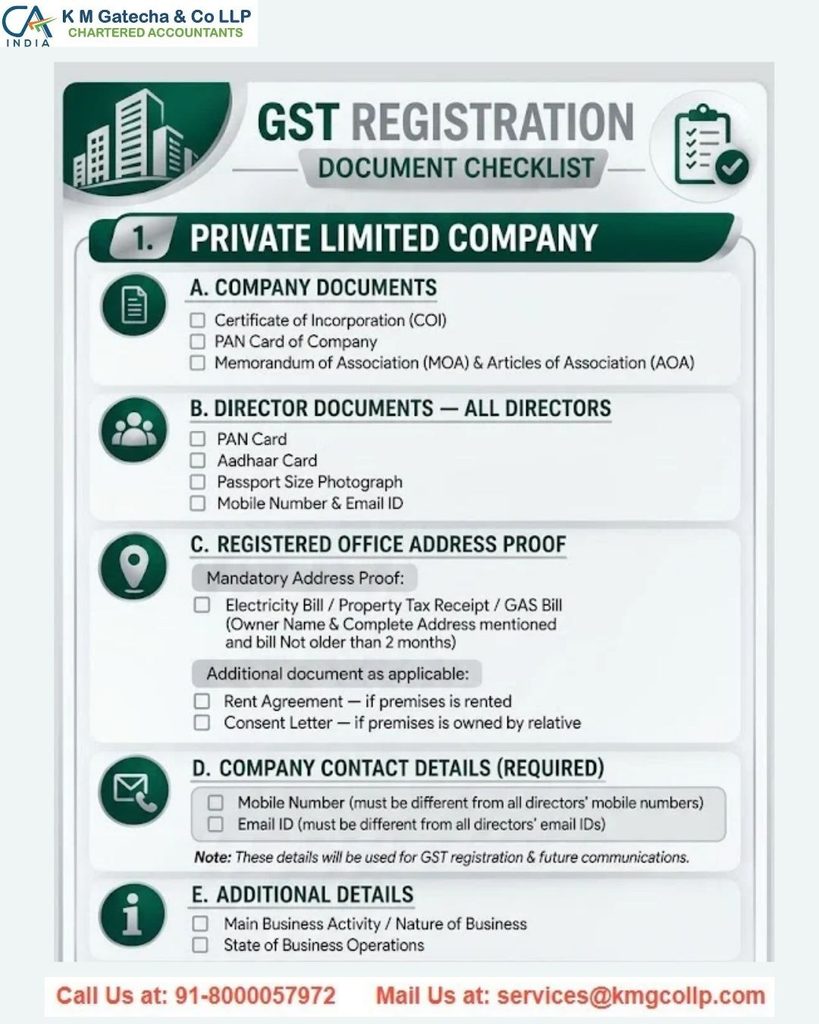
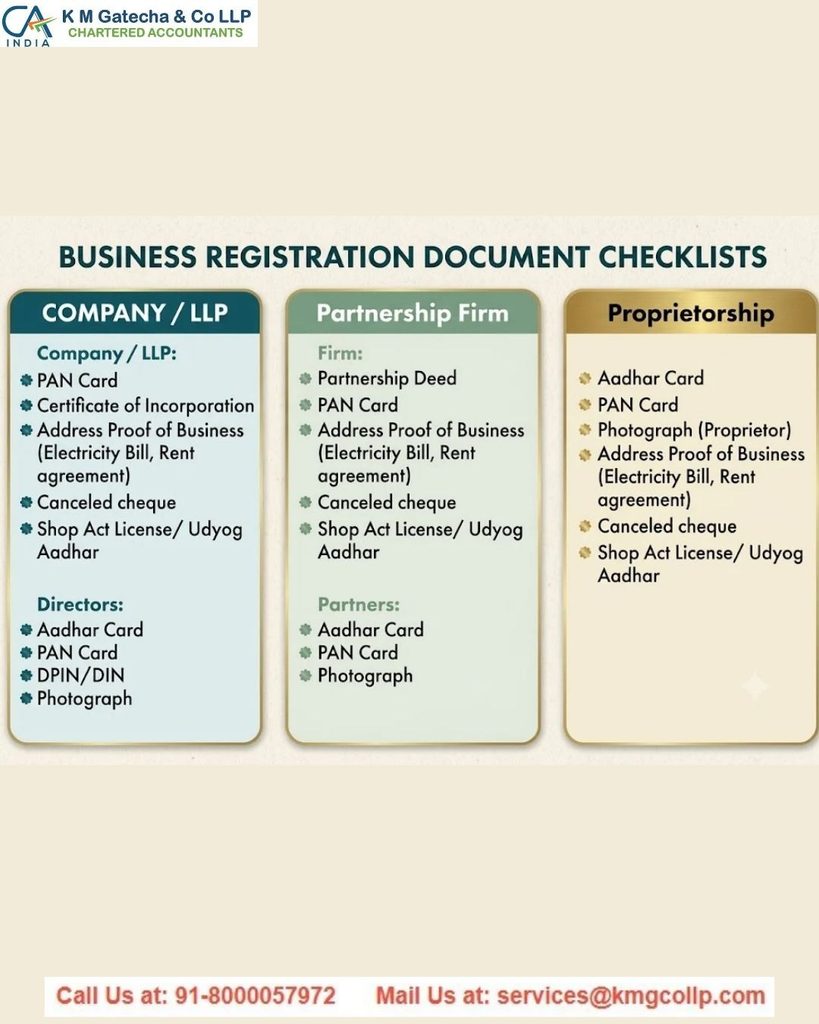
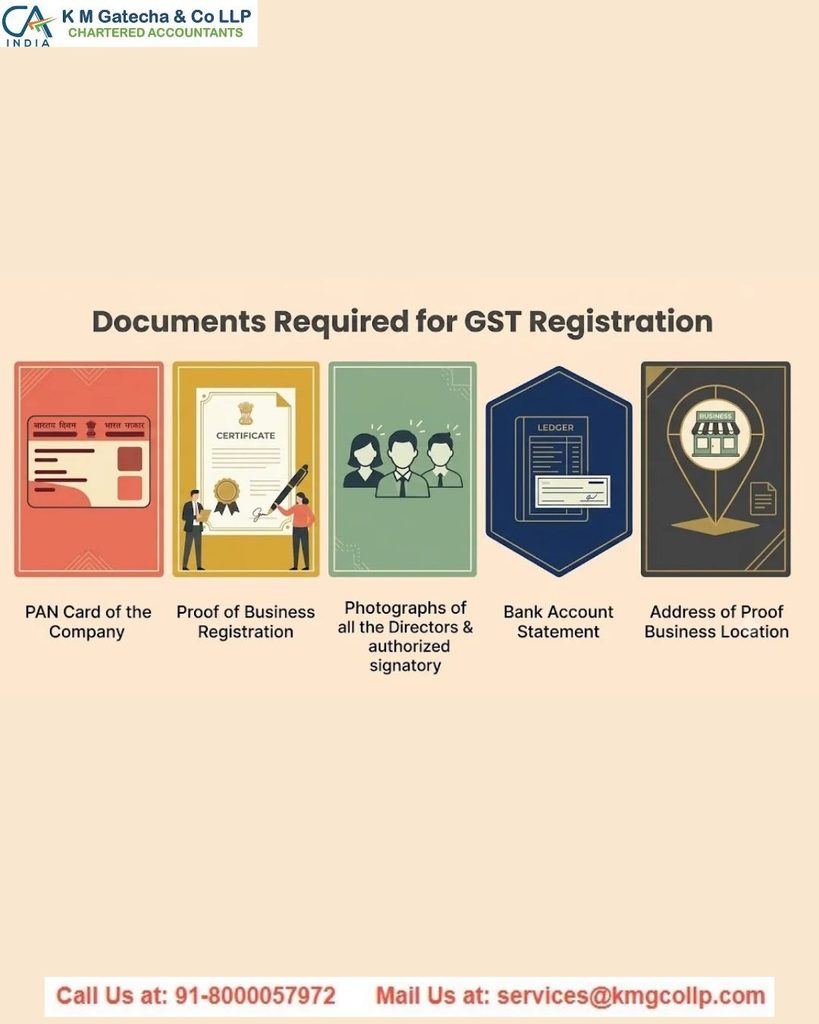
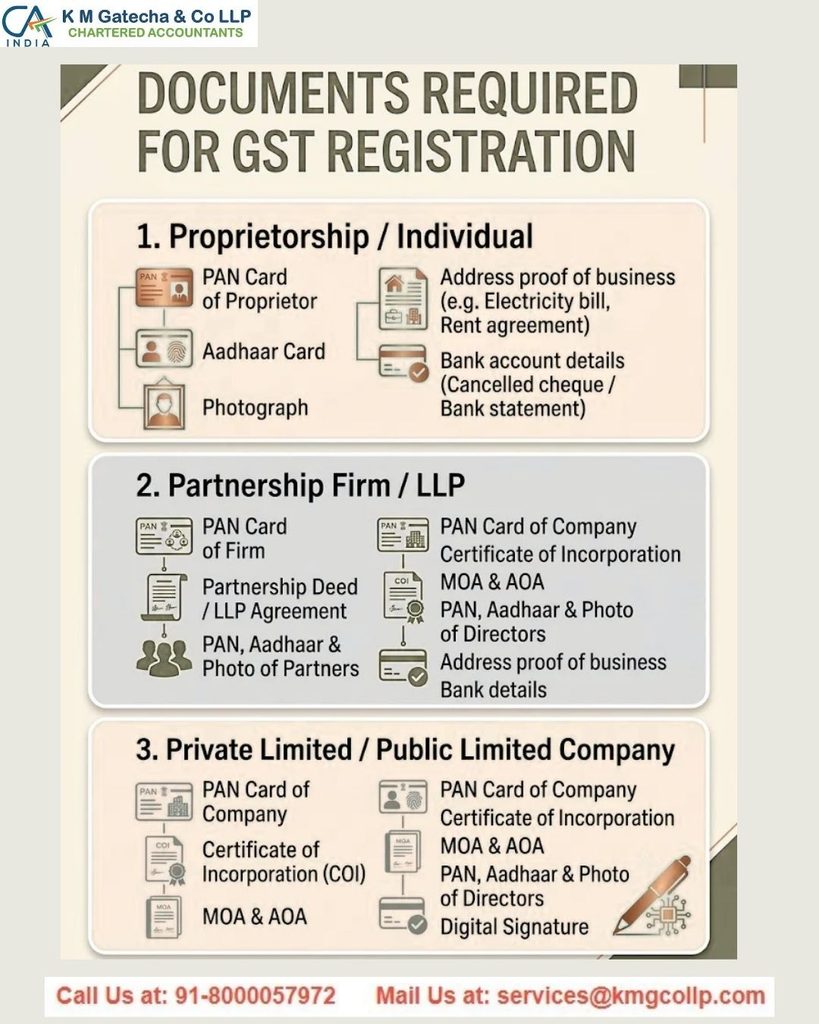
Documents Required for GST Registration of a Private Limited Company
Before applying for GST registration, keep the following documents and details ready:
- Company PAN Card: PAN issued in the name of the private limited company.
- Certificate of Incorporation: Certificate issued by the Ministry of Corporate Affairs (MCA).
- Memorandum of Association (MOA) and Articles of Association (AOA): Company constitutional documents, if required.
- Photographs of Directors: Photographs of the relevant directors or promoters, as applicable.
- PAN and Aadhaar Details of Directors: Identification details for the relevant individuals, subject to applicable verification requirements.
- Email Address and Mobile Number: Contact details required for application communication and verification.
- Board Resolution or Letter of Authorization: Proof authorizing the person acting as the company’s authorized signatory.
- Proof of Principal Place of Business: Documents such as an electricity bill, rent or lease agreement, property tax receipt, or consent letter/NOC, depending on the ownership arrangement.
- Bank Account Details: Bank details and supporting documents, such as a cancelled cheque or bank statement, where required under the applicable process.
The exact documents required may vary depending on the company’s business activities, premises, and application details.
Steps to Register for GST for a Private Limited Company in India
Step 1: Visit the GST Portal
Visit the official GST portal and start a new registration application.
- Open the official GST portal.
- Navigate to Services → Registration → New Registration.
- Select Taxpayer as the type of applicant.
- Choose the relevant state and district.
- Enter the company’s legal name and PAN details, along with the required contact information.
- Verify the mobile number and email address using the OTPs provided.
After successful verification, the portal generates a Temporary Reference Number (TRN). Keep this number safe, as it is used to access and complete the application.
Step 2: Complete Part B of the Application
Use the TRN to log in to the GST portal and complete the remaining registration details. The application generally covers business information, promoters or directors, the authorized signatory, the principal place of business, and other applicable details.
A. Business Details
Enter the company’s business information accurately.
- Trade Name: Provide the trade name, if different from the company’s legal name.
- Constitution of Business: Select Private Limited Company.
- State and District: Confirm the appropriate location details.
- Reason for Registration: Select the applicable reason based on the company’s circumstances, such as crossing the registration threshold, being required to register under a specific provision, or applying voluntarily.
- Existing Registrations: Provide details of any relevant previous registrations, where applicable.
Review the information and save the details before moving to the next section.
B. Promoter and Director Information
Provide the required information for the company’s directors and other relevant individuals as requested by the portal.
This may include:
- Full name, residential address, and contact details.
- Date of birth and gender, where requested.
- Designation or status within the company.
- Director Identification Number (DIN), where applicable.
- PAN and Aadhaar details, subject to the applicable verification requirements.
- Photograph and other supporting information requested by the portal.
If a director is also the primary authorized signatory, indicate this in the relevant section. Add other directors or promoters as required by the application.
Save the information and proceed to the next section.
C. Authorized Signatory
The authorized signatory is the person designated to handle GST registration and related compliance activities on behalf of the company.
Complete the following steps:
- Enter the authorized signatory’s personal and contact details.
- Select the option identifying the primary authorized signatory.
- Upload the required proof of authorization, such as a board resolution or letter of authorization.
- Review the information and save the details.
Ensure that the authorization document clearly supports the individual’s role in representing the company for GST-related matters.
D. Principal Place of Business
Enter the address of the company’s principal place of business. This is generally the main business location declared for GST purposes and may be the registered office if business activities are conducted there.
Provide the following information:
- Complete business address, including the state, district, PIN code, and other applicable details.
- Contact information, including the business email address and phone number.
- Nature of possession of the premises, such as owned, rented, leased, or consent-based.
- Supporting address documents based on the nature of possession.
- Nature of business activities conducted at the premises, such as manufacturing, trading, services, warehousing, or other applicable activities.
Depending on the premises arrangement, supporting documents may include an electricity bill, rent or lease agreement, property ownership proof, or a consent letter/NOC with the relevant supporting documents.
Check that the address and supporting documents are consistent before saving the information and continuing with the application.
Disclaimer: The content on this website is for informational purposes only and does not constitute legal, financial, or professional advice. Please consult qualified experts before acting on any information. K M GATECHA & CO LLP accepts no liability for errors, omissions, or outcomes from the use of this content. This site is not an advertisement or solicitation.


