

Long-Term Capital Gains Tax in India: Rates, Rules and Examples
An introductory guide to long-term capital gains tax rates, holding periods, exemptions, and calculations in India.
Key Takeaways
- Capital gains are profits earned from transferring or selling a capital asset, such as property, shares, or mutual fund units.
- Long-term capital gains (LTCG) arise when an asset is held beyond the applicable holding period. This is generally 12 months for specified listed securities and 24 months for immovable property and many other assets.
- LTCG tax rate: Gains from many long-term capital assets transferred on or after July 23, 2024, are taxed at 12.5% without indexation, subject to special provisions and exceptions.
- Section 112A exemption: Eligible long-term gains from listed equity shares, equity-oriented mutual funds, and specified business-trust units are exempt up to ₹1.25 lakh in aggregate per financial year. Eligible gains exceeding this limit are generally taxed at 12.5%, subject to applicable conditions.
- Property-related relief: Resident individuals and Hindu Undivided Families (HUFs) selling land or buildings acquired before July 23, 2024, may qualify for a comparison of the new tax calculation with the earlier 20% rate with indexation.
- Asset-specific rules matter: Not every investment follows the same holding period, tax rate, or exemption rules.
What Is Long-Term Capital Gains Tax?
Long-Term Capital Gains Tax (LTCG tax) is the tax payable on profits earned when a capital asset classified as long-term is transferred or sold. The applicable holding period depends on the asset’s nature and the relevant tax provisions.
Capital assets may include land, buildings, listed shares, unlisted shares, bonds, securities, and mutual fund units. The taxable capital gain is generally calculated by deducting the eligible cost of acquisition, qualifying improvement costs, and permitted transfer expenses from the sale consideration, subject to the applicable rules.
The tax treatment depends on factors such as:
- The type of asset sold.
- The period for which the asset was held.
- The date of transfer.
- The taxpayer’s residential status.
- Any applicable exemptions, deductions, or special tax provisions.
Understanding Capital Assets for LTCG Taxation
Capital assets cover a wide range of investments and properties, but the holding period required for long-term classification differs by asset type.
For example, listed equity shares generally qualify as long-term assets when held for more than 12 months. Land or buildings generally qualify after a holding period exceeding 24 months. Certain other investments may have different rules or be treated as short-term assets irrespective of the holding period.
The distinction between short-term and long-term capital gains is important because the tax rates, calculation methods, and available exemptions may differ.
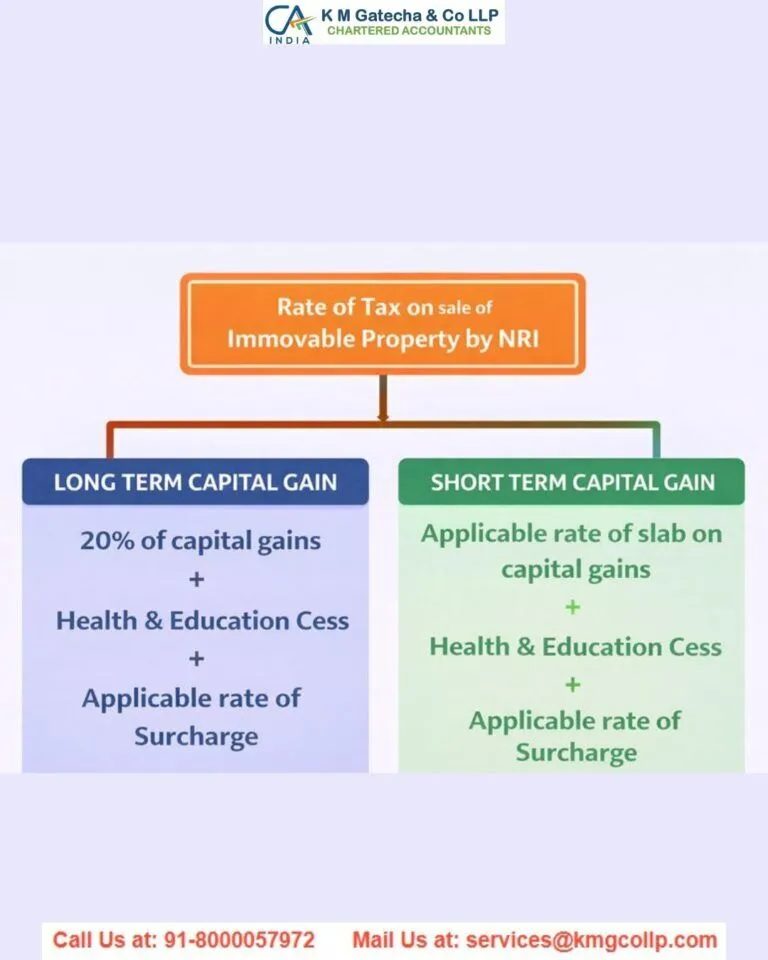
Long-Term Capital Gains Tax Rates in India
For many long-term capital assets transferred on or after July 23, 2024, the general LTCG tax rate is 12.5% without indexation. However, the applicable rate and tax calculation depend on the asset and the relevant provisions of the Income-tax Act.
| Asset or investment | General tax treatment |
| Eligible listed equity shares | 12.5% on qualifying LTCG exceeding the annual ₹1.25 lakh exemption under Section 112A, subject to conditions |
| Eligible equity-oriented mutual funds | Generally 12.5% on qualifying LTCG exceeding the annual ₹1.25 lakh exemption under Section 112A, subject to conditions |
| Eligible business-trust units | Generally 12.5% on qualifying LTCG exceeding the annual ₹1.25 lakh exemption under Section 112A, subject to conditions |
| Land and buildings | Generally 12.5% without indexation, subject to applicable provisions and potential relief for eligible older acquisitions |
| Many other long-term capital assets | Generally 12.5% without indexation, subject to special rates, exemptions, and asset-specific rules |
| Specified debt-oriented mutual funds and certain other investments | Special provisions may apply; the general LTCG rate should not automatically be assumed |
Section 112A: Tax on Eligible Equity Investments
Section 112A applies to qualifying long-term capital gains from specified equity shares, equity-oriented mutual fund units, and units of business trusts, subject to prescribed conditions, including applicable securities transaction tax (STT) requirements.
For eligible transfers on or after July 23, 2024:
- The first ₹1.25 lakh of qualifying long-term capital gains in aggregate during the financial year is exempt from tax under this provision.
- Qualifying gains exceeding ₹1.25 lakh are generally taxed at 12.5%.
- Indexation is not available for these gains.
The ₹1.25 lakh exemption is an aggregate annual limit, not a separate exemption for each share or mutual fund.
LTCG Tax Calculation: Example
Suppose you purchase 100 listed shares for ₹1,500 each and later sell them for ₹2,500 each after holding them for more than 12 months. Assume the sale qualifies for Section 112A and all applicable conditions are satisfied.
| Particulars | Amount (₹) |
| Purchase cost: 100 × ₹1,500 | 1,50,000 |
| Sale value: 100 × ₹2,500 | 2,50,000 |
| Long-term capital gain | 1,00,000 |
| Annual Section 112A exemption available | 1,25,000 |
| Taxable gain under Section 112A | 0 |
| LTCG tax under Section 112A | 0 |
In this example, the qualifying gain of ₹1 lakh falls within the annual ₹1.25 lakh exemption. Therefore, no tax is payable on this gain under Section 112A, assuming the exemption has not already been used by other qualifying gains during the same financial year.
Example: When Total Eligible Equity Gains Exceed ₹1.25 Lakh
Suppose your aggregate qualifying long-term equity gains for the financial year are ₹2,00,000.
| Particulars | Amount (₹) |
| Total eligible long-term gains | 2,00,000 |
| Annual exemption | 1,25,000 |
| Taxable gain | 75,000 |
| Tax at 12.5% | 9,375 |
The estimated tax is ₹9,375 before any applicable surcharge and cess. The calculation assumes that the entire exemption is available and that all gains qualify under Section 112A.
LTCG Tax on Shares
Profits from selling listed equity shares held for more than 12 months are generally classified as long-term capital gains. For eligible transactions covered by Section 112A, the first ₹1.25 lakh of aggregate qualifying gains in a financial year is exempt, while the excess is generally taxed at 12.5% for transfers on or after July 23, 2024.
Example: LTCG Tax on Shares
Suppose you purchase eligible listed shares for ₹2,00,000 and sell them after 18 months for ₹3,50,000.
| Particulars | Amount (₹) |
| Purchase cost | 2,00,000 |
| Sale value | 3,50,000 |
| Long-term capital gain | 1,50,000 |
| Section 112A exemption, assuming fully available | 1,25,000 |
| Taxable gain | 25,000 |
| Tax at 12.5% | 3,125 |
The estimated tax is ₹3,125 before applicable surcharge and cess, provided the transaction meets the conditions for Section 112A and the annual exemption has not been used elsewhere.
Unlisted shares and other securities may be subject to different holding-period or tax rules, so their treatment should be checked separately.
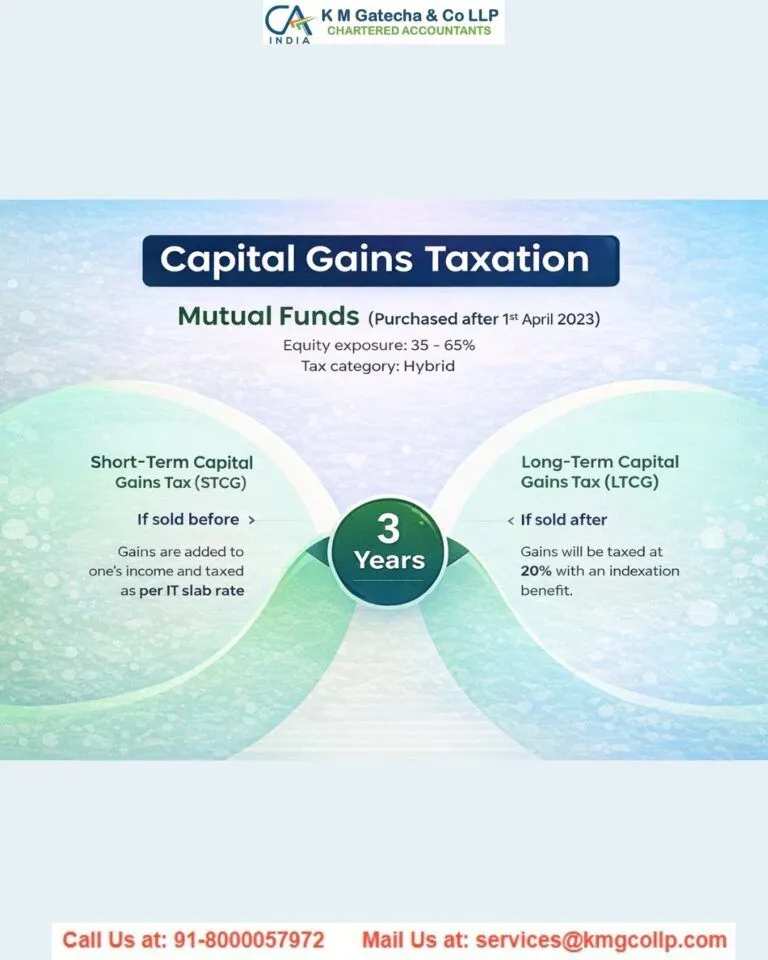
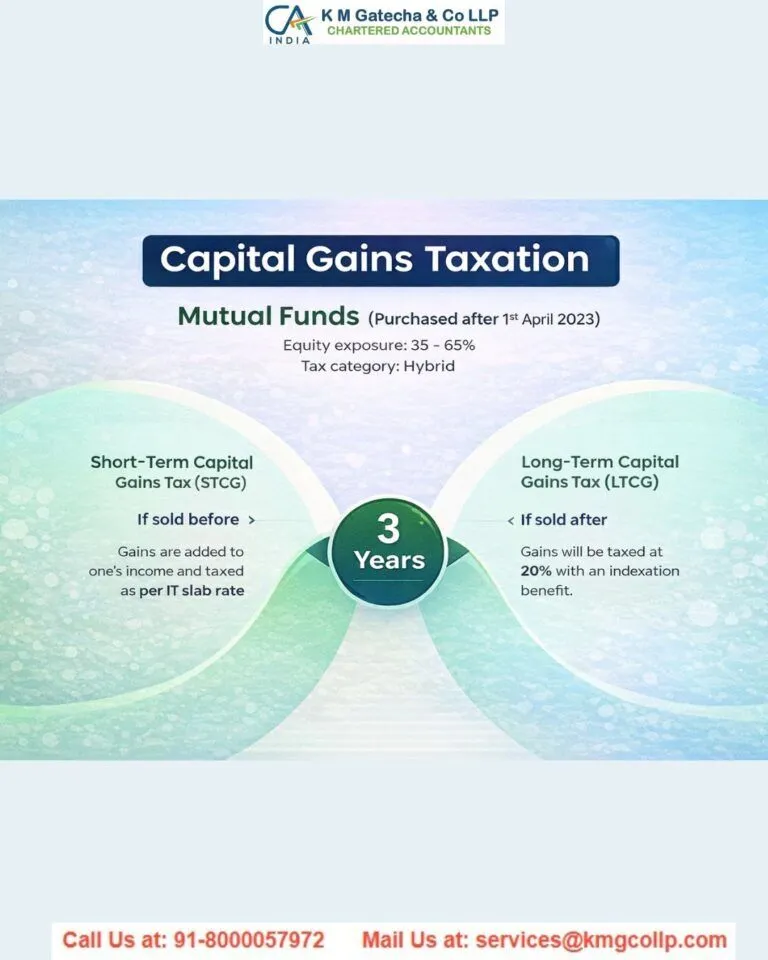
LTCG Tax on Mutual Funds
The tax treatment of mutual fund gains depends on the fund’s classification, acquisition date, holding period, and the applicable provisions.
Equity-oriented mutual funds: Eligible long-term gains covered by Section 112A are generally taxed at 12.5% on the aggregate amount exceeding ₹1.25 lakh in a financial year, subject to the prescribed conditions.
Debt-oriented and other mutual funds: These do not automatically receive the same treatment as eligible equity-oriented funds. Certain specified mutual funds may be subject to special rules under which gains are treated as short-term and taxed according to the applicable provisions, regardless of how long the investment was held.
Example: LTCG Tax on an Equity-Oriented Mutual Fund
Suppose you invest ₹2,00,000 in an eligible equity-oriented mutual fund and redeem the units after 18 months for ₹3,50,000.
| Particulars | Amount (₹) |
| Investment cost | 2,00,000 |
| Redemption value | 3,50,000 |
| Long-term capital gain | 1,50,000 |
| Annual exemption, assuming fully available | 1,25,000 |
| Taxable gain | 25,000 |
| Tax at 12.5% | 3,125 |
The estimated tax is ₹3,125 before applicable surcharge and cess, assuming the investment qualifies under Section 112A and the exemption is fully available.
This example should not be applied to debt funds or other mutual fund categories without first checking their specific tax treatment.
LTCG Tax on Property: Rates and Example
For land or buildings, the holding period generally needs to exceed 24 months for the asset to qualify as long-term. The 36-month holding period cited in older tax guidance is no longer the general rule for immovable property under the current provisions.
For eligible long-term property transfers on or after July 23, 2024, the general tax rate is 12.5% without indexation. However, a special relief may be available to a resident individual or HUF selling land or a building acquired before July 23, 2024. If the tax calculated under the new method is higher than the tax under the earlier method of 20% with indexation, the applicable relief may prevent the excess from being charged. Eligibility and the precise calculation should be verified for the transaction.
Example: Calculating LTCG Tax on Property
Suppose you purchased a property for ₹40,00,000 and later sold it for ₹75,00,000. For simplicity, assume there are no eligible transfer expenses, improvement costs, exemptions, or special reliefs.
| Particulars | Amount (₹) |
| Purchase cost | 40,00,000 |
| Sale value | 75,00,000 |
| Capital gain before other adjustments | 35,00,000 |
| Tax at 12.5% | 4,37,500 |
The estimated tax is ₹4,37,500 before surcharge and cess and assumes the 12.5% method applies without any additional relief.
For a qualifying resident individual or HUF who acquired the property before July 23, 2024, the alternative calculation with indexation should also be examined where applicable. The final liability may differ depending on acquisition details, eligible costs, exemptions, and the taxpayer’s circumstances.
How to Reduce Long-Term Capital Gains Tax Legally
Taxpayers should review the available provisions before selling an asset. Depending on the type of asset and the taxpayer’s eligibility, possible considerations include:
- Check available exemptions: Certain reinvestment provisions may provide relief for eligible capital gains, subject to their conditions and time limits.
- Review property-specific relief: Eligible resident individuals and HUFs selling certain properties acquired before July 23, 2024, should compare the applicable calculation methods.
- Maintain supporting records: Keep purchase documents, sale agreements, brokerage statements, improvement invoices, and other records required to substantiate the capital gain calculation.
- Confirm the asset’s tax classification: Check the holding period, acquisition date, and applicable tax provision before estimating tax.
- Seek professional advice where necessary: Transactions involving multiple assets, non-resident taxpayers, inherited property, or reinvestment exemptions may require a detailed review.
How to Calculate Long-Term Capital Gains Tax
Calculating long-term capital gains (LTCG) tax in India involves identifying the sale consideration, the cost of acquisition, the applicable holding period, and the tax rules for the asset sold. The calculation method and tax rate vary depending on the type of asset and the date of transfer.
Step 1: Determine the cost of acquisition
Identify the original purchase cost of the asset, along with any eligible expenses that may be included in its cost under the applicable tax rules. Indexation is not generally available for assets transferred on or after July 23, 2024, where the revised 12.5% LTCG tax regime applies.
Step 2: Calculate the capital gain
Subtract the eligible cost of acquisition, cost of improvement, and allowable transfer expenses from the sale consideration to determine the capital gain. The precise calculation depends on the asset category and applicable provisions.
Step 3: Apply the applicable LTCG tax rate
For many long-term capital assets transferred on or after July 23, 2024, the applicable tax rate is 12.5% without indexation. Eligible gains from listed equity shares, equity-oriented mutual funds, and specified business-trust units are generally taxed at 12.5% on the aggregate amount exceeding ₹1.25 lakh in a financial year, subject to Section 112A conditions. Different rules may apply to certain assets and transactions.
Step 4: Check available exemptions
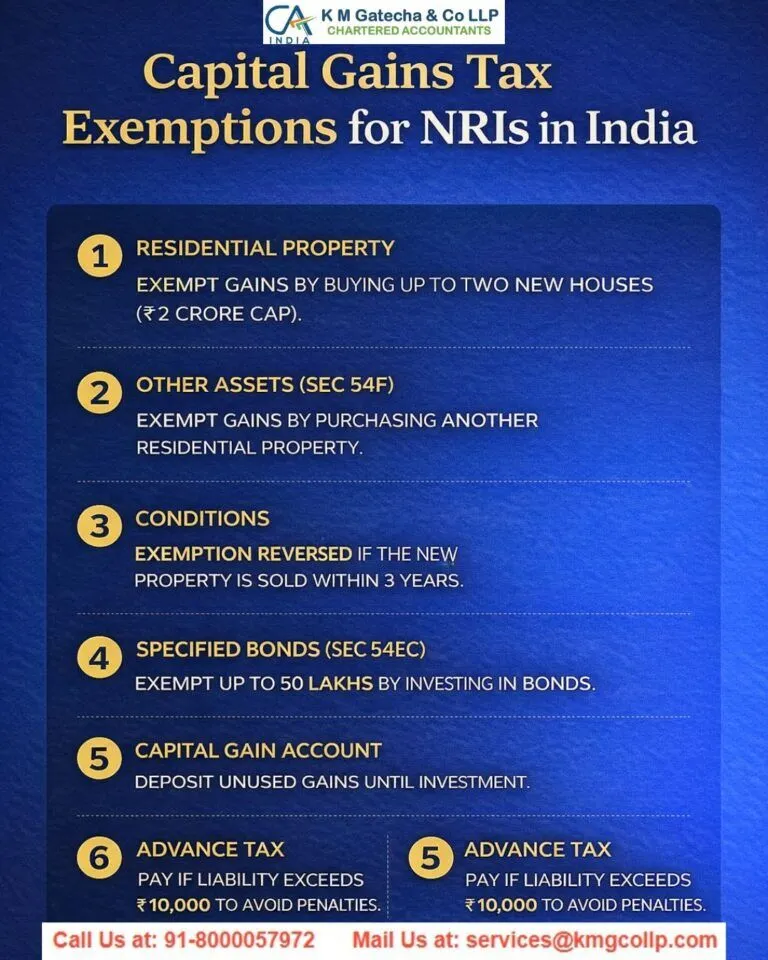
You may be eligible to reduce your tax liability by investing in specified assets or meeting other conditions prescribed under the Income Tax Act, 1961. Sections 54, 54EC, and 54F provide relief in qualifying circumstances.
A long-term capital gains tax calculator can help estimate your liability based on the asset type, purchase and sale details, applicable tax rate, and eligible exemptions. However, verify the calculator’s assumptions before relying on its results.
Factors Influencing LTCG Calculation
Several factors determine how much long-term capital gains tax you may need to pay:
- Type of asset: Land, buildings, listed shares, equity mutual funds, and other investments may be subject to different tax rates and conditions.
- Holding period: Listed equity shares and eligible listed securities generally qualify as long-term when held for more than 12 months. Land and buildings generally require a holding period exceeding 24 months. Other assets may have different requirements.
- Cost of acquisition: The original purchase cost and eligible related expenses affect the amount of capital gain. Indexation is generally unavailable under the revised rules for assets transferred on or after July 23, 2024, although specific relief may apply to certain resident individuals and Hindu Undivided Families (HUFs) selling qualifying land or buildings acquired before that date.
- Applicable tax rate: Many long-term capital gains are taxed at 12.5% without indexation under the revised regime. Eligible Section 112A gains are subject to a separate annual exemption threshold of ₹1.25 lakh. Other assets may have different rules.
- Exemptions and deductions: Sections 54, 54EC, and 54F may provide tax relief when their respective eligibility requirements and reinvestment conditions are met.
Exemptions on Long-Term Capital Gains Tax
The Income Tax Act, 1961, provides certain exemptions that may reduce or defer long-term capital gains tax when taxpayers meet the prescribed conditions. The availability of relief depends on the type of asset sold, the taxpayer’s eligibility, and how the proceeds or gains are reinvested.
Section 54: Sale of a Residential House
Section 54 may allow an eligible individual or HUF to claim an exemption on long-term capital gains from the sale of a residential house by investing the gains in another residential house in India.
Generally, the new house must be purchased within one year before or two years after the date of transfer, or constructed within three years after the transfer. The exemption is subject to statutory conditions and applicable limits.
Section 54EC: Investment in Specified Bonds
Section 54EC may provide an exemption when eligible long-term capital gains from the transfer of land or buildings are invested in specified bonds, subject to the prescribed conditions.
The investment must generally be made within six months of the transfer. Eligible bonds have a five-year lock-in period, and the exemption is subject to the statutory investment limit and other requirements.
Capital Gains Account Scheme (CGAS)
If you cannot use the capital gains for an eligible reinvestment before the applicable income tax return filing deadline, you may be able to deposit the eligible amount into a Capital Gains Account Scheme (CGAS) account with an authorised bank.
The deposit must meet the relevant timing and procedural requirements. The funds must subsequently be used for the specified purpose within the prescribed period; otherwise, the unutilised amount may become taxable under the applicable provisions.
Conclusion
Long-term capital gains tax is an important consideration when selling assets such as property, shares, or mutual funds in India. The applicable tax rate, holding period, calculation method, and available exemptions depend on the asset type and the relevant tax provisions.
Before filing your income tax return, review the applicable LTCG rules and check whether you qualify for any exemptions. Accurate calculations and timely reinvestment, where required, can help you determine your tax liability and avoid errors in reporting capital gains.
Disclaimer: The content on this website is for informational purposes only and does not constitute legal, financial, or professional advice. Please consult qualified experts before acting on any information. K M GATECHA & CO LLP accepts no liability for errors, omissions, or outcomes from the use of this content. This site is not an advertisement or solicitation.


