Essential Documents for GST Registration of a Private Limited Company
GST registration is an important compliance requirement for private limited companies in India that meet the applicable registration criteria. The general turnover threshold is ₹40 lakh for businesses exclusively supplying goods and ₹20 lakh for service providers, subject to state-specific rules, exceptions, and other conditions. Certain businesses may also be required to register regardless of turnover.
Having the necessary documents ready can help simplify the application process and reduce the likelihood of delays. Below is a guide to the essential documents required for GST registration of a private limited company.
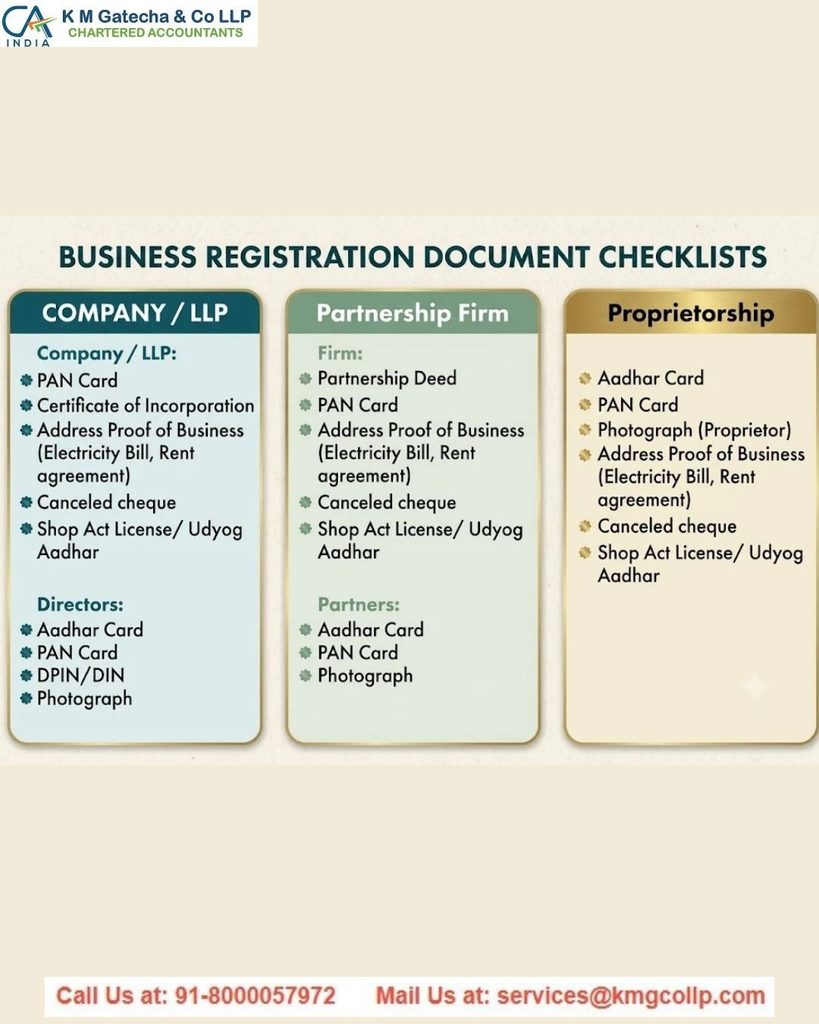
Why Is GST Registration Important for Private Limited Companies?
GST registration helps eligible companies comply with tax regulations and manage their business transactions efficiently. Its key benefits include:
- Legal Compliance: Registration enables companies required to register under GST law to meet their statutory obligations and avoid applicable penalties for non-compliance.
- Input Tax Credit (ITC): Eligible registered businesses can claim credit for GST paid on qualifying purchases, subject to applicable conditions.
- Business Credibility: A valid GST registration can help establish credibility with customers, suppliers, and business partners.
- Interstate Transactions: GST registration enables companies to comply with applicable GST requirements when making interstate taxable supplies.
- E-commerce Operations: Businesses selling through e-commerce platforms may need GST registration depending on their activities and the applicable provisions. Certain exceptions apply, so registration requirements should be checked before commencing sales.
Essential Documents Required for GST Registration
Before applying, a private limited company should prepare the following documents and details.
1. Certificate of Incorporation
The Certificate of Incorporation is issued by the Ministry of Corporate Affairs (MCA) when a company is legally incorporated.
- It serves as proof of the company’s legal existence.
- It establishes the company’s registered name and incorporation details.
- It is generally required to verify the company’s identity during GST registration.
2. PAN Card of the Company
The company’s Permanent Account Number (PAN) is a fundamental requirement for GST registration.
- The PAN must belong to the private limited company, not an individual director.
- It is used to establish the company’s tax identity.
- The legal name entered in the application should match the company’s PAN records.
3. Memorandum of Association (MoA) and Articles of Association (AoA)
The MoA and AoA are the company’s constitutional documents.
- Memorandum of Association (MoA): Describes the company’s objectives and scope of activities.
- Articles of Association (AoA): Sets out the rules governing the company’s internal management and operations.
Keep these documents available if they are requested during the registration or verification process.
4. Identity and Personal Details of Directors
The GST application may require identity details of the company’s directors and other relevant individuals, depending on their roles in the application.
Commonly requested details include:
- PAN card.
- Aadhaar details, where applicable.
- Photograph.
- Residential address and contact information.
- Director Identification Number (DIN), where applicable.
Other identity documents, such as a passport or voter ID, may be relevant for supporting identification or verification where accepted. The precise requirements depend on the individual’s role and the applicable GST process.
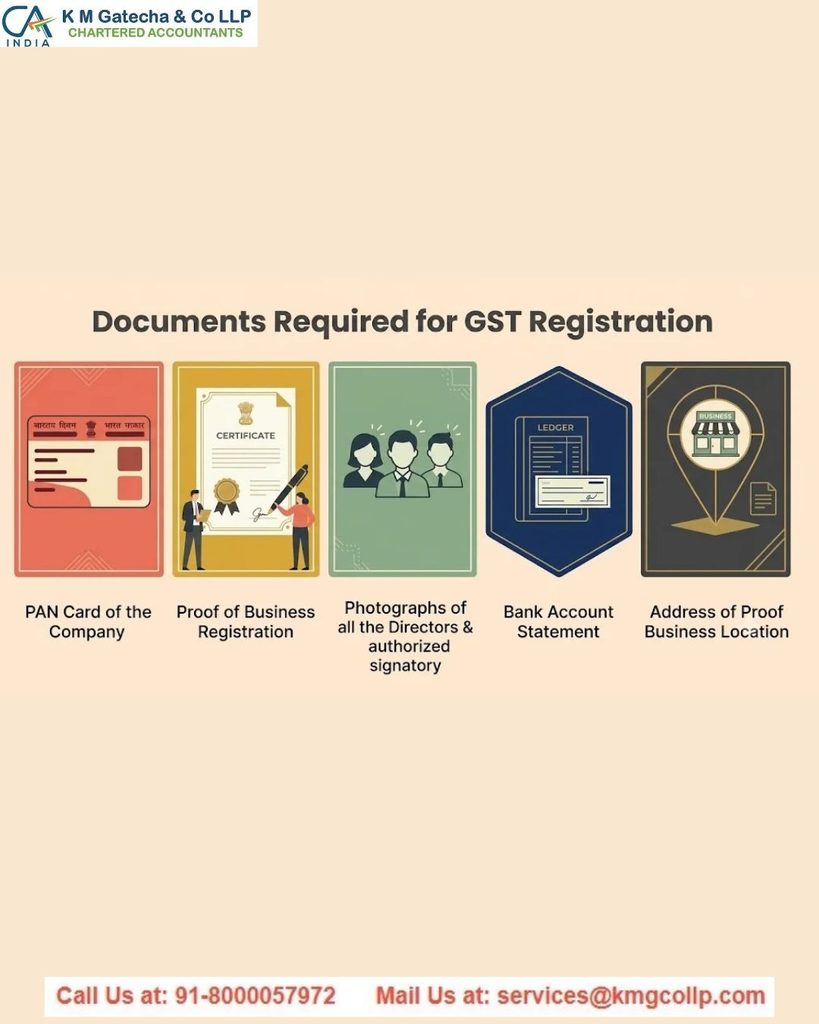
5. Address Proof of Directors
Residential address details may be required for directors or other individuals included in the application.
Depending on the circumstances, supporting documents may include:
- Aadhaar card.
- Passport.
- Voter ID.
- Other address proof accepted for the applicable verification process.
The document requirements can vary, and a utility bill should not automatically be treated as acceptable in every situation. Follow the current GST portal instructions for the relevant applicant.
6. Proof of the Company’s Principal Place of Business
Proof of the principal place of business is an important part of GST registration. The documents required depend on whether the premises are owned, rented, leased, or shared.
For owned premises:
- Property tax receipt, sale deed, or another acceptable ownership document.
- Recent electricity bill or other supporting address proof, where applicable.
For rented or leased premises:
- Valid rent or lease agreement.
- Ownership or address proof of the lessor, where required.
- NOC or consent documentation, if applicable to the circumstances.
For shared or co-working premises:
- Agreement or other proof establishing the company’s right to use the premises.
- Consent letter or NOC from the provider or property owner, where required.
- Supporting address proof, depending on the arrangement.
Additional address documentation:
A recent electricity bill or other acceptable document may be required to support the declared address. Ensure that the business address is consistent across the application and supporting records.
7. Bank Account Details
Bank details may be required as part of the GST compliance process. Depending on the applicable requirements, supporting documents can include:
- Cancelled cheque showing the company’s name and bank account details.
- Bank statement.
- First page of the bank passbook, where applicable.
Bank account details have generally not been mandatory at the initial registration application stage. However, registered taxpayers must furnish the required details within the prescribed period after registration. Check the latest GST portal requirements to ensure timely compliance.
8. Digital Signature Certificate (DSC)
A Digital Signature Certificate (DSC) is used to electronically authenticate certain submissions.
- Companies, including private limited companies, generally need a valid DSC to submit their GST registration application.
- The DSC should be issued by a licensed Certifying Authority.
- Ensure that the certificate is valid and associated with the authorized signatory or director completing the submission.
The applicable DSC requirements should be checked before filing the application.
9. Board Resolution or Letter of Authorization
If an individual is appointed to act as the company’s authorized signatory, proof of authorization may be required.
The supporting document can include:
- A board resolution authorizing the individual to represent the company for GST-related matters.
- A letter of authorization, where appropriate.
- Other documents requested by the GST portal or department.
The authorization should clearly identify the person authorized to act on behalf of the company and should be consistent with the details entered in the application.
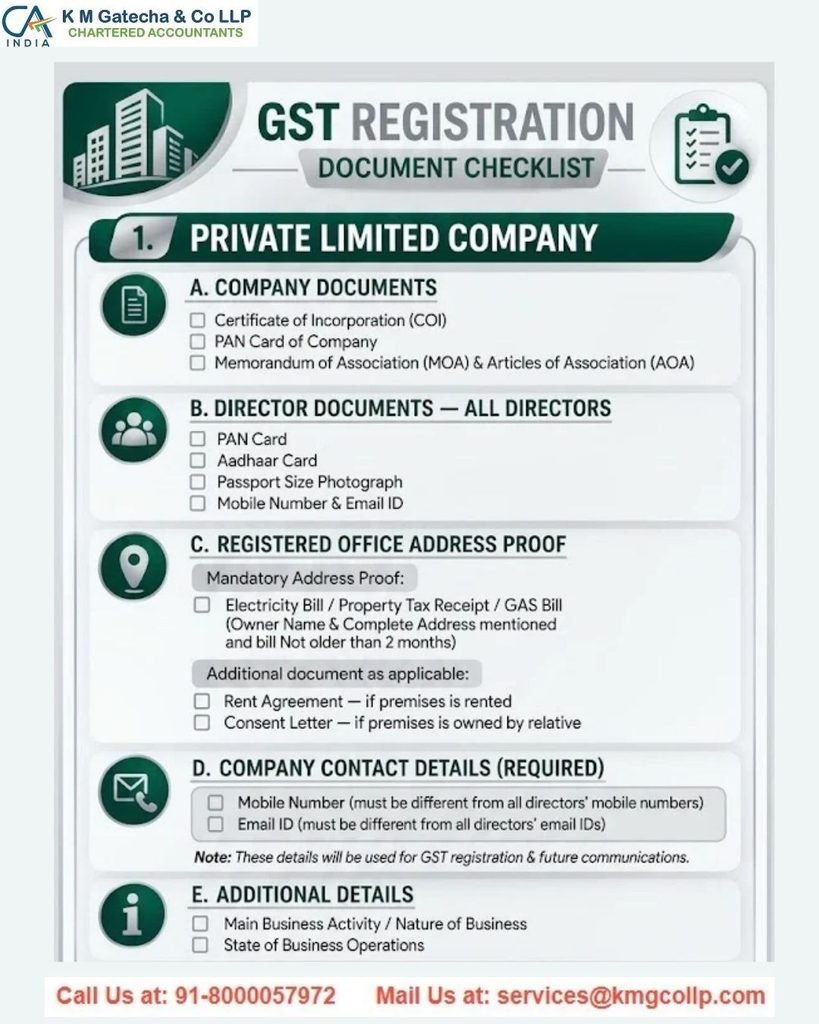
Final Checklist Before Applying
Before submitting the GST registration application, verify that:
- The company’s PAN and Certificate of Incorporation are available.
- The legal name and business details match the official records.
- The directors’ and authorized signatory’s information is accurate.
- Proof of the principal place of business is appropriate for the premises arrangement.
- The required authorization documents are ready.
- The applicable DSC and verification requirements have been met.
- All documents are clear, valid, and uploaded in the formats accepted by the GST portal.
Preparing the correct documentation in advance can make GST registration more straightforward. Since requirements may vary according to the company’s circumstances and current GST rules, review the latest instructions on the official GST portal before submitting the application.
Step-by-Step GST Registration Process for a Private Limited Company
A private limited company can apply for GST registration through the official GST portal. Following the prescribed procedure and providing accurate information can help reduce errors and avoid unnecessary delays. Professional guidance may also be useful if the company has complex business activities or specific compliance requirements.
Step 1: Visit the GST Portal
Visit the official GST Portal and navigate to Services → Registration → New Registration to begin the application process.
Select Taxpayer as the applicant type and provide the required state, district, company PAN, email address, and mobile number.
Step 2: Complete Part A of Form GST REG-01
Enter the preliminary details requested in Part A of the registration application, including the company’s PAN and contact information.
Ensure that the information matches the company’s official records. The legal name associated with the PAN should be entered accurately to prevent verification issues.
Step 3: Verify Your Contact Details
The GST portal sends OTPs to the mobile number and email address provided in the application.
Enter the OTPs to complete the verification process. After successful verification, you will receive a Temporary Reference Number (TRN) to access and continue the application.
Step 4: Complete Part B of Form GST REG-01
Log in using the TRN and complete the remaining sections of the application. These generally include:
- Company and business details.
- Director and promoter information, where applicable.
- Authorized signatory details.
- Principal place of business.
- Additional places of business, if any.
- Goods and services supplied.
- Bank and other information, as required.
- Supporting documents and applicable declarations.
Review all details carefully before proceeding to verification.
Step 5: Verify and Submit the Application
Complete the verification process using the method applicable to the company.
- Digital Signature Certificate (DSC): Generally required for private limited companies.
- Electronic Verification Code (EVC): Available only where permitted under the applicable GST portal rules.
Complete the required authentication and submit the application. Make sure the DSC is valid and that the person signing the application is authorized to do so.
Step 6: Track Application Processing
After successful submission, the GST portal generates an Application Reference Number (ARN). Use this number to track the application status.
The GST officer may review the application and supporting documents. If any clarification or additional information is required, the applicant may receive a notice and must respond within the prescribed timeframe.
Step 7: Receive Your GSTIN
Once the application is approved, the company receives its 15-digit Goods and Services Tax Identification Number (GSTIN) and GST registration certificate.
Download and retain the certificate for business records. The company should also ensure that it follows the applicable GST invoicing, return-filing, and payment requirements from the relevant effective date.
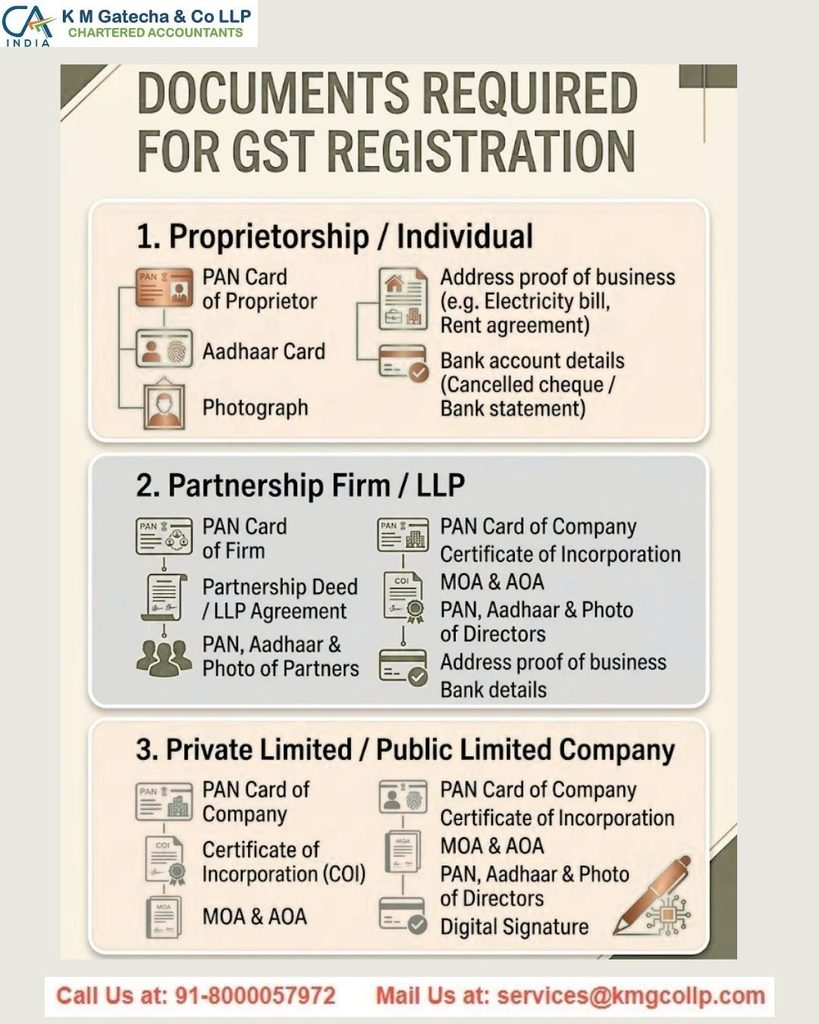
Common Reasons for GST Registration Application Rejection or Delay
Errors or incomplete information can lead to queries, delays, or rejection of a GST registration application. Common issues include:
- PAN Mismatch: Incorrect PAN details or inconsistencies between the company’s PAN records and the application.
- Incorrect Business Address Proof: Missing, unclear, outdated, or inconsistent documents relating to the principal place of business.
- Incomplete Authorization Documents: A missing or inadequate board resolution or letter of authorization for the authorized signatory.
- Invalid Digital Signature Certificate: An expired, invalid, or improperly configured DSC that prevents successful submission.
- Incomplete Application Details: Missing information, incorrect business particulars, or documents that do not support the details provided.
- Failure to Respond to Notices: Not providing the requested clarification or supporting documents within the specified period.
To reduce these risks, check the application carefully, ensure that the supporting documents are consistent, and respond promptly to any notice issued by the GST department.
Conclusion
GST registration is an important compliance step for private limited companies in India that are required to register under applicable GST laws. Preparing the necessary documents, entering accurate business details, and completing the prescribed verification process can help make registration smoother.
Once registered, an eligible company can claim Input Tax Credit on qualifying business purchases, collect GST on taxable supplies, and meet its statutory obligations. Reviewing the current GST requirements and seeking professional assistance when necessary can help the company manage registration and ongoing compliance more effectively.
Disclaimer: The content on this website is for informational purposes only and does not constitute legal, financial, or professional advice. Please consult qualified experts before acting on any information. K M GATECHA & CO LLP accepts no liability for errors, omissions, or outcomes from the use of this content. This site is not an advertisement or solicitation.