

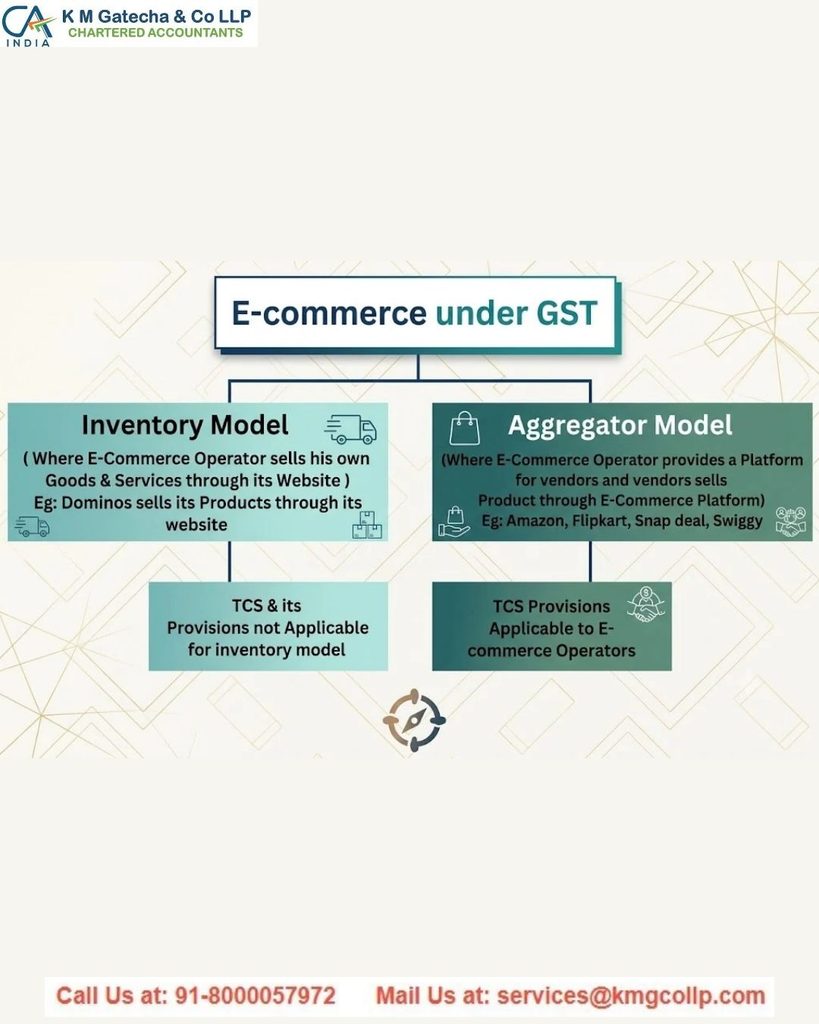
E-commerce has transformed the way businesses function by creating a broad platform that connects buyers and sellers. As this sector continues to expand, businesses must meet essential regulatory requirements, particularly those related to Goods and Services Tax (GST), before operating in the Indian market.
Essential Tips for GST Registration for E-commerce Businesses
The growth of e-commerce has made it easier for businesses to reach customers and conduct transactions online. However, businesses must comply with applicable regulations, including GST requirements, to operate in India.
GST is an indirect tax imposed on the supply of goods and services. For e-commerce businesses, GST registration is an important statutory requirement to promote transparency, ensure fair practices, and maintain compliance with Indian tax laws. Understanding the registration process and its benefits can help businesses meet their tax obligations effectively.
Why Is GST Registration Necessary?
GST registration helps businesses establish credibility and maintain transparency in their operations. Its importance can be understood through the following points:
- Transparency and Fairness: GST promotes a uniform tax structure, helping create a level playing field for businesses.
- Legal Compliance: Mandatory GST registration helps businesses comply with applicable tax laws, avoid penalties, and contribute to the country’s economic growth.
- Consumer Protection: GST makes businesses more accountable, helping build consumer trust and safeguard customer interests.
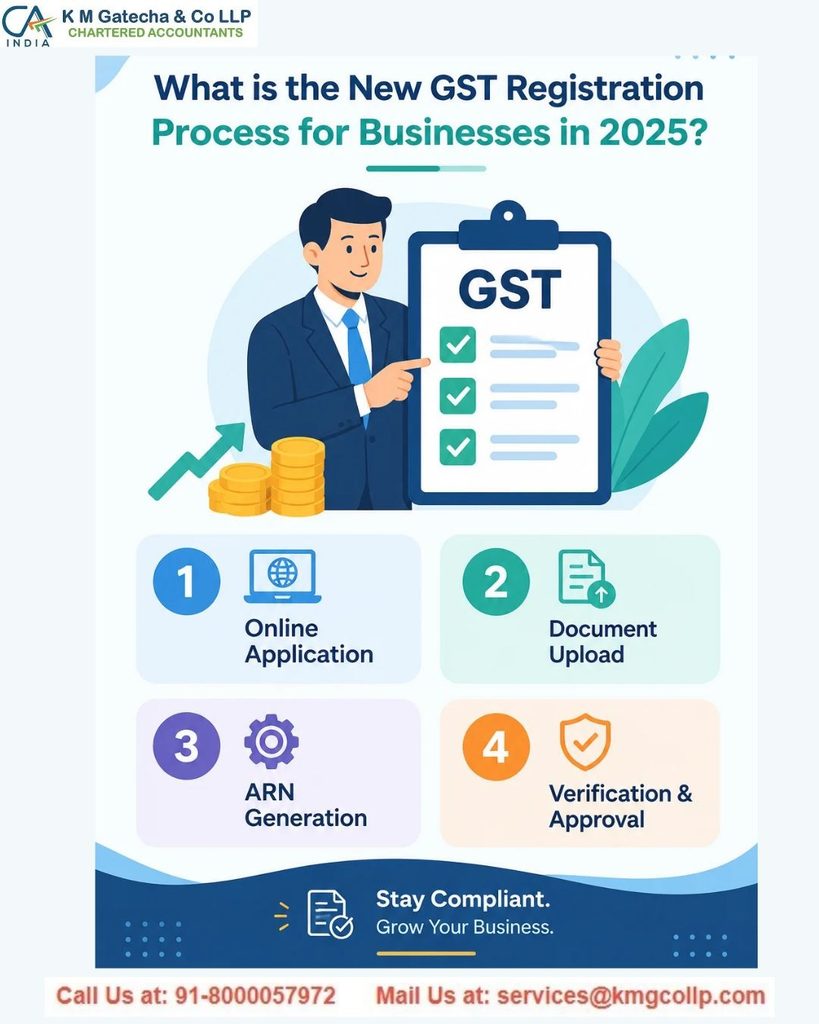
Step-by-Step Process for GST Registration for E-commerce Businesses
Follow these steps to complete GST registration for your e-commerce business:
- Visit the GST Portal
Access the official GST website at www.gst.gov.in. - Start a New Registration
Go to the Services tab, select Registration, and click on New Registration to begin the application process. - Complete the Application Form
Enter the required information accurately, including:- Taxpayer type, such as an e-commerce operator.
- Legal business name and PAN (Permanent Account Number).
- Address of the principal place of business.
- Contact information and bank account details.
- Details of the authorized signatory.
- Obtain a Digital Signature Certificate (DSC)
Acquire a Class 2 or Class 3 DSC to digitally sign your application. - Submit the Application for Verification
Submit the completed form along with the required documents. The tax authorities will verify the information provided. - Receive the Application Reference Number (ARN)
Once the application is submitted and processed for verification, you will receive an ARN to track its status. - Get Your GSTIN
After the application is approved, you will be allotted a 15-digit GST Identification Number (GSTIN). - Download the Registration Certificate
Download your GST registration certificate as confirmation of your registration.
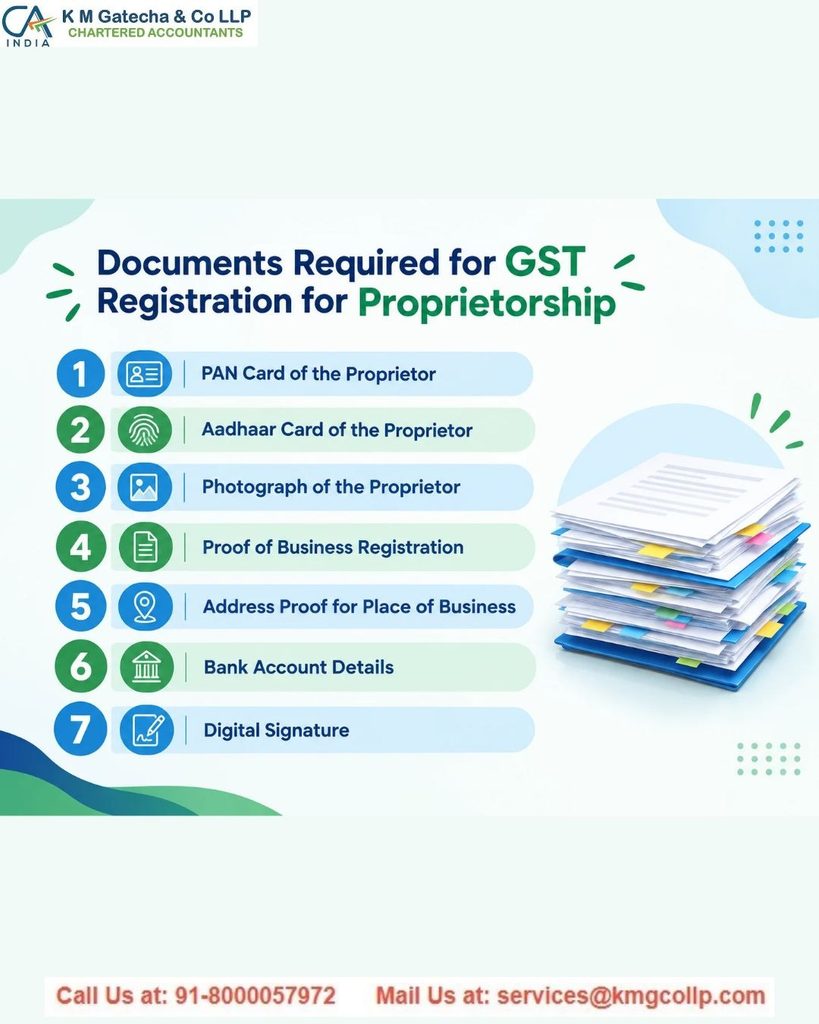
Documents Required for GST Registration
Keep the following documents ready for the registration process:
- PAN Card: PAN details of the business and authorized signatories.
- Aadhaar Card: Required for individuals and sole proprietors.
- Proof of Identity: Passport-sized photographs of the authorized signatories.
- Proof of Address: Documents such as a rental agreement, electricity bill, or property tax receipt.
- Bank Account Details: Bank account number and IFSC code.
- Digital Signature Certificate (DSC): A Class 2 or Class 3 DSC for digital signatures.
Benefits of GST Registration for E-commerce Businesses
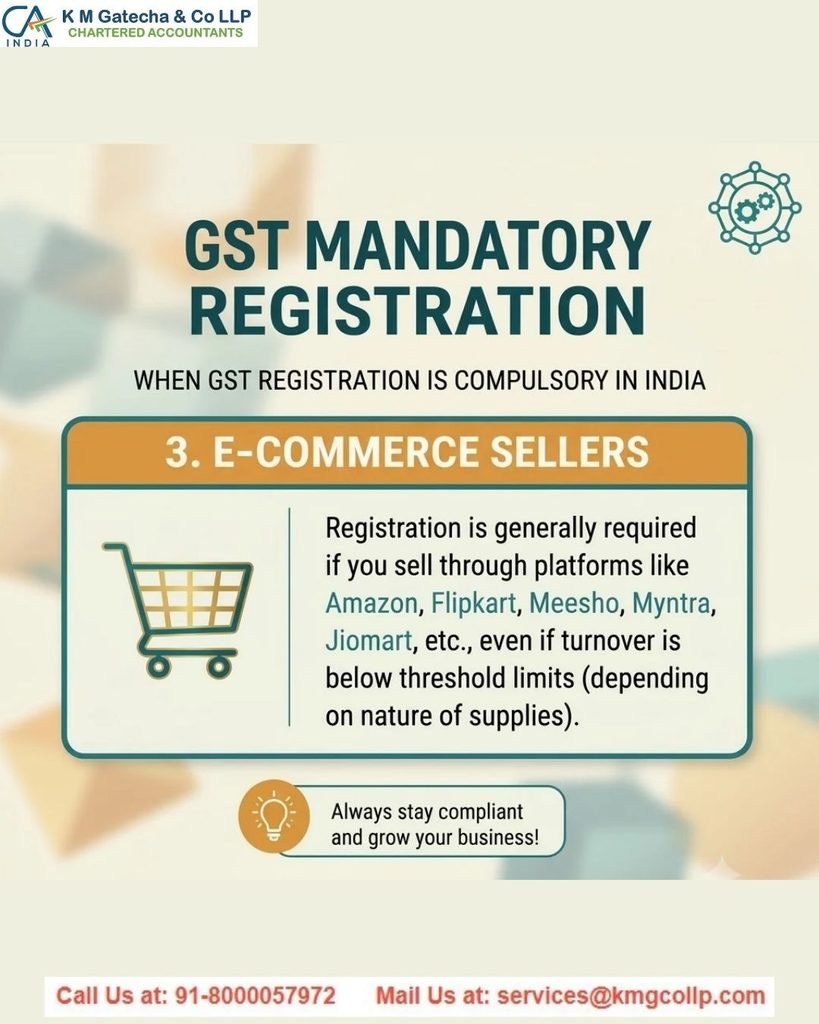
GST registration offers several advantages to e-commerce businesses, including:
- Input Tax Credit (ITC):
Businesses can claim tax credits on raw materials, inventory, and services, helping reduce their overall tax liability. - Simplifies Interstate Trade:
GST brings multiple taxes under a unified system, helping reduce compliance costs and support smoother interstate business operations. - Improves Business Credibility:
Having a GSTIN strengthens your business’s reputation and helps build trust among customers and suppliers. - Ensures Legal Compliance:
GST registration helps businesses comply with Indian tax laws and avoid potential penalties and legal complications. - Enhances Operational Efficiency:
GST simplifies tax filing procedures and reduces administrative workloads, contributing to more efficient business operations.
Conclusion: GST Compliance Supports Business Growth
GST registration is an important requirement for e-commerce businesses operating in India. Proper compliance with tax regulations promotes transparency, builds customer confidence, and helps businesses tap into the growing e-commerce market.
For professional guidance, consult an expert or connect with us. Our experienced team of Chartered Accountants can assist you throughout the GST registration process and provide support with other related services.
Disclaimer: The content on this website is for informational purposes only and does not constitute legal, financial, or professional advice. Please consult qualified experts before acting on any information. K M GATECHA & CO LLP accepts no liability for errors, omissions, or outcomes from the use of this content. This site is not an advertisement or solicitation.


