


Role of a CA in Startup India Registration and Compliance
Introduction
Starting a startup is an exciting step, but turning a business idea into a legally compliant and financially stable business requires proper planning. Founders need to manage registration, taxes, accounting, legal requirements, and regular compliance.
The Startup India Scheme was introduced to support eligible startups through government recognition and various benefits. However, understanding the eligibility rules and completing the registration process can sometimes be difficult.
A Chartered Accountant (CA) can help startups manage these requirements, maintain proper records, and stay compliant as the business grows.
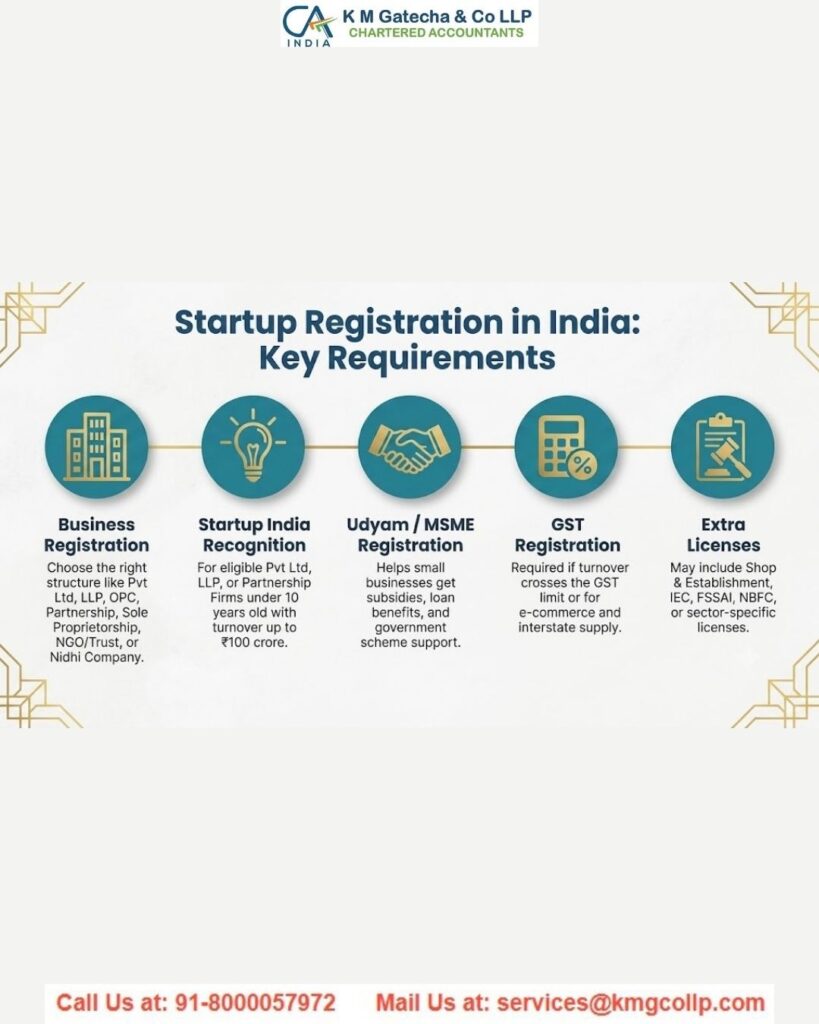
What is Startup India Registration?
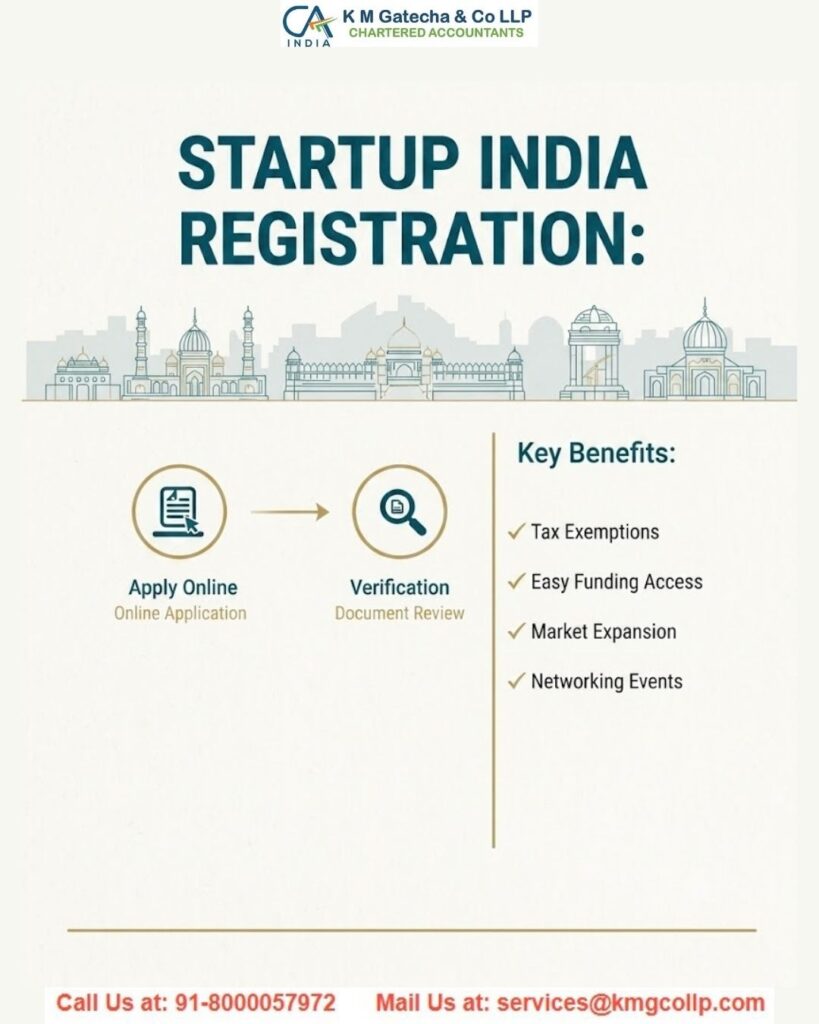
Startup India registration refers to the process of getting an eligible business recognized by the Department for Promotion of Industry and Internal Trade (DPIIT).
Depending on eligibility, recognized startups may receive benefits such as:
- Income tax benefits
- Self-certification under certain labour and environmental laws
- Support for patent and trademark registration
- Access to certain government schemes
- Funding and other startup support programs
A CA can help founders understand the eligibility requirements and prepare the necessary documents for the application.

Why is a CA Important for Startup India Registration?
1. Checking Startup Eligibility
Not every new business automatically qualifies for Startup India benefits. A CA can help check factors such as:
- Date of incorporation
- Turnover
- Business activities
- Ownership structure
- Innovation or scalability
- Other applicable conditions
Checking eligibility before applying can help avoid errors and delays.
2. Choosing the Right Business Structure
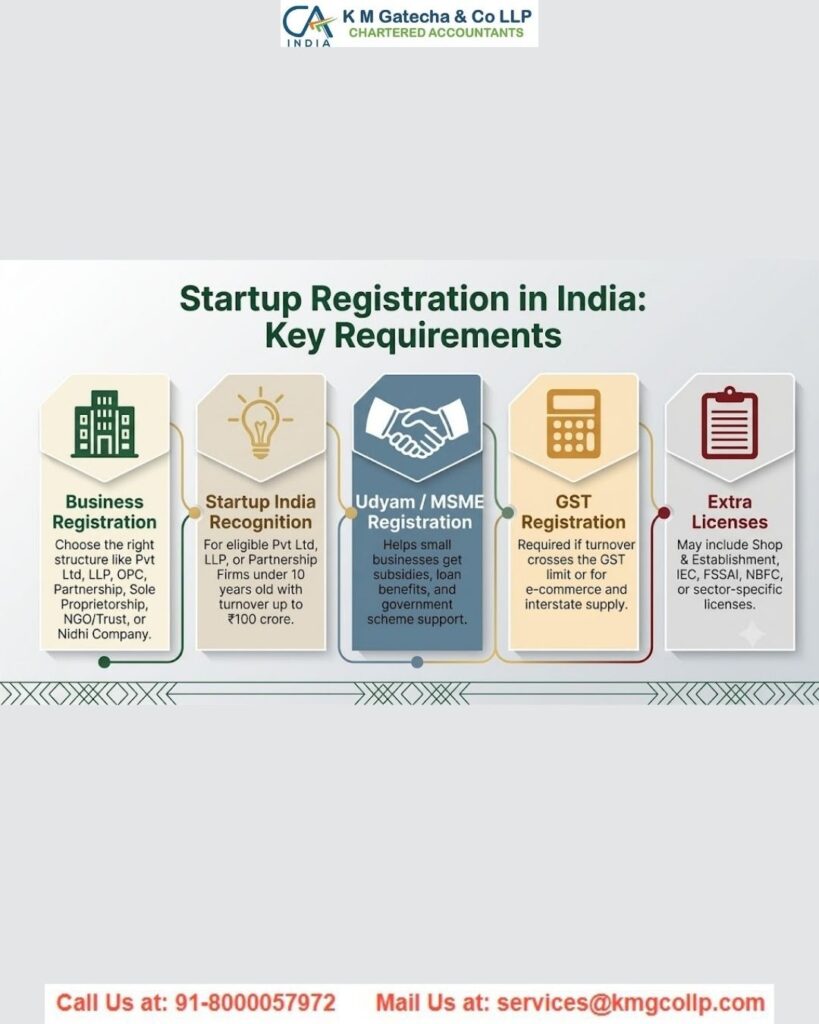
Choosing the right structure is important for the future of a startup. Common options include:
- Private Limited Company
- Limited Liability Partnership (LLP)
- Partnership Firm
Each structure has different rules for taxation, ownership, liability, funding, and compliance.
A CA can help founders compare these options and choose a structure that suits their business goals.
3. Assistance with Startup India Registration
A CA can assist with the Startup India recognition process, including:
- Preparing the required documents
- Providing business activity details
- Preparing declarations
- Checking application information
- Assisting with the submission process
This can help founders complete the process correctly and avoid common mistakes.
Role of a CA in Ongoing Startup Compliance
Startup India recognition is not the end of a startup’s responsibilities. The business must continue to meet applicable tax, accounting, and legal requirements.
1. Tax Planning and Tax Filing
A CA can help startups manage:
- GST registration and returns, where applicable
- Income tax returns
- TDS compliance
- Advance tax requirements
- Applicable tax benefits and deductions
Proper tax planning can help startups manage their finances and avoid unnecessary compliance issues.
2. ROC and MCA Compliance
Companies and LLPs have regular compliance requirements. A CA can assist with:
- Annual ROC filings
- Financial statement filings
- Statutory records
- Audit-related requirements
- Other applicable MCA filings
Timely compliance helps the business maintain proper legal records and avoid penalties.
3. Accounting and Bookkeeping
Accurate financial records are important for every startup. A CA can help maintain:
- Books of accounts
- Profit and loss statements
- Balance sheets
- Cash flow records
- Budgets and financial reports
Good accounting helps founders understand the financial position of the business and make informed decisions.
Role of a CA in Funding and Business Growth
1. Preparing Financial Records for Investors
Startups seeking funding need clear and reliable financial information. A CA can help prepare:
- Financial projections
- Financial statements
- Valuation-related documents
- Compliance records
- Due diligence documents
Proper financial records can make the funding process more organized and help investors understand the business better.
2. Government Schemes and Incentives
Eligible startups may have access to different government schemes and benefits. A CA can help founders understand the applicable requirements and assist with areas such as:
- Government schemes
- MSME registration
- Eligible tax benefits
- Grants and funding programs
- Other applicable incentives
The availability of these benefits depends on the startup meeting the required conditions.
Examples of CA Support for Startups
Example 1: Managing Tax Compliance
A service-based startup may focus mainly on customers and business growth while overlooking GST or tax requirements. This can later lead to notices or pending filings.
A CA can help organize the records, identify compliance requirements, and create a regular filing system.
Example 2: Correcting Registration Documents
A startup may face problems if incorrect or incomplete information is submitted during registration or recognition. A CA can review the documents, identify missing information, and help prepare the application correctly.
Conclusion
Starting a startup involves more than having a good business idea. Founders also need to manage registration, taxation, accounting, legal requirements, and ongoing compliance.
A Chartered Accountant can support startups at different stages, from choosing the right business structure and applying for Startup India recognition to managing tax filings, accounting, ROC compliance, and financial planning.
Professional guidance can help startups maintain proper records, reduce compliance problems, and build a strong financial foundation for future growth.
Disclaimer: The content on this website is for informational purposes only and does not constitute legal, financial, or professional advice. Please consult qualified experts before acting on any information. K M GATECHA & CO LLP accepts no liability for errors, omissions, or outcomes from the use of this content. This site is not an advertisement or solicitation.
